
 Jacob Browning and Yann Lecun in Noema:
With artificial intelligence now powering Microsoft’s Bing and Google’s Bard search engines, brilliant and clever conversational AI is at our fingertips. But there have been many uncanny moments — including casually delivered disturbing comments like calling a reporter ugly, declaring love for strangers or rattling off plans for taking over the world.
To make sense of these bizarre moments, it’s helpful to start by thinking about the phenomenon of saying the wrong thing. Humans are usually very good at avoiding spoken mistakes, gaffes and faux pas. Chatbots, by contrast, screw up a lot. Understanding why humans excel at this clarifies when and why we trust each other — and why current chatbots can’t be trusted.
Getting It Wrong
For GPT-3, there is only one way to say the wrong thing: By making a statistically unlikely response to whatever the last few words were. Its understanding of context, situation and appropriateness concerns only what can be derived from the user’s prompt. For ChatGPT, this is modified slightly in a novel and interesting way. In addition to saying something statistically likely, the model’s responses are also reinforced by human evaluators: The system outputs a response, and human evaluators either reinforce it as a good one or not (a grueling, traumatizing process for the evaluators). The upshot is a system that is not just saying something plausible, but also (ideally) something a human would judge to be appropriate — if not the right thing, at least not offensive.
But this approach makes visible a central challenge facing any speaker — mechanical or otherwise. In human conversation, there are countless ways to say the wrong thing…
More here.
 David Van Reybrouk in Noema:
 Daniel Bessner in Boston Review:
 Max Krahé in Phenomenal World:
 I
I It’s a testament to Black endurance and brilliance that the little girl called Phillis Wheatley became, within 12 years of her arrival in Boston, the most significant African American poet of the 18th century. Yet, as
  John Muir and Robert Underwood Johnson were unlikely allies in the war to preserve
 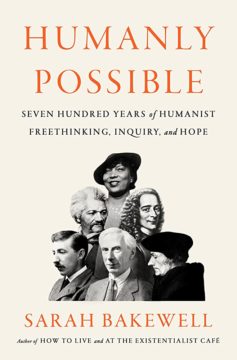 “I am human, and consider nothing human alien to me”: The famous line from the Roman playwright Terence, written more than two millenniums ago, is easy to assert but hard to live by, at least with any consistency. The attitude it suggests is adamantly open-minded and resolutely pluralist: Even the most annoying, the most confounding, the most atrocious example of anyone’s behavior is necessarily part of the human experience. There are points of connection between all of us weirdos, no matter how different we are. Michel de Montaigne liked the line so much that he had the Latin original — Homo sum, humani nihil a me alienum puto — inscribed on a ceiling joist in his library.
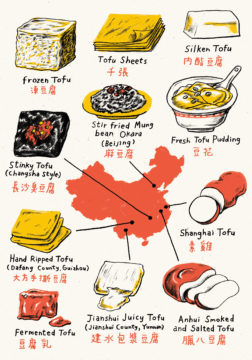 Guiyang didn’t have many restaurants, per se. The metropolis was more of a city-wide night market. Even in the pre-COVID days, streets like Qingyun Road were only half-filled with cars, to leave room for tents and tables that stretched to the horizon, and for smoke and steam that rose into the clouds. Eateries didn’t burden you with 14-page menus, common at Shanghainese or Northeastern restaurants. No — a làoguō 烙锅 shop sold laoguo (think Korean BBQ with more vegetables, cooked over a clay pot dome). A sīwáwa 丝娃娃 shop sold siwawa (shreds of 20-plus varieties of fresh and pickled vegetables that you roll into a thin, rice cake-like taco). And tofu stands sold tofu. But probably not the tofu you’re thinking of.
 There’s now an
 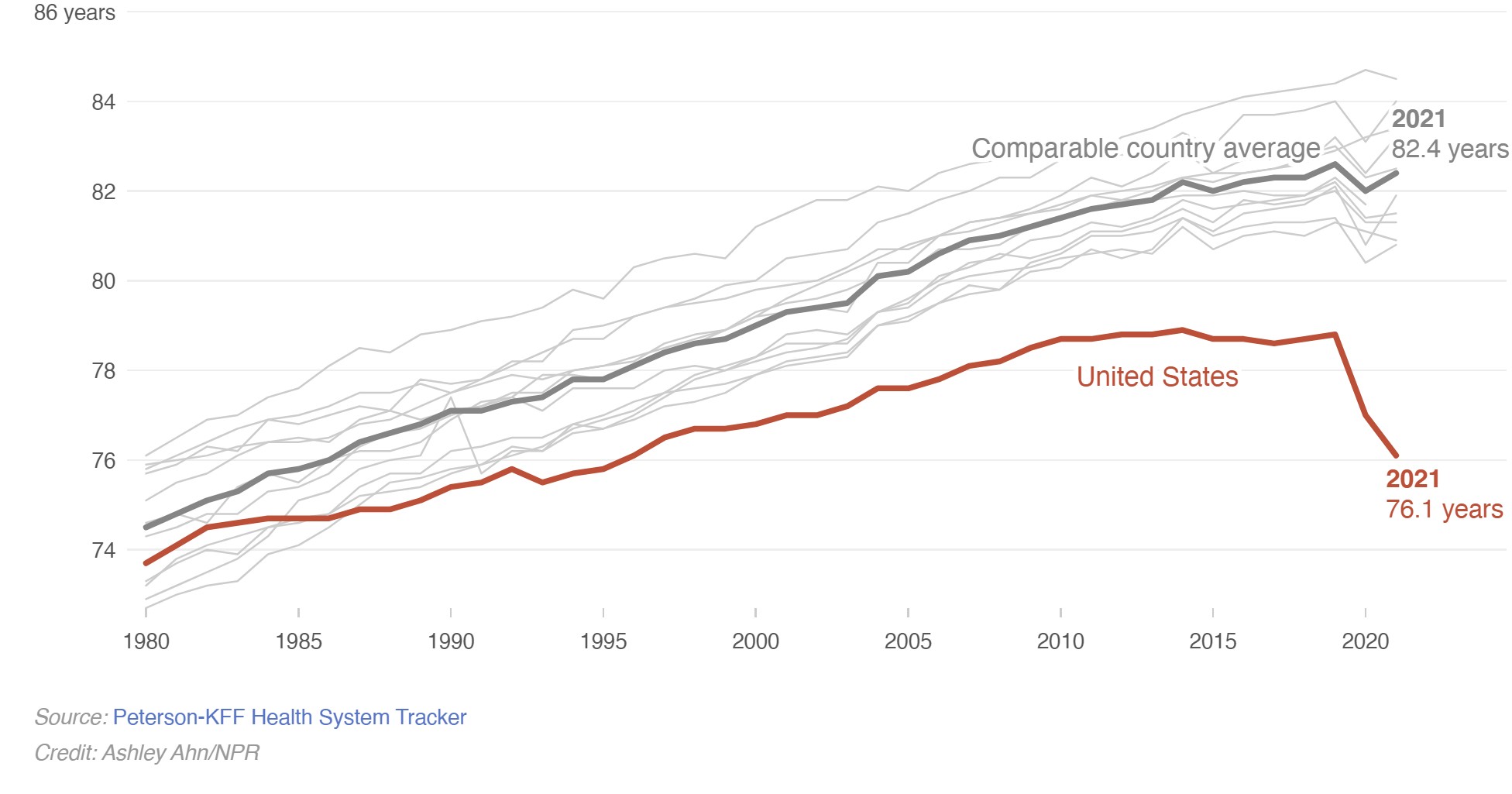 Just before Christmas, federal health officials confirmed
 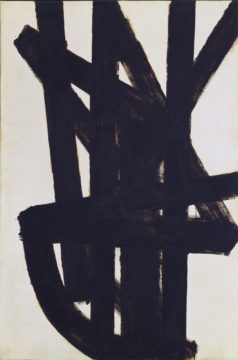 I’ve found myself thinking a lot about that epigraph in the wake of two back-to-back events this past October. One was Soulages’s death at age 102, the other a visit to the monographic room recently devoted to Pierrette Bloch (1928–2017) at the Musée d’Art Moderne de Paris (MAM). Comprising eight objects from between 1974 and 1999, all belonging to the museum’s permanent collection, the focused presentation offered a welcome opportunity to think broadly about a singularly poetic body of work exhibited regularly in Europe but rarely in the US. Particularly in the wake of Soulages’s death, however, it also invites fresh consideration of the two artists’ longtime dialogue. Introduced in 1949 by Bloch’s art professor Henri Goetz, the pair were friends for nearly seven decades, and their lives and oeuvres were closely intertwined. Early in her career, Bloch used a spare room in Soulages’s house as her studio, and each collected work by the other. Slightly older than the artists of Supports/Surfaces but avowedly attentive to their investigations, Bloch developed a similarly expanded practice of painting, moving beyond the stretched canvas support to engage a broad array of nontraditional and often notably humble materials. Her work brilliantly illuminates both the fecundity and the limits of the “materiological” Soulages brought to the fore through Segalen’s striking image of signs woven in stone.
 If there is one part of one building that is quintessential Christopher Wren it is not the dome of St Paul’s Cathedral, or the ceremonial river frontage of the Royal Naval Hospital at Greenwich, nor even any of the infinitely various steeples of his city churches, but the base of the Monument.
 The
The
 Around noon on March 9, I learned that the Federal Deposit Insurance Corporation (FDIC) had shut down the Silicon Valley Bank (SVB), where my company has some of its accounts. My co-founder and I were in the middle of a call with some of our advisors, all experienced hands in the tech startup world actively advising and investing in tech startups like ours. The Zoom room was empty within seconds. We all immediately knew what that meant: The cash we pay our employees and vendors was now locked up—perhaps indefinitely.