
Benjamin Tausig at Public Books:
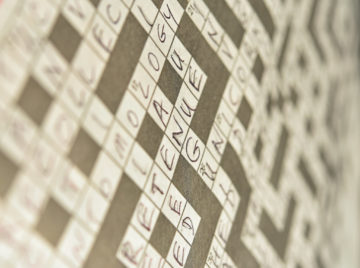 An Upper East Sider with advanced degrees playing Wordle over espresso; a suburban teenager pairing Call of Duty: Warzone with bong rips before work: both play, arguably, for the same reasons. Each delights in low-stakes release. Each enjoys the sense of completing a task (spelling words, killing enemies) that feels vaguely moral, and which the player might take pride in, even if virtually and for an audience composed only of themselves. What is different is only that the New York Times and other enlightened organs have now found ways to market trivial, dependence-inducing digital game products (already wildly lucrative in other settings) to the gentry. And the Times is hardly alone.
Is this boom in bourgeois gaming bad? The “inanity of many leisure activities” famously troubled the philosopher Theodor Adorno.
An ardent anti-capitalist—and a half-Jewish German refugee who feared that frivolous entertainment was a handmaiden to fascism (living in Los Angeles must have been interesting!)—Adorno had no problem with leisure, but he suspected that so-called free time had, in late capitalism, become little more than a recharging period between episodes of labor extraction, i.e., work days.
More here.
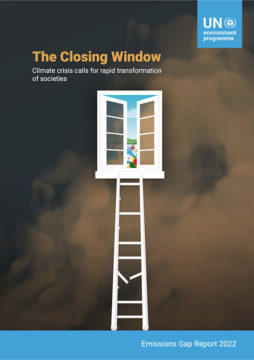 The first signs that the mood was brightening among the corps of reporters called to cover one of the gravest threats humanity has ever faced appeared in the summer of 2021. “Climate change is not a pass/fail course,” Sarah Kaplan wrote in the Washington Post on August 9. “There is no chance that the world will avoid the effects of warming—we’re already experiencing them—but neither is there any point at which we are doomed.” Writing in the Guardian a few days later, Rebecca Solnit highlighted a paragraph from a recent report published by the Intergovernmental Panel on Climate Change (IPCC) that said carbon-dioxide removal technology could theoretically “reverse . . . some aspects of climate change.” Though she admitted this was “a long shot” that would require “heroic effort, unprecedented cooperation, and visionary commitment,” Solnit nevertheless concluded, “It is possible to do. And we know how to do it.”
 This attempt to imbue his texts with greater realism by rejecting the reality of his own literary vocation has been part of Cărtărescu’s methodology since the dark days of Ceauşescu’s pseudo-communist regime. In earlier works, this denial had taken the form of the verbatim publishing of his own journals and the attendant claim that he doesn’t live his life but rather “constructed” it. But Cărtărescu also gives his novel a gritty sense of realism through its setting as well as its bitter views of its protagonist. The Bucharest of Solenoid has the curious air of a building constructed according to Hitler and Albert Speer’s Theorie vom Ruinwert: namely with the aim of having it look better as it ages than when new-made. For decay is everywhere in the Bucharest of the counter-Cărtărescu. His city is an urban environment seemingly purpose-built to express impermanence and decay, one in which moldering old mercantile houses and newly built yet already decaying apartment buildings are rendered phantasmagorical by the nameless narrator’s wanderings through their chipped and spalling chambers. Repeatedly and elegiacally, the counter-Cărtărescu hymns the city of his birth as “the saddest city,” and just as the precision of his writing imbues a dream with great realism, so too does the crumbling nature of his hometown offer us fragments of material beauty—perhaps the very ones necessary to shore us up against our current ruination.
 What is life? Like most great questions, this one is easy to ask but difficult to answer. Scientists have been trying for centuries, and philosophers have done so for millennia. Today our knowledge is so advanced that we can precisely manipulate life’s building blocks—DNA, RNA and proteins—to build biological machines and engineer new genomes. Yet despite all we know, no universal consensus currently exists on life’s fundamental definition.
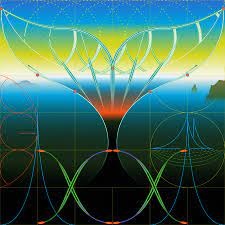 “Call me Ishmael.” This has to be one of the most famous opening sentences in all of literature, and I’m embarrassed to say that — until quite recently — I didn’t get beyond it. “Moby-Dick” was, for me, one of those books that languished in the guilt-inducing category of “things you should have read a long time ago,” and I just never got around to it. Plus, I am a mathematician. And despite my interest in literature, my intellectual priorities did not include 400-page novels about whales — or so I thought. That all changed one day when I overheard a mathematician friend mention that “Moby-Dick” contains a reference to cycloids.
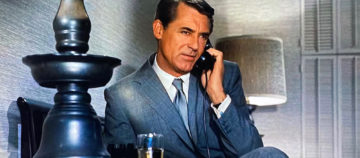 North by Northwest isn’t about what happens to Cary Grant, it’s about what happens to his suit. The suit has the adventures, a gorgeous New York suit threading its way through America. The title sequence in which the stark lines of a Madison Avenue office building are “woven” together could be the construction of Cary in his suit right there—he gets knitted into his suit before his adventure can begin.
 On 28 February 1989, a matter of days after the publication of what he had described as the first volume of a tetralogy, the Swiss writer Hermann Burger kept a long-held promise and killed himself. The world could not say it had not been warned: from his first novel, Schilten (1976), about a school teacher who prepares his pupils for death, to his collection of aphorisms Tractatus logico-suicidalis (1988), a gathering of over a thousand ‘mortologisms’ on the logic of self-slaughter, Burger was nothing if not consistently morbid. To rehearse Spike Milligan’s famous epitaph, he had told us he was ill.
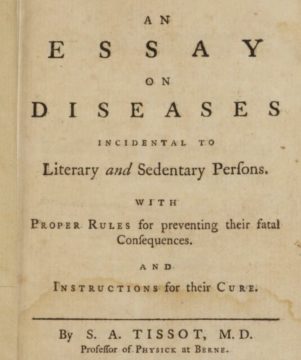 It was dangerous to be a man of letters in the eighteenth century. All that rumination; such single-minded concentration; countless hours hunched over the escritoire. “Some men are by nature insatiable in drinking wine, others are born cormorants of books”, wrote the Swiss physician Samuel-Auguste Tissot in An Essay on Diseases Incidental to Literary and Sedentary Persons (1768). As with the reckless consumer of claret, an overindulgence in books could have devastating consequences for the mind and body.
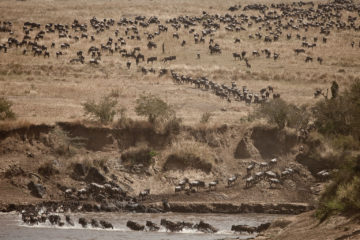 When it comes to climate solutions, your first thought may not be the wildebeest. But in the Serengeti, these buffalo-looking antelopes are the key to carbon capture.
 A major ocean circulation that forms around Antarctica could be headed for collapse, risking significant changes to the world’s weather, sea levels and the health of marine ecosystems, scientists say, offering a stark warning about the growing impacts of climate change.
 The Covid-19 pandemic has wreaked extraordinary destruction and misery, killing nearly 7 million people worldwide thus far and devastating the lives of many more. And yet, viewed through the long lens of human history, writes the public health sociologist Jonathan Kennedy, “there is little about it that is new or remarkable”. Previous pandemics have killed many more, both in absolute numbers and as proportions of populations, and so may future ones. Covid should be a wakeup call that helps us manage deadlier plagues in the future. But will we heed it?
 Air pollution could cause lung cancer not by mutating DNA, but by creating an inflamed environment that encourages proliferation of cells with existing cancer-driving mutations, according to a sweeping study of human health data and experiments in laboratory mice. The results, published in Nature on 5 April
 A major exhibition on the art and influence of Japanese printmaker Katsushika Hokusai
 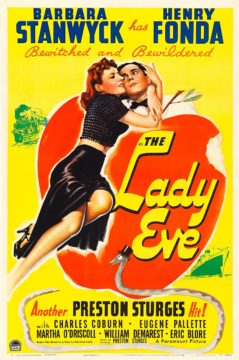 Klawans, like many before him, notes the echoes of Sturges’s life in his work: the juxtaposition of bohemians and stern squares, the fluency in both American vernacular and European argot, the linking of slapstick and hypocrisy. But he also wants to make this reading “wobble a bit,” and he peers between every snappy line for cultural references, Biblical allegories, political sympathies, and philosophies about love and suffering. A Sturges film, Klawans believes, is more than just its witty banter: “One of the chief distractions from thinking your way through the films is their most universally admired trait: the dialogue.”