
Category: Recommended Reading
Beatle in the Box
Sophie Wright in LensCulture:
 The thought of adding crickets to a summer gazpacho or making your tacos out of honey bee moths is likely to make the majority of us squirm. But faced with a future of growing food scarcity, insects may soon become a kitchen staple; a regular ingredient in our everyday cooking. In Beatle in the box, Italian photographers Michela Benaglia and Emanuela Colombo combine various genres such as still life and food photography in a bid to normalize this fact visually. Rich with proteins, vitamins, carbs, omega-3 fatty acids, calcium, iron and other micronutrients, bugs and beasties have a low environmental-impact as food. They are small, meaning they cause less greenhouse gasses which is an important factor in livestock farming, and they can also be bred easily with few resources. In short, they might be the food of our future. The photographers propose a handy comparison: the growth and spread of sushi through the West in the 1990s—first as a trend, then as a food business.
In this interview with Sophie Wright for LensCulture, the pair discuss the benefits of eating bugs, the process of insect studio photography and their favorite recipe.
Sophie Wright: How would you describe the key concerns that drive your photography practice? And did Beatle in the box grow out of any existing interests or does it mark a departure from your previous work?
Michela Benaglia & Emanuela Colombo: As documentary photographers we usually work on various current issues that capture our interest and have not yet been explored. Beatle in the box is not an exception: we usually work as reportage photographers, but for this theme the studio photography seemed to us the most effective.
SW: How did your interest in the topic first arise?
MB & EC: We discovered a new law that, starting in 2018, ‘Novel Food’ will enter into force facilitating the sale and the supply of insects within the European Union, bringing all member states on a par with Holland and Belgium where insect-based products have already been for sale in supermarkets for a long time.
More here. (Note: In honor of the first course made up of ants, worms, crickets, scorpions and tiny lobsters my daughter Sheherzad and I enjoyed in Tulum, Mexico, last week)
This Is Too Important to Leave to Microsoft, Google and Facebook
Ezra Klein in The New York Times:
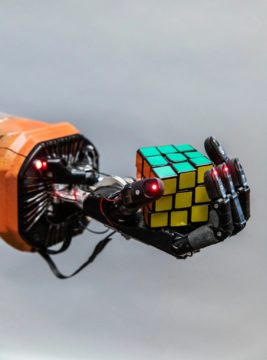 Among the many unique experiences of reporting on A.I. is this: In a young industry flooded with hype and money, person after person tells me that they are desperate to be regulated, even if it slows them down. In fact, especially if it slows them down. What they tell me is obvious to anyone watching. Competition is forcing them to go too fast and cut too many corners. This technology is too important to be left to a race between Microsoft, Google, Meta and a few other firms. But no one company can slow down to a safe pace without risking irrelevancy. That’s where the government comes in — or so they hope.
A place to start is with the frameworks policymakers have already put forward to govern A.I. The two major proposals, at least in the West, are the “Blueprint for an A.I. Bill of Rights,” which the White House put forward in 2022, and the Artificial Intelligence Act, which the European Commission proposed in 2021. Then, last week, China released its latest regulatory approach. Let’s start with the European proposal, as it came first. The Artificial Intelligence Act tries to regulate A.I. systems according to how they’re used. It is particularly concerned with high-risk uses, which include everything from overseeing critical infrastructure to grading papers to calculating credit scores to making hiring decisions. High-risk uses, in other words, are any use in which a person’s life or livelihood might depend on a decision made by a machine-learning algorithm.
More here.
Sunday Poem
Exit Strategy
Tell me there is a way to believe it all,
an exit strategy with groggy murmurs
of nothing but rest and a quiet universe.
All I can think of is my child, asleep
in bed, dealing with whatever birthright
his dreams afford his fears, waiting to wake.
Sometimes I feel like Kepler, poised to inherit
pages of wrinkled data, but grumbling,
What a holy-fucking mess Tycho left behind.
Under the surface of the crowd’s rumble
is a song. We could have danced, you know,
to the how-not-why of these perfect heartbeats.
It’s true. You’ve not been asked to understand.
You’ve been asked to listen, and work it out.
George Murray
from: The Rush to Here.
Nightwood Editions, 2007
Saturday, April 15, 2023
How Pixies & Doolittle Launched The 90s
‘Veniss Underground’ By Jeff VanderMeer
Noah Berlatsky at the LA Times:
 “They could never believe in a giant fish that holds a whole world. They’d laugh. They’d scoff. Even if they saw it, they wouldn’t believe it. That is why the human race is dying — too limited an imagination.”
The above quote from Jeff VanderMeer’s first novel, 2003’s “Veniss Underground,” is a kind of statement of purpose for his career. As one of the leading writers of the New Weird, VanderMeer has taken it as his aesthetic and ethical task to push the bounds of the imagination to bizarre, absurd and disgusting extremes.
A new edition of the book, including related stories, fragments and commentary by VanderMeer, shows how consistent his methods and goals have remained over the last 20 years. It also shows, however, that even as he’s grown into a bigger fish, he’s become — admirably and definitively — weirder.
more here.
Fassbinder: Thousands of Mirrors
Anthony Quinn at The Guardian:
 A dream prospect. Rainer Werner Fassbinder, the short-lived, self-destructive wunderkind who made movies about love as masochism, pain as an inevitable condition and history as a dire weight upon his native Germany, has long been in need of an equally forthright celebration. And who better to provide it than one-time NME star, cultural contrarian and film nut Ian Penman, in his first original book since his great comeback suite of music essays, It Gets Me Home, This Curving Track, in 2019? Well, hold your horses.
Fassbinder – RWF – was an artist whose work once had a “huge and axis-shifting effect” on Penman as a young cinephile. Now, in his early 60s, the fan wonders exactly why he was so enthralled by the film-maker. Straight off, he made the mistake, he says, of trying to rewatch the oeuvre in lockdown: Fassbinder films are about the very last thing you need during an enforced isolation. Berlin Alexanderplatz, his “iconic” TV series, was “especially hard going”. (Funnily enough, I tried the same thing, same time, and had to retire hurt after two episodes.)
more here.
Inside the Black Box
Elham Saeidinezhad in Phenomenal World:
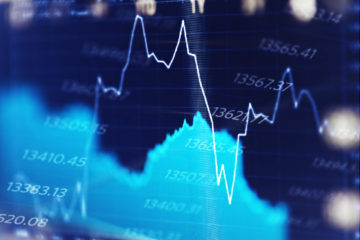
We live in a period of unparalleled financial complexity, and, as the history of recent decades has demonstrated, unparalleled financial risk. The recurring crises which plague the global economy have brought theorists of systemic instability to the fore. Key among them has been Hyman Minsky, whose framework for understanding financial market fragility takes a cyclical form. In his model, an excessive credit expansion (“displacement”) fuels a speculative bubble (“mania” ) and causes “financial distress,” leading to credit contraction and the bursting of the bubble (“panic” ).
The appeal of Minsky’s model lies, in part, in its “structural” perspective. In contrast to the general tendency to disregard financial market practices, Minsky leveraged institutional and legal structures of the financial markets to develop his views. A classic example is his interpretation of the 1980s debt crisis—unlike orthodox theories of profit determination based on productivity and market power, Minsky linked firms’ performance to the developments of the financial market. Specifically, he focused on the 1980s merger and acquisition mania and the structure of junk bonds. Whereas neoclassical theories priced cash flows based on profitability, Minsky analyzed them as claims on firms’ tangible assets, which were often used as collateral for junk bond loans. In the ‘80s, financial distress thus enabled issuers to refrain from making payments, generating a liquidity crisis that neoclassical frameworks could not understand.
More here.
Rise of the Climate Rating Agencies
 Lee Harris in The American Prospect:
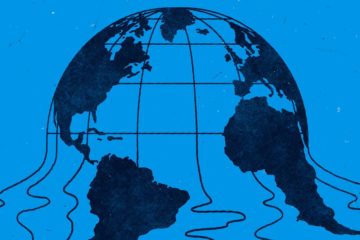
In the spring of 2011, heavy rainfall swelled the Mississippi River to record levels, flooding trailer parks and pushing up gas prices as refineries and fuel terminals along the waterway closed. Surveying the wreckage, Heather McTeer Toney, then mayor of Greenville, Mississippi, found a crucial partner in Mars, Inc., the international conglomerate that makes M&M’s and pet food.
Mars operates an 80-acre rice farm in Greenville—its largest factory in the world. The company sent senior officials and shared its in-house risk assessment with Toney, which helped her plan the city’s police and fire response, design street upgrades, identify points of weakness in the wastewater and levee systems, and work with the Army Corps of Engineers.
“Today, we would call that climate risk,” Toney told the Prospect, but at the time it was “just protecting infrastructure.”
Local officials, civil engineers, and homeowners describe a growing need for information on exposure to the risks of extreme weather. In the past five years, demand has exploded. But not all cities have an anchor business as willing to share as Mars, and many might prefer not to depend on private industry for public planning.
Financial markets and private companies, meanwhile, are in an “arms race” for climate intelligence. Some firms have announced decarbonization plans, while others are pledging to double down on fossil fuels. Regulators, struggling to keep up, have asked for more disclosure.
Private climate risk modelers have been the beneficiaries of this gold rush. Their guidance falls into two buckets: physical risk, or material exposure of assets to hazards, or transition risk, which includes fallout from policy changes, impact on the financial system, and reputation.
More here.
Idlers of the World, Unite!
 Charlie Tyson in Jewish Currents:
KARL MARX’S GIFT FOR SATIRE is often underestimated. In his chapter on the working day in Capital, he recounts the death of a 20-year-old dressmaker named Mary Anne Walkley who was “exploited by a lady with the pleasant name of Elise.” After working for 26 1/2 hours straight in a cramped, poorly ventilated room, Walkley suddenly expired, “without, to the astonishment of Madame Elise, having finished off the bit of finery she was working on.” Zola at his most acidic could hardly do better.
Marx peppers the text of Capital with such blackly comic moments. Quoting a factory manager who justifies the 15-hour workday he requires by noting that his machine is always stopped for dinner, Marx comments in a parenthetical: “What generosity!” Describing the adulteration of bread resulting from the capitalist takeover of the baking industry, he reflects: “Englishmen, with their good command of the Bible, knew well enough that man, unless by elective grace a capitalist . . . is destined to eat his bread in the sweat of his brow.” But these pious Brits did not know that their bread would include “cobwebs, dead cockroaches,” and sand, among “other agreeable mineral ingredients.”
If the socialist writer Paul Lafargue, the husband of Marx’s daughter Laura, could not rival his father-in-law’s brilliance or scholarship, he took up the economist’s satirical streak with great enthusiasm, writing humorous sketches, essays, stories, and speeches.
More here.
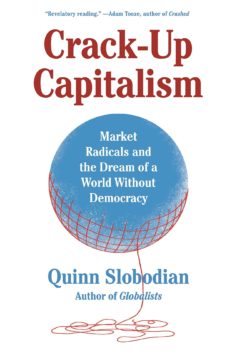
Feudalism by Design: On Quinn Slobodian’s “Crack-Up Capitalism”
 Jodi Dean in LA Review of Books:
AT A RALLY in 2019, California Assembly Speaker Anthony Rendon announced, “When you hear about folks talking about the new economy, the gig economy, the innovation economy, it’s fucking feudalism all over again.” Rendon was there to support legislation classifying most gig workers as employees rather than independent contractors. Assembly Bill 5 was intended to bring gig workers under the protection of existing California labor laws, and the bill passed. But the following year, California voters chose feudalism: they approved Proposition 22, a ballot measure heavily funded by Uber, Lyft, DoorDash, and Instacart, that would exempt app-based drivers from the labor protections that Assembly Bill 5 tried to secure. In March 2023, a state appellate court upheld Prop 22. By making exceptions for the big transportation and delivery apps, by saying that employment laws do not apply to them, California is entrenching the labor relations—the feudalism—that Rendon warned against.
California has long been at the neofeudal vanguard. Sea Ranch, the northern coastal community founded in the 1960s, ushered in the walled settlements and private enclaves that would come to dominate the US housing landscape. California has more private security businesses than any other state (close to double that of Florida, its closest competitor). It also has more charter schools—that is, schools exempted from some state and district laws. California is at the ideological forefront of movements that seek to protect capitalism from democracy, that model communities on corporations, and that idealize the European Middle Ages. While warnings about the unfreedom and deprivation facing a society of servants come at us from all sides, Silicon Valley tech-lords and venture-capitalist libertarians are dreaming up experiments for seceding from, carving up, and perforating nation-states into a neofeudal patchwork of authority and jurisdiction.
More here.
Machine Life
Michael Levin in IAI News:
 One of the most useful metaphors for driving scientific and engineering progress has been that of the “machine.” But in light of our increased understanding of biology, evolution, intelligence, and engineering we must re-examine the life-as-machine metaphor with fair, up-to-date definitions. Such a process is allowing us to see that living things are in fact remarkable, agential, morally-important machines, writes Michael Levin.
The difference between living beings and machines was once apparent. Machines came from a factory and were designed by the real creatives – humans (or in the case of simple machines, such as levers, by crows), who understood exactly how they work. They were boring and predictable – they did the same thing over and over again, they did not adapt to new challenges, and they showed no evidence of having preferences or an inner perspective. Thus, we felt on safe moral ground to do whatever we wanted with them – disassemble them for example. Living beings were the exact opposite in every way. They were created, with great competency but no comprehension, by other living things. On a longer time scale, they appeared as a result of a blind search process (evolution), from an originally abiotic state, becoming infinitely clever in their handling of their environment and of novel challenges and opportunities.
More here.
Million-year-old viruses help fight cancer
James Gallagher in BBC:
 Relics of ancient viruses – that have spent millions of years hiding inside human DNA – help the body fight cancer, say scientists. The study by the Francis Crick Institute showed the dormant remnants of these old viruses are woken up when cancerous cells spiral out of control. This unintentionally helps the immune system target and attack the tumour. The team wants to harness the discovery to design vaccines that can boost cancer treatment, or even prevent it. The researchers had noticed a connection between better survival from lung cancer and a part of the immune system, called B-cells, clustering around tumours.
B-cells are the part of our body that manufactures antibodies and are better known for their role in fighting off infections, such as Covid. Precisely what they were doing in lung cancer was a mystery but a series of intricate experiments using samples from patients and animal tests showed they were still attempting to fight viruses. “It turned out that the antibodies are recognising remnants of what’s termed endogenous retroviruses,” Prof Julian Downward, an associate research director at the Francis Crick Institute, told me. Retroviruses have the nifty trick of slipping a copy of their genetic instructions inside our own.
More here.
Saturday Poem
Be Bored
For the sake of cleansing seconds
stare at something still.
Free from feeling filled
hum the sound of the sun descending
sitting in its final ribbons.
Watch what leaves shake
in the unseen breeze.
Feel your own fingers.
Let time be soil for time.
Let hunger set in
by Sean Kerney
from Press Magazine, Fall 2014
Friday, April 14, 2023
Salman Rushdie Is Recovering, Reflecting, and Writing About the Attack on His Life
Karl Vick in Time:
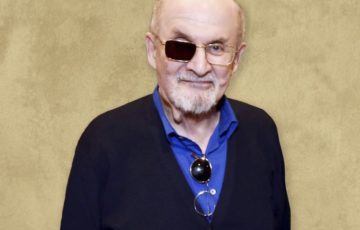 Salman Rushdie is back at his desk, savoring the acclaim for his most recent work and bending to the next—his account of the attack that nearly killed him last summer on a stage in Chautauqua, N.Y.
“If it’s a book, it’s not going to be a particularly long book,” he tells TIME. “Might be a couple hundred pages, so I’m hoping that I could do it in a year or so. But I’m not beating myself up about it. I’m just getting it right.”
Rushdie, who was stabbed more than 10 times, describes his recovery from the Aug. 12, 2022 attack with the kind of measured care that has kept him in the land of the living. “Slowly does it,” he says. A tinted lens hides his right eye, which no longer sees. “The knife went quite deep in. The knife went as far as the optic nerve.” He also lost the use, for a time, of his left hand, but that’s coming back. His longtime therapist has helped with “nightmares, and that sort of thing,” he says.
More here. [Includes a short video.]
Slowing down development of AI systems passing the Turing test
Yoshua Bengio at his own website:
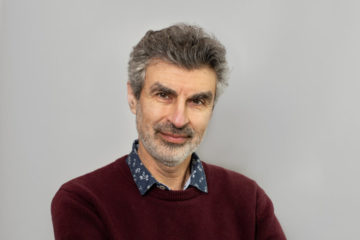 There is no guarantee that someone in the foreseeable future won’t develop dangerous autonomous AI systems with behaviors that deviate from human goals and values. The short and medium term risks –manipulation of public opinion for political purposes, especially through disinformation– are easy to predict, unlike the longer term risks –AI systems that are harmful despite the programmers’ objectives,– and I think it is important to study both.
With the arrival of ChatGPT, we have witnessed a shift in the attitudes of companies, for whom the challenge of commercial competition has increased tenfold. There is a real risk that they will rush into developing these giant AI systems, leaving behind good habits of transparency and open science they have developed over the past decade of AI research.
There is an urgent need to regulate these systems by aiming for more transparency and oversight of AI systems to protect society. I believe, as many do, that the risks and uncertainty have reached such a level that it requires an acceleration also in the development of our governance mechanisms.
More here.
Friday Poem
Hummingbird
One day in a lifetime
I saw one with wings
a pipesmoke blur
shaped like half a kiss
and its raspberry-stone
heart winked fast
in a thumbnail of a breast.
In that blink it
was around a briar
and out of sight, but
I caught a flash
of its brain
where flowers swing
udders of sweet cider;
and we pass as thunderclouds or,
dangers like death, earthquake, and war,
ignored because it’s no use worrying ….
By him I mean. Responsibility
Against the threat of termination
by war or other things
is given us as by a deity.
by Milton Acorn
from: Dig Up My Heart: Selected Poems 1952-83
McClelland and Stewart, Toronto, 1983. p.62.
It’s Not About You: Charting freedom’s descent into forgetfulness
Curtis White in Lapham’s Quarterly:
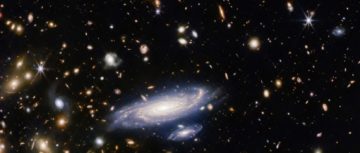 This issue of Lapham’s Quarterly bravely addresses the hotly contested word freedom. It is hotly contested in part because what the word means has never been clear, a fact that has not seemed to lessen its importance for us. It is a word in which we have invested enormous amounts of energy without producing much in the way of illumination. And yet freedom cannot be dismissed simply on semantic grounds—“just another word,” as Kris Kristofferson sang—because what is at its heart may very well answer the question “What does it mean to be human?”
In our own moment, progressive activists resist what they see as the opposite of freedom: slavery. Modern slavery takes the forms of work and debt, of legislation limiting a woman’s authority over her own body, of racist segregation, and of the prison-industrial complex, to name but a few examples. Our world is not so different from the one described by
Belinda, a woman enslaved for fifty years in eighteenth-century Massachusetts, where “lawless domination sits enthroned, pouring bloody outrage and cruelty on all who dare to be free.”
The voice of economic privilege uses the idea of freedom in order to claim the right to deploy property to its own rich advantage. Making matters worse, others on the political right have weaponized freedom to advance a long list of grievances about what they believe has been wrongly taken from them. Some of these grievances are legitimate; neoliberalism has indeed denied many people the work that once gave them economic independence and a sense of self-worth. But that legitimate complaint has gotten tangled with terrible things, especially the perception of those on the right talking freedom that they have been “replaced” by racial minorities, liberated women, and the LGBTQ community. So they set out to “own the libs” and reclaim their lost freedoms through the public display of their resentments (aka rioting), with guns on their hips if they so choose (and they usually do). This is freedom as understood in George Orwell’s Nineteen Eighty-Four: “War is peace. Slavery is freedom. Ignorance is strength.”
More here.
Kishore Kumar sings “Ek Larki Bheegi Bhaagi Si”
How Cells in the Skin Team Up To Fight Pathogens
Rachael Gorman in The Scientist:
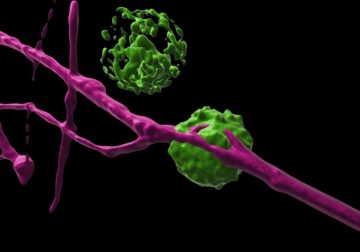 Skin shields our bodies from the world’s dangers, but sometimes, with a nick or a bump, that barrier is breached. That’s when pain- and itch-sensing nociceptor neurons jump to action, transmitting threat signals to the central nervous system, while dendritic cells eliminate pathogens by secreting cytokines and coordinating local inflammation, while also playing a role in adaptive immunity.
But this work is not done in isolation: Dendritic cells (DCs) and nociceptors are entangled in a powerful partnership, and a new study published March 31 in Science describes three unique ways these intertwined cells communicate to fine-tune the fight against invaders.
Back in the early 2010s, clinicians observed that people with the autoimmune inflammatory skin condition psoriasis who also happen to have nerve damage don’t suffer from the condition’s hallmark skin lesions in the injured area. When the nerve heals, however, the lesions return. Lorena Riol-Blanco and Ulrich von Andrian, immunology researchers at Harvard University, were intrigued, and in 2014, their team discovered for the first time that DCs interact with nociceptors. They found that this relationship is necessary for an inflammatory response: DCs sit on nociceptor axons and require a signal from them to make the cytokine interleukin (IL)-23, which is the master driver of psoriasis skin inflammation. The precise nature of this relationship, however, eluded them. “We didn’t know what’s the language that’s being spoken there,” von Andrian tells The Scientist. Answering “the question ’How exactly does it actually work?’ was a five-year process.”
More here.