
Francisco Toro in Persuasion:
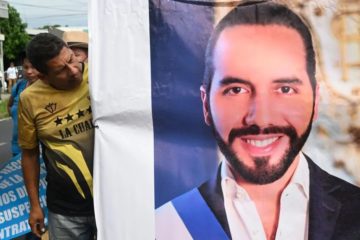 The most dangerous political experiment in Latin America is underway in El Salvador. A strange breed of populism is tipping the scale in the region’s age-old tug of war between authoritarianism and democracy. Rather than dividing the country, like populism usually does, it’s uniting it solidly behind a new consensus. More than anything, though, it’s succeeding, and doing so in the kind of impossible-to-miss way that turns heads up and down the hemisphere.
At the top of it all is the self-described “coolest dictator in the world,” the startlingly energetic Nayib Bukele. Having rounded up tens of thousands of suspected gang members in a series of police and military actions that don’t even pay lip service to due process of law, Bukele has become something of a national hero, with approval ratings now north of 90%. Under his watch, one of the most violent countries on earth has become considerably safer: a startling transformation that nearly all Salvadoreans seem profoundly grateful for.
More here.
 For a long time, people believed that colours were objective, physical properties of objects or of the light that bounced off them. Even today, science teachers regale their students with stories about Isaac Newton and his prism experiment, telling them how different wavelengths of light produce the rainbow of hues around us.
 For the 20th time since 1933, Congress is writing a multiyear farm bill that will shape what kind of food U.S. farmers grow, how they raise it and how it gets to consumers. These measures are large, complex and expensive: The next farm bill is projected to cost taxpayers
  The aging process is kind to no one, and that includes Johnny Depp.
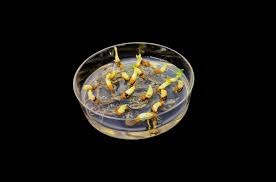 In early summer, unusual pollinators swoop over rice fields in Texas and Arkansas. Small, nimble helicopters fly low and steady so their rotors blow pollen from one row of plants to another. The flights help RiceTec, a plant breeding company, produce seed for high-yielding, robust varieties of rice grown across the southern United States. It’s an expensive and complicated way to create seed.
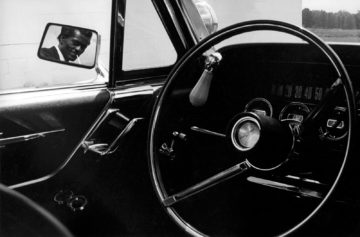 Berry never claimed that he invented rock and roll, and was always quite happy to point out where he’d gotten his inspiration: from the great hinterland and invisible college of rhythm and blues. He happily fessed up to his influences, such as Louis Jordan and T-Bone Walker. There was a lot of guilt-free recycling involved—transplanting a riff or a lick, a line or a trope, into fresh new settings. (Jordan’s guitarist Carl Hogan was the source for the famous opening guitar riff of “Johnny B. Goode.”) Even the execrable (but insanely popular) late hit “My Ding-A-Ling” was a virtual xerox of a roiling 1952 R & B side by the marvelous Dave Bartholomew. He tinkered, customized, and retooled songs as if giving an old car a new coat of paint, adding horsepower, then taking them back out on the open road again.
 W
W OpenAI chief executive Sam Altman delivered a sobering account of ways artificial intelligence could “cause significant harm to the world” during his first congressional testimony, expressing a willingness to work with nervous lawmakers to address the risks presented by his company’s ChatGPT and other AI tools.
 Imagine using your cellphone to control the activity of your own cells to treat injuries and disease. It sounds like something from the imagination of an overly optimistic science fiction writer. But this may one day be a possibility through the emerging field of quantum biology.
 In January 1941, the world found itself in the darkest depths of World War II. Nazi Germany had conquered Poland and France. It remained allied with Japan and the Soviet Union, and now seemed on the verge of subduing the United Kingdom. The stakes were existential and the outlook increasingly bleak.
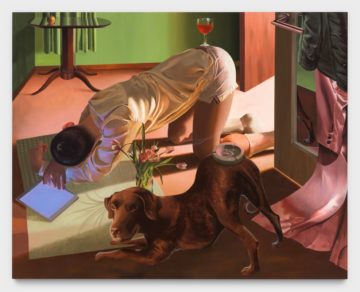 Ten paintings. Each engaging; each mysterious; each stranger than the next. Vivid color, erotic tension, mistrust, and atonement for what society has deemed are perverse games of sexual desecration. The figures in Kyle Dunn’s Night Pictures, now on display at P·P·O·W gallery, exist in suspended states of crisis, in the throes of jealousy and loneliness, withdrawn into shadow — burned out, exhausted, beautiful.
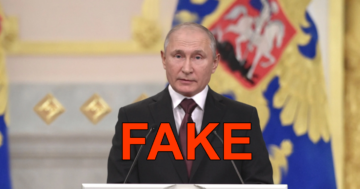 Any machine learning researcher will admit that there is a critical disconnect between what’s possible in the lab and what’s happening in the field. Take deepfakes. When the technology was first developed, public discourse was saturated with proclamations that it would slacken society’s grip on reality. A 2019 New York Times
  When Shadi Pourkashef takes the stage at elementary school auditoriums, students know she’s there to talk about being kind, stopping bullying, and understanding others. So it might be surprising to them that she begins by asking what they think she does outside of her presentations.
 In 2009, I took a job as a copywriter with an ad agency in Minneapolis. After 10 years of academia and publishing in obscure literary magazines, I began writing copy for health care and medical device accounts. The work was boring but the salary was grand, and so I threw myself into learning about stents and dilatation balloons.