
Jeannette Cooperman at The Common Reader:
 Weeks ago, the sweet family across the street put up their festive holiday lights. The house on the corner followed, then three more houses, all before I had even managed to order a Thanksgiving turkey.
I curse the lights.
Typically American, I mutter, meaning of course U.S. American, where we are so arrogant we subsume all the countries to the north and south, and so profit-driven that revenue (read: greed) makes all our communal decisions.
But then I read that in Australia, the luxury department store David Jones Limited starts showcasing Christmas merchandise in September. Not to be outdone, Irish retailer Brown Thomas opens its Christmas store in mid-August. The U.K. has moved promotions to October so people can shop before Black Friday. Canadian retailers tried, too, but were met with hot protest at any suggestion of Christmas preceding Remembrance Day.
The alliterative, Dickensian term “Christmas creep” was coined in the mid-1980s, well before Black Friday showed up to rationalize it.
More here.
Enjoying the content on 3QD? Help keep us going by donating now.
 M
M With just a single injection, a new treatment transforms immune cells in cancer patients into efficient tumor-killing machines. Now equipped with homing beacons, the cells rapidly track down and destroy their cancerous foes.
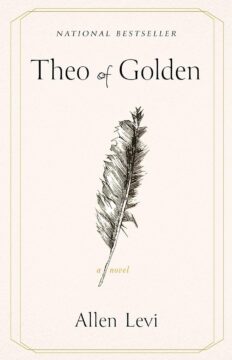 When Allen Levi, a musician who had written scores of songs over his career, began writing his first novel, his plan was to finish it and stick it in a drawer. “I just wanted to see if I had the muscle to write a piece of long fiction,” he said. The resulting book, “Theo of Golden,” is about an older man who moves to a city in Georgia and begins buying 92 pencil portraits off a coffee shop wall to return them to their subjects and “rightful owners.” After a group of Levi’s friends read the novel and encouraged him not to let the manuscript molder, he self-published it through Amazon in the fall of 2023.
 O
O
 Waymo’s co-CEO Tekedra Mawakana made a striking prediction this week:
 This has been a year in which terrible ideas buried and forgotten rose from the dead and ate many brains.
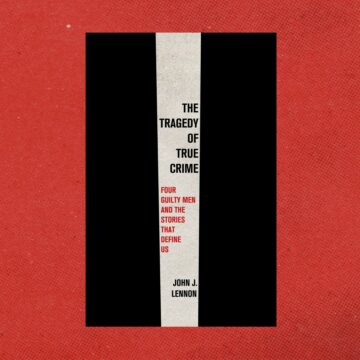 John J. Lennon is, at the moment, probably this country’s foremost imprisoned journalist. This title won’t be taken from him any time soon, not because there aren’t many talented and inquisitive people in prison but because the barriers to entry are so nearly impassible. A journalist’s life is a daunting prospect these days even to a person with freedom of movement, a real computer, the ability to make phone calls in private. Lennon’s new book, The Tragedy of True Crime, concludes with an author’s note that describes the makeshifts that he and his supporters have had to adopt so he can fulfill the most basic parts of an author’s job:
 In January this year, an announcement from China rocked the world of artificial intelligence. The firm DeepSeek released its
 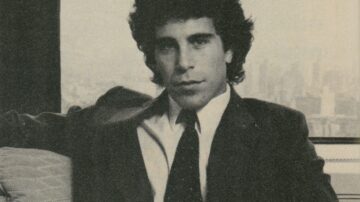 One evening in early 1976, a bushy-haired Jeffrey Epstein showed up for an event at an art gallery in Midtown Manhattan. Epstein was a math and physics teacher at the city’s prestigious Dalton School, and the father of one of his students had invited him. Epstein initially demurred, saying he didn’t go out much, but eventually relented. It would turn out to be one of the best decisions he ever made.
 In the winter
  On a cool evening in October, six weeks after Charlie Kirk was assassinated in full view of thousands at Utah Valley University, I joined
 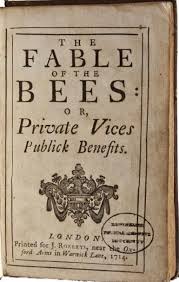 In 1714, and in an enlarged edition in 1723, Mandeville published the prose volume that made him infamous: The Fable of the Bees: Or, Private Vices, Public Benefits. The original poem was reprinted with a series of commentary essays in which Mandeville expanded upon his provocative arguments that human beings are self-interested, governed by their passions rather than their reason, and he offered an explanation of the origin of morality based solely on human sensitivity to praise and fear of shame through a rhapsody of social vignettes. Mandeville confronted his contemporaries with the disturbing fact that passions and habits commonly denounced as vices actually generate the welfare of a society.