
Robert Ito in The New York Times:
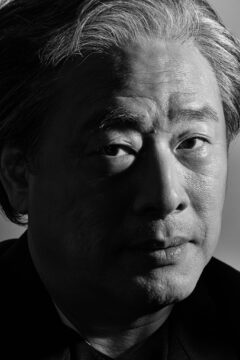 Park Chan-wook is one of Asia’s most famous directors, an auteur beloved as much for his complex, often critical visions of his home country of South Korea as for scenes of stomach-churning horror. But when Park started work on “No Other Choice,” he really wanted to direct it as an American film, so much so that he spent 12 frustrating years trying to get financing from Hollywood studios. The source material, Donald E. Westlake’s 1997 horror thriller novel, “The Ax,” was based in the United States, “so it just felt very natural to me,” he said. “I didn’t put too much other thought in it.”
Beyond the novel’s suburban East Coast setting, the plot and lead character also felt particularly American to the Korean director: a manager of a paper company has his life upended by corporate downsizing, and to secure a new job, he sets about murdering his rivals in increasingly gruesome ways. “This is a story about the capitalist system,” Park said. “I thought it would be best told in America, since America is the heart of capitalism.”
More here.
Enjoying the content on 3QD? Help keep us going by donating now.
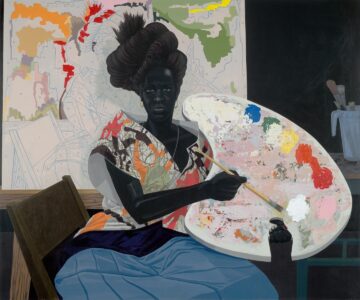 Kerry James Marshall is contemporary art’s great engine tinkerer. He wants to know how things work. In the 1990s, when his contemporaries were making slight, cerebral works using found objects, photography and minimalism to poeticize the commonplace or reveal hidden ideologies, Marshall fell in love with the creakingly old idea of paintings as “machines.”
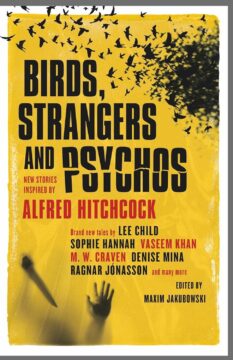 EDITOR MAXIM JAKUBOWSKI has recently made something of a specialty of compiling collections of stories inspired by the work of his favorite writers, including Cornell Woolrich and J. G. Ballard. In his newest anthology, he has gathered 24 original (commissioned) stories inspired in one way or another by the life and work of Alfred Hitchcock. Such a collection is no surprise given the ongoing prominence in American film culture of Hitchcock’s work and of Hitchcock as an individual. Indeed, while it has now been a century since the release of the first feature film he directed and nearly half a century since his last, Hitchcock remains one of the most widely recognizable names (and silhouettes) in cinema history. In addition, the concept of the “Hitchcockian” is so well established that it provides a perfect starting point for such a themed collection.
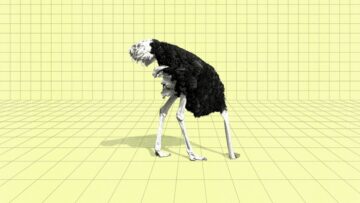 Over the past few months, we’ve seen a surge of skepticism around the phenomenon currently referred to as the “AI boom.” The shift began when OpenAI released GPT-5 this summer
  Tragedies, wars, and scandals are transformed into Instagram moments. The instant horror strikes—a terror attack, a catastrophe—social-media platforms erupt with ritual phrases: recycled mantras of “We will take immediate action,” “We condemn…,” “We stand in solidarity….” Rarely do these words lead to deeds. A Ukrainian flag by a profile picture. A #StandWithPalestine sticker. This simplified #empathy and performative #goodness are measured in likes, hearts, and views.
 Rail: I’d like to spin the thread of porcelain and ceramic as a material culture that runs throughout your works.
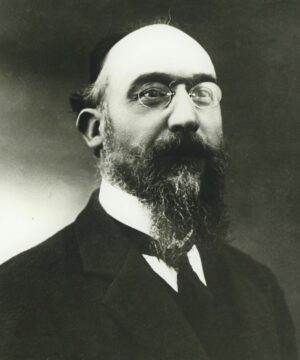 Erik Satie was the truest bad boy of musical modernism in the hypercompetitive market of Paris before World War I, crammed with aspiring bad boys. He took up pieties and profaned them. He took up blasphemy and somehow blasphemed against that. His music is ingeniously confounding. It received no shortage of vicious criticism, and Satie responded in kind. A postcard to the critic and composer Jean Poueigh began, “Monsieur Fuckface…Famous Gourd and Composer for Nitwits.” He lost the ensuing libel suit, adding to his eternal financial woes. Among his many achievements, he’s near the top of the (long) list of self-destructive classical composers.
 The race to
 I have arrived to present to you the Ultimate List, otherwise known as the List of Lists—in which I read all (or at least many) of the Best Of lists on the internet and count which books are recommended most.
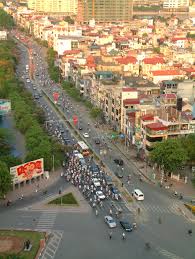 At dawn Hanoi is already awake. Motorbikes swarm beneath balconies before the light has quite broken, a mechanical chorus that carries the city into motion. From the window of my apartment overlooking Tây Hồ, the lake lies bruised with mist until the first glare of sun turns it to metal. On the street below, vendors set down baskets of fruit, incense burns outside a pagoda, and the smell of French bread mingles with diesel.
 With the arrival of
 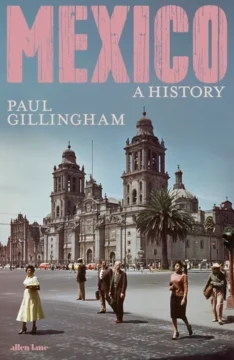 In Mexico City on 27 September 1842, a man was delivering an unusual eulogy. Fixing his eyes on what he called ‘the mutilated remains of an illustrious leader of independence’, the speaker was so moved that he felt he must ‘shed ardent tears over the remains of the hero’ before him. The occasion, however, was not quite as sad as he made out. For the hero, Antonio López de Santa Anna, a general and many times president of Mexico, was listening to the speech. What was being buried, for the second time, was a leg the general had lost in battle years earlier. Santa Anna was attached to his leg, even if it was no longer attached to him. Now president, he had organised for it to be disinterred, brought to Mexico City in a glass case like a holy relic and then reburied with pomp and ceremony beneath a lavish monument. Two years later, after a revolt toppled Santa Anna from power, the leg was exhumed again and dragged through the streets while people shouted, ‘Kill the lame bastard!’ and ‘Death to the cripple!’ Less than two years after that, in 1846, Santa Anna was president once more, charged with defending Mexico against US invasion. He was not up to the task, and soon the Stars and Stripes was unfurled over the magnificent central square in the capital city. The occupying US troops left only after Mexico was forced to sign away half its national territory, including present-day California.