
Smriti Mallapaty in Nature:
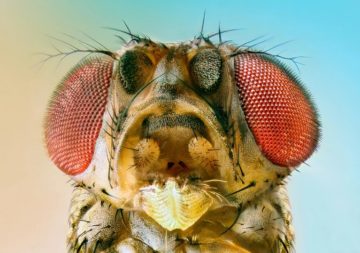 Researchers have discovered an entirely new kind of taste receptor that allows fruit flies (Drosophila melanogaster) to detect alkaline substances — those that have a high pH — and avoid toxic meals and surfaces. Finding a new taste receptor in such a well-studied animal is unexpected, says Emily Liman, a neurobiologist at the University of Southern California in Los Angeles. “I found it quite surprising that there is this whole new type of taste,” says Liman. “It is really beautiful work.” The discovery, published in Nature Metabolism this week1, could “potentially inform future research into the physiological mechanisms underlying alkaline taste in other organisms”, says Lai Ren, a biochemist at the Kunming Institute of Zoology at the Chinese Academy of Sciences.
Most animals function in a narrow pH range, which makes sensing acids and bases important for their survival. Studies in the past few decades have detailed the receptors, cells and neural circuits involved in detecting sour and acidic tastes2, which occur at low pH, but sensing alkaline substances is not well understood, says Lai. Some early work in people3 and cats4 suggests — but does not prove — that the alkaline sensation could be a type of taste, he adds.
More here.
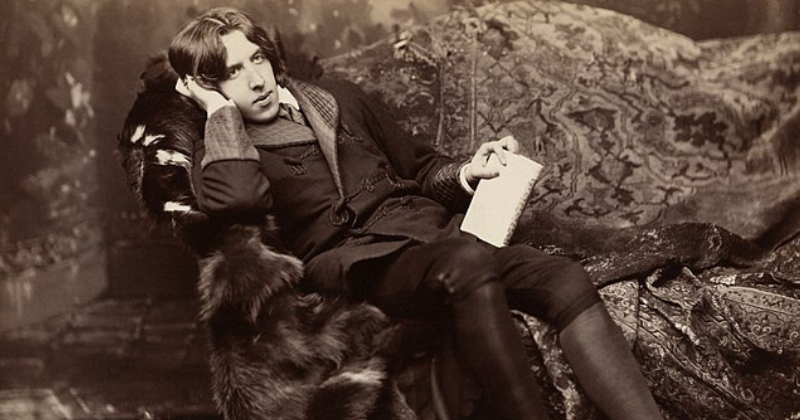 When still a boy, Forrest Reid saw Oscar Wilde in Belfast.
 Welcome to another episode of Sean Carroll’s Mindscape. Today, we’re joined by Raphaël Millière, a philosopher and cognitive scientist at Columbia University. We’ll be exploring the fascinating topic of how artificial intelligence thinks and processes information. As AI becomes increasingly prevalent in our daily lives, it’s important to understand the mechanisms behind its decision-making processes. What are the algorithms and models that underpin AI, and how do they differ from human thought processes? How do machines learn from data, and what are the limitations of this learning? These are just some of the questions we’ll be exploring in this episode. Raphaël will be sharing insights from his work in cognitive science, and discussing the latest developments in this rapidly evolving field. So join us as we dive into the mind of artificial intelligence and explore how it thinks.
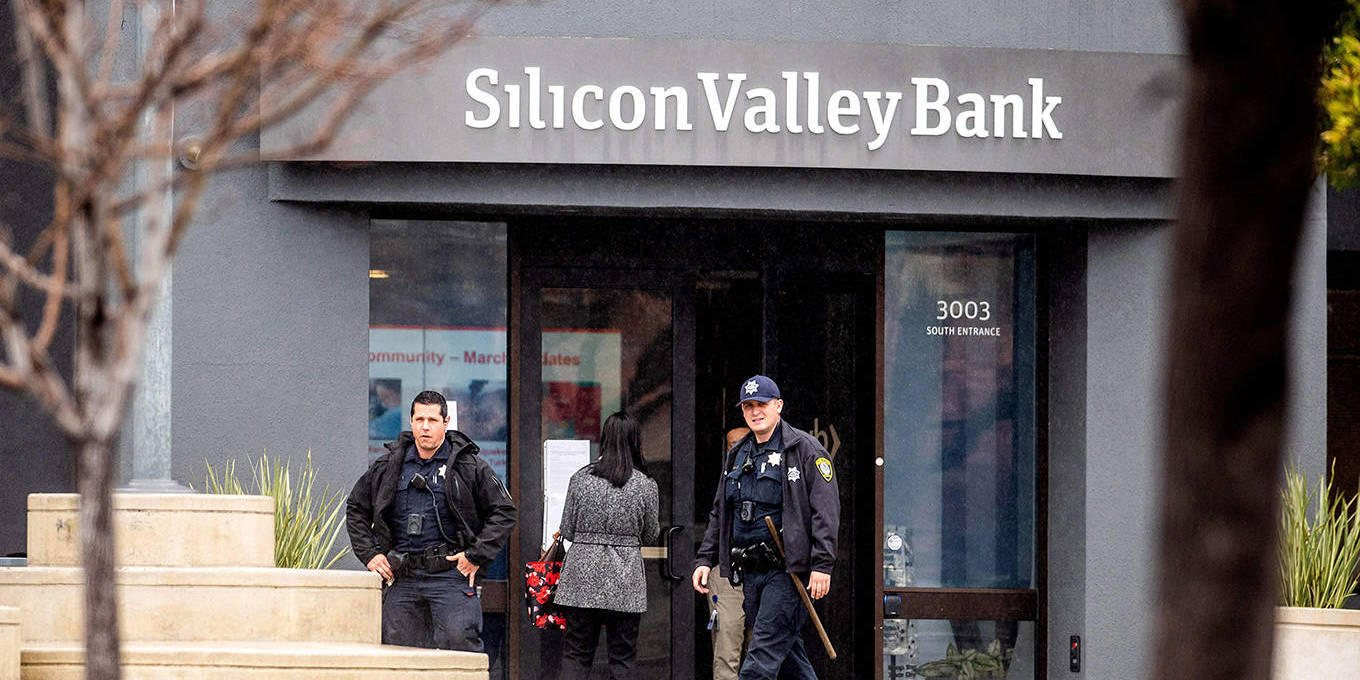 The run on Silicon Valley Bank (SVB) – on which
  Wave charts aren’t maps so much as mnemonic devices. They’re not brought on board in order to navigate; rather, the navigator makes them as a personal reference, studying them while on land and bringing that knowledge onto the sea. There were
  Pity Sir Thomas Roe. He was sent to India in February 1615 by James I as the first English ambassador to the fabulously glamorous Mughal court – a privilege and an extraordinary opportunity, one might think. But diplomats in the 17th century, in Europe at least, were woefully underpaid and were expected to make up any shortfall out of their own pockets in anticipation of a refund on their return. The amount reimbursed was at the whim of the monarch, who might be grateful for their years of travail but might just as easily be disappointed or no longer interested. It is a measure of their unrealistic expectations that the East India Company, formed only fifteen years before Roe set off on the hazardous six-month voyage to India and partial sponsors of his expedition, imagined that the ‘Grand Mogore’ might be persuaded to give Roe an allowance, enabling him to return their investment in him.
 A recent podcast series digs into the beginnings of conservative talk radio and tracks its rise. NPR’s Steve Inskeep talks to Katie Thornton, the host of “The Divided Dial.”
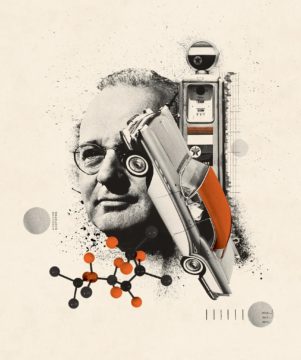 It was said that Thomas Midgley Jr. had the finest lawn in America. Golf-club chairmen from across the Midwest would visit his estate on the outskirts of Columbus, Ohio, purely to admire the grounds; the Scott Seed Company eventually put an image of Midgley’s lawn on its letterhead. Midgley cultivated his acres of grass with the same compulsive innovation that characterized his entire career. He installed a wind gauge on the roof that would sound an alarm in his bedroom, alerting him whenever the lawn risked being desiccated by a breeze. Fifty years before the arrival of smart-home devices, Midgley wired up the rotary telephone in his bedroom so that a few spins of the dial would operate the sprinklers.
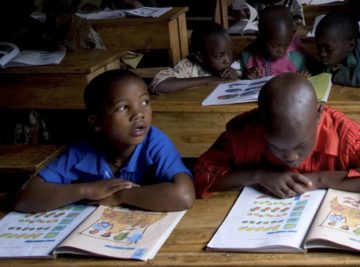 English may have become universal, but not everyone believes it is a gift. In fact, many hold diametrically opposite views. In an article in The Guardian in 2018, the journalist Jacob Mikanowski described English as a ‘behemoth, bully, loudmouth, thief’, highlighting that the dominance of English threatens local cultures and languages. Due to the ways in which English continues to gain ground worldwide, many languages are becoming
  Recent investigations like the one Dyer worked on have revealed that LLMs can produce hundreds of “emergent” abilities — tasks that big models can complete that smaller models can’t, many of which seem to have little to do with analyzing text. They range from multiplication to generating executable computer code to, apparently, decoding movies based on emojis. New analyses suggest that for some tasks and some models, there’s a threshold of complexity beyond which the functionality of the model skyrockets. (They also suggest a dark flip side: As they increase in complexity, some models reveal new biases and inaccuracies in their responses.)
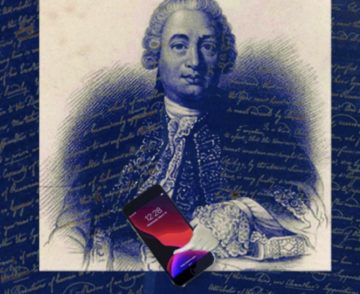 In a recent Substack post, free-range social critic Freddie deBoer
  The first precept of survivors’ justice is the desire for community acknowledgment that a wrong has been done. This makes intuitive sense. If secrecy and denial are the tyrant’s first line of defense, then public truth telling must be the first act of a survivor’s resistance, and recognizing the survivor’s claim to justice must be the moral community’s first act of solidarity.
 A
A This week the conservative writer Bethany Mandel had the kind of moment that can happen to anyone who talks in public for a living: While promoting a new book critiquing progressivism, she was asked to define the term “woke” by an interviewer — a reasonable question, but one that made her brain freeze and her words stumble. The viral