
Pat Cassels in the Los Angeles Review of Books:
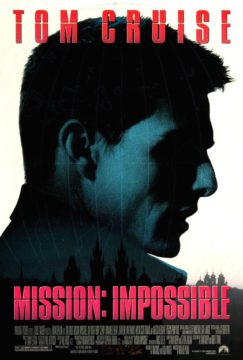 Over time, Ethan Hunt and his geopolitical exploits have remained a rare cultural constant through a time of real-world geopolitical upheaval. Mission: Impossible’s six installments have been with the United States across three recessions, five presidents, at least two wars, and a global pandemic. That’s the kind of longevity that transforms a franchise from a series of ephemeral blockbusters with loosely connected plots into a quasi-reliable witness to history who has stuck around long enough to recall a few important things, even if its memories are a little hazy, and for some reason all involve Ving Rhames wearing a fedora.
Of course, trying to gauge the political philosophy of the Mission: Impossible franchise is a little like trying to gauge the guests’ feelings during an orgy. Sure, they must have something on their minds, but asking would just ruin everyone’s good time. But the franchise’s unprecedented durability, combined with the fact that Mission: Impossible is, however obliquely, about a US intelligence agency (the IMF, literally the “Impossible Mission Force”), has made it an unlikely chronicler of American hegemony in the first quarter of our century—about the only thing the series has ever “quietly” done.
More here.
 First, the physical effort of driving a race car is much greater than that of driving your family car.
 Eyes follow you from behind a slit in a translucent sheet. A tear, loosely sewn, cuts across an image. A nose emerges, and elsewhere faces float in repose, softened and semi-hidden. Overlays, cuts, and stitches in the smoky surface create a game of hide and seek. Perhaps we’ve caught someone mid-dream, but who? The person in the portrait or the artist herself?
 There I was, sitting in a New Jersey Burger King, while the restaurant manager I was on a date shouted the lyrics to Rule, Britannia! at the top of his lungs. I had just started eating my Whopper meal when he started belting it out, his arms firmly placed on my shoulders. “She’s British! She’s British,” he shouted at the various people who were just getting on with their day, but were clearly wondering what on earth was going on. Well, this is going to be fantastic, I thought. I was in my mid-40s at the time, and had no real plan other than which states I would be visiting, placing newspaper adverts in New York, New Jersey, Los Angeles, Miami, and Philadelphia claiming to be a single woman looking for love.
 Jessica Winter in The New Yorker:
 Jack Arden in Sidecar:
 Jon Raymond: Let’s start simple. How far back does your fascination with Nevelson go? Were there any pivotal moments that led you to write this book? Any signs or portents that guided you?
 The controversies that have haunted the publication of Heidegger’s work are significant, insofar as they concern not merely occasional and understandable editorial lapses but instead suggest a premeditated policy of substantive editorial cleansing: a strategy whose goal was to systematically and deliberately excise Heidegger’s pro-Nazi sentiments and convictions. As Heidegger scholar Otto Pöggeler observed appositely, “Heidegger is like a fox who sweeps away his traces with his tail.”
 B
B The Hasidim more than other Jewish sects are committed to a life after death—some believe that dead souls can appear to the living. In the oldest Jewish traditions, though, there is little emphasis on a next life; there are almost no revenants or ghosts in the Hebrew Bible, and no afterlife that impresses us as being more than a name for death itself—Sheol is as featureless and blind and inactive as the grave it stands for. The tradition of the soul’s escape from the earth and the body through the spheres derives from Neoplatonic philosophers of late antiquity; I don’t know how it might have become implicated in the funerary rites of the Lubavitcher Hasidim, and no other rabbi I’ve talked to has ever heard of this explanation for the practice, but I was there on that day, giving aid to a soul on its journey. And yet I also know that on the anniversaries of his death, the man I helped to bury is visited by his relations, who place small rocks on his headstone, and pray that he may rest there in peace.
 In Peter Singer’s paper,
  Given India’s long coastline and its total reliance on predictable patterns of rainfall and steady rates of snow-replenished, glacial meltwater to feed its people, the mounting threats of climate change are real and urgent. It behoves us, as a nation, to take aggressive action to mitigate these threats by reducing our use of coal, oil and gas, by preserving and expanding mature forests. But, given that we demand more electricity and gasoline to power our increasingly urban, consumerist lives while pursuing a model of development based on pulling more people into energy-intensive lifestyles, the central government has declared its intention to more than double energy generation capacity by 2030, mostly by rapidly expanding low-carbon energy sources. As a low-emissions, renewable resource, the Polavaram dam might be regarded as an example of “green” energy, never mind its immense ecological and human costs.
 When Western leaders welcomed China into the World Trade Organization in 2001, most assumed that they were creating the conditions for eventual democratization. A growing Chinese middle class, they assumed, would demand greater accountability from the government, ultimately creating so much pressure that the autocrats would step aside and allow for a democratic transition. This political fantasy underpinned the Sino-American relationship for decades.