
Category: Recommended Reading
Friday Poem
The Night I Walked Into Town
The night I walk into town
to meet my brother
I’m tripped up
by a car whose wheels rip
through a newspaper
along the white line
of the road.
The black bold
type is bleeding
I scream
but the bleeding doesn’t stop.
At the corner a man who hasn’t seen
water, food, gloved fingers
this cold, snow-blowing January
asks how many faces do I see
holding his chin up.
Twenty-five, I say
twenty-five thousand.
Naomi Ayala
from El Coro
University of Massachusetts Press, 1997
Reassessing David Foster Wallace
Patricia Lockwood at the LRB:
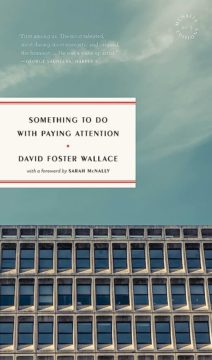 I have always appreciated Wallace most in his monologues and I can, like my father, hear confessions all day; Hideous Men ought to be my book. Instead, I found myself generally standing opposite to Smith’s assessments: I think ‘Forever Overhead’ is juvenelia, I find ‘Church Not Made with Hands’ to be rank fraud, and I would like to put ‘Octet’ in my ass and turn it into a diamond. Attempts to operate in the register of the profound fail; poetry deserts him, having once been insulted; and I did not laugh once, and then for a different reason, until I got to the line, ‘That’s right, the psychopath is also a mulatto.’
The truth about Brief Interviews is this: it only gets good when we’re about to be raped. We are, for the purposes of this encounter, a daffy granola hippie whose hot body is momentarily shed of her poncho, as Hideous Man #20 tells the interviewer the story of the night she unwisely got into a stranger’s car: ‘I did not fall in love with her until she had related the story of the unbelievably horrifying incident in which she was brutally accosted and held captive and very nearly killed ... By this time she was focus itself, she had merged with connection itself.’
more here.
Human Beings Are Soon Going to Be Eclipsed
David Brooks at the New York Times:
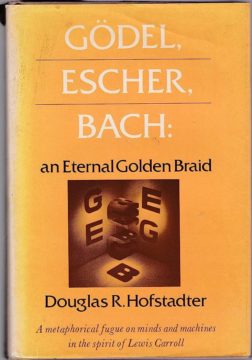 Hofstadter has long argued that intelligence is the ability to look at a complex situation and find its essence. “Putting your finger on the essence of a situation means ignoring vast amounts about the situation and summarizing the essence in a terse way,” he said.
Humans mostly do this through analogy. If you tell me that you didn’t read my column, and I tell you I don’t care because I didn’t want you to read it anyway, you’re going to think, “That guy is just bloated with sour grapes.” You have this category in your head, “sour grapes.” You’re comparing my behavior with all the other behaviors you’ve witnessed. I match the sour grapes category. You’ve derived an essence to explain my emotional state.
Two years ago, Hofstadter says, A.I. could not reliably perform this kind of thinking. But now it is performing this kind of thinking all the time. And if it can perform these tasks in ways that make sense, Hofstadter says, then how can we say it lacks understanding, or that it’s not thinking?
more here.
Uncommon Sights
Melissa Anderson in The Drift Magazine:
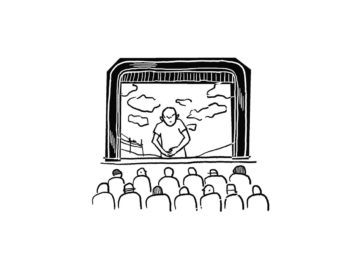 This is not an atypical day for a cinephile in New York, where resolutely non-franchise fare — the experimental, the underground, the unclassifiable, the avant-garde — has been a vital, if not a defining, part of the filmgoing ecosystem since at least the founding of Amos and Marcia Vogel’s Cinema 16 in 1947. That spirit seems especially apparent in the past two years. Multiplexes may be going dark (the Cinépolis in Chelsea and the Regal UA Court Street in downtown Brooklyn are now shuttered; soon the Regal in Union Square will be), but micro-cinemas, notably Light Industry and Spectacle in Williamsburg, are thriving. Plans are currently underway for a brick-and-mortar space for Alfreda’s Cinema, which since 2015 has hosted screenings throughout the city devoted to underrecognized titles that, per its mission statement, “celebrate Black and non-Black people of color.” If my own moviegoing experiences since 2021 (following the year-long, Covid-mandated shuttering of NYC cinemas) are any guide, the audiences for works made far outside the conventional financing and distribution infrastructures are perhaps more heterogeneous — in age, race, gender, sexuality — than ever. I am optimistic about very little in our bleak world. New Yorkers’ seemingly unslakable desire to assemble with others in the dark to experience uncommon sights and sounds together, though, is a rare sign of hope that algorithms haven’t completely dominated viewing habits.
More here.
Behind ‘Oppenheimer,’ a Prizewinning Biography 25 Years in the Making
Andy Kifer in The New York Times:
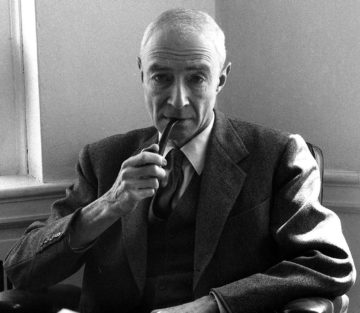 Martin Sherwin was hardly your classic blocked writer. Outgoing, funny, and athletic, he is described by those who knew him as the opposite of neurotic.
But by the late 1990s, he had to admit he was stuck. Sherwin, a history professor and the author of one previous book, had agreed to write a full-scale biography of J. Robert Oppenheimer two decades earlier. Now he wondered if he would ever finish it. He’d done plenty of research — an extraordinary amount, actually, amassing some 50,000 pages of interviews, transcripts, letters, diaries, declassified documents and F.B.I. dossiers, stored in seemingly endless boxes in his basement, attic and office. But he’d barely written a word.
Sherwin had originally tried to turn the project down, his wife remembered, telling his editor, Angus Cameron, that he didn’t think he was seasoned enough to take on such a consequential subject as Oppenheimer, the so-called father of the atomic bomb. But Cameron, who had published Sherwin’s first book at Knopf — and who, like Oppenheimer, had been a victim of McCarthyism — insisted.
More here.
Thursday, July 13, 2023
What Was the Fact?
Jon Askonas in The New Atlantis:
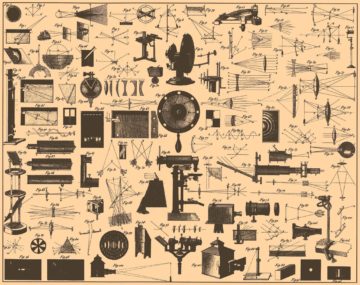 How hot is it outside today? And why did you think of a number as the answer, not something you felt?
A feeling is too subjective, too hard to communicate. But a number is easy to pass on. It seems to stand on its own, apart from any person’s experience. It’s a fact.
Of course, the heat of the day is not the only thing that has slipped from being thought of as an experience to being thought of as a number. When was the last time you reckoned the hour by the height of the sun in the sky? When was the last time you stuck your head out a window to judge the air’s damp? At some point in history, temperature, along with just about everything else, moved from a quality you observe to a quantity you measure. It’s the story of how facts came to be in the modern world.
This may sound odd. Facts are such a familiar part of our mental landscape today that it is difficult to grasp that to the premodern mind they were as alien as a filing cabinet. But the fact is a recent invention.
More here.
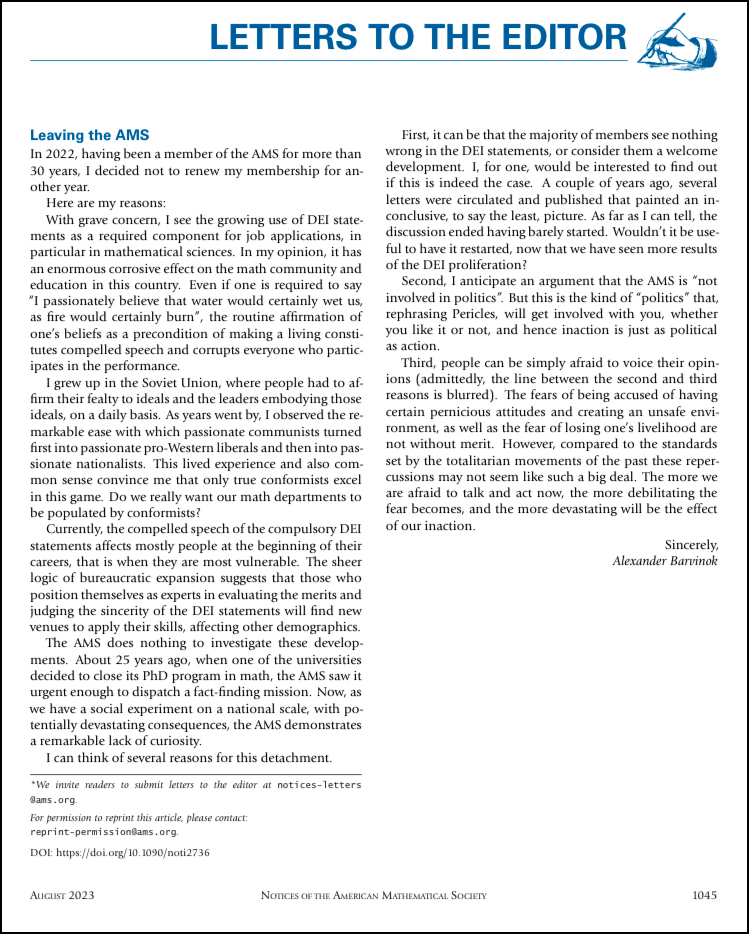
Leaving the American Mathematical Society
From here.
Sean Carroll’s Mindscape Podcast: David Krakauer on Complexity, Agency, and Information
Sean Carroll in Preposterous Universe:
 Complexity scientists have been able to make an impressive amount of progress despite the fact that there is not universal agreement about what “complexity” actually is. We know it when we see it, perhaps, but there are a number of aspects to the phenomenon, and different researchers will naturally focus on their favorites. Today’s guest, David Krakauer, is president of the Santa Fe Institute and a longtime researcher in complexity. He points the finger at the concept of agency. A ball rolling down a hill just mindlessly obeys equations of motion, but a complex system gathers information and uses it to adapt. We talk about what that means and how to think about the current state of complexity science.
More here.
On the battle to control the semiconductor industry
Noah Smith in Noahpinion:
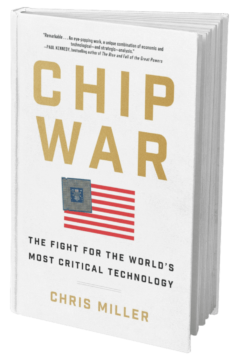 The struggle to control the semiconductor industry is one of the most important economic stories in the world today. Whether China can wrest dominance of semiconductors away from the U.S. and its democratic allies, as it has so many other high-tech industries, will go a long way toward determining the military balance of power this century. And the best book you can read to familiarize yourself with the basics of this titanic struggle is Chip War: The Fight for the World’s Most Critical Technology, by Tufts University historian Chris Miller. I reviewed the book here; its place at the top of many lists of the “best books of 2022” was well-deserved. I’m not sure I’ve ever read a book that does such a good job of crafting key events into a tight, readable narrative while also teaching readers key facts about a complex technology.
But what’s even more amazing about Chip War is that the book came out just a few days before the Biden administration launched a sweeping regime of export controls aimed at stifling China’s high-end chip industry.
More here.
Chris Packham: We’re precipitating a mass extermination event
The Sheer Love and Joy of Alice Neel’s Pet Portraits
Elaine Velie at Hyperallergic:
 For six decades, Alice Neel rendered intimate depictions of strangers, lovers, and friends, capturing fleeting moments, moods, and personalities in her beloved expressionistic paintings. Now through October, visitors to the Orange County Museum of Art (OCMA) can become acquainted with a lesser-known subject of Neel’s paintings: pets. Amidst a total of 40 works, Alice Neel: Feels Like Home showcases five paintings of cats, dogs, and one parrot, all of which Neel portrayed with her characteristic familiarity and attention to individuality.
“It’s something that really struck me when I started doing more research and looking at the work,” OCMA’s Chief Curator Courtenay Finn told Hyperallergic. “They are characters and personalities in their own right along with the people, which I think is kind of incredible.”
more here.
Alice Neel’s Classic Carson Appearance
Overload, Dizziness, Vertigo, Trance
Stephen Piccarella at n+1:
 THE PURPOSE OF VESTIBULAR THERAPY is to induce symptoms of dizziness so that the brain becomes accustomed to accommodating them until they subside or are no longer noticeable. It’s a kind of physical therapy designed to train and improve the functioning of the vestibular system —the inner ear—which determines a body’s balance and stable position in space. Dysfunction of the vestibular system can result in a range of complications, from vertigo to ataxia to double vision. I’m currently receiving treatment for convergence insufficiency, a slight misalignment or tendency to turn outward of one eye (my left), and Persistent Postural Perceptual Dizziness, a chronic “non-spinning” dizziness that causes disorientation and foggy thinking without necessarily impeding physical balance. My symptoms are constant, but interfere mostly with visual processing—usually when I’m reading, particularly on a screen, or when I’m in a busy public place.
Eliciting these diagnoses turned out to be far from easy. That surprised me, but not anyone I know who deals with doctors on a regular basis.
more here.
Why scientists haven’t cracked consciousness
Oshan Jarow in Vox:
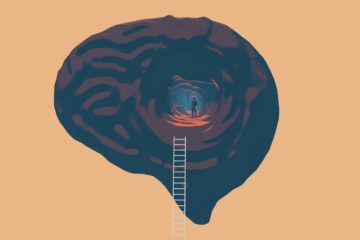 In 1998, at the conference of the Association for the Scientific Study of Consciousness (ASSC), the neuroscientist Christof Koch made a bet with the philosopher David Chalmers: by 2023, science would be able to explain how the brain’s tangle of neurons gives rise to the phenomenon we call consciousness. The winner would get a case of wine. Koch was a professor of cognitive biology who helped pioneer the mechanistic study of the “neural correlates of consciousness,” which maps the relationship between brain activity and subjective experiences. He believed that consciousness was fundamentally measurable and that it was only a matter of time before science identified how it arose in the brain.
Chalmers was both a philosopher and cognitive scientist who was skeptical that science would be able to build explanatory bridges between neural correlates in the brain and the subjective experience of consciousness. Famously, he called consciousness “the hard problem,” which he believed was sufficiently challenging to keep any explanation of consciousness at bay for at least a quarter of a century. At the 26th ASSC conference this past weekend, 25 years after the initial wager, the results were declared: Koch lost. Despite years of scientific effort — a time during which the science of consciousness shifted from the fringe to a mainstream, reputable, even exciting area of study — we still can’t say how or why the experience of consciousness arises.
Galileo split consciousness away from science 400 years ago
While the Western science of consciousness only grew into a reputable field over the past few decades, part of the reason answers remain so elusive may be buried in the deep structure of scientific inquiry itself, reaching back to the 1600s.
More here.
To Help Cool a Hot Planet, the Whitest of White Coats
Cara Buckley in The New York Times:
 Xiulin Ruan, a professor of mechanical engineering at Purdue University, didn’t set out to make it into the Guinness World Records when he began trying to make a new type of paint. He had a loftier goal: to cool down buildings without torching the Earth.
In 2020, Dr. Ruan and his team unveiled their creation: a type of white paint that can act as a reflector, bouncing 95 percent of the sun’s rays away from the Earth’s surface, up through the atmosphere and into deep space. A few months later, they announced an even more potent formulation that increased sunlight reflection to 98 percent. The paint’s properties are almost superheroic. It can make surfaces as much as eight degrees Fahrenheit cooler than ambient air temperatures at midday, and up to 19 degrees cooler at night, reducing temperatures inside buildings and decreasing air-conditioning needs by as much as 40 percent. It is cool to the touch, even under a blazing sun, Dr. Ruan said. Unlike air-conditioners, the paint doesn’t need any energy to work, and it doesn’t warm the outside air.
In 2021, Guinness declared it the whitest paint ever, and it’s since collected several awards. While the paint was originally envisioned for rooftops, manufacturers of clothes, shoes, cars, trucks and even spacecraft have come clamoring. Last year, Dr. Ruan and his team announced that they’d come up with a more lightweight version that could reflect heat from vehicles.
More here.
Wednesday, July 12, 2023
Robert Oppenheimer Speaking At UCLA (1964)
The Good Witches Of Pennsylvania
Rachel Yoder at Harper’s Magazine:
 What the old Amish woman named Rachel Smoker and others like her practice is called, depending on whom you ask, powwow or Braucherei or pulling pain or active prayer or witchcraft or folk-cultural religious ritual, though Rachel Smoker would never call it any of these things. She prefers “natural healing” and “reflexology.”
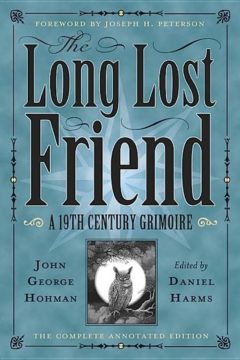
I came to find her because of a book of spells. And I sought out this book because it seemed to me one of the more compelling corners of my Amish and Mennonite heritage, though it had never once been mentioned to me growing up. The book—The Long Lost Friend: A Collection of Mysterious and Invaluable Arts and Remedies, also called the “Famous Witchbook of the Pennsylvania Dutch”—was compiled in the early nineteenth century by John George Hohman, a German-speaking immigrant.
more here.
‘Kairos’ By Jenny Erpenbeck
Kevin Power at Literary Review:
 How is a totalitarian state like a love affair? They both leave archives behind when they go. How is a totalitarian state like a bad love affair? The archive that survives the end of each is a monument to abuse, surveillance and betrayal.
This equivalence is indirectly evoked in the opening pages of Jenny Erpenbeck’s fourth novel, Kairos. The totalitarian state in question is the German Democratic Republic, whose Ministry for State Security (or Stasi) generated, in its forty years of existence, ‘the equivalent of all records in German history since the middle ages’ (this factoid comes courtesy not of Erpenbeck but of Anna Funder’s semi-elegiac 2003 portrait of GDR life, Stasiland).
The love affair at the centre of Kairos is that of Hans and Katharina.
more here.
Milan Kundera: The Nobel Prize for Literature Winner We Never Had
Robin Ashenden in Quillette:
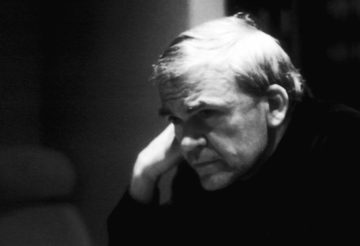 For a long time before his death this week at the age of 94, the novelist Milan Kundera seemed to have fallen out of fashion with critics. Jonathan Coe wrote of his “problematic sexual politics” with their “ripples of disquiet.” Alex Preston complained about the “adolescent and posturing” flavour of the books which had thrilled him in his youth, adding of Kundera’s later novels that reading them was an “increasingly laboured process of digging out the occasional gems from the abstraction and tub-thumping philosophising… a series of retreats into mere cleverness.” Diane Johnson of the New York Times seemed to ring the death knell loudest: “what he has to tell us seems to have less relevance… the world has run beyond some of the concerns that still preoccupy him.”
Doubtless Kundera’s light had dimmed in the last few decades. No substantial novel had come from him since Immortality (1990), just before he switched from writing in Czech to French. Yet these critics’ withdrawal of support seemed modish, ironic, and not without schadenfreude.
More here.