
Alejandra Manjarrez in The Scientist:
 Although they are rare, noninherited mutations can have a large impact. According to a new study published in Cell Genomics, somatic mutations occurring during early development of the human embryo may contribute to some cases of schizophrenia.1 Specifically, the authors found recurrent mutations disrupting two genes, one of which previously linked to the disorder.
The mutations discovered by the research team are “rare variants that affect a few people but may have a very large effect size,” said Thomas Burne, a neuroscientist at the Queensland Brain Institute who did not participate in this study. Burne noted that this is not going to explain how people develop schizophrenia in general, but it might be important for precision medicine and for prompting future discoveries.
Somatic mutations contribute to other psychiatric disorders such as autism and focal epilepsy.2,3 “It seemed like it was worth exploring whether something similar might be going on in schizophrenia,” said Christopher Walsh, a neurogeneticist at the Boston Children’s Hospital and coauthor of the paper. To test this hypothesis, Walsh and his colleagues analyzed the genomes of blood samples from 12,834 patients diagnosed with schizophrenia and compared them with samples from 11,648 control individuals.
More here.
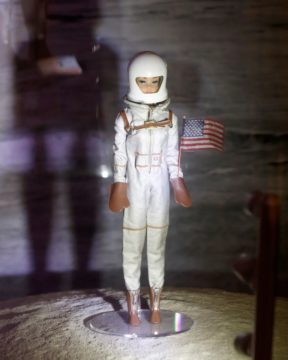 Barbie can do it all. In Greta Gerwig’s 2023 film, she appears as a US president, a Nobel Prize winning physicist, a Supreme Court Justice and even a mermaid. The movie reflects the many roles the doll has had over the decades. One of her most famous is as a space explorer. In the 1960s, Astronaut
  G
G Sehar Iqbal in Phenomenal World:
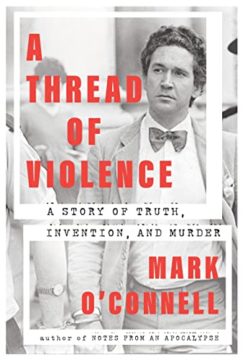
 At first blush, the journalist Michael Finkel’s captivating new book, “
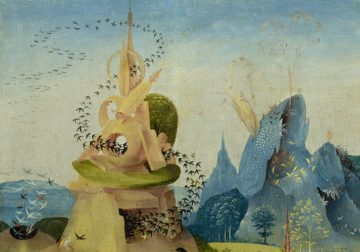 I am an accidental birder. While I never used to pay much attention to the birds outside my window, even being a bit afraid of them when I was a child, I have always loved making lists. Ranking operas and opera houses, categorising favourite books and beautiful libraries – not to mention decades of creating ‘Top Ten’ lists of hikes, drives, national parks, hotels, and bottles of wine. My birding hobby grew out of this predilection. Specifically, out of my penchant for writing down the birds I found in the paintings by the Old Masters.
 One recalls the days when sympathy was not reduced to a series of yellow crying faces – when people had more time to be human and condolences were not something to be fired off before scrolling on to the next Facebook post.
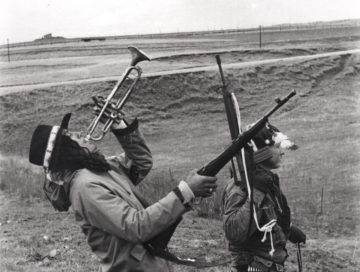 In 1973 rookie reporter Kevin McKiernan smuggled himself onto the Pine Ridge Sioux Reservation in the trunk of a car, hoping to cover the takeover of Wounded Knee, South Dakota. Embedded with activists of the American Indian Movement (AIM)—who clamored for control of their communities and an end to slum conditions, McKiernan filmed their conflicts with Tribal Chair Richard (“Dickie”) Wilson, his armed supporters who called themselves Guardians of Oglala Nation (GOONs), and the government agents backing them. Despite a media blackout, McKiernan sat in on AIM negotiations with the Nixon administration, earning on-camera glares from negotiator Kent Frizzell. As a settlement was hammered out between the groups, McKiernan buried his film in a hole and smuggled himself out of the encampment. Arrests followed, his included. Six weeks later, he returned to Wounded Knee to recover his footage.
 I met Gordon in Phnom Penh a year ago. He had agreed to take me and Ashish Dhakal, a journalist and repatriation activist from Nepal, to Koh Ker and Angkor. First, though, I spent nearly a week at the National Museum of Cambodia. It opened in 1920, designed by George Groslier, to hold the artefacts that archaeologists in French Indochina weren’t shipping back to Paris. He enlarged the architectural forms of Cambodian Buddhist temples to create a building that hadn’t previously been needed in a region where sacred artworks generally remained in place.
 Multiple sclerosis presents far more variously than most other illnesses; for that reason, it has been called “the great imitator.” Some of the conditions it can resemble are minor, and others are major. If you have ever Googled a random tingling or twinge or eyebrow twitch, you have probably spent at least one evening convinced that you have M.S. On the other hand, M.S. patients often think for a while that they don’t have much going on. One person’s first symptom might be numbness. A different patient might experience weakness. Or an unexplained fall, or fatigue, or difficulty urinating or walking. In the United States, the incidence is around three people in a thousand, which is either rare or common, depending on the emotional heft you ascribe to a third of one per cent of the population.
 Filmmakers like Quentin Tarantino, Martin Scorsese, and Christopher Nolan are known for being beloved by film bros around the world. If Hollywood makes “chick flicks” for women, these directors win prizes for providing what everyone believes to be the opposite thing—a type of film that, interestingly, doesn’t have a catchy, degrading name. (Gloria Steinem once
  Neuroscientists, educators and psychologists like Kathy Hirsh-Pasek know that play is as an essential ingredient in the lives of adults as well as children. A weighty and growing body of evidence—spanning evolutionary biology, neuroscience and developmental psychology—has in recent years confirmed the centrality of play to human life. Not only is it a crucial part of childhood development and learning but it is also a means for young and old alike to connect with others and a potent way of supercharging creativity and engagement. Play is so fundamental that neglecting it poses a significant health risk.