Lanterns
The summer we placed my mother in the psychiatric hospital,
the July sunlight spray-painted itself as glare along the building’s walls
as we drove away. I peered out the back window while our father
told us that our mother’s thoughts had strayed deep into the woods
and had lost their way, though the doctors had lanterns to help her
find her way back out. Years later, I imagined my mother was a mystic,
that her fever dreams that summer were whispering deeper truths,
that the mechanical thump of her heart was a secret numerology.
She told me once she was grateful for the lights of the nightly stars,
that they were trying to be gardens. And she told me once that
the years were like fingertips brushing lightly across the surface
of some imagined drum, and that naming something was forever
a way of sending it into exile, banishing it to its own separate sphere,
landlocked and lonely. And once—after our father divorced her—
he described how, in his childhood summers in Michigan’s
Upper Peninsula, turkey vultures with blood-red heads had circled
above the roadkill as he rode his bike to school, as though
a death watch were a form of sleepy hypnosis. Not one of us, I think,
is fully part of this world but lives inside the body’s ossuary.
We are three parts dreaming and two parts disappointment.
I remember listening to an argument once between my father
and my brother about statutes of limitations over his treatment
of our mother. That was maybe a year before his death,
and our father grew quieter and more patient than usual
while a blur of morning light fell through the windows
and transformed one half of his body into a smudge of photons,
the words pummeling him into something almost incorporeal.
My mother had once claimed she’d been wintering all her life,
and I remembered her standing one January in our backyard,
coatless in the snow, in bare feet, huddling her arms
around her body like a junco motionless on a power line,
gazing toward the bright bruise of sun.
by Doug Ramspeck
from Rattle Magazine
Enjoying the content on 3QD? Help keep us going by donating now.

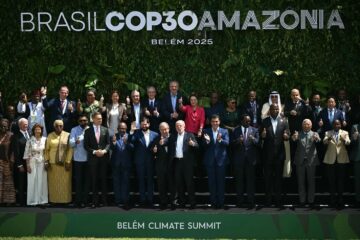 The yearly Conference of Parties to the United Nations Framework Convention on Climate Change—COP, to habitués—has morphed, over the years, into a kind of travelling circus grotesquely mismatched to the problem it’s meant to address.
 Everyone agrees that modern poetry in France—and therefore in Europe—starts with Charles Baudelaire. But no one agrees on why. His successors, Arthur Rimbaud and Stéphane Mallarmé, are each in their own way more patently radical, and the same is true of his American contemporary Walt Whitman. How modern do you have to be to be a modern? Compared to their works, those of Baudelaire, despite their sulfurous aroma, are far more traditional; while he was an early adopter of the prose poem, his most influential poetry used received forms. “Baudelaire accomplished what classical prosody had always required, or rather what it had inaugurated. … His prosody has the same spiritual monotony as Racine’s,” Yves Bonnefoy once remarked. And beyond matters of form, some of Baudelaire’s content was familiar too. His exacerbated ambivalence toward his Haitian-born lover Jeanne Duval, the subject of so many of his poems, is as ancient as Catullus’s odi et amo; praise of drunkenness dates back to the Greeks; and his proud sense of damnation, of his “Heart great with rancor and bitter desires,” would have been second-hand news to Lord Byron. Was the “new shudder” that Victor Hugo perceived in Baudelaire’s writing new enough to make him, rather than the last of the Romantics (the one in whose work Romanticism, you might say, curdled), the first of the moderns?
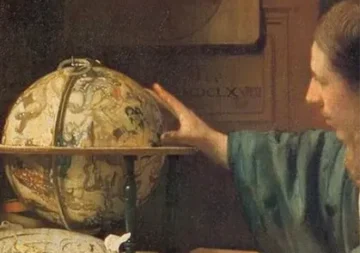 Somehow I keep coming back to Nicholas of Cusa, that late medieval Renaissance man (1401-1464), a devout church leader and mathematical mystic who was at the same time one of the founders of modern experimental science—propagator, for example, of some of the first formal experiments in biology (proving that trees somehow absorb nourishment from the air, and that air, for that matter, has weight) and advocate, among other things, of the notion that the earth, far from being the center of the universe, might itself be in motion around the sun (this a good two generations before Copernicus), and yet, for all that, a cautionary skeptic as to the limits of that kind of quantifiable knowledge and thus, likewise, a critic of the then-reigning Aristotelian/Thomistic worldview. No, he would regularly insist, one could never achieve knowledge of God, or, for that matter, of the wholeness of existence, through the systematic accretion of more and more factual knowledge. Picture, he would suggest, an n-sided equilateral polygon nested inside a circle, and now keep adding to the number of its sides: triangle, square, pentagon, hexagon, and so forth. The more sides you added, the closer it might seem that you were getting to the bounding circle—and yet, he insisted, in another sense, the farther away you would in fact be getting. Because a million-sided regular polygon, say, has, precisely, a million sides and a million angles, whereas a circle has none, or maybe at most one.
 On the sub-tropical Japanese islands of Okinawa, they have a saying: Live far enough away from your family so you’re not running into them every day, but close enough to take them a warm bowl of soup – on foot. Many of us during the past 18 months would have benefited from living within walking distance of our family. We’ve had to make do with Zoom calls instead – and the
 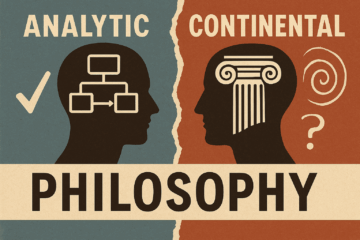 Within the broader discipline of philosophy, there is a split between what is called “analytic philosophy” and what is called “continental philosophy.” The gulf between these two camps is wide, and the dispute between them extremely acrimonious, although it is hard to articulate precisely what the difference between the two is. Any proposed account of this distinction – analytic philosophers are like this, while continentals are like that – will inevitably result in very angry objections. For one thing, any proposed distinction will inevitably mischaracterize several paradigmatic continental or analytic philosophers. But more importantly, the person proposing the distinction is usually a partisan of one camp or the other, and they characterize the distinction in terms that are extremely flattering to their own side. “Analytic philosophers prize rigor and clarity,” says that analytic philosopher, “whereas continentals do not.” “Go fuck yourself,” the continental philosopher replies.
 Rats have gotten a bad reputation over the years for being dirty,
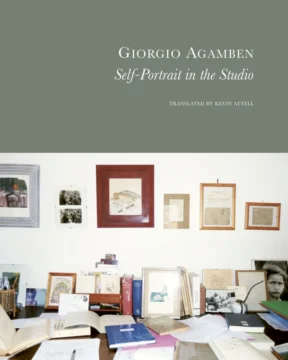 In 2004 the Italian philosopher Giorgio Agamben was scheduled to spend the spring semester as a visiting professor at NYU. On January 5 of that year, however, the Department of Homeland Security launched a new program to collect fingerprints from foreign visitors. Though EU citizens were exempted, three days later Agamben announced that “personally, I have no intention of submitting myself to such procedures,” and he refused to come to the US. In a statement first published in La Repubblica, he warned that collecting fingerprints marked a new “threshold in the control and manipulation of bodies”—what Michel Foucault had named “biopolitics.” Agamben described fingerprint collection as a perfect example of this tyranny over bodies and called it “biopolitical tattooing,” analogous to the tattooing of numbers on prisoners’ arms at Auschwitz.
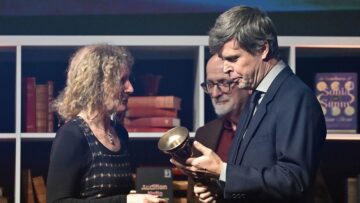 When David Szalay’s novel “
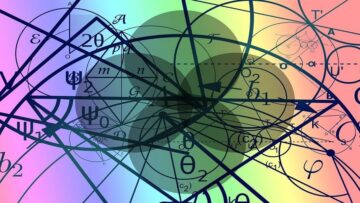 Bees in hives produce hexagonal honeycomb. Why? According to the “honeycomb conjecture” in mathematics, hexagons are the most efficient shape for tiling the plane. If you want to fully cover a surface using tiles of a uniform shape and size while keeping the total length of the perimeter to a minimum, hexagons are the shape to use.
 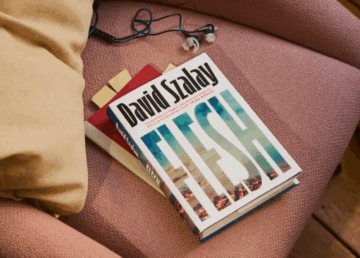 István isn’t one of the most talkative characters in literary fiction. He says “yeah” and “okay” a lot, and is mostly reactive to the world around him. But that quietness covers up a tumultuous life — from Hungary to England, from poverty to being in close contact with the super-rich.
 As a contender in the race to build an