
Enjoying the content on 3QD? Help keep us going by donating now.
Category: Recommended Reading
How to rescue the aid industry: focus on conflict prevention, not just relief
Rabah Arezki in Nature:
 The unravelling of the aid industry must force a reset of the nexus between peace and economic development. The international-development model has changed little in eight decades. In 1949, at his inaugural address as US president, Harry Truman introduced a linear concept of development — in which countries progress from ‘under-developed’ to ‘developed’ — and recognized that poverty was a “threat” to both less- and more-prosperous areas. Since then, the proportion of the world’s population in extreme poverty has plummeted, from 50–60% to about 10%. Yet, conflicts have surged. Clearly the relationship between economic development and conflict is a complicated one, which is being explored in empirical research.
My own studies point to an asymmetry: it takes at least a decade for a society to rebuild after a conflict, whereas a burst of economic development (including that through aid) barely affects conflict intensity. Quantitatively, the half-life — or how long it takes the cumulative effect of a shock to decay by half — of the adverse effects of conflicts on development goals is around eight years. By contrast, shocks to development performance — be they improvements or deteriorations — exhibit only transient effects on conflict, with a half-life of around two years.
This finding challenges the premise that peace is a byproduct of economic development and carries sobering implications for the global aid industry.
More here.
Enjoying the content on 3QD? Help keep us going by donating now.
Thursday Poem
Reinventing North America
Living on the western edge of Turtle Island
in Shasta Nation
Whose people are native, Euro-, African, Asian, Mestizo,
Pacific and nuevo Americano — Turtle Islanders —
Where the dominant language is still Mexicano
In the Homo sapiens year 50,ooo
by Gary Snyder
from This Present Moment
Counterpoint Books, 2015
Enjoying the content on 3QD? Help keep us going by donating now.
James Baldwin v. William F. Buckley (1965)
(Note: Throughout February, at least one post will be devoted to Black History Month: A century of Black History Commemorations)
Whatever white people do not know about Negroes reveals, precisely and inexorably, what they do not know about themselves
James Baldwin in The New Yorker (1962):
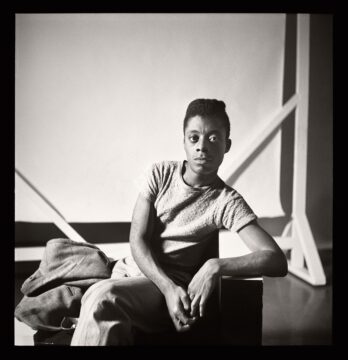 In short, we, the black and the white, deeply need each other here if we are really to become a nation—if we are really, that is, to achieve our identity, our maturity, as men and women. To create one nation has proved to be a hideously difficult task; there is certainly no need now to create two, one black and one white. But white men with far more political power than that possessed by the Nation of Islam movement have been advocating exactly this, in effect, for generations. If this sentiment is honored when it falls from the lips of Senator Byrd, then there is no reason it should not be honored when it falls from the lips of Malcolm X. And any Congressional committee wishing to investigate the latter must also be willing to investigate the former. They are expressing exactly the same sentiments and represent exactly the same danger. There is absolutely no reason to suppose that white people are better equipped to frame the laws by which I am to be governed than I am. It is entirely unacceptable that I should have no voice in the political affairs of my own country, for I am not a ward of America; I am one of the first Americans to arrive on these shores.
More here. (Note: Throughout February, at least one post will be devoted to Black History Month: A century of Black History Commemorations)
Enjoying the content on 3QD? Help keep us going by donating now.
Wednesday, February 11, 2026
Daniel Berrigan On Resistance
Enjoying the content on 3QD? Help keep us going by donating now.
Daniel Berrigan’s Spiritual Radicalism
Charlotte Shane at Bookforum:
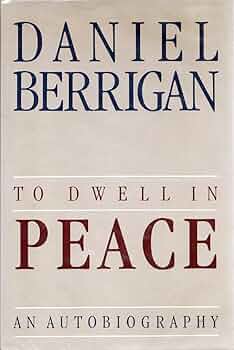 FATHER DANIEL BERRIGAN TURNED FORTY-NINE WHILE HIDING FROM THE FBI IN THE SPRING OF 1970, though pictures from that time suggest the playfulness of a younger man. In shots taken by civil rights movement photographer Bob Fitch, Berrigan mugs at the camera from under a rat’s-nest wig and sombrero, a lampoon of disguise. Beanie-clad, he grins in a parking lot while holding a Coke, takes a comically large step in sparse woods, smiles in a daylit diner booth at someone out of frame. At Cornell University’s Freedom Seder, part of a multiday festival thrown in his honor, he flashes a peace sign from the stage, sunglasses pointlessly and conspicuously on. He’d planned to surrender himself there, then decided not to, and escaped.
He analogized going underground to dying, to “closing the lid of a tomb,” and wrote of the loneliness that came with the necessary separation from family, especially his hospitalized mother. Yet “what fun!” he thought after he evaded the FBI at Cornell in, famously, an oversize puppet costume.
more here.
Enjoying the content on 3QD? Help keep us going by donating now.
Young Tennyson, Science and the Crisis of Belief
Catherine Nicholson at the NY Times:
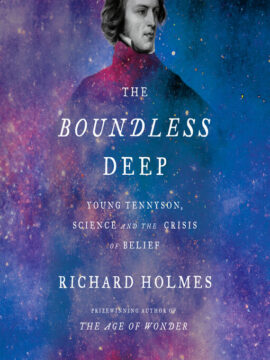 “My dear Fitz, Ain’t I a beast for not answering you before? Not that I am going to write to you now,” the 1847 letter begins. “My Book is out and I hate it and so no doubt will you.” It’s signed, “A. Tennyson.”
“Fitz” was Edward FitzGerald. His correspondent was his hapless friend Alfred. Both men were nearing 40. FitzGerald had family money, but Alfred was a semi-vagrant social misfit, prone to depression, awkward with women, addicted to his malodorous pipe and seemingly bent on squandering every particle of his abundant natural talent. Two early collections of verse had been largely well received by critics, but mostly Alfred wrote poems he didn’t publish, preferring to revise them obsessively and recite them — unrequested, and at great length — at parties.
Now, at long last, one of them had appeared in print. “The Princess: A Medley” is a blank-verse romance in seven books on the theme of higher education for women, its tone veering, in the author’s words, from “mock-heroic gigantesque” to “true-sublime.” Reviewers were baffled. “Eminently he is worthy to be the poet of our time,” wrote one. “Why does he not assume his mission?”
more here.
Enjoying the content on 3QD? Help keep us going by donating now.
The Unexpected Persistence of John Rawls
Joseph Heath at Persuasion:
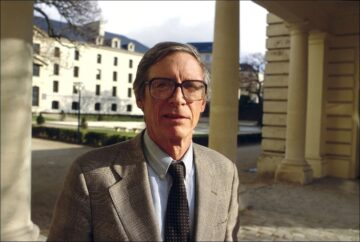 According to popular perception, universities have become cesspools of radical left-wing indoctrination, dominated by cultural Marxism, critical race theory, and post-modernism. As someone who has been working on the inside through the past three decades of intellectual fads and enthusiasms, I am sorry to report that, not only is this false, it is the opposite of true. The hegemonic ideology in the fields of political philosophy, legal theory, and political science, throughout my entire career, has been American liberalism. And not just any old American liberalism, but rather the very specific manifestation of this tradition articulated in the work of John Rawls.
Indeed, the intellectual dominance of Rawls has been so complete, for so long, that we have all become desperately bored of talking about him. To provide a sense of the magnitude of the phenomenon, consider that, of the five most highly-cited works of English-language political philosophy published in the past century, two were written by Rawls, and the other three were written in response to Rawls. Political philosophy has basically been all Rawls all the time for as long as I can remember. Every decade or so a new book comes along, promising to shift the paradigm, to give us all something new to talk about. Each one has fizzled out, sending us all back to Rawls.
What explains this extraordinary persistence?
More here.
Enjoying the content on 3QD? Help keep us going by donating now.
Something Big Is Happening (with AI)
Matt Shumer at his own website:
I’m going to be direct with you because I think you deserve honesty more than comfort.
Dario Amodei, who is probably the most safety-focused CEO in the AI industry, has publicly predicted that AI will eliminate 50% of entry-level white-collar jobs within one to five years. And many people in the industry think he’s being conservative. Given what the latest models can do, the capability for massive disruption could be here by the end of this year. It’ll take some time to ripple through the economy, but the underlying ability is arriving now.
This is different from every previous wave of automation, and I need you to understand why. AI isn’t replacing one specific skill. It’s a general substitute for cognitive work. It gets better at everything simultaneously. When factories automated, a displaced worker could retrain as an office worker. When the internet disrupted retail, workers moved into logistics or services. But AI doesn’t leave a convenient gap to move into. Whatever you retrain for, it’s improving at that too.
Let me give you a few specific examples to make this tangible…
More here.
Enjoying the content on 3QD? Help keep us going by donating now.
Can AI Prove It? Terence Tao on “Big Math” and Our Theoretical Future
Enjoying the content on 3QD? Help keep us going by donating now.
Akeel Bilgrami in wide-ranging interview: Secularism is a stick with which to beat multiculturalists
Muddasir Ramzan at Frontline:
 Akeel Bilgrami, the Sidney Morgenbesser Professor of Philosophy at Columbia University, is a public intellectual and a distinctive voice in contemporary philosophy. His four books (Belief & Meaning; Self-Knowledge and Resentment; Secularism, Identity, and Enchantment; and Capital, Culture, and the Commons) and many published papers testify to his ability to forge within a single, coherent framework, analytic epistemology, moral psychology, and a critical and constructive political philosophy that is deeply informed by history and political economy. In this email interview, he reflects on issues that are deeply relevant not just to India but across the world.
Tell us a bit about yourself as an intellectual. How do you see yourself and how would you like to be defined?
I’m not sure I’d like to be defined. And I am wary of the label “intellectual”. What is true is that I don’t have any other talent. I love literature, especially poetry, I love music and listen to it each day with great pleasure, but I have no talent for literary writing or for producing music. Since whatever limited ability I have for intellectual and philosophical reflection is something I constantly exercise—I can’t seem to help doing so—there may be some grounds to call me an intellectual, but I am reluctant to assume any such label.
For two reasons. The first is that the label is used to talk of the “intellectual class”, which for the most part, in the places I’ve spent any time of my life, has been an elite class.
More here. [Free registration might be required.]
Enjoying the content on 3QD? Help keep us going by donating now.
Portrait of an American: Frederick Douglass on “Pictures and Progress”
(Note: Throughout February, at least one post will be devoted to Black History Month: A century of Black History Commemorations)
Enjoying the content on 3QD? Help keep us going by donating now.
Frederick Douglass Knew That Liberty Means the Freedom of Self-Responsibility
Timothy Sandefur in Goldwater:
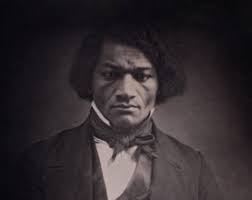 Today is the day that abolitionist and statesman Frederick Douglass chose to celebrate as his birthday. Those born into slavery, as Douglass was, were of course never told their actual birthdays; masters hardly considered such a thing worth remembering. But Douglass later recalled that the last time he had seen his mother was at the age of 7, on an occasion when she had given him a heart-shaped ginger cake to eat, and had called him her “Valentine.” Since she lived on a distant plantation—slave masters typically separated mothers and children as soon as possible, in order to maintain their dominance—it must have been a long walk for her to visit him, he surmised. Thus it must have been a special occasion; perhaps his birthday. Thus he decided to celebrate February 14.
Douglass is celebrated today for his work as a writer and speaker against the evils of slavery. True, his memoirs—published originally as Narrative of the Life of Frederick Douglass, An American Slave, then expanded over the years into The Life and Times of Frederick Douglass—are among the greatest of American life stories. And his speeches and articles in defense of liberty and against slavery and racism are astonishing for their eloquence. But Douglass was more than an agitator against evil. He was also a philosopher, who wrote searching reflections on the nature of personal identity and psychology.
More here. (Note: Throughout February, at least one post will be devoted to Black History Month: A century of Black History Commemorations)
Enjoying the content on 3QD? Help keep us going by donating now.
Why Frederick Douglass Matters
Yohuru Williams in History.com:
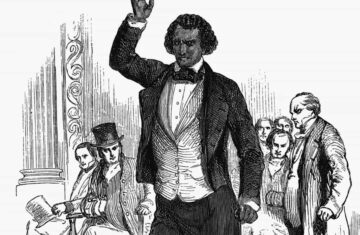 Frederick Douglass sits in the pantheon of Black history figures. Born into slavery, he made a daring escape North, wrote best-selling autobiographies and went on to become one of the nation’s most powerful voices against human bondage. He stands as the most influential civil and human rights advocate of the 19th century. Perhaps his greatest legacy? He never shied away from hard truths.
…Douglass’s voluminous writings and speeches reveal a man who believed fiercely in the ideals on which America was founded, but understood—with the scars to prove it—that democracy would never be a destination of comfort and repose, but a journey of ongoing self-criticism and struggle. He knew it when he lobbied relentlessly to abolish slavery. And he knew it after Emancipation, when he continued to battle for equal rights under the law. Indeed, Douglass knew, as he argued so ardently in his famed 1852 July Fourth speech, that for democracy to thrive, the nation’s conscience must be roused, its propriety startled and its hypocrisy exposed. Not once, but continually and for the good of the nation, he argued, we must bring the “thunder.”
More here. (Note: Throughout February, at least one post will be devoted to Black History Month: A century of Black History Commemorations)
Enjoying the content on 3QD? Help keep us going by donating now.
Wednesday Poem
Everything That Happens Can Be Called Aging
I have more love than ever.
Our kids have kids soon to have kids.
I need them. I need everyone
to come over to the house,
sleep on the floor, on the couches
in the front room. I need noise,
too many people in too small a space,
I need dancing, the spilling of drinks,
the loud pronouncements
over music, the verbal sparring,
the broken dishes, the wealth.
I need it all flying apart.
My friends to slam against me,
to hold me, to say they love me.
I need mornings to ask for favors
and forgiveness. I need to give,
have all my emotions rattled,
my family to be greedy,
to keep coming, to keep asking
and taking. I need no resolution,
just the constant turmoil of living.
Give me the bottom of the river,
all the unadorned, unfinished,
unpraised moments, one good turn
on the luxuriant wheel.
by Carl Adamshick
From Saint Friend
McSweeney’s Poetry Series, 2014
Enjoying the content on 3QD? Help keep us going by donating now.
Tuesday, February 10, 2026
Extreme Inequality Presages The Revolt Against It
Nathan Gardels at Noema:
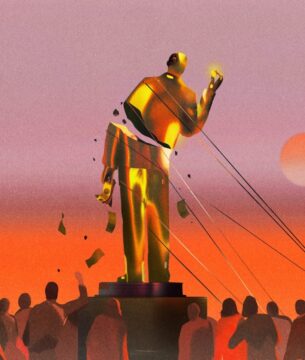 When inequality is too vast to last, it doesn’t. The skyrocketing valuations of Big Tech and the staggering concentration of wealth accruing to its titans only presage a revolt against the depredations of disparity.
The advent of our new Gilded Age of silicon plutocrats will be remembered as the moment when the Daoist principle of “the reverse movement of history” was set in motion. That principle holds that strengthening an ascending tendency also strengthens the opposition to it, laying the seeds of its own unraveling.
Even before the innovations of digital capitalism thoroughly divorce productivity growth and wealth creation from employment and income, the chasm of wealth inequality in America today is already driven primarily by the gap between those who own the technology of the future through financial investments and those who labor for a living. The top 10% own 93% of all equities.
More here.
Enjoying the content on 3QD? Help keep us going by donating now.
A string of surprising advances suggests usable quantum computers could be here in a decade
Davide Castelvecchi in Nature:
 The pace of progress in the field has picked up dramatically, especially in the past two years or so, along several fronts. Teams in academic laboratories, as well as companies ranging from small start-ups to large technology corporations, have drastically reduced the size of errors that notoriously fickle quantum devices tend to produce, by improving both the manufacturing of quantum devices and the techniques used to control them. Meanwhile, theorists better understand how to use quantum devices more efficiently.
“At this point, I am much more certain that quantum computation will be realized, and that the timeline is much shorter than people thought,” says Dorit Aharonov, a computer scientist at Hebrew University in Jerusalem. “We’ve entered a new era.”
More here.
Enjoying the content on 3QD? Help keep us going by donating now.
Pico Iyer: Silence, the Universal Medicine
Enjoying the content on 3QD? Help keep us going by donating now.
Ends and Beginnings: Terry Eagleton in Conversation
Enjoying the content on 3QD? Help keep us going by donating now.