
Jeff Sebo at Aeon Magazine:
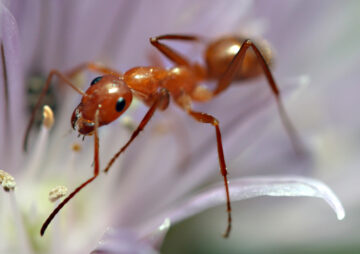 You notice an ant struggling in a puddle of water. Their legs thrash as they fight to stay afloat. You could walk past, or you could take a moment to tip a leaf or a twig into the puddle, giving them a chance to climb out. The choice may feel trivial. And yet this small encounter, which resembles the ‘drowning child’ case from Peter Singer’s essay ‘Famine, Affluence, and Morality’ (1972), raises big questions. Are ants sentient – able to experience pleasure and pain? Do they deserve moral concern? Should you take a moment out of your day to help one out?
Historically, people have had very different views about such questions. Exclusionary views – dominant in much of 20th-century Western science – err on the side of denying animals sentience and moral status. On this view, only mammals, birds and other animals with strong similarities to humans merit moral concern. Attributions of sentience and moral status require strong evidence. Human exceptionalist perspectives reinforced this view as well, holding that other animals were created for human use.
more here.
Enjoying the content on 3QD? Help keep us going by donating now.