
M. Anthony Mills in The New Atlantis:
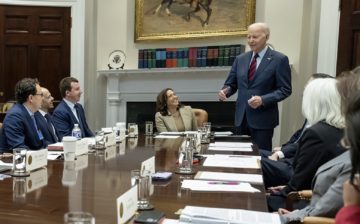 Last month, President Joe Biden issued an executive order on artificial intelligence. Among the longest in recent decades and encompassing directives to dozens of federal agencies and certain companies, the order is a decidedly mixed bag. It shrinks back from the most aggressive proposals for federal intervention but leaves plenty for proponents of limited government to fret about. For instance, the order invokes the Defense Production Act — a law designed to assist private industry in providing necessary resources during a national security crisis — to regulate an emerging technology. This surely strains the law’s intent, not to mention allowing the executive branch to circumvent Congress.
Setting aside the merits or demerits of the order itself, however, it is worth stepping back to consider what this move by the White House tells us about the politics of AI — and in particular what it leaves out.
More here.
 In the church of my childhood, we believed God’s angels battled demons in a war for our souls. This was not a metaphor. We were Pentecostals, though not strictly and not always. We weren’t picky about denomination; what mattered was belief in the redeeming blood of Christ, in the Bible literally interpreted and in God’s endless love. And evil. We believed in evil.
 In many of Albert Bierstadt’s Western paintings, there is a darkness on one side, maybe a mountain or its shadow. Then toward the middle, animals graze or drink from a lake or stream. And then at the far right or in the sky, splashes of light lie like shawls across the shoulders of the mountains. The great darkness says to me what I often say to heartbroken friends — “I don’t know.”
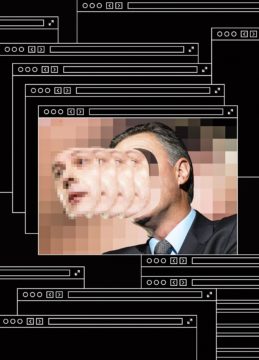 There’s a video of Gal Gadot having sex with her stepbrother on the internet.” With that sentence, written by the journalist Samantha Cole for the tech site Motherboard in December, 2017, a queasy new chapter in our cultural history opened. A programmer calling himself “deepfakes” told Cole that he’d used artificial intelligence to insert Gadot’s face into a pornographic video. And he’d made others: clips altered to feature Aubrey Plaza, Scarlett Johansson, Maisie Williams, and Taylor Swift.
 In mathematics, simple rules can unlock universes of complexity and beauty. Take the famous Fibonacci sequence, which is defined as follows: It begins with 1 and 1, and each subsequent number is the sum of the previous two. The first few numbers are:
 In
In 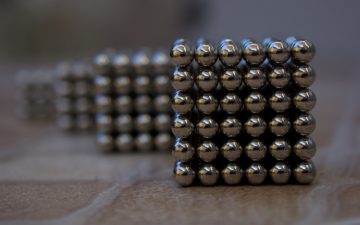 We have been through a radical shift in technology across just three generations of my family, and each step of the way has changed our lives dramatically, just as they did for society as a whole: allowing us to communicate with our loved ones, creating the world of instant news, changing the way we work, and altering the way we entertain and are entertained. But while a video call may seem a far cry from the telegram, all these forms of modern communication are based on the science of signals being sent from one distant point to another, almost instantaneously. And our ability to do that centers around magnets.
 In an essay on the voluble New York intellectual Dwight Macdonald, George Scialabba cites Lionel Trilling’s assessment of Orwell, who, for Trilling, exemplified “the virtue of not being a genius, of fronting the world with nothing more than one’s simple, direct, undeceived intelligence, and a respect for the powers one does have, and the work one undertakes to do.”
 Like printed books, perspective drawing, and double-entry bookkeeping, pockets were heralds of the modern era. In most times and places, people have either carried their money, combs, papers, and other small items in bags separate from their garments or tucked them into belts or sleeves. Integrated pockets are a product of European tailoring, which dates back only to the 14th century. They emerged when men’s breeches ballooned in the mid-1500s.
 T
T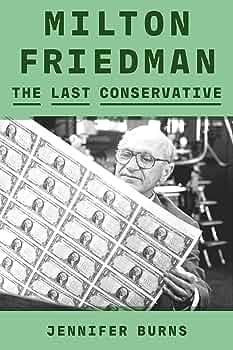 In writing her new biography of the Nobel Prize-winning economist Milton Friedman, known throughout his long life for his cheerful endorsement of deregulation and free markets, Jennifer Burns certainly had her work cut out for her. Reflecting on how controversial her subject was, she says that one of her goals was “to restore the fullness of Friedman’s thought to his public image.” She depicts Friedman, who