
Jeremy Horpedahl in The City Journal:
 The Federal Reserve’s latest Survey of Consumer Finances contains several revelations about the state of the American economy.
First, it found that the average American household’s net worth is over $1 million. Outliers can distort averages, of course, but even median household wealth is at the Fed’s highest level ever recorded. In 2019, it was still stuck below pre-Great Recession levels. By 2022, however, it had reached $192,000, eclipsing the 2007 mark by more than 10 percent, and almost doubling the post-Great Recession 2010 figure. (These and all subsequent data are adjusted for inflation.)
Income data complicate this rosy picture. The Census Bureau found that median household income has declined by almost 5 percent since 2019. That raises a question: How can median household wealth be up by 37 percent since 2019 at the same time median household income declined?
More here.
 I
I Witold Szablowski describes a number of surprising dishes in his entertaining yet unnerving new book, “What’s Cooking in the Kremlin,” which explores the last century of Russian history through its food. But none is as surreal as the recipe for one of Lenin’s favorites. The instructions for making his “scrambled eggs using three eggs” orders you to break the eggs but not to beat them. What Lenin called “scrambled eggs” were actually fried eggs, with their yolks and whites intact — not scrambled at all.
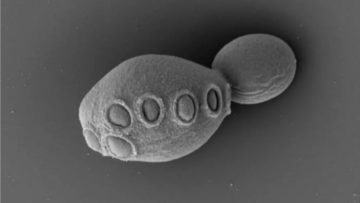 Our ability to manipulate the genes of living organisms has expanded dramatically in recent years. Now, researchers are a step closer to building genomes from scratch after unveiling a strain of yeast with more than 50 percent synthetic DNA.
 I
I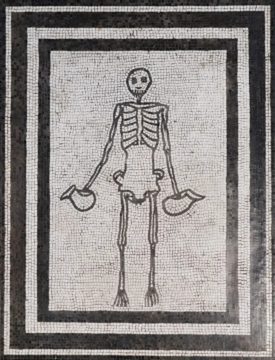 We are coming up the seventh anniversary of my grandfather-in-law’s death. Traditionally, in the Orthodox church, this occasion would be marked by a ritual that involves digging up the bones of the deceased, washing them white and clean, and then reburying them forever. In the period prior to that significant anniversary, there is ongoing exchange, both ritual and spontaneous, with the dead. Whenever food or drink is accidentally spilled from the table, it is said to be shared with the dead. The candles lit for the dead outside of churches are another effective way of initiating exchange. Food, fire, and prayer continue to pass across the boundary that death has made impermeable to ordinary speech and action.
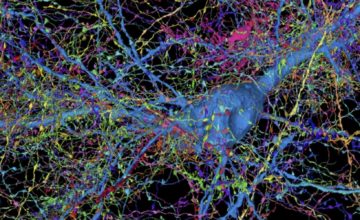 Can a computer be programmed to simulate a brain? It’s a question mathematicians, theoreticians and experimentalists have long been asking — whether spurred by a desire to create artificial intelligence (AI) or by the idea that a complex system such as the brain can be understood only when mathematics or a computer can reproduce its behaviour. To try to answer it, investigators have been developing simplified models of brain neural networks since the 1940s
 Here’s a question for you: since the last general election, has the British government been tough or soft on immigration? Depending on your political inclination, the answer might seem obvious – but the reality is more complicated. On the one hand, the Johnson and Sunak governments have brought an end to EU free movement and promised to deport unwanted
  Tranströmer has been praised for the apparent effortlessness of his craft. The poet and critic
 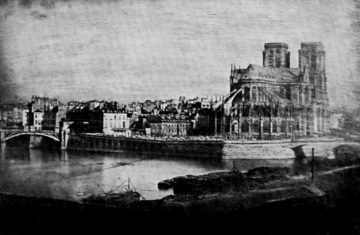 More shadows than men, really; just silhouettes, might as well be smudges on the lens. Hard to notice at first, the two undifferentiated figures in the lower left-hand of the picture, at the corner of the Boulevard du Temple. A bootblack squats down and shines the shoes of a man contrapasso above him; impossible to tell what they’re wearing or what they look like. Obviously no way to ascertain their names or professions. At first they’re hard to recognize as people, these whispers of a figure joined together, eternally preserved by silver-plated copper and mercury vapor; they’re insignificant next to the buildings, elegant Beaux-Arts shops and theaters, wrought iron railings along the streets and chimneys on their mansard roofs. Based on an analysis of the light, Louis Daguerre set up his camera around eight in the morning; leaves are still on trees, so it’s not winter, but otherwise it’s hard to tell what season it is that Paris day in 1838. Whatever their names, it was by accident that they became the first two humans to be photographed.