
Enjoying the content on 3QD? Help keep us going by donating now.
Category: Recommended Reading
Sunday Poem
Human Chain
Seeing the bags of meal passed hand to hand
In close-up by the aid workers, and soldiers
Firing over the mob, I was braced again
With a grip on two sack corners,
Two packed wads of grain I’d worked to lugs
To give me purchase, ready for the heave—
The eye-to-eye, one-two, one-two upswing
on to the trailer, then to stoop and drag and drain
of the next lift. Nothing surpassed
That quick unburdening, backbreaks’s truest payback,
A letting go which will not come again
Or it will, once, And for all.
by Seamus Heaney
from Human Chain
Farrar, Straus and Giroux, NY 2010
Enjoying the content on 3QD? Help keep us going by donating now.
Ebo Taylor (1936 – 2026) Afrobeat Musician
Enjoying the content on 3QD? Help keep us going by donating now.
Friday, February 13, 2026
Al-Ghazali – The Reviver of Religious Sciences
Enjoying the content on 3QD? Help keep us going by donating now.
Al-Ghazālī & the Ideal of Godlikeness
Janne Mattila at Notre Dame Philosophical Reviews:
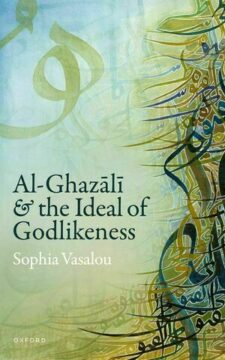 The large question going through the book is whether setting God as our moral exemplar makes much sense. If God is understood to set the ultimate criteria for goodness, the idea seems unproblematic: emulating God simply means becoming as good as possible. But when we look deeper into what these criteria entail—as the book’s chapters do from various perspectives—problems arise.
The big problem is that God is supposed to be completely unlike us—and nowhere more so than in the Islamic emphasis on divine transcendence. From God’s perspective, this risks turning al-Ghazālī’s project into an exercise of megalomania: how can a mere human being claim to be like God? From the human perspective, the problem is whether we would even want to emulate God. The point of moral exemplars is that, although better than us, they are also like us in some relevant sense. Even the annoyingly virtuous Socrates at least shares our human nature. How are we supposed to identify with a transcendent being of utmost perfection?
Many of the specific problems addressed by Vasalou arise from this incommensurability of the human and divine perspectives. Al-Ghazālī makes God the paradigm of moral virtues—whether in the form of Platonic cardinal virtues, or of God’s names.
more here.
Enjoying the content on 3QD? Help keep us going by donating now.
Wagner’s Ring On Period Instruments?
Vivien Schweitzer at The American Scholar:
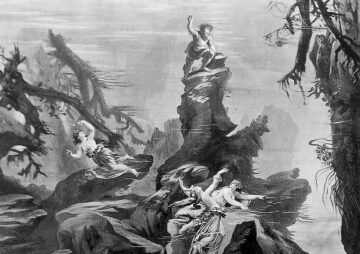 Ask most opera lovers what comes to mind when they think about Richard Wagner’s Ring cycle, and they’ll likely mention the huge voices and lush, booming orchestras of the so-called golden age of the 1930s and ’40s—not the transparent, mellow instrumental sounds and light, flexible voices typical of period-instrument performances. Indeed, when I mentioned to friends that I’d recently attended a memorable historically informed performance of Siegfried, the third opera in the Ring cycle, I was met with bemused looks.
Beginning in the mid-20th century, the historically informed performance (HIP) movement led to dramatic reinterpretations of Renaissance, baroque, classical, and some Romantic era music. Proponents relied on period instruments (or replicas) and scholarly research to convey the stylistic norms and sounds of those earlier eras. In general, this led to swifter tempos and thinner textures; musicians used vibrato and portamento (the smooth gliding transition from one note to another) sparingly, if at all.
more here.
Enjoying the content on 3QD? Help keep us going by donating now.
Fatima Bhutto on her abusive relationship: ‘I thought it could never happen to me’
Nosheen Iqbal in The Guardian:
 Had Fatima Bhutto been left to her own devices, her devastating forthcoming memoir would have been almost entirely about her relationship with her dog, Coco. “I know it sounds nuts,” she laughs. And it’s true that being dog-crazy doesn’t quite track with the public perception of Bhutto as a writer, journalist, activist and member of Pakistan’s most famous political dynasty. But the pandemic had forced something of a creative unravelling and when Bhutto took stock, she found herself only really able to write about Coco. Her agent politely suggested her memoir might need something more. A second draft was written, then abandoned.
“Until I thought, what if I just tell the truth? And then it fell out of me – it didn’t even pour, it fell.” In around three weeks Bhutto had reworked her draft and, in the process, revealed a shocking chapter of her life that she’d kept secret from everyone around her.
The resulting book, The Hour of the Wolf, is a raw, vulnerable account of an abusive, decade-long relationship that Bhutto endured, certain in her belief that this was love.
More here.
Enjoying the content on 3QD? Help keep us going by donating now.
Are we on the verge of creating synthetic life?
Robin McKie in The Guardian:
 Proteins are the building blocks of life. They make up our hair, bone, skin and muscle and are constructed of folded sequences of amino acids. Scientists knew how to create one-dimensional chains but were unable to predict how the resulting strings of amino acids would fold up to form three-dimensional proteins, whose shape determines their function. This greatly restrained their ability to generate new proteins.
Then, in 2020, AlphaFold2, drawing on neural-network technology also used in systems like ChatGPT, cracked the folding code. The structures of complex proteins can now be predicted with confidence, and as a result we are able to create novel ones for use in medicine or elsewhere.
And if we can make new proteins, we can also contemplate bringing into being new forms of life, writes Woolfson. “Biology now stands at the threshold of transitioning from a largely descriptive science into a generative one. In the future, we won’t just catalogue species, we will create them.”
More here.
Enjoying the content on 3QD? Help keep us going by donating now.
OpenClaw: The Viral AI Agent that Broke the Internet – Peter Steinberger & Lex Fridman
Enjoying the content on 3QD? Help keep us going by donating now.
Weimar Germany and the Fatal Flaw
Dan Gardner at PastPresentFuture:
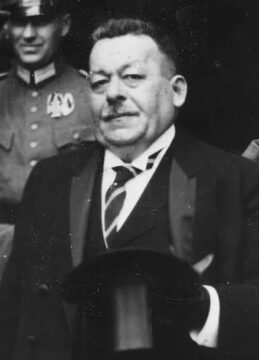
Billie Eilish’s anti-ICE message at the Grammies — “no one is illegal on stolen land” — reminded me of Weimar Germany. For a complex reason.
I’ve never been a fan of this-is-like-Germany-before-the-Nazis references because they are almost universally overwrought or misinformed. But Weimar Germany had a fascism problem. We have a fascism problem. Most people in Weimar Germany were not fascists. Most people today are not fascists. Yet Weimar Germany succumbed to fascism when the Nazis took power in 1933.
It seems reasonable now that we include Weimar Germany among our analytical tools.
So I’m going to review some basic history of Weimar Germany. Then I’m going to show how Billie Eilish’s comment is typical of a stupid mistake many people on the left are making. They aren’t the first to make this mistake. Many on the left in Weimar Germany made the same mistake, and in doing so, they did something they absolutely did not intend.
They helped create the Nazi dictatorship.
More here.
Enjoying the content on 3QD? Help keep us going by donating now.
Black history comes alive in Trump Country
Gary Abernathy in The Washington Post:
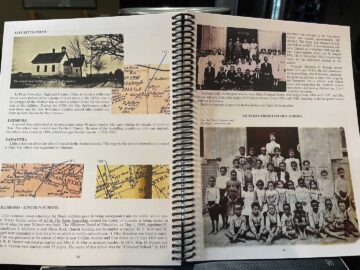 Let’s start with a tragedy: Since the 2020 election, 37 states have introduced legislation designed to limit how Black history can be taught, especially in its relation to institutional racism, and 14 states have successfully imposed such laws, according to Education Week.
Efforts requiring schools to play down examples of historic racism if anyone is made to feel “discomfort” or “guilt” are confounding to me coming from Republicans, who rightfully complain about de-platforming voices on social media and cancel culture run amok. Fortunately, more of America’s Black history is clawing its way out of undeserved obscurity anyway, particularly through new books — some from big publishing houses written by celebrated authors, and others on a smaller scale in unlikely places such as my former home of Highland County, Ohio, in the heart of Trump Country.
More here. (Note: Throughout February, at least one post will be devoted to Black History Month: A century of Black History Commemorations)
Enjoying the content on 3QD? Help keep us going by donating now.
“Ain’t I A Woman?” – Sojourner Truth
From rev:
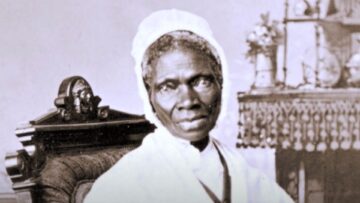 Well children … Well there is so much racket there must be something out of kilter. I think that betwixt the Negroes of the South and the women at the North all talking about rights these white men going to be in a fix pretty soon.
But what’s all this here talking about? That man over there says that women need to be helped into carriages, and lifted over ditches, and to have the best place everywhere. Nobody ever helped me into carriages, or over mud puddles, or gives me any best place. Ain’t I a woman?
Look at me, look at my arms, I have plowed, and planted, and gathered in the barns, and no man can head me. And ain’t I a woman? I could work as much, and eat as much as a man when I could get it, and bear the lash as well. And ain’t I a woman? I have borne 13 children and seen most all sold off to slavery. And when I cried out with my mother’s grief none but Jesus heard me. And ain’t I a woman?
Then they talk about this thing in the head … What’s this they call it? What’s this they call it?
Intellect, that’s it honey. Intellect. What’s that got to do with women’s rights and Negroes’ rights? If my cup will hold but a pint, and yours will hold a quart, wouldn’t you be mean not to let me have my little half measure fool?
And then that man back there in the black … That man back in the black says that women can’t have as much rights as men because Christ wasn’t a woman. Where did your Christ come from? Where did your Christ come from? From God and a woman. Man had nothing to do with him. Now if the first woman that God ever made was strong enough to turn this world upside down all alone, these women together ought to be able to turn it back and get it right side up again. And now they is asking to do it and you men better let them.
More here: (Note: Throughout February, at least one post will be devoted to Black History Month: A century of Black History Commemorations)
Enjoying the content on 3QD? Help keep us going by donating now.
Friday Poem
An April Thought
To a Friend Who Likes Transcendence
Here’s a brook in all its April energy.
Up its steep and many-bouldered bank
a profusion of nasturtiums scatter –
“like bright syllables”
a transcendentalist poet might say.
Her eye would read that poem.
She’d hear harmonies of rock and water,
feel the soft touch of sun,
the warm taste of spring,
and think of what it meant.
Yet, air is full of a blue confidence in itself.
The world is full of fullness.
Nothing to transcend here.
by NilsPeterson
2/12/26
Enjoying the content on 3QD? Help keep us going by donating now.
Thursday, February 12, 2026
Don’t have a menty b about this bloggy p (on 3 Quarky D!)
Stan Carey at Sentence first:
We can show this linguistic fad as having two main stereotyped patterns or formulas, which overlap morphologically. For type 1, we take a word or short phrase, clip (i.e., truncate, abbreviate) the first stressed syllable, add a y-suffix, and reduce the next word or stressed syllable to its initial letter:
mental breakdown → menty b
nervous breakdown → nervy b
a hundred percent → hundy p
tomato ketchup → tommy k
sauvignon blanc → savvy b
ChatGPT → chatty g
lockdown → locky d
pandemic → panny d
Clapham Junction → Clappy J
For type 2, we clip the first stressed syllable, add a y-suffix (same as type 1 so far), clip the next word or stressed syllable, and, optionally, add an s-suffix:
general election → genny lec/lex
cost of living / cost-of-living crisis → cozzy/cozzie livs
platinum jubilee → platty jubes/joobs
king’s coronation → corrie nash
bank holiday → banny hols
state funeral → statey funes
You may not have seen or heard any of these. They’re still fairly restricted demographically, and are perhaps more spoken than written – and written only in very informal contexts – but if you search for them you’ll find examples.
More here.
Enjoying the content on 3QD? Help keep us going by donating now.
‘All It Is Is Pain’: The Olympian Testing the Limits of Endurance
Reid Forgrave at the New York Times:
 There are two principal reasons for the superior conditioning of cross-country skiers, according to Laura Richardson, a clinical exercise physiologist at the University of Michigan School of Kinesiology. First, theirs is a quadrupedal sport, with arms and legs working hard at the same time, along with core and back muscles. Because the body’s cardiovascular system is not accustomed to serving those large muscle groups simultaneously at high rates of exertion, they all compete for the available blood. Over time, the body adapts by increasing blood volume, so the heart pumps more blood with each heartbeat. This sends more hemoglobin with oxygen throughout the body. As a result, most elite cross-country skiers like Diggins have an especially powerful heart muscle and an especially large and strong left ventricle to pump out more blood per minute. The mitochondria in muscle tissues — the powerhouses of the cell — in turn grow in size and in numbers to handle the rise in oxygen.
More here.
Enjoying the content on 3QD? Help keep us going by donating now.
Terence Tao: Why I Co-Founded SAIR (The Foundation for “Science and AI Research”)
Enjoying the content on 3QD? Help keep us going by donating now.
How to rescue the aid industry: focus on conflict prevention, not just relief
Rabah Arezki in Nature:
 The unravelling of the aid industry must force a reset of the nexus between peace and economic development. The international-development model has changed little in eight decades. In 1949, at his inaugural address as US president, Harry Truman introduced a linear concept of development — in which countries progress from ‘under-developed’ to ‘developed’ — and recognized that poverty was a “threat” to both less- and more-prosperous areas. Since then, the proportion of the world’s population in extreme poverty has plummeted, from 50–60% to about 10%. Yet, conflicts have surged. Clearly the relationship between economic development and conflict is a complicated one, which is being explored in empirical research.
My own studies point to an asymmetry: it takes at least a decade for a society to rebuild after a conflict, whereas a burst of economic development (including that through aid) barely affects conflict intensity. Quantitatively, the half-life — or how long it takes the cumulative effect of a shock to decay by half — of the adverse effects of conflicts on development goals is around eight years. By contrast, shocks to development performance — be they improvements or deteriorations — exhibit only transient effects on conflict, with a half-life of around two years.
This finding challenges the premise that peace is a byproduct of economic development and carries sobering implications for the global aid industry.
More here.
Enjoying the content on 3QD? Help keep us going by donating now.
Thursday Poem
Reinventing North America
Living on the western edge of Turtle Island
in Shasta Nation
Whose people are native, Euro-, African, Asian, Mestizo,
Pacific and nuevo Americano — Turtle Islanders —
Where the dominant language is still Mexicano
In the Homo sapiens year 50,ooo
by Gary Snyder
from This Present Moment
Counterpoint Books, 2015
Enjoying the content on 3QD? Help keep us going by donating now.
James Baldwin v. William F. Buckley (1965)
(Note: Throughout February, at least one post will be devoted to Black History Month: A century of Black History Commemorations)
Whatever white people do not know about Negroes reveals, precisely and inexorably, what they do not know about themselves
James Baldwin in The New Yorker (1962):
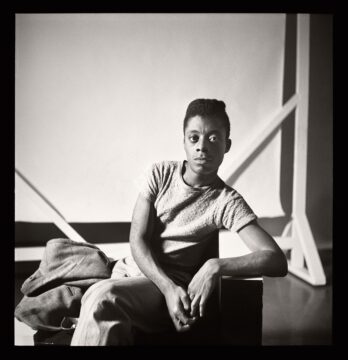 In short, we, the black and the white, deeply need each other here if we are really to become a nation—if we are really, that is, to achieve our identity, our maturity, as men and women. To create one nation has proved to be a hideously difficult task; there is certainly no need now to create two, one black and one white. But white men with far more political power than that possessed by the Nation of Islam movement have been advocating exactly this, in effect, for generations. If this sentiment is honored when it falls from the lips of Senator Byrd, then there is no reason it should not be honored when it falls from the lips of Malcolm X. And any Congressional committee wishing to investigate the latter must also be willing to investigate the former. They are expressing exactly the same sentiments and represent exactly the same danger. There is absolutely no reason to suppose that white people are better equipped to frame the laws by which I am to be governed than I am. It is entirely unacceptable that I should have no voice in the political affairs of my own country, for I am not a ward of America; I am one of the first Americans to arrive on these shores.
More here. (Note: Throughout February, at least one post will be devoted to Black History Month: A century of Black History Commemorations)
Enjoying the content on 3QD? Help keep us going by donating now.