
Karim Sadjapour in Time Magazine:
 The Islamic Republic of Iran has thus far proved too ideologically rigid to reform and too ruthless to collapse. As in the late stages of the Soviet Union, however, the foundations decay in plain sight. Outside their homeland, women of Iranian origin become world-class mathematicians and astronauts; inside Iran, the ruling clerics debate whether women should be allowed to ride bicycles.
One year ago this month, the regime’s “morality police” detained and beat a 22-year-old woman—Mahsa Jina Amini—for allegedly showing too much hair beneath her compulsory veil. Her death in custody triggered Iran’s longest anti-government protests since the 1979 revolution that transformed the country from a U.S.-allied monarchy to an anti-American Islamist theocracy. Supreme Leader Ali Khamenei managed these protests as he always does, by crushing dissent, dividing adversaries, and refusing to offer any concessions. Over 20,000 people were arrested and over 500 killed, including several who were executed. Compromising under pressure, Khamenei believes, only projects weakness and emboldens dissent.
More here.
 The ceremony takes place on the night of the full moon in February, which the Tibetans celebrate as the coldest of the year. Buddhist monks clad in light cotton shawls climb to a rocky ledge some 15,000 feet high and go to sleep, in child’s pose, foreheads pressed against cold Himalayan rocks. In the dead of the night, temperatures plummet below freezing but the monks sleep on peacefully, without shivering.
 Some
Some 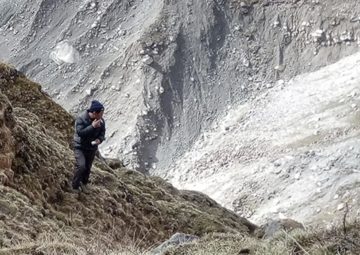 I
I Over the past two years, China has enacted some of the world’s earliest and most sophisticated
  There were less intimate places available, so it was odd when a woman took the seat directly facing mine across the subway aisle. I looked up from my book and right back down: a couple of months before, we’d gone home together. She had a Southern accent and a boy’s name she swore was given. Bobby. Probably spelled Bobbie or Bobbi but she didn’t say “Bobbi with an i,” which I thought cool of her. Good sex, great chemistry, and I promised but then failed to text; encountering her on the subway might have been awkward even if I weren’t reading What Were You Expecting?: A New Manual for New Parents by Drs. Laurie and Lawrence Shriver. No point hiding the cover now. Bobbi had seen it before she sat down—that much was clear when we made eye contact. She chose the seat to shame me.
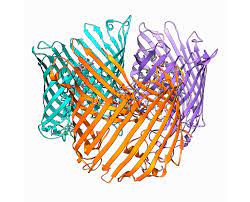 The protein universe just got a lot brighter.
 Every time this happens I’m reminded of Vladimir Nabokov’s unique and hilarious novel Pale Fire and the opening couplet of the 999-line poem that gives the book its title:
 “‘I have named the paper thus presented Calotype paper on account of its great utility in obtaining the pictures of objects with the camera obscura,’” he said, as quoted by Ellen Sharp, who notes, that “With his improved process, Talbot had reduced exposures from an hour to a few minutes, or even seconds, depending on the strength of the sun.”
 When James Murray, the then editor of the Oxford English Dictionary (OED), received the first bundle of quotations from a “Dr William Chester Minor” of Broadmoor Criminal Lunatic Asylum in 1883, he presumed the man worked there. In the first volume of the dictionary, published five years later, Minor is thanked as “Dr WC Minor, Crowthorne, Berks”. It was only in 1890 that Murray discovered the truth: that while Minor was an American surgeon, he was also a paranoid schizophrenic and probable sex addict who had been committed to Broadmoor after shooting a man dead.
 CLAUDINE GAY
 I
I A number of things have changed regarding climate change over the last 13 years. On the negative side, annual emissions continued to increase slowly or maybe
  The study of cognition and sentience would be greatly abetted by the discovery of intelligent alien beings, who presumably developed independently of life here on Earth. But we do have more than one data point to consider: certain vertebrates (including humans) are quite intelligent, but so are certain cephalopods (including octopuses), even though the last common ancestor of the two groups was a simple organism hundreds of millions of years ago that didn’t have much of a nervous system at all. Peter Godfrey-Smith has put a great amount of effort into trying to figure out what we can learn about the nature of thinking by studying how it is done in these animals with very different brains and nervous systems.