
Jim Hartley in National Association of Scholars:
 Every now and then, I had heard that Wright was a fantastic writer. But not often enough; most of the time I heard about him it was in the context of “protest novel” and “communism.” But, I finally got around to reading Native Son. Wow. Great book, and as noted above, most probably, Great Book. But, its greatness has nothing to do with being a means of implicating America in being racist.
The story: Bigger, a young black thug, gets a job as a chauffeur to wealthy white family, murders the daughter on his first night on the job, does a terrible job trying to cover up the crime, is discovered, flees, murders another girl, is caught, and is put on trial. The book highlights two great divides in American society.
First, the Black-White divide. As a historical matter, Wright’s book is enormously influential in highlighting this divide.
More here. (Note: Throughout February, at least one post will be devoted to Black History Month: A century of Black History Commemorations)
Enjoying the content on 3QD? Help keep us going by donating now.
 On Morrison, Namwali Serpell’s foray into the expanding field of Morrison scholarship, picks up where these previous monographs left off. Serpell, an award-winning fiction writer and critic and professor of English at Harvard, meticulously pored over archival materials made accessible by the Morrison estate and Princeton University to produce a breathtaking excavation of the inner workings and outer impression of a swaggering Black genius. With this book, Serpell extends Mayberry’s research on Morrison’s critical reception by providing more critical reception of Morrison’s fiction and nonfiction oeuvre. She adds further grist to Williams’s careful exploration of what percolated just below Morrison’s famously steely surface. Altogether, On Morrison homes a novelist-critic’s eye in on a novelist-critic’s body of work and not only considers the beautiful world-building that has enamored publics for decades but does so with attention steeped in the craft of Black virtuosity.
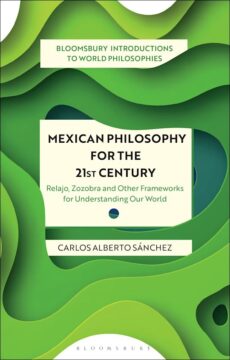 Some philosophers get anxious with talk of perspectives or the shaping power of historical events, but in Mexistentialism these are central to understanding ourselves and our world, and especially ourselves in a world in crisis. Undeniably, this is where we find ourselves today: a world in crisis. And by ‘we’, I mean those of us who exist in crisis or under the constant threat of crisis. In this, I follow what the Mexican philosopher
  The police in authoritarian states are expected and assumed to be corrupt, and ditto for lawyers, judges and the military. But doctors? Apparently so. Late in the Pakistani writer Mohammed Hanif’s fourth novel, Dr. Pervez Alam Pervez is described by an army inquisitor as “the finest post-mortem artist in the entire district. Bring him a body and he’ll give you the exact cause of death you want.” Drowning? Suicide? Just name it and he’ll produce the proper autopsy report, whatever will best help dispose of an inconvenient corpse.
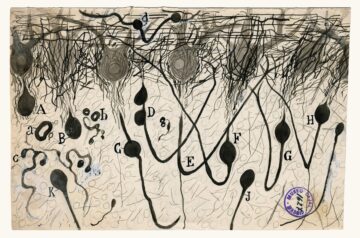 In the early years of modern deep learning, the brain was a North Star. Ideas like hippocampal replay — the brain’s way of rehearsing past experience — offered templates for how an agent might learn from memories. Meanwhile, work on temporal-difference learning showed that some dopamine neuron responses in the brain closely parallel reward-prediction errors — solidifying a useful framework for reinforcement learning.
 Last year, the US may have recorded the lowest murder rate in its 250 year history. Other crimes have poorer historical data, but are at least at ~50 year lows.
 MICHEL MARTIN, host: As we’ve just said, the apology for slavery from the House of Representatives is just the latest public act in the century-long drama of slavery in the U.S. Fiction has shaped much of how America has viewed the lives of enslaved Americans. From “Gone to the Wind,” to “Roots,” to “Amistad,” the public imagination has evolved from seeing slaves as happy servants to victims of history to defiant heroes who demanded that the country live up to its core beliefs.
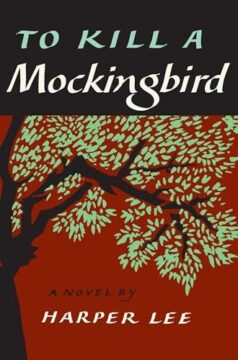 Harper Lee’s To Kill a Mockingbird
  “The peculiar grace
 The word ‘revolution’ enjoys a special place in our political vocabulary. It is associated with events that shaped the modern world – the English Revolution of the mid-17th century, the French Revolution of 1789, the revolutions of 1848, the Russian Revolution of 1917 and the Chinese Revolution beginning in 1927. In each of these, the word refers to a sudden transformation. Above all, it signifies a radical change of regime – most commonly involving a shift from monarchy to republic. But if the word ‘revolution’ is often used in this specific sense, it has not always been confined to this single register of meaning. Two important new works both argue this case. Both exhibit impressive range and subtlety.
 My doubts began when I was still in academia, teaching critical thinking to philosophy students and science majors alike. Fallacies are a favorite chapter in such courses. In some ways, they are ideal teaching material: they come in tidy lists and seem easy to apply. Many trace back to Aristotle and still parade under their Latin names—ad hominem, ad populum, ad ignorantiam, ad verecundiam (better known as the argument from authority), the slippery slope, affirming the consequent, and so on.
 “Between the scale of atoms and the scale of stars,” Maria Popova writes in the prologue to her daring book Traversal, “between the time of mayflies and the time of mountains, we exist as proteins lit up with purpose.” And she sets out to investigate just what this purpose is.
 Desire is a curious thing. Some desires are easily satisfied—they pass quickly after they are successfully gratified, and rarely intrude into our consciousness. A lazy afternoon at the beach is a pleasure, but one we only seek occasionally. Other desires are insatiable. For those rewards, the thirst for more persists no matter how much access we get. Even after gratifying such desires, the longing barely fades—or if there is any relief it’s short-lived. Indulgence of such desires can lead to an escalation of the hunger, rather than contented satisfaction. This is not always a negative thing—to give and receive love is an example of a desire we never tire of—but insatiable desires are hard to moderate.