
Carlos Alberto Sánchez at Aeon Magazine:
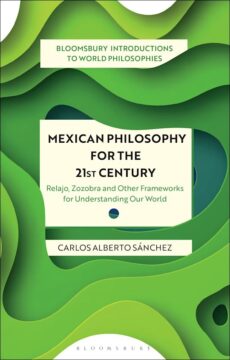 Some philosophers get anxious with talk of perspectives or the shaping power of historical events, but in Mexistentialism these are central to understanding ourselves and our world, and especially ourselves in a world in crisis. Undeniably, this is where we find ourselves today: a world in crisis. And by ‘we’, I mean those of us who exist in crisis or under the constant threat of crisis. In this, I follow what the Mexican philosopher Emilio Uranga (1921-88) means when he refers to the ‘we’ that will read and appreciate his philosophical analyses: they are ‘those others that through a thousand accidents of history, of culture or society, have been framed by the catastrophic’. For Uranga, as well as for his contemporaries, those ‘framed by the catastrophic’ are Mexicans and all ‘others’ who, like Mexicans, can identify with a history of oppression, marginalisation and historical violence.
What Uranga couldn’t have foreseen is that the ‘we’ that has been framed by the catastrophic has grown since he wrote those words some 75 years ago. The we whose perspectives are shaped by trauma, violence, persecution and fear has expanded to include many other peoples from across the globe. Closer to home, in the US, it is immigrants or those who look like immigrants who, every day, are framed – shaped, informed, scarred – by betrayal, insecurity and terror, and for whom ‘nothing is certain’ is the only certainty.
more here.
Enjoying the content on 3QD? Help keep us going by donating now.