
Pankaj Mishra in the LRB:
In 1977, a year before he killed himself, the Austrian writer Jean Améry came across press reports of systematic torture against Arab prisoners in Israeli prisons. Arrested in Belgium in 1943 while distributing anti-Nazi pamphlets, Améry himself had been brutally tortured by the Gestapo, and then deported to Auschwitz. He managed to survive, but could never look at his torments as things of the past. He insisted that those who are tortured remain tortured, and that their trauma is irrevocable. Like many survivors of Nazi death camps, Améry came to feel an ‘existential connection’ to Israel in the 1960s. He obsessively attacked left-wing critics of the Jewish state as ‘thoughtless and unscrupulous’, and may have been one of the first to make the claim, habitually amplified now by Israel’s leaders and supporters, that virulent antisemites disguise themselves as virtuous anti-imperialists and anti-Zionists. Yet the ‘admittedly sketchy’ reports of torture in Israeli prisons prompted Améry to consider the limits of his solidarity with the Jewish state. In one of the last essays he published, he wrote: ‘I urgently call on all Jews who want to be human beings to join me in the radical condemnation of systematic torture. Where barbarism begins, even existential commitments must end.’
Améry was particularly disturbed by the apotheosis in 1977 of Menachem Begin as Israel’s prime minister. Begin, who organised the 1946 bombing of the King David Hotel in Jerusalem in which 91 people were killed, was the first of the frank exponents of Jewish supremacism who continue to rule Israel. He was also the first routinely to invoke Hitler and the Holocaust and the Bible while assaulting Arabs and building settlements in the Occupied Territories. In its early years the state of Israel had an ambivalent relationship with the Shoah and its victims.
More here.
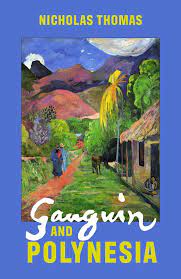 Today, says Thomas, ‘it feels difficult just to look at a Gauguin painting, without being told what to think’. The instructions tell us that he was ‘a sexual predator in life and a colonialist in his art’. Thomas’s aim is not to launder Gauguin’s reputation or undo recent decades of feminist art history and postcolonial studies but to eliminate some of the anachronism that inevitably arises when the past is examined, and judged, by contemporary mores.
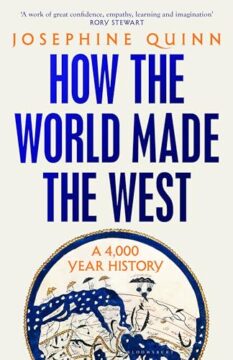 “Western civilisation” would not exist without its Islamic, African, Indian and Chinese influences. To understand why, Quinn takes us back in time, beginning at the bustling port of Byblos in Lebanon in about 2000BC. It was the middle of the bronze age, which “inaugurated a new era of regular long-distance exchange”. Carbon dating techniques applied to recent archaeological findings provide compelling evidence about just how “globalized” the Mediterranean already was, 4,000 years ago. Welsh copper went to Scandinavia, and Cornish tin as far as Germany, for the forging of bronze weapons. Beads of Baltic amber, found in the graves of Mycenaean nobles, were made in Britain. A thousand years later, trade up and down the Atlantic seaboard meant that “Irish cauldrons became especially popular in northern Portugal”.
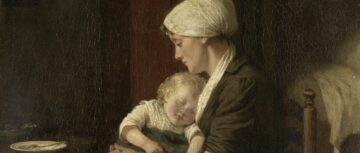 William Ewart Gladstone was Britain’s prime minister four times between 1868 and 1894, a member of Parliament for more than sixty years, a brilliant and passionate orator, an accomplished writer, and an indefatigable social reformer. Lord Kilbracken, his private secretary, estimated that if a figure of 100 could represent the energy of an ordinary man and 200 that of an exceptional one, Gladstone’s energy would be represented by a figure of at least 1,000.
 A
A What made
  Cousin marriage rates are high in many countries today. We provide the first estimate of the effect of such marriages on the life expectancy of offspring. By studying couples married over a century ago, we observe their offspring across the lifespan. Using US genealogical data to identify children whose parents were first cousins, we compare their years of life to the offspring of their parents’ siblings. We find that marrying a cousin leads to more than a three-year reduction in offspring life expectancy. This effect is strikingly stable across time, despite large changes in life expectancy and economic environment.
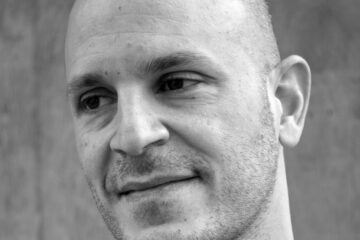 In 2007 Louise Glück selected Fady Joudah as the winner of the distinguished Yale Series of Younger Poets competition. In a foreword to his debut poetry collection published the following year, The Earth in the Attic, she called Joudah a “lyric poet in whom circumstance and profession . . . have compelled obsession with large social contexts and grave national dilemmas.” Since then, Joudah has published five more collections of poetry, won numerous awards, and translated several volumes of poetry by Palestinian writers, among them Mahmoud Darwish, perhaps the best-known Palestinian poet in the English-speaking world.
 “Where’s my tail?”
 T
T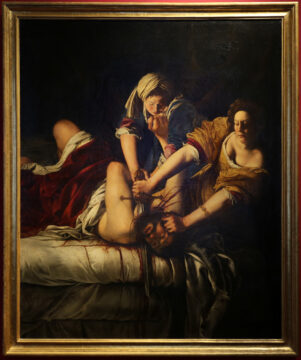 It’s true that Caravaggio’s reputation as a revolutionary force in Italian art remains unmatched, but Artemisia Gentileschi now overshadows all the other artists who drew on his influence. Édouard Manet, likewise, may still be seen as the key figure in the emergence of modernism in 19th-century Paris, but among those who recognized and built on his achievement, Mary Cassatt and Berthe Morisot appear far more important today than they did 50 years ago; the specific qualities of their work, unshared by their contemporaries, have come into focus. Paula Modersohn-Becker outshines most of her German Expressionist colleagues. And while Jackson Pollock remains the Abstract Expressionist par excellence, Lee Krasner and Joan Mitchell are now better appreciated than some of the male painters who were once accounted as his near-equals—Franz Kline, for example. Is just plain old “great” not great enough without the “supremely” added like a cherry on top?
 When my kids were little, I was always afraid that they would die, but that was mostly nervous ignorance on my part, knowing nothing about the resilience of little bodies. I used to worry how an infant would be able to tell me what was wrong. But the real worry was about my parents. They had language—and still they would die.
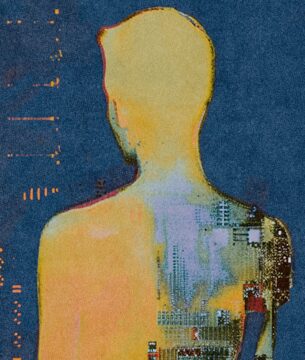 In a recent interview with U.K. Prime Minister Rishi Sunak, Elon Musk
  Very few of us expected liberalism to have such a rocky