
Silvana Paternostro at the Paris Review:
 Gabriel García Márquez died ten years ago this April, but people all over the world continue to be stunned, moved, seduced, and transformed by the beauty of his writing and the wildness of his imagination. He is the most translated Spanish-language author of this past century, and in many ways, rightly or wrongly, the made-up Macondo of One Hundred Years of Solitude has come to define the image of Latin America—especially for those of us from the Colombian Caribbean.
I have been writing about Gabo since 1995, when I met him for three days during a journalism workshop he led and decided that he himself would make an interesting subject. Colombia’s god of magical realism reminded me of my grandfather, I wrote in my first piece about him, which was later published in the Winter 1996 issue of The Paris Review. In the early 2000s, I began interviewing his friends, family, fans, and naysayers for an oral biography that appeared in an early form in the magazine’s Summer 2003 issue.
more here.
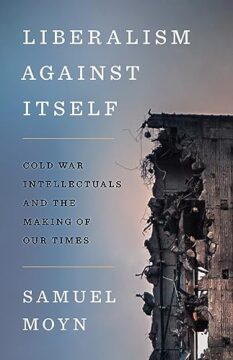 Hollywood rarely shops for film rights at academic presses. Yet if Samuel Moyn’s thought-provoking new book, Liberalism Against Itself, were adapted into a movie, I would recommend making it a courtroom drama.
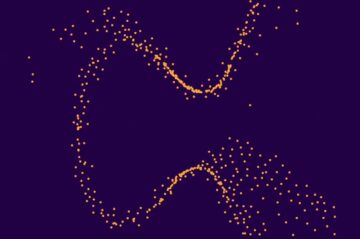 Understanding elliptic curves is a high-stakes endeavor that has been central to math. So in 2022, when a transatlantic collaboration used statistical techniques and artificial intelligence to discover completely unexpected patterns in elliptic curves, it was a welcome, if unexpected, contribution. “It was just a matter of time before machine learning landed on our front doorstep with something interesting,” said
  As environmental, social and humanitarian crises escalate, the world can no longer afford two things: first, the costs of economic inequality; and second, the rich. Between 2020 and 2022, the world’s most affluent 1% of people captured nearly twice as much of the new global wealth created as did the other 99% of individuals put together, and in 2019 they emitted as much carbon dioxide as the poorest two-thirds of humanity. In the decade to 2022, the world’s billionaires more than doubled their wealth, to almost US$12 trillion.
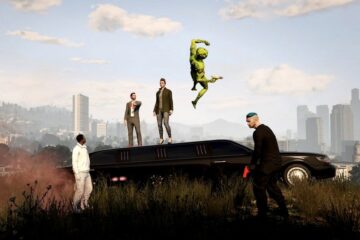 Sam Crane was in the middle of doing Macbeth when the bullets started flying. A veteran of the British stage, Crane was on the verge of playing the lead in the London production of Harry Potter and the Cursed Child when COVID-19 shut down live performances, and by the U.K.’s third lockdown, he was itching for an audience. So instead of playing to a West End crowd, he found himself orating to a smattering of heavily armed lawbreakers inside the video game Grand Theft Auto. “If I could just request that you refrain from killing each other,” he calls out amid the tomorrows and tomorrows. “And don’t kill the actors either!”
 I
I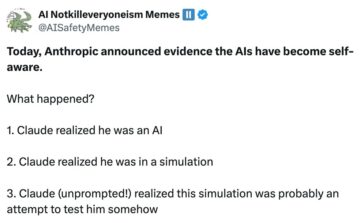
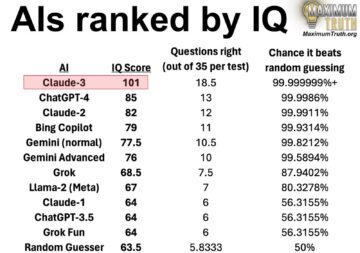 OK so Anthropic’s latest Claude is now more intelligent than the average human being
  We are living through humanity’s fourth industrial revolution, which is largely driven by breakthroughs in digital technologies. Some, like the internet and artificial intelligence, are converging and amplifying each other, with far-reaching consequences for economies and societies. For developing countries, the implications are profound, and questions concerning policy choices and the “appropriateness” of new technologies have become urgent.
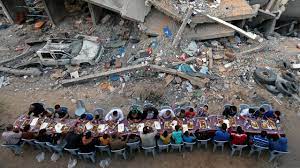 It’s difficult to imagine Ramadan in Gaza this year. I want to imagine that, even at a time of devastation and deprivation, a personal act of sacrifice can still lend purpose to senselessness. Maybe it can give powerless people a small sense of control. When you fast, you can think, I chose this hunger; it was not forced on me. But maybe that’s wishful thinking. Hunger is painful. It is one of our most primal desires, and the most human; inflicting it on someone else can seem inhuman. The only antidote is to eat. And in the same way that food brings people together I wonder whether its absence keeps us apart. Hunger makes us weak, and not only physically. It cuts us off from the strength that comes from being together.
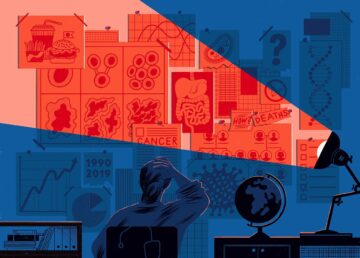 Of the many young people whom Cathy Eng has treated for cancer, the person who stood out the most was a young woman with a 65-year-old’s disease. The 16-year-old had flown from China to Texas to receive treatment for a gastrointestinal cancer that typically occurs in older adults. Her parents had sold their house to fund her care, but it was already too late. “She had such advanced disease, there was not much that I could do,” says Eng, now an oncologist at Vanderbilt University Medical Center in Nashville, Tennessee. Eng specializes in adult cancers. And although the teenager, who she saw about a decade ago, was Eng’s youngest patient, she was hardly the only one to seem too young and healthy for the kind of cancer that she had.
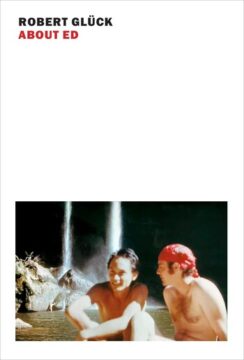 MIDWAY THROUGH ABOUT ED, Robert Glück revives a line by Frank O’Hara: “Is the earth as full as life was full, of them?” Referring to three of O’Hara’s recently deceased friends, the line appears in “A Step Away from Them,” where it clangs against the rest of the poem and its meandering attention to noontime activity in midtown Manhattan, 1956. It perplexes Glück, whose About Ed remembers Ed Auerlich-Sugai, a lover and friend who died of AIDS-related complications in 1994. “The misdirection threw me,” Glück writes, “from the earth being full, to life being full, instead of Ed being full of life. Was life still full. . . ? Was it always? Was it ever?”
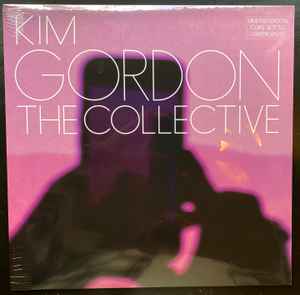 The day she turned 60, the artist and musician Kim Gordon felt, by her own admission, “shipwrecked.” She had recently gone through a painfully high-profile divorce from her husband of 27 years, Thurston Moore, and in the wake of their
  The other week there was a lovely opportunity to observe the way in which economists inhabit a mental reality which is quite adjacent to, but often very different from, the economy. An American