
Shelby Bradford in The Scientist:
 Many people view forgetting as an inconvenience, and if it occurs extensively, they associate it with neurodegenerative diseases. However, some evidence suggests that nonpathological forgetting is an adaptive and active part of learning and memory maintenance.1 “The environment is changing, and to adapt to an environment that is constantly changing, we need to update our memories; and updating our memories also means forgetting,” said Livia Autore, a neuroscientist and postdoctoral researcher in the lab of Tomás Ryan at the Trinity College Dublin and author of a study published in Cell Reports.2 The findings indicate that forgetting is an active process that is important for the ability to remember and that it serves as a basis for understanding altered memory capacity.
The physical component of a memory consists of activated neurons and synapses formed during an event, collectively called an engram.3 To study changes in engram cells during forgetting, Autore’s team labeled neurons in the hippocampus with an adeno-associated virus cocktail that marked engrams formed during training experiences as well as all activated neurons during the testing phase. Autore’s group then set up an object context training experiment in which mice explored one set of objects, for instance, a pair of small water bottles, in a chamber with a pattern of triangles on the wall to provide contextual information. An hour later, the researchers exposed the mice to a different pair of objects, like small statues, in a different chamber with striped walls as interference.
More here.
 I
I Back in 2001, immunologist Pere Santamaria was exploring a new way to study diabetes. Working in mice, he and his collaborators developed a method that uses iron oxide nanoparticles to track the key immune cells involved in the disorder.
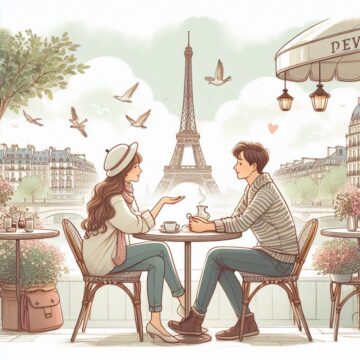 We hypothesize that fictional stories are highly successful in human cultures partly because they activate evolved cognitive mechanisms, for instance for finding mates (e.g., in romance fiction), exploring the world (e.g., in adventure and speculative fiction), or avoiding predators (e.g., in horror fiction). In this paper, we put forward a comprehensive framework to study fiction through this evolutionary lens.The primary goal of this framework is to carve fictional stories at their cognitive joints using an evolutionary framework. Reviewing a wide range of adaptive variations in human psychology–in personality and developmental psychology, behavioral ecology, and evolutionary biology, among other disciplines –, this framework also addresses the question of interindividual differences in preferences for different features in fictional stories. It generates a wide range of predictions about the patterns of combinations of such features, according to the patterns of variations in the mechanisms triggered by fictional stories. As a result of a highly collaborative effort, we present a comprehensive review of evolved cognitive mechanisms that fictional stories activate.To generate this review, we (1) listed more than 70 adaptive challenges humans faced in the course of their evolution, (2) identified the adaptive psychological mechanisms that evolved in response to such challenges, (3) specified four sources of adaptive variability for the sensitivity of each mechanism(i.e., personality traits, sex, age, and ecological conditions), and (4) linked these mechanisms to the story features that trigger them. This comprehensive framework lays the ground for a theory-driven research program for the study of fictional stories, their content, distribution, structure, and cultural evolution.
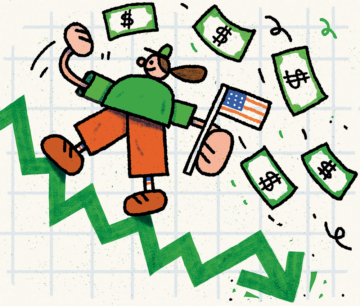 Some of the largest and most notable prediction markets to date have been around elections. The only problem? Prediction markets simply aren’t very good at political predictions. Markets for major U.S. elections are some of the deepest prediction markets anywhere: billions of dollars bet, millions of daily trades, and huge amounts of press. In theory, the larger the market, the more accurate the predictions. But in the markets with the biggest spotlight, we see a lot of strange stuff. Predictions that don’t line up with common sense. Odds that seem to defy reality. Obviously noncredible market movements. To figure out why, we’ll have to explore the underlying mechanisms that make markets work, and why the typical user of political prediction markets may not behave in the ways we expect.
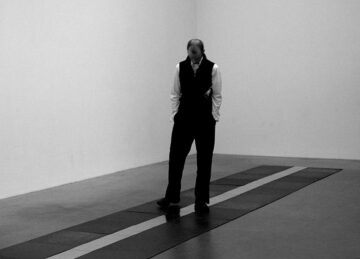 Coming upon an Andre as you turn a corner in a gallery can be a lovely surprise. But for all the smaller controversies it has generated, it has become almost impossible to look down at Andre’s bricks, to tread his floors of metal plates, or gaze at his constructions of cut ash and cedar timbers, without thinking of the death of the
 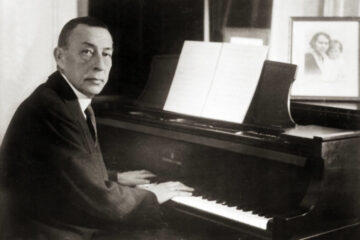 The biggest recent find in classical music was the discovery that in 1940, Sergei Rachmaninoff was privately recorded by the conductor Eugene Ormandy. Seated at Ormandy’s piano, he played through his new Symphonic Dances, which Ormandy would soon premiere with the Philadelphia Orchestra. Singularly, Rachmaninoff never permitted his public performances to be broadcast—so this surreptitious home recording is the best evidence we have of what Rachmaninoff’s legendary pianism sounded like outside the confines of recording studios sucked clean of the oxygen a body of listeners can activate.
 F
F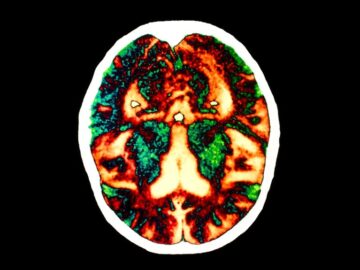 For the past decade, Collinge and his team have studied people in the United Kingdom who in childhood
  The first video portapacks arrived in the 1970s, cameras that skipped the lab and allowed the cameraman to be mobile, but they were so expensive only those who had connections with a TV station could experiment with them. Or if you had a rich aunt who needed to document a wedding, sometimes exorbitant rentals were available. Those with the ties to TV stations became the pioneers of art video. The rest of us painfully wove our laurels out of what could be cadged or granted. The tech, always changing, improved year by year, as did access and the imagery. We were offered new ways to think about color, resolution, and the translation of experience to video. Seeing invention at work as each new video tool appeared – sometimes developed by the artists themselves – was thrilling.
 Why do we enjoy showing and sharing?
 A theory developed by
 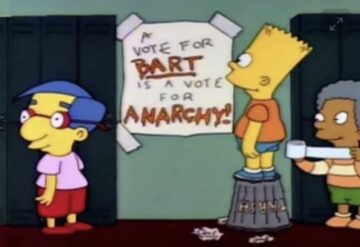 One unfortunate feature of American politics is that both Republicans and Democrats tend to work themselves into a frenzy over the other party’s presidential candidate, no matter who it is. To put it bluntly, both sides cry wolf all the time. Yes, I am a Democrat, but Democrats do this too — I’m old enough to remember when people I knew went crazy over poor old Mitt Romney saying that he had “
 Greetings, gentle readers! Welcome to the very first installment of Am I the (Literary) Assh*le, a series where I get drunk and answer your burning (anonymous) questions about all things literary.