
Laura Kipnis in Critical Quarterly:
In 2010, when a book I’d written called How to Become a Scandal was going to press, my editor contacted Christopher to ask for a blurb. He sent back three choices, the first of which read, ‘Laura Kipnis promised me a blowjob if I endorsed her latest triumph, which I hereby warmly and devotedly do.’ I’m sure it says nothing good about me that I found this funny, especially since using it would have so perfectly – and devilishly – enacted the premise of the book. Though generally no prig, sadly my editor insisted we go with the more conventional third option (the second was a double entendre about a now mostly forgotten Republican senator caught in a clumsy men’s room encounter). She did forward me their subsequent correspondence: ‘Christopher – you are a scream!’ she’d written back, to which he responded, ‘Yeah? Well a lot depends on which one she picks.’
I can be as humourless as the next leftwing feminist but for some reason Christopher’s, what to call it – lasciviousness? antiquarianism? – amused more than offended me, though his public anti-abortion stance was noxious and, one suspects, hypocritical. Colour me surprised if that particular edict was upheld in practice. In any case, I never thought of him as someone you’d go to for instruction on feminism, and increasingly not on any political question, yet it was perplexingly hard to hold his bad politics against him.
More here.
 Maria Haro Sly in Phenomenal World:
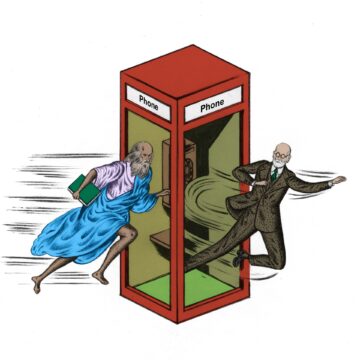 Around five years ago, David—a pseudonym—realized that he was fighting with his girlfriend all the time. On their first date, he had told her that he hoped to have sex with a thousand women before he died. They’d eventually agreed to have an exclusive relationship, but monogamy remained a source of tension. “I always used to tell her how much it bothered me,” he recalled. “I was an asshole.” An Israeli man now in his mid-thirties, David felt conflicted about other life issues. Did he want kids? How much should he prioritize making money? In his twenties, he’d tried psychotherapy several times; he would see a therapist for a few months, grow frustrated, stop, then repeat the cycle. He developed a theory. The therapists he saw wanted to help him become better adjusted given his current world view—but perhaps his world view was wrong. He wanted to examine how defensible his values were in the first place.
 The cosmetics entrepreneur Helena Rubinstein once observed, “There are no ugly women, only lazy ones.” The kind of beauty she had in mind is an ambivalent gift. On the one hand, it is not confined to the biologically blessed but available to everyone; on the other, it is a hard-earned prize, a product of ritualistic and often painstaking devotions at the mirror. Is this sort of beauty worth pursuing? Some feminist thinkers have bashed it as a superficial distraction. “Taught from infancy that beauty is woman’s sceptre, the mind shapes itself to the body, and roaming round its gilt cage, only seeks to adorn its prison,” Mary Wollstonecraft wrote disdainfully in 1792. Yet there is a tinge of misogyny to the familiar accusation that cosmetic projects are fluffy trivialities. Perhaps there is more truth (and more respect) to be found in the view of the novelist Henry James, who once described a female character’s flair for fashion as a form of “genius.”
 “King of New York” was the epithet given to him by David Bowie, an obsessive Velvets fan who rescued Reed’s lacklustre solo career by producing Transformer, which spawned his biggest hit, Walk on the Wild Side. It’s also the title of Will Hermes’s meticulous yet vivid new biography, the first to draw on the archive donated to the New York Public Library by Reed’s widow Laurie Anderson. As in his 2011 book Love Goes to Buildings on Fire, about the city’s mid-70s musical landscape, Hermes expertly conjures the different scenes Reed inhabited, placing him amid a rich cast of collaborators, friends and lovers.
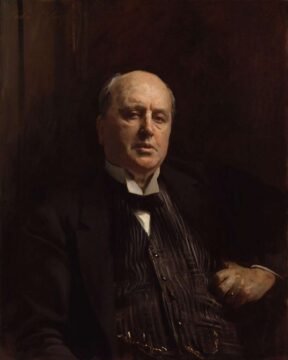 Forget everything you’ve ever heard about less being more, about economy of syntax, about the read-between-the-lines profundity of wide-margined, double-spaced “spare prose.” To read a paragraph by Henry James — a single one can sprawl across pages — is to luxuriate in linguistic excess.
 Police officers are often the last to know when someone is being conned. A worried son might spot unusual payments on his elderly father’s bank statement. A concerned friend will do a reverse-image search on a suspiciously good-looking dating-app match. A fraudster will run out of excuses as to why they can’t meet. A horrible realisation will dawn and a report will be filed.
 Goo. Gunk. Gloop. Gak. By its own definition, slime is hard to grasp. As an object of disgust, it represents our fears and stigmas, the unknown Other. As a toy or sight gag, it’s a silly plaything. It’s easy to forget that slime permeates every living being on Earth, that, like the cosmos or fungi, slime’s existence is vital to our own, a biological imperative as much as oxygen or sunlight. Nebulous and omnipresent, deathless and primordial, slime is an essential link between nonliving matter and the first life that developed in the ocean 3.6 billion years ago. Slime molds are at least millions of years old and can thrive in outer space. The granddaddy of all mankind, slime is everywhere. It’s also easy to miss, which helps explain why we’re often so afraid of it.
 The past year has given many of us reason to pause.
  In the surreal aftermath of my suicide attempt and amid the haze of my own processing, my best friend visited me in the hospital with a (soft-bound and thus mental-patient-safe) copy of David Foster Wallace’s Infinite Jest under his arm. It was the spring of 2021. A couple months earlier, I had slipped in a tub, suffered a concussion, and triggered my first episode of major depression, and those had been the most difficult months of my life.
 The Supreme Court is on a collision course with itself, and it’s not clear that the justices even know it. We are now witnessing a five-car pileup of Trump–slash–Jan. 6 cases that will either be heard by the Supreme Court or land on their white marble steps in the coming weeks. The court has already agreed to hear the case of Joseph Fischer, the former Pennsylvania cop accused of taking part in the Jan. 6 storming of the Capitol and assaulting police officers,
  T
T