
Daniel Immerwahr in The Guardian:
 The German forester Peter Wohlleben’s surprise bestseller, The Hidden Life of Trees (published in English in 2016), has inaugurated a new tree discourse, which sees them not as inert objects but intelligent subjects. Trees have thoughts and desires, Wohlleben writes, and they converse via fungi that connect their roots “like fibre-optic internet cables”. The same idea pervades The Overstory, Richard Powers’ celebrated 2018 novel, in which a forest scientist upends her field by demonstrating that fungal connections “link trees into gigantic, smart communities”.
Both books share an unlikely source. In 1997, a young Canadian forest ecologist named Suzanne Simard (the model for Powers’ character) published with five co-authors a study in Nature describing resources passing between trees, apparently via fungi. Trees don’t just supply sugars to each other, Simard has further argued; they can also transmit distress signals, and they shunt resources to neighbours in need. “We used to believe that trees competed with each other,” explains a football coach on the US hit television show Ted Lasso. But thanks to “Suzanne Simard’s fieldwork”, he continues, “we now realise that the forest is a socialist community”.
The idea of trees as intelligent and cooperative has moved swiftly from research articles to “did you know?” cocktail chatter to children’s book fare.
More here.
 Artificial intelligence is enabling India’s politicians to be everywhere at once in the world’s largest election by cloning their voices and digital likenesses. Even dead public figures, such as politician and actress Jayaram Jayalalithaa, are getting digitally resurrected to canvass support in what is shaping up to be the biggest test yet of democratic elections in the age of
  O
O “It was a wrong number that started it, the telephone ringing three times in the dead of night, and the voice on the other end asking for someone he was not.” So begins City of Glass, the first book in what became Paul Auster’s acclaimed New York Trilogy. Published in 1985, it marked the arrival of a truly unique voice in fiction, one quite distinct from many of the currents in American writing at the time. This was not the minimalism of Raymond Carver, or the expansiveness of Tom Wolfe; this was work much more connected to the traditions of European literature in which Auster was steeped. Paul Auster, who has died at the age of 77 in Brooklyn – where he lived his wife, the writer Siri Hustvedt – leaves a lasting and distinctive legacy in English-language literature.
 When I was in college, I came across “The Sea and Poison,” a 1950s novel by Shusaku Endo. It tells the story of a doctor in postwar Japan who, as an intern years earlier, participated in a vivisection experiment on an American prisoner. Endo’s lens on the story is not the easiest one, ethically speaking; he doesn’t dwell on the suffering of the victim. Instead, he chooses to explore a more unsettling element: the humanity of the perpetrators.
 One of the courses I teach is called “Science, Activism, and Political Conflict,” and one of my ambitions with that course is to show students that both of these things—activism and political conflict—are normal in science, and in academic life more generally. That’s a theme that we like to emphasize when speaking in “defense” of student protest. It’s part of a storied tradition, it’s respectable, it’s normal. But in order to explain why I think what you all are doing is so important, I want to start today by saying that actually, student protest is nowhere near normal enough in the history of higher education in this country. The real scandal is not that there has been student protest. It is that there has not been much, much more of it.
 An artificial intelligence system has proven it can save lives by warning physicians to check on patients whose heart test results indicate a high risk of dying. In a randomised clinical trial with almost 16,000 patients at two hospitals, the AI reduced overall deaths among high-risk patients by 31 per cent.
 A Moloch Trap is, in simple terms, a zero-sum game. It explains a situation where participants compete for object or outcome X but make something else worse in the process. Everyone competes for X, but in doing so, everyone ends up worse off.
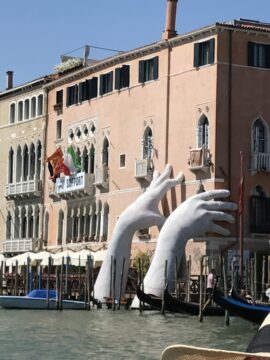 Many other fine pieces in the Central Exhibition are textile-based: a dense, earthy slab of threads by the Colombian Olga de Amaral, who turns ninety-two this year; a selection of embroidered burlap pieces by the anonymous Chileans known as Arpilleristas; large, cool compositions by Susanne Wenger, who spent most of her long life in Nigeria, practicing the Yoruba religion and mastering batik, the art of wax-resist dyeing. Her pieces, which show mortals and deities floating side by side, stick to the same spiky patterns and subdued hues but never retrace their steps; you could imagine them continuing forever, and might well want them to. If not, walk a few feet to the exhibition’s other main batik specialist, Ṣàngódáre Gbádégẹsin Àjàlá, who passed away in 2021. His creations are as religiously inclined as Wenger’s—he was her adopted son—but with a livelier clamor of bodies pressed together. There’s almost too much to savor; the intricate coloring, combined with pale spiderweb shading, gives the figures a pimpled texture I can’t remember seeing in art before and now can’t stop noticing everywhere. Àjàlá, Wenger, and the rest of the fibre brigade may be the snappiest retort to the gripe that there are too many dead artists this year: when we’re dealing with textiles, one of the oldest visual art forms and still backlogged with brilliance, the distinction between new and old stops mattering so much. Good is good, even if it takes decades for anyone to notice.
 Chances are, if you have put on a few pounds, the cause is deeper than eating too much junk food or skipping one too many workouts. Chronic, low-grade
 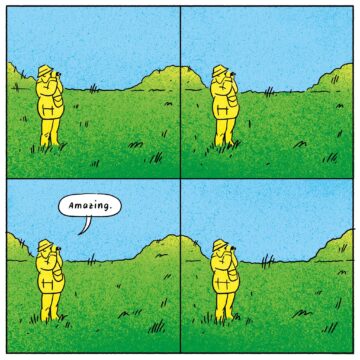 In some birding circles, people say that anyone who looks at birds is a birder — a kind, inclusive sentiment that overlooks the forces that create and shape subcultures. Anyone can dance, but not everyone would identify as a dancer, because the term suggests, if not skill, then at least effort and intent. Similarly, I’ve cared about birds and other animals for my entire life, and I’ve written about them throughout my two decades as a science writer, but I mark the moment when I specifically chose to devote time and energy to them as the moment I became a birder.