
James Stewart in The New York Times:
 It’s been 14 years since Goldman Sachs was vilified as a “vampire squid” by Matt Taibbi in Rolling Stone. “Organized greed always defeats disorganized democracy,” he concluded then. Goldman has since experienced some hard times, tarred by scandal (the looting of a Malaysian sovereign wealth fund) and forced to bail out of consumer banking. Big companies like Walt Disney are under attack not so much from the socialist left, but by conservatives for being too “woke.” Yet organized greed lives on, a seemingly intractable aspect of human nature, as three new business books make clear.
The age-old swing of the pendulum between greed, excess and regulation is the subject of TAMING THE OCTOPUS: The Long Battle for the Soul of the Corporation (Norton, 290 pp., $29.99), by Kyle Edward Williams, a history of efforts to temper capitalist excess through social responsibility, whether self-directed by corporations or imposed by regulators. Inevitably, greed and scandal breed regulation, which in turn provokes proponents of the free market to decry government overreach. Consider the Glass-Steagall Act, which separated commercial banking from more speculative investment banking during the Great Depression only to be relaxed by the Clinton administration more than six decades later. The cycle then begins anew.
More here.
 The proponents of intermittent fasting often cite benefits such as weight loss, improved blood sugar, and reduced cholesterol. And there is some scientific evidence to support these claims — at least in the short term. But what about intermittent fasting’s effects in the long run? And could it actually do more harm than good for the human heart? Intermittent fasting is a rather contentious topic when it comes to health and well-being. While there are studies that point to its short-term benefits such as reduced cholesterol when people
  As I’ve been researching and writing Boundless 2.0, I’ve found myself reevaluating many of the health and fitness strategies that I previously endorsed.
 Imagine you had a friend who gave different answers to the same question, depending on how you asked it. “What’s the capital of Peru?” would get one answer, and “Is Lima the capital of Peru?” would get another. You’d probably be a little worried about your friend’s mental faculties, and you’d almost certainly find it hard to trust any answer they gave.
 Few writers have possessed the short-story format as thoroughly as the Canadian author and Nobel laureate
 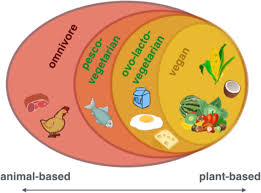 Western societies notice an increasing interest in plant-based eating patterns such as vegetarian and vegan, yet potential effects on the body and brain are a matter of debate. Therefore, we systematically reviewed existing human interventional studies on putative effects of a plant-based diet on the metabolism and cognition, and what is known about the underlying mechanisms. Using the search terms “plant-based OR vegan OR vegetarian AND diet AND intervention” in PubMed filtered for clinical trials in humans retrieved 205 studies out of which 27, plus an additional search extending the selection to another five studies, were eligible for inclusion based on three independent ratings.
 Cardiovascular diseases (CVDs) and cancer currently represent the leading causes of death and disability worldwide. Studies performed on large cohorts worldwide have identified several modifiable and non-modifiable risk factors. Among them, robust evidence supports
  A few years ago, when my daughter was a freshman at Columbia University, one of only a few from Arkansas, I had the audacity to propose to then-president Lee Bollinger that the university add a hands-on component to its core curriculum. The core curriculum is intended to build a common framework of understanding as a baseline for academic life and what proceeds from it. Even though my academic credentials might not have caught Bollinger’s attention, I believed that I had something to offer as a craftsman and woodworker, and a father.
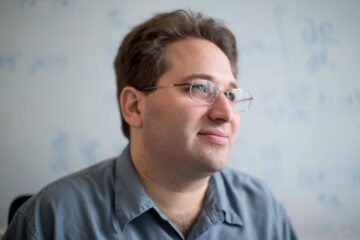 Dr. Scott Aaronson is the David J. Bruton Jr. Centennial Professor of Computer Science at UT Austin. He is known for his work as a computer scientist and research into complexity theory and quantum computing, and more recently for his work at OpenAI, the creators of ChatGPT, on AI alignment. I sat down with Dr. Aaronson to talk about the nature of quantum computing, why we should care, and his thoughts on the recent developments in artificial intelligence.
 Bérubé’s new book, The Ex-Human, is about science fiction. Bérubé offers thoughtful close readings of a number of classic science fiction texts: Ursula Le Guin’s The Left Hand of Darkness, Cixin Liu’s The Three-Body Problem, Margaret Atwood’s Oryx and Crake, Philip K. Dick’s Do Androids Dream of Electric Sleep? (with some reference to its film adaptation as Blade Runner), Arthur C. Clarke’s 2001 (with some reference to its better-known film adaptation by Stanley Kubrick), and Octavia Butler’s Parable series and Lilith’s Brood series.
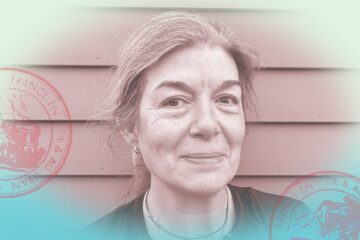 “I’m a writer; I tell stories,” reads the first line of Claire Messud’s
  Older people who aren’t picky eaters appear to have better brain health than those who prefer more limited diets, according to a large study of British adults. The
  I’m stressed and running late, because what do you wear for the rest of eternity?