Over at Philosophy Bites:
Category: Recommended Reading
On The Pompous, Malicious Intellectual Vacuity Of Leon Wieseltier
Daniel Koffler in Jewcy:
Leon Wieseltier has a meandering, conceptually confused, pointless essay in the upcoming issue of TNR sort of criticizing the latest loathsome hit piece from Bill Kristol, sort of defending it, but mostly subjecting readers to a masturbatory public display that goes on for just about 1000 words and feels like ten times that number. As Wieseltier winds things out having proved nothing, argued for nothing, expressed no worthwhile insight, and informed no one of anything, the masochistic reader who makes it all the way to the end is treated to this:
And now for the grossly undialectical bit. The ink on the Times was not yet dry when Andrew Sullivan rushed to the defense of his idol, I mean Obama. When one types all the time, sooner or later everything will be typed, and so Sullivan, in his fury against Kristol, typed this: “A non-Christian manipulator of Christianity is calling a Christian a liar about his faith.” Ponder that early adjective. It is Jew baiting. I was not aware that only Christians can judge Christians, or that there are things about which a Jew cannot call a Christian a liar. If Kristol is wrong about Obama, it is not because Kristol is a Jew. So this fills me with a certain paschal wrath. Nice little blog you have there, Obama boy. Pity if frogs or locusts should happen to it. Let my people be!
“Ponder that early adjective,” Wieseltier writes, referring to Sullivan's description of Kristol as a “non-Christian manipulator of Christianity.” If you're not determined to be a willfully obtuse prick, then also ponder the noun it modifies — “manipulator.” What Sullivan is obviously saying is that Kristol's affectation of taking offense to a slight to Christianity is a transparently cynical imposture on the part of a man who in fact regards sincere Christians as an alien species that happens to be useful in serving his electoral ends.
More here. And my own take on the odious Wieseltier from a couple of years ago is here.
Israel’s War in Gaza: Laura Flanders interviews Rashid Khalidi, others
From the GRIT TV website:
Rashid Khalidi Edward Said Professor of Arab Studies at Columbia University and the author of The Iron Cage: The Story of the Palestinian Struggle for Statehood on the Israeli invasion of Gaza. What does Israel hope to achieve? Khalidi explores the role of the United States and Europe in the blockade of Gaza, Barack Obama's silence, and what if anything the international community can do to end the war.
We also hear from Sameh Habeeb, a photo-journalist and peace activist on the ground in Gaza. He has been reporting regularly from Gaza since the invasion began. You can read his blog here.
Finally, activists respond to the Israeli invasion. GRITtv speaks to Lubna Hammad a Palestinian lawyer and founding member of Adalah-NY: The Coalition for Justice in the Middle East, Adam Shapiro a documentary filmmaker and American co-founder of the International Solidarity Movement, and Courtney Sheetz a filmmaker who participated in two attempted shipments of aid sponsored by the Free Gaza Movement.
Understanding Gaza
Tony Karon in Rootless Cosmopolitan:
It’s fear of another Holocaust that has driven Israel to bomb the crap out of the Palestinians in Gaza — at least, that’s if you believe what you read on the New York Times op ed page. (Never a good idea, of course, because as I’ve previously noted, when it comes to Israel and related fear-mongering, there simply is no hysteria deemed unworthy of the Times op ed page.)
Morris, a manic fellow at the best of times prone to intellectual mood swings — having laid bare the ethnic cleansing that created modern Israel, Morris then didn’t as much recant as complain that the problem was that Ben Gurion hadn’t finished the job. And since the 2000 debacle at Camp David, of course, he’s been a de facto editorial writer for Ehud Barak, the failed former Prime Minister nicknamed “Mr. Zig-Zag” while in office because of his inconsistency — and who, of course, is the author of the current operation in Gaza.
Barak, never shy about spewing utter rubbish when his audience is American and prone to be taken in by demagoguery, last weekend offered the priceless suggestion to Fox News that “expecting Israel to have a cease-fire with Hamas is like expecting you to have a cease-fire with al-Qaeda.” Presumably it would not occur to Fox’s anchors to ask why, then, had Barak maintained just such a cease-fire for the past six months? And why had he been seeking its renewal?
More here.
CNN Finally Confirms Israel Broke Ceasefire First
Gaza: The death and life of my father
For Fares Akram, The Independent's reporter in Gaza, the Israeli invasion became a personal tragedy when he discovered his father was one of the first casualties of the ground war.
Fares Akram in The Independent:
My father, Akrem al-Ghoul, was no militant. Born in Gaza and educated in Egypt, he was a lawyer and a judge who worked for the Palestinian Authority. After Hamas took over, he quit and turned to agriculture. Dad's father, Fares, who had been driven out of his home in what is now Israeli Ashkelon in 1948, had bought the land in the 1960s.
During the second intifada and until the Israelis withdrew from Gaza in 2005, the farm was taken over by Israeli settlers, but after 2005 we went there every holiday. In Gaza, the only escape is the beach or, if you are lucky enough, the farmland. My father hated what Hamas was doing to Gaza's legal system, introducing Islamist justice, and he completely opposed violence. He would have worked hard for a just settlement with Israel and a better future for Palestinians. When the PA gained control over the West Bank, he moved to Ramallah to help establish the courts there.
My grief carries no desire for revenge, which I know to be always in vain. But, in truth, as a grieving son, I am finding it hard to distinguish between what the Israelis call terrorists and the Israeli pilots and tank crews who are invading Gaza. What is the difference between the pilot who blew my father to pieces and the militant who fires a small rocket? I have no answers but, just as I am to become a father, I have lost my father.
More here.
Norwegian doctor in Gaza: “This is an all-out war against Civilians”
Tuesday Poem
To a Sad Daughter
To a Sad Daughter
Michael Ondaate
……………All night long the hockey pictures
gaze down at yousleeping in your tracksuit.
Belligerent goalies are your ideal.
Threats of being traded
cuts and wounds
–all this pleases you.
O my god! you say at breakfast
reading the sports page over the Alpen
as another player breaks his ankle
or assaults the coach.
////////////////
When I thought of daughters
I wasn't expecting this
but I like this more.
I like all your faults
even your purple moods
when you retreat from everyone
to sit in bed under a quilt.
And when I say 'like'
I mean of course 'love'
but that embarrasses you.
You who feel superior to black and white movies
(coaxed for hours to see Casablanca)
though you were moved
by Creature from the Black Lagoon.
////////////////
One day I'll come swimming
beside your ship or someone will
and if you hear the siren
listen to it. For if you close your ears
only nothing happens. You will never change.
Love thy neighbour: Kindness has gone out of fashion.
From The Guardian:
Kindness was mankind's “greatest delight”, the Roman philosopher-emperor Marcus Aurelius declared, and thinkers and writers have echoed him down the centuries. But today many people find these pleasures literally incredible, or at least highly suspect. An image of the self has been created that is utterly lacking in natural generosity. Most people appear to believe that deep down they (and other people) are mad, bad and dangerous to know; that as a species – apparently unlike other species of animal – we are deeply and fundamentally antagonistic to each other, that our motives are utterly self-seeking and that our sympathies are forms of self-protectiveness.
Kindness – not sexuality, not violence, not money – has become our forbidden pleasure. In one sense kindness is always hazardous because it is based on a susceptibility to others, a capacity to identify with their pleasures and sufferings. Putting oneself in someone else's shoes, as the saying goes, can be very uncomfortable. But if the pleasures of kindness – like all the greatest human pleasures – are inherently perilous, they are none the less some of the most satisfying we possess.
In 1741 the Scottish philosopher David Hume, confronted by a school of philosophy that held mankind to be irredeemably selfish, lost patience. Any person foolish enough to deny the existence of human kindness had simply lost touch with emotional reality, Hume insisted: “He has forgotten the movements of his heart.” For nearly all of human history – up to and beyond Hume's day, the so-called dawn of modernity – people have perceived themselves as naturally kind. In giving up on kindness – and especially our own acts of kindness – we deprive ourselves of a pleasure that is fundamental to our sense of well-being.
More here.
Food Dance Gets New Life When Bees Get Cocaine
From The New York Times:
Buzz has a whole new meaning now that scientists are giving bees cocaine. To learn more about the biochemistry of addiction, scientists in Australia dropped liquefied freebase cocaine on bees’ backs, so it entered the circulatory system and brain. The scientists found that bees react much like humans do: cocaine alters their judgment, stimulates their behavior and makes them exaggeratedly enthusiastic about things that might not otherwise excite them.
What’s more, bees exhibit withdrawal symptoms. When a coked-up bee has to stop cold turkey, its score on a standard test of bee performance (learning to associate an odor with sugary syrup) plummets. “What we have in the bee is a wonderfully simple system to see how brains react to a drug of abuse,” said Andrew B. Barron, a senior lecturer at Macquarie University in Australia and a co-leader in the bees-on-cocaine studies. “It may be that when we know that, we’ll be able to stop a brain reacting to a drug of abuse, and then we may be able to discover new ways to prevent abuse in humans.”
More here.
Monday, January 5, 2009
Perceptions
Mohammed al Hawajiri. Untitled.
More on this Palestinian artist here.
Sunday, January 4, 2009
The Gaza Ghetto Uprising
Joseph Massad on Israel's war on Gaza in Electronic Intifada:
While Hashemite-Zionist relations and Maronite Church-Zionist relations have always been known and documented, there has been less documentation of the services that Israel has provided and continues to provide to Arab regimes over the decades. It is now recognized that Israel's 1967 invasion of Egypt aimed successfully to destroy Gamal Abdul-Nasser, the enemy of all US dictatorial allies among the Arab regimes, whom the US and before it Britain and France had tried to topple since the 1950s but failed. Israel thus rendered a great service to Arab monarchies (and a few republics) from “the ocean to the Gulf,” whose survival was threatened by Nasser and Nasserism. Israel's subsequent intervention in Jordan in 1970 to help the Jordanian army destroy Palestinian Liberation Organization (PLO) guerrillas and its final crushing of that organization in its massive invasions of Lebanon in 1978 and 1982 were also important services it rendered to these same regimes threatened by the PLO's “revolutionary” potential and its sometimes recalcitrant positions. Israeli intelligence has also provided over the decades crucial information to several Arab regimes enabling them to crush their political opposition and strengthen their dictatorial rule. Prominent examples among recipients of Israeli intelligence largesse include the Moroccan and the Omani dictatorships.
Israel's services to Arab regimes continue apace.
The Cassandra of this Current Crisis
In the Wall St. Journal (via delong):
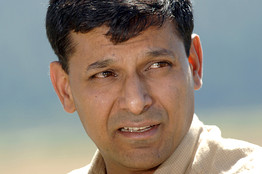
Mr. Rajan, a professor at the University of Chicago's Booth Graduate School of Business, chose that moment to deliver a paper called “Has Financial Development Made the World Riskier?”
His answer: Yes.
He says he had planned to write about how financial developments during Mr. Greenspan's 18-year tenure made the world safer. But the more he looked, the less he believed that. In the end, with Mr. Greenspan watching from the audience, he argued that disaster might loom.
Incentives were horribly skewed in the financial sector, with workers reaping rich rewards for making money, but being only lightly penalized for losses, Mr. Rajan argued. That encouraged financial firms to invest in complex products with potentially big payoffs, which could on occasion fail spectacularly.
He pointed to “credit-default swaps,” which act as insurance against bond defaults. He said insurers and others were generating big returns selling these swaps with the appearance of taking on little risk, even though the pain could be immense if defaults actually occurred.
Mr. Rajan also argued that because banks were holding a portion of the credit securities they created on their books, if those securities ran into trouble, the banking system itself would be at risk. Banks would lose confidence in one another, he said: “The interbank market could freeze up, and one could well have a full-blown financial crisis.”
Two years later, that's essentially what happened.

Feynman on Boltzmann Brains
Sean Carroll over at Cosmic Variance:
The Boltzmann Brain paradox is an argument against the idea that the universe around us, with its incredibly low-entropy early conditions and consequential arrow of time, is simply a statistical fluctuation within some eternal system that spends most of its time in thermal equilibrium. You can get a universe like ours that way, but you’re overwhelmingly more likely to get just a single galaxy, or a single planet, or even just a single brain — so the statistical-fluctuation idea seems to be ruled out by experiment. (With potentially profound consequences.)
The first invocation of an argument along these lines, as far as I know, came from Sir Arthur Eddington in 1931. But it’s a fairly straightforward argument, once you grant the assumptions (although there remain critics). So I’m sure that any number of people have thought along similar lines, without making a big deal about it.
One of those people, I just noticed, was Richard Feynman. At the end of his chapter on entropy in the Feynman Lectures on Physics, he ponders how to get an arrow of time in a universe governed by time-symmetric underlying laws.
So far as we know, all the fundamental laws of physics, such as Newton’s equations, are reversible. Then were does irreversibility come from? It comes from order going to disorder, but we do not understand this until we know the origin of the order. Why is it that the situations we find ourselves in every day are always out of equilibrium?
Feynman, following the same logic as Boltzmann, contemplates the possibility that we’re all just a statistical fluctuation.
Gaza 2008: Micro-Wars and Macro-Wars
Juan Cole in Informed Comment:
Israel's current attack on Gaza is aimed at forestalling an ever more successful microwar waged by Hamas. Its rockets were inaccurate and most seem to have fallen uselessly in the desert. But they did do some property damage and killed 15 Israelis over 8 years, and they also inflicted psychological blows on the fragile Israeli psyche. The Israeli leadership saw a danger that Hamas would become ever better entrenched, organically, in Gaza society and gain all the advantages such a social penetration offers, and that monetary aid from Iran and explosives smuggling through tunnels from the Egyptian Sinai would allow them eventually to wage a truly effective micro-war.
The Israeli leadership knew that it could not reply to Hamas's microwar without engaging in total war on the Gaza population, and that this step would be unpopular with the world's publics. But the Israeli leadership has successfully thumbed its nose and world public opinion so often and so successfully that this sort of consideration does not even enter into their practical calculations (except to the extent that they are careful to do a lot of propaganda for their war effort). Their estimation that they will suffer no practical bad consequences of attacks on civilians is certainly correct in the short to medium term.
Reflections on the Late Samuel Huntington, 1927-2008
Samuel Huntington died on Christmas Eve. Lee Siegel in the NYT:
It was not always so. In the classical age, when wars lasted for many years, even decades, and technology evolved at a snail’s pace, historians like Thucydides and Polybius took a longer view. To them, no single historical event mattered more than any other. All unfolded within endlessly recurring cycles dominated by the deep currents of human nature. This view might seem archaic — yet its lessons remain relevant. Bernard Madoff is accused of bilking an estimated $50 billion from investors by executing the same scheme Charles Ponzi used in 1921. Wall Street’s financial “instruments” have undergone a revolution in the last nine decades, but people are driven by the same appetites — envy, greed, fear.
It was in the modern era, with its belief in human progress, that thinkers began to interpret the world in a different way — not as a record of human folly but rather as an enactment of changing or evolving historical forces.
America, ‘Amerika’
From The New York Times:
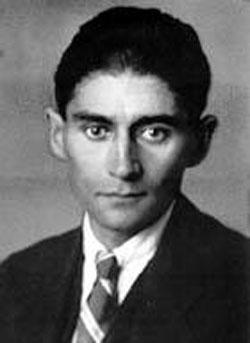
Most writers take years to become themselves, to transform their preoccupations and inherited mannerisms into a personal style. For Franz Kafka, who was an exception to so many rules of life and literature, it took a single night. On Sunday, Sept. 22, 1912, the day after Yom Kippur, the 29-year-old Kafka sat down at his desk and wrote “The Judgment,” his first masterpiece, in one all-night session. “Only in this way can writing be done,” he exulted, “only with such coherence, with such a complete opening out of the body and the soul.”
Everyone who reads Kafka reads “The Judgment” and the companion story he wrote less than two months later, “The Metamorphosis.” In those stories, we already find the qualities the world would come to know as “Kafkaesque”: the nonchalant intrusion of the bizarre and horrible into everyday life, the subjection of ordinary people to an inscrutable fate. But readers have never been quite as sure what to make of the third major work Kafka began writing in the fall of 1912 — the novel he referred to as “Der Verschollene,” “The Missing Person,” which was published in 1927, three years after his death, by his friend and executor Max Brod, under the title “Amerika.” The translator Michael Hofmann, whose English version of the book appeared in 1996, correctly called it “the least read, the least written about and the least ‘Kafka’ ” of his three novels. Now Schocken Books, which has been the main publisher of Kafka’s works since the 1930s, hopes to reintroduce his first novel to the world with a new translation, by Mark Harman. “If approached afresh,” Harman promises in his introduction, “this book could bear out the early claim by . . . Brod that ‘precisely this novel . . . will reveal a new way of understanding Kafka.’ ”
More here.
the elements of spam
14. Use the active voice.
Notice how aloof the passive voice is.
Your balls are to be slurped the most by cum-starved nymphos!!!!!
Hardly persuasive. The five exclamation points feel tacked on, an attempt by an inexperienced writer to breathe life into a desiccated construction. The active voice, however, allows you to write with verve and straightforwardness.
Cum-starved nymphos will slurp your balls the most!!!!!
16. Use definite, specific, concrete language.
Generalities enervate your writing; strong details invigorate it.
In short order, you'll notice enhanced length and girth.
What is meant by “short order”? A week? A month? The imprecision is suspicious. Further, avoid bankrupt modifiers such as enhanced. Rewrite with exactness.
more from McSweeney's here.
life before the segway
domesticity: today vs. 1861
The word “domesticity” gives me the vapors. Just the sight of a ball of yarn and knitting needles makes me have to lie down and fan myself for a while. A deeply neurotic part of my brain appears to equate learning how to sew a button with giving up my career, marrying a dentist, and moving to the suburbs to tend to little Basil and sweet Paprika. I am not afraid of spiders — I am afraid of needle and thread. It is a fear of turning into the type of woman that Christina Stead’s fictional Letty Fox described as “cave wives”: dull, stay-at-home types whose only topics of conversation are their new knitting projects, their children, or the interesting things their husbands said. I know that these women are mostly fictional stereotypes created by my own subconscious. Yet the fear still exists, and it is powerful.
more from The Smart Set here.