African Americans in the United States Congress

From Wikipedia:

Maxine_Waters_109th_pictorial Since 1870, 123 African Americans have served in the United States Congress. This figure includes five non-voting members of the House of Representatives who represented the District of Columbia and the U.S. Virgin Islands. In addition, in 1868, one candidate was elected to the House but was not seated due to an election dispute.

Reconstruction and Redemption

The right of Blacks to vote and to serve in the United States Congress was established after the Civil War by the Fifth,Thirteenth, Fourteenth, and Fifteenth Amendments to the Constitution. The Thirteenth Amendment (ratified December 6, 1865), abolished slavery. The Fourteenth Amendment (ratified July 9, 1868) made all people born or naturalized in the United States citizens. The Fifteenth Amendment (ratified February 3, 1870) forbade the denial or abridgment of the right to vote on account of race, color, or previous condition of servitude, and gave Congress the power to enforce the law by appropriate legislation. In 1866, Congress passed the Civil Rights Act and the Reconstruction Act, which dissolved all governments in the former Confederate states with the exception of Tennessee, and divided the South into five military districts to protect the rights of newly freed blacks. The act required that the former Confederate states ratify their constitutions conferring citizenship rights on blacks or forfeit their representation in Congress.

As a result of these measures, blacks acquired the right to vote across the Southern states. In several states (notably Mississippi and South Carolina), blacks were the majority of the population, and were able, by forming coalitions with pro-Union whites, to take control of the state legislatures, which at that time elected members of the United States Senate. In practice, however, only Mississippi elected black Senators. On February 25, 1870, Hiram Rhodes Revels became the first black member of the Senate and thereby also the first black member of the Congress. Blacks were a majority of the population in many congressional districts across the South. In 1870, Joseph Rainey of South Carolina became the first black member of the United States House of Representatives and thereby the first directly elected black member of Congress. Blacks were also elected from Alabama, Florida, Georgia, Louisiana, Mississippi, North Carolina and Virginia. All of these Reconstruction era black senators and representatives were members of the Republican Party. To many blacks, the Republicans represented the party of Abraham Lincoln and of the Emancipation Proclamation, while the Southern Democrats represented the party of slavery and secession. Until 1876, the Republicans made genuine efforts to ensure that southern blacks were able to vote. After the disputed Presidential election of 1876 between Democratic Samuel J. Tilden, governor of New York, and Republican Rutherford B. Hayes, governor of Ohio, an agreement between Democratic and Republican factions was negotiated, resulting in the Compromise of 1877. Under the compromise, Democrats conceded the election to Hayes and promised to acknowledge the political rights of blacks; Republicans agreed to no longer intervene in southern affairs and promised to appropriate a portion of federal monies toward southern projects….

Picture: Maxine Waters, member of the United States House of Representatives.

More here.

ART AND HUMAN REALITY: A Talk With Denis Dutton

From Edge:

Dutton500 What we regard as the modern human personality evolved during the Pleistocene, between 1.6 million and 10,000 years ago. If you encountered one of your direct ancestors from the beginning of the Pleistocene moseying down the street today, you would probably call the SPCA and ask for a crew with tranquilizer darts and nets to cart the beast off to the zoo. If you saw somebody from the end of the Pleistocene, 10,000 years ago, you'd call the Immigration & Naturalization Service—by that time our ancestors wouldn't have appeared much different from any of us today. It is that crucial period, those 80,000 generations of the Pleistocene before the modern period, which is the key to understanding the evolution of human psychology. Features of life that makes us most human—language, religion, charm, seduction, social status-seeking, and the arts—came to be in this period, no doubt especially in the last 100,000 years.

The human personality—including those aspects of it that are imaginative, expressive, and creative—cries out for a Darwinian explanation. If we're going to treat aspects of the personality, including the aesthetic expression, as adaptations, we've got to do it in terms of three factors.

The first is pleasure: the arts give us direct pleasure. A British study a few years ago showed that six percent of all waking life of the average British adult is spent enjoying fictions, in movies, plays, and on television. And that didn't even include fictional books—bodice-rippers, airport novels, high literature, and so forth. That kind of devotion of time and its pleasure-payoff demands some kind of explanation.

More here.

Wednesday, February 25, 2009

Coming Soon: Capitalism 3.0

Rodrik Dani Rodrik in Project Syndicate:

[The] “mixed-economy” model was the crowning achievement of the twentieth century. The new balance that it established between state and market set the stage for an unprecedented period of social cohesion, stability, and prosperity in the advanced economies that lasted until the mid-1970’s.

This model became frayed from the 1980’s on, and now appears to have broken down. The reason can be expressed in one word: globalization.

The postwar mixed economy was built for and operated at the level of nation-states, and required keeping the international economy at bay. The Bretton Woods-GATT regime entailed a “shallow” form of international economic integration that implied controls on international capital flows, which Keynes and his contemporaries had viewed as crucial for domestic economic management. Countries were required to undertake only limited trade liberalization, with plenty of exceptions for socially sensitive sectors (agriculture, textiles, services). This left them free to build their own versions of national capitalism, as long as they obeyed a few simple international rules.

The current crisis shows how far we have come from that model. Financial globalization, in particular, played havoc with the old rules. When Chinese-style capitalism met American-style capitalism, with few safety valves in place, it gave rise to an explosive mix. There were no protective mechanisms to prevent a global liquidity glut from developing, and then, in combination with US regulatory failings, from producing a spectacular housing boom and crash. Nor were there any international roadblocks to prevent the crisis from spreading from its epicenter.

The lesson is not that capitalism is dead. It is that we need to reinvent it for a new century in which the forces of economic globalization are much more powerful than before. Just as Smith’s minimal capitalism was transformed into Keynes’ mixed economy, we need to contemplate a transition from the national version of the mixed economy to its global counterpart.

The Story of Charles Dickens’s ‘Chaste Little Harem’ for Misfits

John Bowen in the TLS:

There is a lost book by Dickens, one that recorded some of the most remarkable encounters of his life. Within it, he catalogued the stories told him by the women – prostitutes, confidence tricksters, thieves and attempted suicides – whom he interviewed before they were admitted to Urania Cottage, the refuge for fallen women he established in Shepherd’s Bush in the 1840s and effectively directed for a decade or more. The money – substantial sums, for this was “high-end philanthropy” – came from the immensely wealthy Angela Burdett-Coutts, but the initial scheme and much of its everyday direction was Dickens’s alone, his most important and most characteristic charitable venture. Jenny Hartley’s excellent new book tells this extraordinary story with compassion, common sense and a lively awareness of the unruly, self-dramatizing energies (both Dickens’s and the women’s) at play within and beyond the home’s four walls.

He was the greatest novelist of the age, Burdett-Coutts its richest heiress, and they were determined to offer a chance to people who had none, or only bad ones. They could only help a tiny proportion of the great tide of vulnerable young women who washed up in the prisons and workhouses of mid-Victorian England, but they did so with determination, energy and imagination. The aged Duke of Wellington, with whom the much younger Miss Coutts was conducting a clandestine courtship, dismissed prostitutes as “irreclaimable”. More resistance came from the women themselves, many of whom rejected the prospect of a year’s quiet domesticity followed by emigration to a distant colony that were the conditions for entry.

The Future of Freedom and Control in the Internet Age

OSI Over at the Open Societies Institute, an audio of the event:

The Open Society Institute and Asia Society hosted an event with Open Society Fellows Rebecca MacKinnon and Evgeny Morozov that explored the changing landscape of Internet censorship. Special attention was given to the techniques employed by governments to co-opt and steer online discussions in ideologically convenient directions. Focusing on the specific cases of Russia and China, the panelists discussed how the strategies and tools of control, manipulation, and censorship have evolved in both countries.

War Crimes in Sri Lanka

Sampath Perera in Countercurrents:

A report released last Friday by the US-based Human Rights Watch (HRW) has provided a glimpse into the criminal character of the Sri Lankan government's war against the separatist Liberation Tigers of Tamil Eelam (LTTE). Entitled “End ‘War' on Civilians,” it calls on the government to “immediately cease its indiscriminate artillery attacks on civilians in the northern Wanni region and its policy of detaining displaced persons in internment camps”.

The HRW is no friend of the LTTE. The report criticises the LTTE's failure to allow civilians to leave its small remaining territory and its shooting at those who try. It also calls on the LTTE to stop placing its fighters near population centres. “With each battlefield defeat, the Tamil Tigers appear to be treating Tamil civilians with increased brutality,” James Ross, HRW legal and policy director, said in a press release.

These allegations are routinely made by the Sri Lankan government to justify its war and repeatedly echoed in the local and international media. What the HRW report does, however, is to undermine the government's own lies, which are rarely challenged in the press. The government and the military have denied all responsibility for civilian casualties and where they have been proven, blamed them on the LTTE.

In its press release, the HRW is unequivocal: “The Sri Lankan government has indicated that the ethnic Tamil population trapped in the war zone can be presumed to be siding with the LTTE and treated as combatants, effectively sanctioning unlawful attacks.

Frederica Krueger and the Eflite Blade mCX

I've recently become obsessed with flying radio-controlled helicopters, and everyone already knows that I am obsessed with my cat, Frederica Krueger, so I decided to combine the two in a video. I actually own four RC helicopters, from the tiny Eflite Blade mCX coaxial 4-channel model shown in the video, to a much larger Esky Honeybee CP2 6-channel machine with variable pitch main rotor which makes it capable of advanced aerobatics including inverted flight. But this tiny Blade mCX is my favorite because it is a true technological marvel of electronics, materials science, mechanics, and aerodynamics.

Of course, I spend more time repairing and maintaining the helicopters than flying them! If you decide to buy an RC helicopter, have a look at this guide, and know that it takes quite a while to learn to fly them. I was overconfident, bought an advanced model first, crashed and broke it into two in the first minutes (seconds, really) of flight, and then read (too late!) that that is the fate of more than 50% of RC helicopters once they come out of their box for the first time! (I ordered spare parts and managed to repair it with the help of my friend Georg who owns things like a soldering iron and a drill, but it took most of a day. By the way, I myself own only one tool, a Swiss Army knife, but it is this one!)

The scene at the end is the view of the mountain Plose, and the Eisack river, from my apartment in Brixen. And also as you can see at the end, Freddy is quite bored by the whole thing. By the way, I was cooking and then flying the helicopter quickly while my rice came to a boil (and I had a willing camera-woman available), that is why I am wearing an apron in part of the video. 🙂

ashbery explains a nest of ninnies

Ninnies2

James Schuyler and I began writing A Nest of Ninnies purely by chance. It was July 1952 and we were being given a lift back to New York from East Hampton, N.Y. where we had spent the weekend as guests of the musical comedy librettist John Latouche. Latouche planned to make a short movie starring us and our friend Jane Freilicher called “Presenting Jane,” from a scenario by Schuyler. A few scenes had just been shot, including a scene of Jane walking on water (actually a submerged dock on Georgica Pond); the film was never finished though Schuyler’s script recently surfaced and is going to be published soon. Now we were in a car being driven by the young cameraman, Harrison Starr, with his father as a passenger in the front seat. Since neither Jimmy nor I knew the Starrs very well, we at first contented ourselves with observing the exurban landscape along the old Sunrise Highway (this was before construction of the now infamous Long Island Expressway). Growing bored, Jimmy said, “Why don’t we write a novel?” And how do we do that, I asked. “It’s easy—you write the first line,” was his reply. This was rather typical of him—getting a brilliant idea and then conscripting someone else to realize it. Not to be outmaneuvered, I contributed a three-word sentence: “Alice was tired.”

more from Context here.

evil dead

Inside

The SS man lives on. More than half a century after the members of this organisation finally slipped out of their blood, sweat and office-dust covered uniforms once and for all, they are a more familiar sight than ever. Instantly recognisable in their high boots and black garb they stomp through films, comics and novels. So I find it surprising, neither as reader nor author, that a former SS officer has been saying “je” in a prize-winning “French bestseller for over a year now and “ich” in the 400-page German translation since the Febrary 23rd. And it’s not as if anyone in this country who takes up Jonathan Littell’s novel “Les Bienveillantes” doesn’t know what they’re in for, historically speaking. An SS man as narrator inevitably means no end of blood and thunder combined with the elaborate logistics and technological innovations necessary for the mass murder of what National Socialism deemed inferior human beings and enemies of the state. These crimes have been comprehensively documented and extensively recounted. Parallel to this factual research and fictionalisation, in the second half of the twentieth century – from the Nuremburg Trials to the most recent book publications – these crimes have been ascribed with a singular distinctiveness. More so than other horrific deeds, those committed by the SS are seen to possess a transcendent, metaphysical quality, which to this day, conjures up the very essence of evil.

more from Sign and Sight here.

some movies pry open your skull and punch you in the brain

Baldwin-MindfuckMovies

There’s a certain brand of movie that I most enjoy. Some people call them “Puzzle Movies.” Others call them “Brain Burners.” Each has, at some point or another, been referred to as “that flick I watched while I was baked out of my mind.” But the phrase I find myself employing, when casting around for a succinct term for the entire genre, is “Mindfuck Movies.” It’s an expression I picked up from a college roommate of mine, an enormous Star Trek: The Next Generation fan who adored those episodes when the nature of reality itself was called into question, usually after the holodeck went berserk or Q showed up and hornswoggled everyone into thinking they were intergalactic dung beetles (or whatever…I never really followed the show myself).

more from The Morning News here.

Wednesday Poem

Ozymandias
Percy Bysshe Shelley

I met a traveller from an antique land

Who said: Two vast and trunkless legs of stone

Stand in the desert … Near them, on the sand,

Half sunk, a shattered visage lies, whose frown,

And wrinkled lip, and sneer of cold command,

Tell that its sculptor well those passions read

Which yet survive, stamped on these lifeless things,

The hand that mocked them, and the heart that fed:

And on the pedestal these words appear:

“My name is Ozymandias, king of kings:

Look on my works ye mighty and despair!”

Nothing beside remains. Round the decay

Of that colossal wreck, boundless and bare

The lone and level sands stretch far away.

Quark star may hold secret to early universe

Paul Parsons in New Scientist:

Quark star A new kind of star may be lurking in the debris from a nearby supernova explosion. If confirmed, the “quark star” could offer fresh insights into the earliest moments of the universe.

When supernovae explode, they leave behind either a black hole or a dense remnant called a neutron star. However, recent calculations suggest a third possibility: a quark star, which forms when the pressure falls just short of creating a black hole.

Astronomers believe these form after the neutron star stage, when the pressure inside a supernova rises so high the neutrons disintegrate into their constituents – quarks. These form an even denser star than neutrons.

Observing a quark star could shed light on what happened just after the big bang, because at this time, the universe was filled with a dense sea of quark matter superheated to a trillion °C. While some groups have claimed to have found candidate quark stars, no discovery has yet been confirmed.

Now Kwong-Sang Cheng of the University of Hong Kong, China, and colleagues have presented evidence that a quark star formed in a bright supernova called SN 1987A (pictured), which is among the nearest supernovae to have been observed.

More here. [Thanks to Angus Faulkner.]

Racial segregation in the United States

From Wikipedia:

Colored Racial segregation in the United States has meant the physical separation and provision of separate facilities (especially during the Jim Crow era), but it can also refer to other manifestations of racial discrimination such as separation of roles within an institution, such as the United States Armed Forces up to 1948 when black units were typically separated from white units but were led by white officers. Racial segregation in the United States can be divided into de jure and de facto segregation. De jure segregation, sanctioned or enforced by force of law, was stopped by federal enforcement of a series of Supreme Court decisions beginning with Brown vs. Board of Education in 1954. The process of throwing off legal segregation in the United States lasted through much of the 1950s, 1960s and 1970s when civil rights demonstrations resulted in public opinion turning against enforced segregation. De facto segregation — segregation “in fact” — persists to varying degrees without sanction of law to the present day. The contemporary racial segregation seen in America in residential neighborhoods has been shaped by public policies, mortgage discrimination and redlining.

After Congress passed the Reconstruction Act of 1867, the ratification of the Fifteenth Amendment to the United States Constitution in 1870 providing the right to vote, and the Civil Rights Act of 1875 forbidding racial segregation in accommodations, Federal occupation troops in the South assured blacks the right to vote and to elect their own political leaders. The Reconstruction amendments asserted the supremacy of the national state and the formal equality under the law of everyone within it.[1] However this radical Reconstruction era would collapse because of multidimensional racialism related to the spread of democratic idealism. What began as region wide passage of ‘Jim Crow’ segregation laws that focused on issues of equal access to public activities and facilities would by 1910 have spread throughout the south, mandating the segregation of whites and blacks in the public sphere.

More here.

Outstanding ‘complexity’ wins Naomi Klein £50,000 inaugural Warwick prize

From The Guardian:

Naomi-Klein-002 The complexity of Naomi Klein's portrayal of the rise of disaster capitalism, The Shock Doctrine, has won its author the inaugural £50,000 Warwick prize for writing. The biennial prize, run by Warwick University, is promising to be one of the most unusual prizes on the books calendar, not least because it will tackle a different theme every two years, with “complexity” chosen as its initial focus. Chair of judges and author of “weird fiction” China Miéville praised The Shock Doctrine as a “brilliant, provocative, outstandingly written investigation into some of the great outrages of our time” which has “started many debates, and will start many more”. The book charts Klein's four-year investigation into moments of collective crisis, such as 9/11 and Hurricane Katrina, dubbing the ways in which they are exploited by global corporations “disaster capitalism”.

“At a time when the news out of the publishing industry is usually so bleak it's thrilling to be part of a bold new prize supporting writing, especially alongside such an exciting array of other books,” Klein said on learning of her win. She beat an extremely diverse shortlist which ranged from scientific theory to Spanish fiction to take the award, seeing off strong competition from Mad, Bad and Sad, Lisa Appignanesi's intricate study of the relationship between women and mental illness, and Alex Ross's Guardian first book award-winning history of 20th-century music, The Rest is Noise. Francisco Goldman's investigation into the murder of Guatemalan bishop Juan Gerardi, The Art of Political Murder, Stuart A Kauffman's Reinventing the Sacred and the solitary novel on the shortlist, Enrique Vila-Matas's study of an obsessive writer, Montano's Malady, completed the line-up.

More here.

When the hive mind works, it’s a beautiful thing

Michael Agger in Slate:

Angry_cat-300x258 Why is the Internet the place where civil discussion goes to die? It must be something in the tubes. Before there even was a mainstream Internet, in 1990, Electronic Frontier Foundation attorney Mike Godwin coined Godwin's Law: “As a Usenet discussion grows longer, the probability of a comparison involving Nazis or Hitler approaches one.” If you put a group of slightly asocial, opinionated people behind usernames, the conversation descends into flame wars and miscellaneous insanity.

Which is why I am so impressed with Ask MetaFilter, a question-and-answer site that grew out of the MetaFilter community in 2003. It's one of the few places on the Internet where you can find sensible, accommodating, actually helpful discussion. For example, last October, the user “Hands of Manos” posed the following query: “How can I be less cynical?” He went on to explain, “I hate most movies, I lost faith in the God I was raised to believe in as a child and I find very little joy in most things now a days” and noted, “My wife is pissed because I'm so negative and doubtful of everything.”

Thoughtful replies were posted immediately, with suggestions ranging from volunteering to banjo playing to avoiding “emotionally toxic” people to reading David McCullough's book on John Adams to looking at a blog that collects examples of how the world is getting better all the time.

More here.

Tuesday, February 24, 2009

Whistling at the Northern Lights

Jason Wilson in The Smart Set:

ScreenHunter_01 Feb. 24 15.37 Friends often accuse me of being too nostalgic. By afternoon, they say, I’ve become misty-eyed over what I’ve eaten for breakfast. That’s not completely true, I tell them. I’m sure there’s been a few bowls of cereal that have been unremembered or unremarked upon. But my protests are half-hearted, because I know my friends are right. Case in point: On a recent trip to Iceland, I became weepy at the sight of three sheep grazing in a grassy field underneath the summer midnight sun.

Let me explain that this was my first trip to Iceland in several years. In my 20s, over the course of nine visits, I spent what some might consider to be an eccentric amount of time in Iceland. I would like to tell you that I had a grand purpose — that I was translating the ancient Sagas or convincing the Icelanders not to hunt whales. But no, when I was wasn’t driving aimlessly on gravel roads shooting photos of the most beautiful landscapes in the world, most of my time was spent hanging out in the bars and cafes of Reykjavík.

During one late summer visit, I fell in with a Finnish woman named Eeva-Liisa and a Danish woman named Trine, who were also artfully perfecting their aimlessness.

More Leave a comment

El Dorado really did exist

Lost-cities-2

Fawcett, however, was convinced that the Amazon wilderness – an area virtually the size of the continental United States – concealed the remnants of at least one, and probably more, highly advanced civilizations. He was the last of a breed of explorers to venture into blank spots on the map with little more than a machete, a compass, and an almost divine sense of purpose, and he spent nearly two decades gathering evidence to prove his case and pinpointing a location. With his 21-year-old son, Jack, and Jack’s best friend, Raleigh Rimell, Fawcett finally set off into the Brazilian jungle to find the City of Z. Then he and his party vanished, giving rise to what has been described as “the greatest exploration mystery of the 20th century.” Fawcett had warned that no one should follow in his wake due to the danger, but scores of scientists, explorers, and adventurers plunged into the wilderness, determined to recover the Fawcett party, alive or dead, and to return with proof of Z. In February 1955, the New York Times claimed that Fawcett’s disappearance had set off more searches “than those launched through the centuries to find the fabulous El Dorado.” Some were wiped out by starvation and disease, or retreated in despair; others were murdered by tribesmen firing arrows dipped in poison. Then there were those adventurers who had gone to find Fawcett and, like him, simply disappeared in the forests that travelers had long ago christened the “green hell.”

more from Boston Globe Ideas here.

Bayesian Updating and Evolutionary Search: On Bayes, Darwin and Wallace

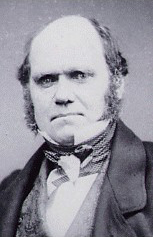
Charles_Darwin Cosma Shalizi over at Three-Toed Sloth:

[T]here are many situations where Bayesian learning does seem to work reasonably effectively, which in light of the Freedman-Diaconis results needs explaining, ideally in a way which gives some guidance as to when we can expect it to work. This is the origin of the micro-field of Bayesian consistency or Bayesian nonparametrics, and it's here that I find I've written a paper, rather to my surprise.

I never intended to work on this. In the spring of 2003, I was going to the statistics seminar in Ann Arbor, and one week the speaker happened to be Yoav Freund, talking about this paper (I think) on model averaging for classifiers. I got hung up on why the weights of different models went down exponentially with the number of errors they'd made. It occurred to me that this was what would happen in a very large genetic algorithm, if a solution's fitness was inversely proportional to the number of errors it made, and there was no mutation or cross-over. The model-averaged prediction would just be voting over the population. This made me feel better about why model averaging was working, because using a genetic algorithm to evolve classifier rules was something I was already pretty familiar with.

The next day it struck me that this story would work just as well for Bayesian model averaging, with weights depending on the likelihood rather than the number of errors. In fact, I realized, Bayes's rule just is the discrete-time replicator equation, with different hypotheses being so many different replicators, and the fitness function being the conditional likelihood.

As you know, Bob, the replicator dynamic is a mathematical representation of the basic idea of natural selection. There are different kinds of things, the kinds being called “replicators”, because things of one kind cause more things of that same kind to come into being. The average number of descendants per individual is the replicator's fitness; this can depend not only on the properties of the replicator and on time and chance, but also on the distribution of replicators in the population; in that case the fitness is “frequency dependent”. In its basic form, fitness-proportional selection is the only evolutionary mechanism: no sampling, no mutation, no cross-over, and of course no sex. The result is that replicators with above-average fitness increase their share of the population, while replicators with below-average fitness dwindle.

This is a pretty natural way of modeling half of the mechanism Darwin and Wallace realized was behind evolution, the “selective retention” part — what it leaves out is “blind variation”.