Atheists and Secularists for Gaza

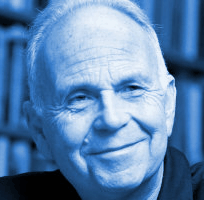
Our own Justin E. H. Smith at his website:

Justin Interested in joining? Go here.

How much longer will it remain possible to elide outrage against the Israeli siege of Gaza with support for Hamas? How far can the semantic band linking these two be stretched before it simply snaps?

And wouldn't it be useful if there were a concerted effort on the part of those of us who could not possibly be Hamas sympathizers, to the extent that we think all religion is childish, to vigilantly watch for and loudly denounce attempts to conflate our opposition to the Israeli assault with sympathy for Islamic jihad? Let us make that effort, by calling into existence a loose confederation of likeminded “Atheists for Gaza.”

Atheists for Gaza will announce themselves as having as little in common with Hamas as they do with Jerry Falwell, the pope, Vojislav Šešelj in Serbia, the BJP in India or the Shas Party in Israel.

Atheists consider them all cavemen. But we are clear-sighted enough to see the siege of Gaza for what it is: not a defense of democracy against the theocratic tyrants who would destroy it, but rather the collective punishment of a population, born into an open-air prison, for the desperate and ineffective gestures of its most frustrated members. Israel's attack is completely disproportionate to the threat posed by Hamas militants, as it is a full-scale military assault against a civilian population that does not even have its own military.

There are likely almost as many atheists opposed to the assault on Gaza as there are atheists, for the same cognitive faculty that enables us not to be duped by unprovable claims as to the existence of a transcendent order is also the one that helps us to see through political bullshitting in general, and Israel's euphemistic appeal to 'self-defense' in particular. Yet astoundingly the public-relations war being conducted by Israel, simultaneously with its more conventional war on Gaza, has been remarkably successful in silencing the voice of the humanist objectors to the war by associating it with the indisputably anti-humanist voice of Hamas, against which Israel is supposedly defending freedom and democracy in the Middle East. But in fact Israel is only defending democracy for itself, and squalid Bantustans for everyone else.

More here. And I urge you to consider joining Justin's group now! I have.
Tuesday, January 20, 2009

Adverbial placement in the Obama oath flub

Benjamin Zimmer in his very good blog, Language Log:

Chief Justice John Roberts' administration of the presidential oath to Barack Obama was far from smooth. Early reports differ in saying who stumbled: NBC and ABC say the flub was Roberts', while the AP says it was Obama's. I think both men were a bit nervous, and the error that emerged from their momentary disfluency came down to a problem of adverbial placement.

The Constitution gives the oath as:

“I do solemnly swear (or affirm) that I will faithfully execute the office of President of the United States, and will to the best of my ability, preserve, protect and defend the Constitution of the United States.”

More here.

David Schmid nominates Slavoj Žižek for Secretary of Culture

200px-slavoj_zizek_in_liverpool_cropped Amitava points me to this:

Dear President-Elect Obama,

In the past few months, you’ve received a lot of advice, and doubtless you’ll receive a lot more in the months and years to come. Let me improve the ratio of useful to useless advice by recommending that you appoint Slavoj Žižek as the USA’s first ever Secretary of Culture.

Apart from dramatically improving America’s reputation with the rest of the world, this appointment has several other advantages, some of which are so obvious that they barely need commenting upon. Can’t sleep at night? Go down to the White House kitchen for milk and cookies and you’ll probably find Žižek at the table, writing and ready to talk about anything—and I do mean anything. Faced with someone asking you how your administration differs from previous administrations? Simply point out that Žižek is a member of your cabinet, and even the most hostile questioner will lapse into stunned, chastened silence.

In the remainder of this letter, however, I want to draw your attention to some other, less obvious benefits that come from Žižek’s presence in your administration, all of which have to do with his value as a symptom.

Tuesday Poem

///
Quiet Night
Robert Wrigley

The bat's opened thorax blips

—that's its heart

beating, says the child—and its mouth bites at

the air, and the cat

that brought it down sits two steps below

and preens, while the pale cone

shed by the porch light makes and remakes itself

with the shadows of miller, moth, and midge.

Listen, the darkness just under the stars

is threaded with passings:

nighthawks and goatsuckers, the sleepy respirations of the forest,

and the owl that asks first for a name,

then leaves its spar

and spreads a silence

so vast and immobile

you can hear whole migrations inside it,

the swoons, the plummets, the bland ascensions

of souls.
//

From Books, New President Found Voice

Michiko Kakutani in The New York Times:

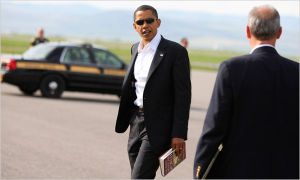
Obama WASHINGTON — In college, as he was getting involved in protests against the apartheid government in South Africa, Barack Obama noticed, he has written, “that people had begun to listen to my opinions.” Words, the young Mr. Obama realized, had the power “to transform”: “with the right words everything could change -— South Africa, the lives of ghetto kids just a few miles away, my own tenuous place in the world.”

Much has been made of Mr. Obama’s eloquence — his ability to use words in his speeches to persuade and uplift and inspire. But his appreciation of the magic of language and his ardent love of reading have not only endowed him with a rare ability to communicate his ideas to millions of Americans while contextualizing complex ideas about race and religion, they have also shaped his sense of who he is and his apprehension of the world.

Mr. Obama’s first book, “Dreams From My Father” (which surely stands as the most evocative, lyrical and candid autobiography written by a future president), suggests that throughout his life he has turned to books as a way of acquiring insights and information from others — as a means of breaking out of the bubble of self-hood and, more recently, the bubble of power and fame. He recalls that he read James Baldwin, Ralph Ellison, Langston Hughes, Richard Wright and W. E. B. Du Bois when he was an adolescent in an effort to come to terms with his racial identity and that later, during an ascetic phase in college, he immersed himself in the works of thinkers like Nietzsche and St. Augustine in a spiritual-intellectual search to figure out what he truly believed.

More here. (Note: Finally, after eight years, you do not have to apologize for being well read. Smart, in fact, is the new cool. Congratulations to all 3qd readers on this special day. Please read this entire article and learn for yourself what an incredible person will be at the helm.)

Lab-Worn Doctor-Lady

Carl Zimmer discusses an example of atrocious science writing in his excellent blog, The Loom:

I…I just don’t know where to begin with the opening to this article in the latest issue of Esquire. “Pretty lady”? “The new poor part of town”? A noxious martini of mixed metaphors topped with an olive of ridiculous hype. (Forget it–I can’t compete with this stuff.)

If we science writers want to defend our old-fashioned craft against its critics, how do we defend stuff like this?

ScreenHunter_07 Jan. 20 12.21 First thing that happens when you have a heart attack, an unlucky part of your heart turns white. The blood’s stopped pumping to that spot, so it becomes pink-speckled bloodlessness, coarse and cool like grapefruit gelatin.

This is the moment when, if they could think, these heart cells in this new poor part of town would go, “Well, shit.” Mortal things have a godly way of knowing when they’ll die.

Next comes the back-alley bruise of organ death. The cells turn from white to black, all shitted up like a body pit in a war, two weeks after. Suddenly, soldier, this part of your heart is dead, only it’s still in your body, attached to the good section — the 90210 ventricle — and the good part is smirking, it’s saying, “Come on, rebuild yourself, man!”

But the dead part can’t fix itself. And the healthy part can’t throw it a bloody rope. So the whole heart begins to die — 650,000 American deaths a year.

But now look here, a woman. She is a pretty lady of Pakistani heritage who highlights her soccer-mom layers, which you don’t expect from a lab-worn doctor-lady. And she’s got ideas. Wild ones. Hina Chaudhry believes she can do what the body can’t: fix the dead parts.

Our discussion yesterday about bad science writing took a sharp turn, jumped the rails, and landed over at Language Log, where my brother Ben takes over. Suddenly I feel a new kinship with the Psalms Book of Proverbs….

In ‘Geek Chic’ and Obama, New Hope for Lifting Women in Science

Natalie Angier in The New York Times:

Science With the inauguration of an administration avowedly committed to Science as the grand elixir for the nation’s economic, environmental and psycho-reputational woes, a number of scientists say that now is the time to tackle a chronic conundrum of their beloved enterprise: how to attract more women into the fold, and keep them once they are there.

Researchers who have long promoted the cause of women in science view the incoming administration with a mix of optimism and we’ll-see-ism. On the one hand, they said, the new president’s apparent enthusiasm for science, and the concomitant rise of “geek chic” and “smart is the new cool” memes, can only redound to the benefit of all scientists, particularly if the enthusiasm is followed by a bolus of new research funds. On the other hand, they said, how about appointing a woman to the president’s personal Poindexter club, the President’s Council of Advisers on Science and Technology? The designated leaders so far include superstars like Harold Varmus, a Nobel laureate, and Eric Lander, genome meister.

The Rosalind Franklin Society, a group devoted to “recognizing the work of prominent women scientists,” has suggested possible co-chairwomen for the panel.

More here.

Sea of Poppies

Ruchira Paul reviews Amitav Ghosh's new novel in Accidental Blogger:

ScreenHunter_06 Jan. 20 12.09 A historical novel, Sea of Poppies is also a love story(ies) flowering both on land and water. It is the account of thriving global trade, addictions, greed, betrayal, war, occupation and the rigid hierarchy of class, caste, race and power. Thoroughly researched, Ghosh meticulously creates the culture of 19th century India in the early grips of foreign occupation and that of seafaring adventurers, pirates and mercenaries. It is set in a time when the East India Company had discovered that among the varied natural resources across the vast expanse of India, the land and climate of the north central Gangetic plains offered one more lucrative opportunity of raising revenues for the British crown which had the additional enticing value of becoming the gateway to China. Under British supervision, the first large scale opium production in India's history began in a region across eastern Uttar Pradesh and western Bihar where farmers were commissioned (coerced) to devote their entire tracts of agricultural land to the growing of poppies for opium. Some quantities of the opium produced in India entered the local markets and it was also utilized for medical purposes in the form of morphine, an effective pain killer and anesthetic. But a large portion of the raw opium was exported to China, the other large Asiatic nation whose wealth and resources the Brits eyed hungrily and whose rulers, fearful of the European intent in Asia, had adamantly barred entry to foreigners. The plan was to make the Chinese so addicted and dependent on opium that out of desperation, the wily mandarins would open the doors of the secretive land to the procurers of the drug. Apart from the complicated shenanigans of opium trafficking, the novel also introduces readers to another British export – the first large scale relocation of Indian laborers to Africa, the Caribbeans and the far east as indentured servants, slaves with a new name.

More here.

The Last Professor

Stanley Fish in the New York Times:

ScreenHunter_05 Jan. 20 11.31 This view of higher education as an enterprise characterized by a determined inutility has often been challenged, and the debates between its proponents and those who argue for a more engaged university experience are lively and apparently perennial. The question such debates avoid is whether the Oakeshottian ideal (celebrated before him by Aristotle, Kant and Max Weber, among others) can really flourish in today’s educational landscape. It may be fun to argue its merits (as I have done), but that argument may be merely academic – in the pejorative sense of the word – if it has no support in the real world from which it rhetorically distances itself. In today’s climate, does it have a chance?

In a new book, “The Last Professors: The Corporate University and the Fate of the Humanities,” Frank Donoghue (as it happens, a former student of mine) asks that question and answers “No.”

Donoghue begins by challenging the oft-repeated declaration that liberal arts education in general and the humanities in particular face a crisis, a word that suggests an interruption of a normal state of affairs and the possibility of restoring the natural order of things.

More here. [Thanks to Aditya Dev Sood.]

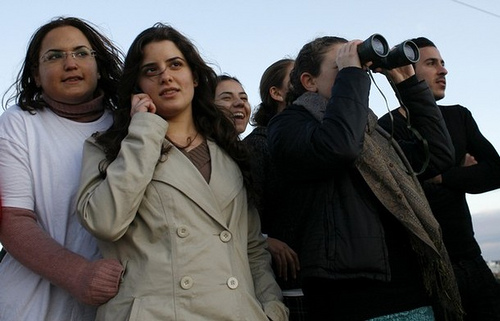
Arabs need 2 die

Israeli Settlers

Palestinian Child

Photos show young Israeli settlers watching the bombardment of Gaza, and a Gazan child.

Rory McCarthy in The Guardian:

Of all the horrors visited on the civilians of Gaza in this war the fate of the Samounis, a family of farmers who lived close together in simple breeze-block homes, was perhaps the gravest.

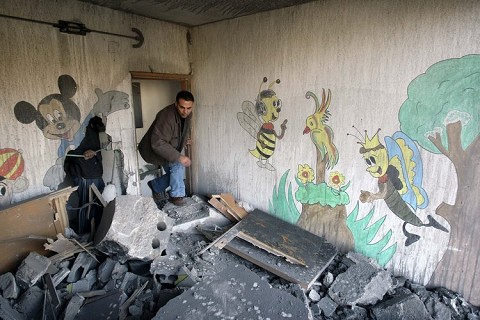
Around a dozen homes in this small area were destroyed, no more than piles of rubble in the sand yesterday. Helmi Samouni's two-storey house was one of the few left standing, despite the gaping hole from a large tank shell that pierced his blackened bedroom wall. During the invasion it had been taken over by Israeli soldiers, who wrecked the furniture and set up sand-bagged shooting positions throughout.

They left behind their own unique detritus: bullet casings, roasted peanuts in tins with Hebrew script, a plastic bag containing a “High Quality Body Warmer”, dozens of olive-green waste disposal bags, some empty, some stinking full – the troops' portable toilets.

But most disturbing of all was the graffiti they daubed on the walls of the ground floor. Some was in Hebrew, but much was naively written in English: “Arabs need 2 die”, “Die you all”, “Make war not peace”, “1 is down, 999,999 to go”, and scrawled on an image of a gravestone the words: “Arabs 1948-2009”.

More here. And Amnesty International finds “indisputable evidence of the widespread use of white phosphorus in crowded residential areas of Gaza City and elsewhere in the territory.” From the BBC:

The Amnesty group said one of the places worst-affected by white phosphorus was the UN Relief and Works Agency (Unrwa) compound in Gaza City.

Israeli shell fire set the compound on fire on 15 January, burning stocks of food and other humanitarian supplies in a warehouse and coming close to stocks of fuel.

The head of Unrwa in Gaza, John Ging, said at the time that “three rounds that emitted phosphorus” hit the compound.

The Israeli military said it had come under fire from Palestinian fighters inside the compound and had fired back.

Human Rights Watch also said it observed “dozens and dozens” of white phosphorus shells being fired by Israel at the Gaza Strip.

More here.

Pete Seeger & Bruce Springsteen – “This Land is Your Land”

Henry Farrell over at Crooked Timber pointed to this one, from the inaugural celebration concert in DC. It seemed appropriate for the occasion. This version has the oft omitted choruses:

In the squares of the city, In the shadow of a steeple;

By the relief office, I'd seen my people.

As they stood there hungry, I stood there asking,

Is this land made for you and me?
There was a big high wall there that tried to stop me;

Sign was painted, it said private property;

But on the back side it didn't say nothing;

That side was made for you and me.
Nobody living can ever stop me,

As I go walking that freedom highway;

Nobody living can ever make me turn back

This land was made for you and me.

Monday, January 19, 2009

Sunday, January 18, 2009

The Pervert’s Guide to Cinema

16pervert.xlarge1 Stephen Holden reviews Zizek's new movie:

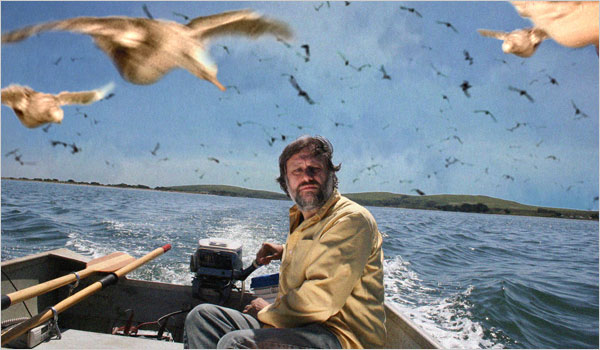
In this globe-trotting documentary, directed by Sophie Fiennes (sister of Ralph and Joseph), Mr. Zizek, a blustery, excitable lecturer, is often filmed speaking on the actual locations of the films he discusses, or on recreated sets. We find him riding on a motorboat in Bodega Bay in northern California, the site of “The Birds,” and prowling around the locations of “Vertigo”; those are the two Hitchcock films besides “Psycho” to receive the closest scrutiny.

Like Freud’s division of the psyche into three parts, the movie unfolds in three loosely overlapping sections. The first examines how the movies arouse our desires and allow us to channel unconscious drives into entertaining thrills and chills. The shower drain in “Psycho” and the toilet bowl that backs up in Francis Ford Coppola’s conspiracy thriller “The Conversation,” he says, are vehicles for transporting evidence of our brute animal selves to a safe distance.

The second part examines sex and fantasy in movies and reaches some major conclusions: that sex is impossible without fantasy; that anxieties are the most authentic emotions we feel; and that fantasies, and by extension the movies that address them, are defenses against anxiety.

Part 3, which contemplates appearance versus reality in movies, explores the paradoxical scene from “The Wizard of Oz” in which the all-powerful Wizard is discovered to be an old man pontificating from behind a curtain. Even when the illusion of the Wizard’s omnipotence is exposed, Mr. Zizek theorizes, there is something more real in the illusion than in the reality behind it. And so when the old man hands the Scarecrow a diploma to prove he has a brain, the Scarecrow is convinced he is smart.

Mr. Zizek is a little bit like the Wizard.

Flat N All That

Matt Taibbi reviews Thomas Friedman's Hot, Flat and Crowded in the New York Press:

In The World is Flat, the key action scene of the book comes when Friedman experiences his pseudo-epiphany about the Flat world while talking with himself in front of InfoSys CEO Nandan Nilekani. In Hot, Flat and Crowded, the money shot comes when Friedman starts doodling on a napkin over lunch with Moisés Naím, editor of Foreign Policy magazine. The pre-lunching Friedman starts drawing, and the wisdom just comes pouring out:

I laid out my napkin and drew a graph showing how there seemed to be a rough correlation between the price of oil, between 1975 and 2005, and the pace of freedom in oil-producing states during those same years.

Friedman then draws his napkin-graph, and much to the pundit’s surprise, it turns out that there is almost an exact correlation between high oil prices and “unfreedom”! The graph contains two lines, one showing a rising and then descending slope of “freedom,” and one showing a descending and then rising course of oil prices.

Friedman plots exactly four points on the graph over the course of those 30 years. In 1989, as oil prices are falling, Friedman writes, “Berlin Wall Torn Down.” In 1993, again as oil prices are low, he writes, “Nigeria Privatizes First Oil Field.” 1997, oil prices still low, “Iran Calls for Dialogue of Civilizations.” Then, finally, 2005, a year of high oil prices: “Iran calls for Israel’s destruction.”Take a look for yourself: I looked at this and thought: “Gosh, what a neat trick!” Then I sat down and drew up my own graph, called SIZE OF VALERIE BERTINELLI’S ASS, 1985-2008, vs. HAP- PINESS. It turns out that there is an almost exact correlation! Note the four points on the graph:

graph1.jpg

1990: Release of Miller’s Crossing

1996-97: Crabs

2001: Ate bad tuna fish sandwich at Times Square Blimpie; felt sick 2008: Barack Obama elected

That was so much fun, I drew another one! This one is called AMERICAN PORK BELLY PRICES vs. WHAT MIDGETS THINK ABOUT AUSTRALIA 1972-2002.

[H/t: Linta Varghese]

The Rocky Road to Recovery

Stiglitz Joseph Stiglitz in Project Syndicate:

A consensus now exists that America’s recession – already a year old – is likely to be long and deep, and that almost all countries will be affected. I always thought that the notion that what happened in America would be decoupled from the rest of the world was a myth. Events are showing that to be so.

Fortunately, America has, at last, a president with some understanding of the nature and severity of the problem, and who has committed himself to a strong stimulus program. This, together with concerted action by governments elsewhere, will mean that the downturn will be less severe than it otherwise would be.

The United States Federal Reserve, which helped create the problems through a combination of excessive liquidity and lax regulation, is trying to make amends – by flooding the economy with liquidity, a move that, at best, has merely prevented matters from being worse. It’s not surprising that those who helped create the problems and didn’t see the disaster coming have not done a masterly job in dealing with it. By now, the dynamics of the downturn are set, and things will get worse before they get better.

In some ways, the Fed resembles a drunk driver who, suddenly realizing that he is heading off the road starts careening from side to side. The response to the lack of liquidity is ever more liquidity. When the economy starts recovering, and banks start lending, will they be able to drain the liquidity smoothly out of the system? Will America face a bout of inflation? Or, more likely, in another moment of excess, will the Fed over-react, nipping the recovery in the bud?

The Inaugural Poet

From The Root:

Elizabeth%20Alexander The selection of Yale professor and poet Elizabeth Alexander to write and deliver a poem at the inauguration of Barack Obama marks not only the return of poetry to a place of prominence in presidential history (she is only the fourth to read at a presidential swearing-in), but represents a true mind-meld between the president-elect and his chosen bard. Professor Alexander is a virtuosic writer and a shrewd analyst of American letters, a polyglot who moves fluently from essay to sonnet, from free verse to drama—and in her teaching, traces equally diverse themes. As the big day approaches, it’s hard to tell who will serve as muse to whom—Alexander and Obama share ties to Chicago and to the classroom, and a demonstrated commitment to the power of words and of community institutions.

I recently caught up with my former teacher to discuss her work and the now-finished poem she will deliver at Tuesday’s ceremony.

The Root: Congratulations! How were you chosen for the honor? Who called who?

Elizabeth Alexander: I actually don’t know! You’d have to ask the inaugural committee what happened. I just got a phone call saying that they were asking me to write a poem and deliver it. It was a tremendous thrill. Kind of like Sarah Palin, I didn’t even think about saying no.

I think one of the really exciting things about the Obama campaign and his election is that so many more people than in the past have felt called to serve, have felt that they needed to step up their game, do what they could. You know, not much has been asked of us in the last eight years—now is the time. So I thought that this question was a continuation of the same mission we heard expressed on the campaign trail.

More here.

A pointless war has led to a moral defeat for Israel

Gaza_klinik_DW_Poli_725145g

Editorial in The Observer:

The notion that the country's security problems can be resolved by the unilateral use of extreme force is a persistent delusion among Israeli politicians. In this case, the problem was perceived to be Hamas rocket fire into southern Israel; the solution was judged to be a war against Hamas. That analysis did not allow for the vital, humane recognition that, in densely populated Gaza, an all-out war against Hamas is, by necessity, an attack on the civilian population.

Even on its own terms, the campaign has failed. Israeli authorities will insist that they have limited the ability of Hamas to launch rocket attacks. But the ostensible war aim was destroying that capability completely.

Israel will also claim that its campaign has exposed a lack of support for Hamas in many Arab capitals; that Hamas' position as the ruling authority in Gaza has been undermined; and that Hamas has been revealed as little more than a terrorist proxy acting on behalf of and armed by Syria and Iran.

But the reality is that the status of Hamas as the preferred vehicle for Palestinian resistance to Israeli occupation has been enhanced by the indiscriminate brutality of the military assault.

More here.