
Category: Recommended Reading
The Arabian Nights
From The Telegraph:
When Dickens’s David Copperfield describes his schooldays, his memories quickly fall into the miserable grooves of “tear-blotted copy-books, canings, rulerings, hair-cuttings, rainy Sundays, suet puddings, and a dirty atmosphere of ink surrounding all”. But there is also a more cheering routine that punctuates his time at school: storytelling. Learning that the “romantic and dreamy” Copperfield has a ready fund of stories up his pyjama sleeves, the dashing Steerforth decides that “you shall tell ’em to me”. With a new episode to look forward to every bedtime, “We’ll make some regular Arabian Nights of it.”
To some extent, the passage is a joke about Dickens’s own career, given how often he published his novels in instalments – a Scheherazade who depended on drawing out stories for his livelihood rather than his life. But the joke is also shadowed by a genuine sense of threat. Copperfield’s recollection that “we commenced carrying [the plan] into execution that very evening” reminds us that the original Scheherazade spins out her narrative thread every night to save herself from a far more serious form of “execution”. For her, each sentence is potentially a death sentence; each full stop is potentially the end of both story and storyteller.
More here.
What a Night!
ALEX WITCHEL in The New York Times:
IN SPITE OF MYSELF: A Memoir By Christopher Plummer
Now that Plummer has published “In Spite of Myself: A Memoir,” it is the most welcome of surprises to discover that this actor writes and reports almost as well as he acts. No kidding. To be sure, in his writing he is a bit hammy, often playing fast and loose with time frames, tone and details, not to mention exercising profligate use of exclamation points — the man thinks in soliloquies. But the result for anyone who loves, loves, loves the theater, not to mention the vanished New York of the 1950s and ’60s, is a finely observed, deeply felt (and deeply dishy) time-traveling escape worthy of a long stormy weekend. Just grab a quilt and a stack of pillows. No need for a delectable assortment of bonbons. They’re in the book.
Plummer begins at the beginning. He grows up in Montreal, something of a poor little rich boy, the great-grandson of the Right Honorable Sir John Joseph Caldwell Abbott, who was president of the Canada Central Railway and the country’s first native-born prime minister.
Plummer’s parents divorce early, and his father disappears. As older relatives die, the money falls away and his mother holds down two jobs while her teenage son, bound up in “a web of good manners and suppressed emotions,” finds release in the worlds of jazz, theater and night life. That also means drinking: “At an embarrassingly early age, I began to hit the sauce. Booze was a national sport up north. It was essential! — (a) to keep you warm, (b) to keep you from going mad, (c) to keep your madness going.”
More here.
World’s First Computer Rebuilt, Rebooted After 2,000 Years
Charlie Sorrel in Wired:
A British museum curator has built a working replica of a 2,000-year-old Greek machine that has been called the world's first computer.
A dictionary-size assemblage of 37 interlocking dials crafted with the precision and complexity of a 19th-century Swiss clock, the Antikythera mechanism was used for modeling and predicting the movements of the heavenly bodies as well as the dates and locations of upcoming Olympic games.
The original 81 shards of the Antikythera were recovered from under the sea (near the Greek island of Antikythera) in 1902, rusted and clumped together in a nearly indecipherable mass. Scientists dated it to 150 B.C. Such craftsmanship wouldn't be seen for another 1,000 years — but its purpose was a mystery for decades.
Many scientists have worked since the 1950s to piece together the story, with the help of some very sophisticated imaging technology in recent years, including X-ray and gamma-ray imaging and 3-D computer modeling.
Now, though, it has been rebuilt. As is almost always the way with these things, it was an amateur who cracked it. Michael Wright, a former curator at the Science Museum in London, has built a replica of the Antikythera, which works perfectly.
More here.
What the U.S. economic crisis means for Latin America
Alvaro Vargas Llosa in The New Republic:
A lot of what has helped Latin America's economies in recent years — access to capital markets, foreign investments, remittances from emigrants, the price of natural resources — depends on the health of the global marketplace. Anytime the U.S. stock markets lose $30 trillion in a few months — 10 times Latin America's gross domestic product — the ripple effects will be felt south of the Rio Grande.
Rather than engage in reform, slash spending and put away some rainy-day money, Latin American governments preserved the status quo and boosted public expenditures by 10 percent annually in matters mostly unrelated to infrastructure, creating alarming new commitments. Except for Chile, which managed the revenue from its copper sales prudently, many of the nations that produce oil (Mexico, Venezuela, Ecuador), minerals (Brazil, Peru) or agricultural commodities (Argentina, Brazil, Uruguay) went on a binge. They will now find themselves starved for cash at a time when they are pledging new forms of government profligacy in the face of the global recession. The temptation to fund it via inflation will be irresistible.
More here.
Life inside a rallying cry
Basharat Peer in The National:
I watched the video of Imran Babar’s phone call on a website at my parents’ house in Srinagar, the Kashmiri capital, a day after he called India TV. His voice and accent betrayed his lower-middle-class origins in Pakistani Punjab, far from the Deccan Plateau in southern India – even as he spoke of the oppression of Indian Muslims. But I was struck when he turned to Kashmir, saying: ““What was the Israeli Army chief doing in Kashmir? What is he to the Indian government? An uncle?” His voice was growing agitated and he shouted, “Was he there to teach what the Israelis do in Gaza and what they did to Bait-ul-Muqadas [the al Aqsa Mosque]?”
Here was a Punjabi terrorist who claimed to speak in the name of Kashmiris and Palestinians alike, assuming the mantle of oppressed communities to rationalise the murder of innocents in hotels and train stations. I was rattled, sitting in Srinigar, watching the loud theatre of terror drown out the complexities of life in Kashmir – watching the cause of Kashmiri independence become linked, in the mind of the world, with the deeds of jihadists in Mumbai.
More here.
Welcome to the Brain of Ruchira

[Thanks to, well… Ruchira. 🙂 ]
Friday, December 19, 2008
Conor Cruise O’Brien, 1917-2008
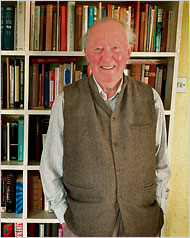
Mr. O’Brien, once described by Christopher Hitchens as “an internationalist, a wit, a polymath and a provocateur,” was a rare combination of scholar and public servant who applied his erudition and stylish pen to a long list of causes, some hopeless, others made less so by his combative reasoning. When called upon, he would put down his pen and enter the fray, more often than not emerging bruised and bloodied.
As a diplomat, he helped chart Ireland’s course as an independent, anticolonialist voice in the United Nations and played a critical role in the UN’s intervention in the Congo in 1961. As vice-chancellor of the University of Ghana he fell out with the dictator Kwame Nkrumah over the question of academic freedom, and while teaching at New York University, he took part in an antiwar demonstration that resulted in his arrest.
Most notably, as a lifelong commentator on Irish politics and as a government minister in the early 1970s, he argued passionately against a united Ireland without the full consent of the Protestant north and bitterly criticized the tacit support for the IRA then prevalent in southern Ireland. “I intend to administer a shock to the Irish psyche,” he said, defiantly. With the Troubles raging in the North, his position made him a hated figure for many Irish, as did his later opposition to the peace process aimed at bringing Sinn Fein into the government of Northern Ireland.
“It’s a Wonderful Life” Reconsidered
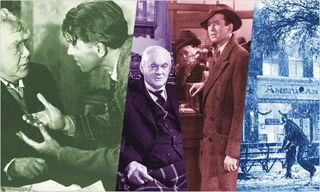
Many are pulling the movie out of the archives lately because of its prescience on the perils of trusting bankers. I’ve found, after repeated viewings, that the film turns upside down and inside out, and some glaring — and often funny — flaws become apparent. These flaws have somehow deepened my affection for it over the years.
Take the extended sequence in which George Bailey (James Stewart), having repeatedly tried and failed to escape Bedford Falls, N.Y., sees what it would be like had he never been born. The bucolic small town is replaced by a smoky, nightclub-filled, boogie-woogie-driven haven for showgirls and gamblers, who spill raucously out into the crowded sidewalks on Christmas Eve. It’s been renamed Pottersville, after the villainous Mr. Potter, Lionel Barrymore’s scheming financier.
Here’s the thing about Pottersville that struck me when I was 15: It looks like much more fun than stultifying Bedford Falls — the women are hot, the music swings, and the fun times go on all night. If anything, Pottersville captures just the type of excitement George had long been seeking.
And what about that banking issue? When he returns to the “real” Bedford Falls, George is saved by his friends, who open their wallets to cover an $8,000 shortfall at his savings and loan brought about when the evil Mr. Potter snatched a deposit mislaid by George’s idiot uncle, Billy (Thomas Mitchell).
But isn’t George still liable for the missing funds, even if he has made restitution?
Intelligent soldiers most likely to die in battle
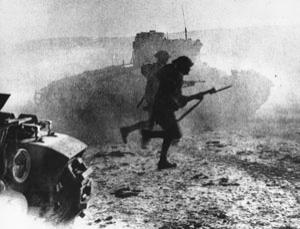
Being dumb has its benefits. Scottish soldiers who survived the second world war were less intelligent than men who gave their lives defeating the Third Reich, a new study of British government records concludes.
The 491 Scots who died and had taken IQ tests at age 11 achieved an average IQ score of 100.8. Several thousand survivors who had taken the same test – which was administered to all Scottish children born in 1921 – averaged 97.4.
The unprecedented demands of the second world war – fought more with brains than with brawn compared with previous wars – might account for the skew, says Ian Deary, a psychologist at the University of Edinburgh, who led the study. Dozens of other studies have shown that
“We wonder whether more skilled men were required at the front line, as warfare became more technical,” Dear says.
His team's study melds records from Scottish army units with results of national tests performed by all 11-year-olds in 1932. The tests assessed verbal reasoning, mathematics and spatial skills.
the shoes we longed for

Strip the words away, and his and the Iraqi people’s cry of deep pain, anger and defiance would amount to no more than a shoe-throwing insult. But the words were heard. “This is the farewell kiss, you dog,” he shouted as he threw the first shoe. The crucial line followed the second shoe: “This is from the widows, the orphans and those who were killed in Iraq .” Once those words were heard, the impact of a pair of shoes became electrifying. A young journalist has put aside the demands of his profession, preferring to act as the loudest cry of his long-suffering people. If one considers the torture and killings in Iraqi and US jails that Muntadhar often mentioned in his reports for al-Baghdadia satellite TV station, he was certainly aware he risked being badly hurt. As the Iraqi and Arab satellite stations switched from the live press conference to reporting reaction to the event, the stunned presenters and reporters were swept away by popular expressions of joy in the streets, from Baghdad to Gaza to Casablanca.
more from The Guardian here.
crazy-ass pompeii
Being Mary Beard is a difficult balancing act. On the one side is the unrepentant scholar, trained in Latin epigraphy in the rigorous school of Joyce Reynolds, passionately determined to get things exactly right, ready to weigh probabilities judiciously, and thoroughly informed about the contents of the latest Dutch festschrift. On the other is the ardent blogger, and the writer (and TLS Classics editor) determined to communicate with audiences larger than a Roman historian or archaeologist can normally reach. Pompeii: The life of a Roman town combines these two personae, often triumphantly, sometimes a little uneasily. Beard’s knowledge of what has been written about Pompeii – a huge amount – is encyclopedic and up-to-the-minute. She knows, for example, who has argued (in a Dutch festschrift) that the wall painting which shows a man on horseback labelled “Spartaks” is not after all Spartacus with his name in Oscan, as some of us had fondly imagined and as I still believe.
more from the TLS here.
Friday Poem
///
Evaluate
Idries ShahAlways evaluate evidence critically,
said a wise man of the Land of Fools.I shall test you on feasibilty.
What if I were to say: Climb that moonbeam,
what would you answer?I would say, I might slip on the way up.
Wrong! You should have thought of
chopping footholds with an axe.From: The Magic Monastery
.
Toujours Tingo: Weird words and bizarre phrases
From The Telegraph:
Gwarlingo: Welsh description of the sound of a grandfather clock before it strikes.
Pisan zapra: Malay for the time needed to eat a banana.
Layogenic: Filipino for someone good-looking from afar but ugly up close.
Mouton enragé : French for someone calm who loses their temper – literally, “an enraged sheep”.
Kati-kehari: Hindi meaning to have the waist of an elegant lion.
Yupienalle: Swedish for a mobile phone – literally, “yuppie teddy” like a security blanket.
Ikibari: Japanese, a “lively needle” and describing a man who is willing but under-endowed.
Tantenverführer: German for a young man with suspiciously good manners.
Fensterln: German for climbing through a window to avoid someone's parents so you can have sex without them knowing.
Stroitel: Russian for a man who likes to have sex with two women at the same time.
Okuri-okami: Japanese for a man who feigns thoughtfulness by offering to see a girl home only to try to molest her once he gets in the door – literally, a “see-you-home wolf”
Trennungsagentur: German for someone hired by a woman to tell her boyfriend he has been dumped.
Picture: Chantepleurer: French for singing at the same time as crying, exactly what these North Korean children are doing as they sing 'Kim Il Sung we want to see you one more time'
More here.
THE YEAR IN SCIENCE
From MSNBC:
Why would anyone want to create diseased cells in the lab? Because that's the best way to learn how to cure those diseases. The ability to transform a patient's ordinary skin cells into virtually any kind of tissue – including the cells that caused the illness in the first place – ranks as this year's biggest breakthrough in the journal Science's annual roundup. The other stars of this year's scientific show include the gene-decoders who are figuring out the instructions for making a woolly mammoth, or even a Neanderthal. Then there are the astronomers who, for the first time, spotted what appear to be planets circling alien stars. And let's not forget the biggest science experiment on the planet, the Large Hadron Collider, which started up this year (and almost immediately broke down).
One of the year's biggest science stories is breaking too late for Science's annual list – but came to light today on the journal's ScienceInsider blog: Harvard physicist John Holdren, who is the director of the Woods Hole Research Center as well as an adviser to President-elect Barack Obama on science and environmental issues, is in line to be named the next White House science adviser, Science's Eli Kintisch quotes sources as saying. The report is spreading like wildfire through the blogosphere. It's worth noting that Holdren's name surfaced as one of the top prospects more than a year ago on Cosmic Log, in the midst of our discussion about future science czars.
More here.
Beyond grey goo
Roly Allen in the New Statesman:
Martyn Amos holds the rare distinction of having been awarded the world's first PhD in his chosen field, DNA computing, and Genesis Machines is his eye-opening presentation of this young science to the lay reader. Attacking our preconceptions, Amos briskly surveys the history of computing from Descartes to Turing and beyond, demonstrating that the concept of “the computer” is a question to which our ugly silicon, plastic and metal boxes are not the only answers.
True, the pace of their development has been jaw-dropping, but it pales into insignificance next to the implications of our recent understanding of the molecules of DNA and the enzymes which act upon it. Indeed, if the book has a hero, it is DNA, whose four bases (A, G, C and T) have powerful properties – notably their tendency to bond to each other in predictable and manipulable ways.
And if you need a human hero, then it may be Len Adleman, the American polymath who was among the first to realise the resemblance between the DNA chain and Turing's theoretical information strings – a foundation of modern computing. (This was in 1983, shortly after he invented the cryptography that secures your internet shopping, and around the same time as he coined the phrase “computer virus” – quite a chap, this Adleman, it seems.)
It is hard not to share Amos's excitement as the computational possibilities of the DNA revolution become clear.
More here. [The book has recently been published in the U.S. and I highly recommend it.]
Harun Yahya’s Dark Arts
Nathan Schneider in Seed Magazine:
Harun Yahya is a pen name for Adnan Oktar, the leader of a small but well-financed religious community that's based there. After years of refusing to grant interviews, Oktar has begun welcoming Western journalists to meet with him. The BBC, Le Monde, Der Spiegel, and many others have taken him up on his offer. In mid-October, I made the journey.
To many scientists, Oktar and his books are a running joke. His 17-inch tall, 850-page book called The Atlas of Creation, which began appearing in mailboxes of scientists across Europe and the United States two years ago, aims to debunk Darwinian evolution with brilliant color, sensational photo-collages, and Qur'anic exegesis. It presents hundreds of fossils, pictured alongside modern flora and fauna, as evidence that all species were created separately by God millions of years ago and have undergone no modification at all. The Atlas goes on to blame Darwinist theories for a whole roster of worldly ills, including fascism, terrorism, and even the Columbine shooting.
The Atlas's claims about genetics, zoology, and paleontology are full of error. Like many creationists, Yahya mistakes ongoing debates about the mechanics of evolution as evidence that the theory as a whole is in crisis. He grossly exaggerates the age of fossils of modern animals, labeling a snow leopard skull as 80 million years old, while the oldest remains known to scientists are far more recent. One blogger even discovered that some of the creatures pictured in the Atlas are photos of realistic fishing lures, with their hooks still visible. Yahya has arranged to have RichardDawkins.net banned in Turkey — along with dozens of other sites — for publishing this fact.
More here.
News Stories in Photographs 2008

“Pakistani people watch as an acrobat rides his motorcycle around a circular track during the memorial of Muslim saint Syed Lal Shah next to his shrine in Muree, about 60 kilometers north of Islamabad, Pakistan on June 15, 2008. Hundred of pilgrims gather during six days every year to pay respect at the tomb of Syed Lal Shah.” (AP Photo/Emilio Morenatti)
Lots more great photos in the Boston Globe here.
Demands for war crimes prosecutions are now growing in the mainstream
Glenn Greenwald in Salon:
Those who cheer on shameful and despicable acts always want to encourage everyone to forget what they did, and those who commit crimes naturally seek to dismiss demands for investigations and punishment as nothing more than distractions and vendettas pushed by those who want to wallow in the past.
Surprisingly, though, demands that Bush officials be held accountable for their war crimes are becoming more common in mainstream political discourse, not less so. The mountain of conclusive evidence that has recently emerged directly linking top Bush officials to the worst abuses — combined with Dick Cheney's brazen, defiant acknowledgment of his role in these crimes (which perfectly tracked Bush's equally defiant 2005 acknowledgment of his illegal eavesdropping programs and his brazen vow to continue them) — is forcing even the reluctant among us to embrace the necessity of such accountability.
It's almost as though everyone's nose is now being rubbed in all of this: now that the culpability of our highest government officials is no longer hidden, but is increasingly all out in the open, who can still defend the notion that they should remain immune from consequences for their patent lawbreaking? As Law Professor Jonathan Turley said several weeks ago on The Rachel Maddow Show: “It's the indictment of all of us if we walk away from a clear war crime.”
More here.
Thursday, December 18, 2008
The Torture Report

Editorial in the New York Times:
Most Americans have long known that the horrors of Abu Ghraib were not the work of a few low-ranking sociopaths. All but President Bush’s most unquestioning supporters recognized the chain of unprincipled decisions that led to the abuse, torture and death in prisons run by the American military and intelligence services.
Now, a bipartisan report by the Senate Armed Services Committee has made what amounts to a strong case for bringing criminal charges against former Defense Secretary Donald Rumsfeld; his legal counsel, William J. Haynes; and potentially other top officials, including the former White House counsel Alberto Gonzales and David Addington, Vice President Dick Cheney’s former chief of staff.
The report shows how actions by these men “led directly” to what happened at Abu Ghraib, in Afghanistan, in Guantánamo Bay, Cuba, and in secret C.I.A. prisons.
It said these top officials, charged with defending the Constitution and America’s standing in the world, methodically introduced interrogation practices based on illegal tortures devised by Chinese agents during the Korean War. Until the Bush administration, their only use in the United States was to train soldiers to resist what might be done to them if they were captured by a lawless enemy.
More here.