
///
Evaluate
Idries ShahAlways evaluate evidence critically,
said a wise man of the Land of Fools.I shall test you on feasibilty.
What if I were to say: Climb that moonbeam,
what would you answer?I would say, I might slip on the way up.
Wrong! You should have thought of
chopping footholds with an axe.From: The Magic Monastery
.
Category: Recommended Reading
Toujours Tingo: Weird words and bizarre phrases
From The Telegraph:
Gwarlingo: Welsh description of the sound of a grandfather clock before it strikes.
Pisan zapra: Malay for the time needed to eat a banana.
Layogenic: Filipino for someone good-looking from afar but ugly up close.
Mouton enragé : French for someone calm who loses their temper – literally, “an enraged sheep”.
Kati-kehari: Hindi meaning to have the waist of an elegant lion.
Yupienalle: Swedish for a mobile phone – literally, “yuppie teddy” like a security blanket.
Ikibari: Japanese, a “lively needle” and describing a man who is willing but under-endowed.
Tantenverführer: German for a young man with suspiciously good manners.
Fensterln: German for climbing through a window to avoid someone's parents so you can have sex without them knowing.
Stroitel: Russian for a man who likes to have sex with two women at the same time.
Okuri-okami: Japanese for a man who feigns thoughtfulness by offering to see a girl home only to try to molest her once he gets in the door – literally, a “see-you-home wolf”
Trennungsagentur: German for someone hired by a woman to tell her boyfriend he has been dumped.
Picture: Chantepleurer: French for singing at the same time as crying, exactly what these North Korean children are doing as they sing 'Kim Il Sung we want to see you one more time'
More here.
THE YEAR IN SCIENCE
From MSNBC:
Why would anyone want to create diseased cells in the lab? Because that's the best way to learn how to cure those diseases. The ability to transform a patient's ordinary skin cells into virtually any kind of tissue – including the cells that caused the illness in the first place – ranks as this year's biggest breakthrough in the journal Science's annual roundup. The other stars of this year's scientific show include the gene-decoders who are figuring out the instructions for making a woolly mammoth, or even a Neanderthal. Then there are the astronomers who, for the first time, spotted what appear to be planets circling alien stars. And let's not forget the biggest science experiment on the planet, the Large Hadron Collider, which started up this year (and almost immediately broke down).
One of the year's biggest science stories is breaking too late for Science's annual list – but came to light today on the journal's ScienceInsider blog: Harvard physicist John Holdren, who is the director of the Woods Hole Research Center as well as an adviser to President-elect Barack Obama on science and environmental issues, is in line to be named the next White House science adviser, Science's Eli Kintisch quotes sources as saying. The report is spreading like wildfire through the blogosphere. It's worth noting that Holdren's name surfaced as one of the top prospects more than a year ago on Cosmic Log, in the midst of our discussion about future science czars.
More here.
Beyond grey goo
Roly Allen in the New Statesman:
Martyn Amos holds the rare distinction of having been awarded the world's first PhD in his chosen field, DNA computing, and Genesis Machines is his eye-opening presentation of this young science to the lay reader. Attacking our preconceptions, Amos briskly surveys the history of computing from Descartes to Turing and beyond, demonstrating that the concept of “the computer” is a question to which our ugly silicon, plastic and metal boxes are not the only answers.
True, the pace of their development has been jaw-dropping, but it pales into insignificance next to the implications of our recent understanding of the molecules of DNA and the enzymes which act upon it. Indeed, if the book has a hero, it is DNA, whose four bases (A, G, C and T) have powerful properties – notably their tendency to bond to each other in predictable and manipulable ways.
And if you need a human hero, then it may be Len Adleman, the American polymath who was among the first to realise the resemblance between the DNA chain and Turing's theoretical information strings – a foundation of modern computing. (This was in 1983, shortly after he invented the cryptography that secures your internet shopping, and around the same time as he coined the phrase “computer virus” – quite a chap, this Adleman, it seems.)
It is hard not to share Amos's excitement as the computational possibilities of the DNA revolution become clear.
More here. [The book has recently been published in the U.S. and I highly recommend it.]
Harun Yahya’s Dark Arts
Nathan Schneider in Seed Magazine:
Harun Yahya is a pen name for Adnan Oktar, the leader of a small but well-financed religious community that's based there. After years of refusing to grant interviews, Oktar has begun welcoming Western journalists to meet with him. The BBC, Le Monde, Der Spiegel, and many others have taken him up on his offer. In mid-October, I made the journey.
To many scientists, Oktar and his books are a running joke. His 17-inch tall, 850-page book called The Atlas of Creation, which began appearing in mailboxes of scientists across Europe and the United States two years ago, aims to debunk Darwinian evolution with brilliant color, sensational photo-collages, and Qur'anic exegesis. It presents hundreds of fossils, pictured alongside modern flora and fauna, as evidence that all species were created separately by God millions of years ago and have undergone no modification at all. The Atlas goes on to blame Darwinist theories for a whole roster of worldly ills, including fascism, terrorism, and even the Columbine shooting.
The Atlas's claims about genetics, zoology, and paleontology are full of error. Like many creationists, Yahya mistakes ongoing debates about the mechanics of evolution as evidence that the theory as a whole is in crisis. He grossly exaggerates the age of fossils of modern animals, labeling a snow leopard skull as 80 million years old, while the oldest remains known to scientists are far more recent. One blogger even discovered that some of the creatures pictured in the Atlas are photos of realistic fishing lures, with their hooks still visible. Yahya has arranged to have RichardDawkins.net banned in Turkey — along with dozens of other sites — for publishing this fact.
More here.
News Stories in Photographs 2008

“Pakistani people watch as an acrobat rides his motorcycle around a circular track during the memorial of Muslim saint Syed Lal Shah next to his shrine in Muree, about 60 kilometers north of Islamabad, Pakistan on June 15, 2008. Hundred of pilgrims gather during six days every year to pay respect at the tomb of Syed Lal Shah.” (AP Photo/Emilio Morenatti)
Lots more great photos in the Boston Globe here.
Demands for war crimes prosecutions are now growing in the mainstream
Glenn Greenwald in Salon:
Those who cheer on shameful and despicable acts always want to encourage everyone to forget what they did, and those who commit crimes naturally seek to dismiss demands for investigations and punishment as nothing more than distractions and vendettas pushed by those who want to wallow in the past.
Surprisingly, though, demands that Bush officials be held accountable for their war crimes are becoming more common in mainstream political discourse, not less so. The mountain of conclusive evidence that has recently emerged directly linking top Bush officials to the worst abuses — combined with Dick Cheney's brazen, defiant acknowledgment of his role in these crimes (which perfectly tracked Bush's equally defiant 2005 acknowledgment of his illegal eavesdropping programs and his brazen vow to continue them) — is forcing even the reluctant among us to embrace the necessity of such accountability.
It's almost as though everyone's nose is now being rubbed in all of this: now that the culpability of our highest government officials is no longer hidden, but is increasingly all out in the open, who can still defend the notion that they should remain immune from consequences for their patent lawbreaking? As Law Professor Jonathan Turley said several weeks ago on The Rachel Maddow Show: “It's the indictment of all of us if we walk away from a clear war crime.”
More here.
Thursday, December 18, 2008
The Torture Report

Editorial in the New York Times:
Most Americans have long known that the horrors of Abu Ghraib were not the work of a few low-ranking sociopaths. All but President Bush’s most unquestioning supporters recognized the chain of unprincipled decisions that led to the abuse, torture and death in prisons run by the American military and intelligence services.
Now, a bipartisan report by the Senate Armed Services Committee has made what amounts to a strong case for bringing criminal charges against former Defense Secretary Donald Rumsfeld; his legal counsel, William J. Haynes; and potentially other top officials, including the former White House counsel Alberto Gonzales and David Addington, Vice President Dick Cheney’s former chief of staff.
The report shows how actions by these men “led directly” to what happened at Abu Ghraib, in Afghanistan, in Guantánamo Bay, Cuba, and in secret C.I.A. prisons.
It said these top officials, charged with defending the Constitution and America’s standing in the world, methodically introduced interrogation practices based on illegal tortures devised by Chinese agents during the Korean War. Until the Bush administration, their only use in the United States was to train soldiers to resist what might be done to them if they were captured by a lawless enemy.
More here.
Blaming CRA for the Crisis, Redux
James Kwak in The Baseline Scenario:
One might have hoped that one collateral benefit of the end of the election season would be the end of the attempt to pin the financial crisis on the Community Reinvestment Act, a 1970s law designed to prohibit redlining (the widespread practice of not lending money to people in poor neighborhoods). Unfortunately, Peter Wallison at the American Enterprise Institute (thanks to one of our commenters for pointing this out) has proven that some people will never give up in their fight to prove that the real source of society’s ills is government attempts to help poor people. Regular readers hopefully realize that we almost never raise political topics here, but sometimes I just get too frustrated.
Many people who are more expert than I in the housing market have already debunked the CRA myth. Here are just a few: Janet Yellen, Menzie Chinn, Randall Kroszner, Barry Ritholtz, David Goldstein and Kevin Hall, and Elizabeth Laderman and Carolina Reid. Mark Thoma does a good job keeping track of the debate.
One of the main arguments against the CRA-caused-the-crisis thesis is that the large majority of subprime loans, and delinquent subprime loans, and the housing bubble in general, had nothing to do with the CRA; it was done by lenders who are not governed bythe CRA, and was done in places like the exurbs of Las Vegas or the beachfront condos in Florida, not poor neighborhoods (which generally saw less price appreciation than average). So Wallison comes up with a new argument: relaxed lending standards, encouraged by the CRA, caused lending standards to be relaxed in the rest of the housing market. Really, I’m not making this up.
Daniel Barenboim’s Music Quickens Time

Virtuoso pianist and conductor Daniel Barenboim in his new book, Music Quickens Time, draws on his profound engagement with music to argue its urgent value and importance in our everyday lives. While we may sometimes think of personal, social, and political issues as existing independently of each other, Barenboim shows with bravura and passion how music teaches us that this is impossible.
Drawing on his own involvement with Palestine in a conversation with Paul Holdengräber, Barenboim will examine the transformative power of music in the world, from his own performances of Wagner in Israel, his friendship with Edward Said, to the creation of the internationally acclaimed West-Eastern Divan Orchestra, which continues to bring together young musicians from Egypt, Syria, Lebanon, Jordan, Tunisia, and Israel to make music. Barenboim describes first-hand how music offers us a way to explore differences and at times resolve some of the most seemingly intractable issues of our times.
The Mumbai Attacks and The City’s Local History of Religious Violence
Faisal Devji in The Immanent Frame:
Since colonial times the practice of religious violence had possessed a mirror-like character, in which the defilement of a temple was repaid by that of a mosque or the murder of three Muslims by that of an equal number of Hindus, often leading to a spiral of violence as the stakes were incrementally raised. Such tactics lend a measure of control and predictability to tribal feuds as well as gangland conflicts in many parts of the world. The 1993 blasts, however, departed this logic for the first time to provide a different kind of “retaliation”, one that not only stepped through the mirror of religious violence but also exited the political arena because it was unattached to any political claim let alone to a political party, creating only a sense of existential self-respect and agency for ordinary Muslims that was much-remarked upon at the time. A consequence of the disparity of numbers between Hindus and Muslims, or between the firepower of militants and the state, terrorism effectively removed the mirror that had for so long been set between the two communities, with “Muslim” bombs and “Hindu” riots following each other until very recently, when it appears as if explosions at mosques and other places of Muslim resort indicate an attempt to “balance” mutual violence again.
Whatever its nature Hindu militancy remains within the political arena, supporting as it does established political parties and tied as it is to electoral struggles in different parts of the country. Outside Kashmir, however, and unrelated to the struggle for autonomy and secession there, Muslim terrorism lacks a politics. As if recognizing this lack, such bombings have never provoked Hindu retaliation, since according to the anthropologist Vyjayanthi Rao they appear to come from nowhere and cannot be linked to any particular Muslim population. Indeed these forms of violence indicate the increasing helplessness and even irrelevance of traditional Muslim authorities, both secular and religious, something of which they are well aware, being no longer in a position either to control militants or act as mediators and stop conflict between communities. All of this only proves Gandhi’s dictum that religious violence is a form of luxury because its combatants’ lack of political responsibility allows them to rely upon the state to reassert order.
The Paintings of Giorgio Morandi

The paintings of Giorgio Morandi express an apparent humility of means underwritten by a life of seemingly total dedication to art. His works are searching, unassuming and small, 30 by 40 centimeters being the average dimensions of a canvas. They are imbued with a muted passion and appear to be unconcerned with anything beyond their manifest subject: simple houses set in dull landscapes or still lifes composed of the most ordinary household objects, bottles chiefly, but also nondescript boxes, carefully placed and painted with a diffident touch in matte pinks, pale yellows, pistachio and colors that have no name–the color of putty, say, or baked unglazed clay. Once he settled into his mature style, Morandi invariably titled his painting Natura morta if it was a still life or Paesaggio if it was a landscape. One irresistible Natura morta, painted in 1953, depicts five objects arranged in two rows. The front row contains a box painted with three wide horizontal stripes of white and muddy brown, a buttery yellow box and a grayish brown box, all rendered in slightly distorted perspective. The striped box and the yellow box occlude a black, handleless cup and an ornamental glass carafe with a wide lip and twisted neck. The group, which stands in a washed-out background of indeterminate color, casts a collective shadow to the right. The gray box seems almost to be shoving the yellow box at its side, exerting such a strong force that it distorts the edge where their tops meet.
Thursday Poem
///
Window
—1st Part
Forough FarrokhzadA window for seeing.
A window for hearing.
A window I like well
that plunges to the heart of the earth
and opens to the vast unceasing love in blue.
A window lavishing the tiny hands of loneliness
with the night's perfume from gentle stars.
A window through which one could invite
the sun for a visit to abandoned geraniums.One window is enough for me.
I come from the land of dolls, from under
the shade of paper trees in a storybook grove;
from arid seasons of barren friendship and love
in the unpaved alleys of innocence;
from years when the pallid letters of the alphabet
grew up behind desks of tubercular schools;
from the precise moment children could write
“stone” on the board and the startled starlings took wing
from the ancient tree.I come from among the roots of carnivorous plants,
and my head stills swirls with the sound
of a butterfly's terror – crucified with a pin to a book.When my trust hung from the feeble rope of justice
and the whole city tore my heart's lamps to shreds,
when love's innocent eyes were bound
with the dark kerchief of the law, and blood gushed
from my dreams' unglued temples,
when my life was no longer anything,
nothing at all except the tick tick of a clock on the wall,
I understood that I must, must, must
deliriously love.One window is enough for me.
Translation: Sholeh Wolpé
Via: The Middle Stage
The Mr. Moms of the Fish World
From Scientific American:
Male pipefish, seahorses and their kin are the stay-at-home dads of the fish world, rearing their young in placentalike pouches from the time they are fertilized eggs until they can swim away. New research shows that these involved fathers not only shelter their young but transfer key nutrients to their offspring via their own versions of a placenta, helping to supplement what the embryos received from their mother in the egg yolk. “In this study, we clearly demonstrate embryonic uptake of paternally derived nutrients in two pipefish species,” says researcher Jennifer Ripley, a biologist at West Virginia University in Morgantown (W.V.U.). “This is the first time we actually have evidence for this placental-like role in these fishes. It has been hypothesized for years but not demonstrated until now.”
To test whether males of two pipefish species, Syngnathus fuscus (northern) and S. floridae (dusky), pass nutrients to their young, Ripley and her colleague Christy Foran, a biologist at W.V.U., injected brooding fish—those carrying embryos in various stages of development—with the lipid (fat) palmitic acid and the amino acid lysine, two important embryonic building blocks. The substances—both of which are essential for development and must be supplied by the dad if egg reserves are not sufficient—were tagged with isotopes (a traceable version of an element) that allowed the researchers to track them with spectroscopy from father to embryo. Although the pipefish embryos did not take up much of the lipid, for reasons that are not clear, Ripley says, the amino acid readily moved from father to offspring. Moreover, the researchers say, the amount of amino acid that was transferred rose as the embryos matured—suggesting that as the nutritional needs of the babies grew, their fathers provided more of the substance.
More here.
Morgan Meis on Malcolm Gladwell. Again.
Our own Morgan Meis in The Smart Set:
A little background is in order. Last summer, I picked up Malcolm Gladwell's bestselling book Blink. Then I wrote a belated review for 3QuarksDaily. The book, like most everything Gladwell writes, is a fun and sometimes exciting read. But I decided that, in the end, there wasn't much of an argument in it. A nasty feeling crept over me. I wondered whether we'd all been duped into thinking that Gladwell had been saying something interesting when it really boiled down to well-placed anecdotes and well-told stories. The nasty feeling transformed into an admittedly nasty review titled “Down, I Say, Down With Malcolm Gladwell!”
I asked the reader to allow me to prove that Blink is “a piece of shit.” I talked about “sliminess” and “outright incoherence.” I called him a “huckster” (I've always liked that word) and then confessed that I hated his looks, “his hair scuffed up just so,” “his cute little suits.” And just for fun, I concluded the diatribe with the thought that the only thing that may salvage Gladwell as a human being is that he's a “bad fraud.” Done.
A couple of days later, I got an e-mail from Mr. Gladwell. He responded to my argument seriously and honestly and wondered, in good humor, whether I really needed to go after his hair and suits. I am a suck-up to power anyway but this disarmed me. Directly upon the heels of our civil and pleasant e-mail exchange, Gawker picked up my review as part of what they called the “Malcolm Gladwell backlash.” This was really too much. I have signed the notional contract that every pretentious intellectual has: We must at all times thumb our noses at Gawker. I began to feel bad about the tone of the review even in its humor. Rapidly, I capitulated. I wrote an apology to Malcolm, though, in an act of astounding bravery, I held to my basic philosophical position as regards Blink. I was, inevitably, denounced by most everyone I know for managing both to be a jerk and an ass-kisser all in one short week. Such is the plight of courageous men. History will absolve me.
But I promised one thing to my faithful readers and perhaps more importantly, to literary culture itself. I promised to review his next book, with a freshened eye. Well, the world of belles-lettres can release its collective breath. I have read the book. I am prepared to speak.
Sean Penn for Senator!
George Packer in The New Yorker:
The cover of the December 15th Nation magazine features an article by the veteran foreign correspondent Sean Penn on his recent trip to Venezuela and Cuba. Travelling in the company of Douglas Brinkley, the noted actor, and Christopher Hitchens, the world-famous hedge-fund executive and philanthropist, Penn was the invited guest of President Hugo Chávez, of Venezuela, well-known as an advocate for the Social Gospel, and of Raúl Castro, Cuba’s humorous, wonky, and athletically gifted new chief executive.
During the course of his extensive interviews with Chávez and Castro, Penn displays skills as a stenographer that would come as a pleasant surprise to fans of “Fast Times at Ridgemont High.” Many pages of Castro monologue are transcribed and transmitted to North American readers without interruption (except when “Raúl interrupts himself”), proving that Penn understands the first principle of the good interview: make the subject feel comfortable enough to open up. Good interviewers also know how to analyze the material they work so hard to elicit, and Penn treats his readers to gems such as “Inside, I’m wondering, Have I got a big story to break here? Or is this of little relevance?”
More here.
Video Shows Every Flight on Earth in 72 Seconds
Dave Demerjian in Wired:
Aspiring scientists from the Zurich School of Applied Sciences have built a video simulation that displays the flight path of every commercial flight in the world over a 24-hour period. There isn't much of an application for it, but it sure is cool to look at.
While the map may look complex, Dr. Karl Rege tells us he and his team found it surprisingly simple to assemble using data readily available on the internet.
“We used a commercial website called FlightStats to gather global flight and schedule information,” he says. “So there was no need to contact the different airlines.”
The team mined FlightStats for the departure and arrival times of every commercial flight in the world, then plugged it all into a computer to assemble their simulation. For the sake of simplicity, they assumed every plane traveled at the same speed and every flight took the most direct route to its destination. Then every flight was assigned a position on a Miller cylindrical projection, which is similar to a Mercator Projection but doesn't distort the poles so much.
More here.
The Top 10 Everything of 2008

Wednesday, December 17, 2008
On Evaluating US Education Through International Comparisons
Clifford Adelman in Inside Higher Ed:
U.S. higher education is not doing as well as we could or should in gross participation and attainment matters, but on the tapestry of honest international accounts, we are doing better than the propaganda allows. When you read reports from other countries’ education ministries that worry about their horrendous dropout rates and problems of access, you would think they don’t take population ratios seriously.
Indeed, they don’t, and one doesn’t need more than 4th grade math to see the problems with population ratios, particularly in the matter of the U.S., which is, by far, the most populous country among the 30 OECD member states.
None of our domestic reports using OECD data bothers to recognize the relative size of our country, or the relative diversity of races, ethnicities, nativities, religions, and native languages — and the cultures that come with these — that characterize our 310 million residents. Though it takes a lot to move a big ship with a motley crew, these reports all would blithely compare our educational landscape with that of Denmark, for example, a country of 5.4 million, where 91 percent of the inhabitants are of Danish descent, and 82 percent belong to the same church.
For an analogous common sense case, Japan and South Korea don’t worry about students from second language backgrounds in their educational systems. Yes, France, the UK, and Germany are both much larger and more culturally diverse than Denmark, but offer nowhere near the concentration of diversities found in the U.S. It’s not that we shouldn’t compare our records to theirs; it’s just that population ratios are not the way to do it.
Calamities of Exile: Said and Solzhenitsyn
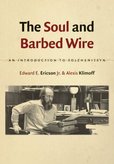
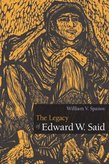
Edward Said and Alexandr Solzhenitsyn, dissident heroes of two sharply divergent political traditions, had a surprising amount in common. Both came from cultures that had been violently uprooted and dislocated; both were exiled, their lives threatened; both found refuge eventually in the United States—and became outspoken critics of this country. Both fought the regimes they opposed with words and the application of counternarrative. Both wrote famous accusatory tomes—Orientalism (1978), The Gulag Archipelago (1973)—that, through the sheer accrual of evidence, fundamentally altered the worlds they described.
Most interesting of all, both lived to see their political projects succeed to a degree they could never have anticipated. The Soviet Union collapsed in 1991; Israel acknowledged the existence of the Palestinian people, and their right to a state, in the 1993 Oslo Accords. And both writers were, immediately and thoroughly, critical of what had once seemed their fondest wishes: While the West celebrated the Yeltsin regime, Solzhenitsyn warned that it was in irresponsible free fall; at almost the same moment, Said denounced Oslo as “a Palestinian Versailles.” Both, sadly, were right.
Two new books give us a sense of where the legacies of these men stand. The Soul and Barbed Wire, an overview of Solzhenitsyn’s life and works by two American scholars, is pure hagiography. While quasi-academic in form and published by a quasi-academic press, the book is willing to acknowledge that Solzhenitsyn had his critics only to label their criticisms “manifestly unfair.” The most relevant thing, claim Edward E. Ericson Jr. and Alexis Klimoff, is that Solzhenitsyn is the equal of Dostoyevsky and Tolstoy. You might have predicted, if you were a sociologist of academe, that two Solzhenitsyn specialists would say approximately that.
William V. Spanos’s The Legacy of Edward W. Said is something else altogether. It is much crazier, more entertaining, and clearly engaged in a live battle for Said’s legacy.