Why, since President Obama promised to “restore science to its rightful place” in Washington, do some things feel not quite right? First there was Steven Chu, the physicist and new energy secretary, warning The Los Angeles Times that climate change could make water so scarce by century’s end that “there’s no more agriculture in California” and no way to keep the state’s cities going, either. Then there was the hearing in the Senate to confirm another physicist, John Holdren, to be the president’s science adviser. Dr. Holdren was asked about some of his gloomy neo-Malthusian warnings in the past, like his calculation in the 1980s that famines due to climate change could leave a billion people dead by 2020. Did he still believe that?
“I think it is unlikely to happen,” Dr. Holdren told the senators, but he insisted that it was still “a possibility” that “we should work energetically to avoid.” Well, I suppose it never hurts to go on the record in opposition to a billion imaginary deaths. But I have a more immediate concern: Will Mr. Obama’s scientific counselors give him realistic plans for dealing with global warming and other threats? To borrow a term from Roger Pielke Jr.: Can these scientists be honest brokers? Dr. Pielke, a professor in the environmental studies program at the University of Colorado, is the author of “The Honest Broker,” a book arguing that most scientists are fundamentally mistaken about their role in political debates. As a result, he says, they’re jeopardizing their credibility while impeding solutions to problems like global warming.
In this powerful speech, the great author explains his controversial decision to accept a literary prize in Israel and why we need to fight the System.
Haruki Murakami in Salon:
I chose to come here rather than stay away. I chose to see for myself rather than not to see. I chose to speak to you rather than to say nothing.
Please do allow me to deliver one very personal message. It is something that I always keep in mind while I am writing fiction. I have never gone so far as to write it on a piece of paper and paste it to the wall: rather, it is carved into the wall of my mind, and it goes something like this:
“Between a high, solid wall and an egg that breaks against it, I will always stand on the side of the egg.”
Yes, no matter how right the wall may be and how wrong the egg, I will stand with the egg. Someone else will have to decide what is right and what is wrong; perhaps time or history will decide. If there were a novelist who, for whatever reason, wrote works standing with the wall, of what value would such works be?
#443: I tie my Hat— I crease my Shawl Emily Dickinson
I tie my Hat—I crease my Shawl— Life's little duties do—precisely— As the very least Were infinite—to me—
I put new Blossoms in the Glass— And throw the old—away— I push a petal from my Gown That anchored there—I weigh The time 'twill be till six o'clock I have so much to do— And yet—Existence—some way back— Stopped—struck—my ticking—through— We cannot put Ourself away As a completed Man Or Woman—When the Errand's done We came to Flesh—upon— There may be—Miles on Miles of Nought— Of Action—sicker far— To simulate—is stinging work— To cover what we are From Science—and from Surgery— Too Telescopic Eyes To bear on us unshaded— For their—sake—not for Ours— 'Twould start them— We—could tremble— But since we got a Bomb— And held it in our Bosom— Nay—Hold it—it is calm—
Therefore—we do life's labor— Though life's Reward—be done— With scrupulous exactness— To hold our Senses—on—
It was the first Friday in December, 23 degrees at dawn and nearly windless. Everyone was looking up.
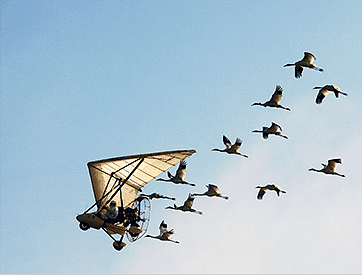
Operation Migration’s four ultralight planes floated into view over some oak and maple trees, then passed over the small, white chapel. An ultralight is powered by a massive rear propeller. In the sky, it looks like a scaled-down Formula 1 car dangling under the wing of a hang glider. Because the little planes taxi on three wheels, pilots call them trikes. At 200 feet, the first pilot, Chris Gullikson, was perfectly visible in his trike’s open cockpit. He was wearing his whooping-crane costume, a white hooded helmet and white gown that looked like a cross between a beekeeping suit and a Ku Klux Klan get-up. Gullikson and the other trike pilots were going to pick up the 14 juvenile whooping cranes that they were, little by little, leading south for the winter. Traditionally, and for many millenniums, cranes learned to migrate by following other cranes. But traditions have changed. Outside the church, a plucky, silver-haired woman named Liz Condie was explaining to the spectators why, exactly, her team has had to dress up and step in.
For all the achievements of science during the 20th century, its great heroic age, there remains a surprising number of absolutely fundamental questions still to be answered. Questions as basic as What Is Life? and Why Do We Die?
In this fascinating, bang-up-to-date report from the outer limits of scientific knowledge today, New Scientist writer Michael Brooks examines 13 of the most urgent scientific mysteries in turn.
One of the great discoveries of 20th-century science was that our universe is expanding. The discovery, however, led straight to another puzzle. The puzzle is, there's nowhere near enough matter to prevent the expanding universe from blowing apart completely into a vast, sterile infinity of lifeless interstellar dust. So how come we live in a lumpy universe, one of the lumps being the planet on which we live? There must be more matter than we can see: the famous dark matter and, to go with it, something even more mysterious – dark energy.
To date, however, there's not a shred of evidence for either, even though teams of scientists have been looking for years.
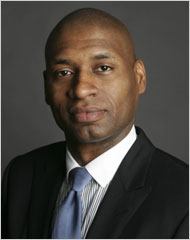
They could be called the integrationists, the young African American men and women who pushed open the doors of mainstream media and paved the way for journalists of color. Young journalists such as Nancy Maynard, Ed Bradley, Earl Caldwell, Charlayne Hunter Gault, Claude Lewis and Wallace Terry reported, organized, mentored and raised the bar for generations to come.
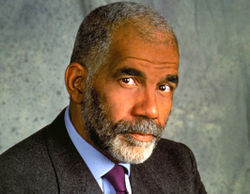
Ed Bradley
One could say that Ed Bradley in part owes his career to a popular Philadelphia radio DJ. Georgie Woods, after all, was the one who came to Bradley's college and gave a talk that inspired Bradley to become a DJ. Cheyney State was a teacher's college and Woods was there to talk to the senior class about using community resources to reach out to kids. Bradley, however, was more interested in Woods' work in the studio. Woods invited the young teacher to WDAS and as Bradley toured the station his life's mission became clearer.
“I just knew when I walked out there that night that I was put on this earth to be on radio,” he says.
Bradley spent everyday at the station, turning his attention to music, sports and some news. When he graduated from Cheyney and began teaching, he went to the station in the evenings. His friend and mentor Del Sheilds, the station's jazz DJ, always encouraged him to focus on news. That, Sheilds told him, was where the opportunities were.
Because of Salman Rushdie, Arundhati Roy and Rohinton Mistry, to mention just a few of the most prominent authors, American readers have long been able to enjoy one terrific Indian novel after another. But Daniyal Mueenuddin's In Other Rooms, Other Wonders is likely to be the first widely read book by a Pakistani writer. Mueenuddin spent his early childhood in Pakistan, then lived in the United States — he attended Dartmouth and Yale — and has since returned to his father's homeland, where he and his wife now manage a farm in Khanpur. These connected stories show us what life is like for both the rich and the desperately poor in Mueenuddin's country, and the result is a kind of miniaturized Pakistani “human comedy.”
In the original Comédie humaine, Balzac had the ingenious notion of tying his various novels together by using recurrent characters. Eugène de Rastignac is the protagonist of Le Père Goriot but is subsequently glimpsed in passing or sometimes just referred to in several other books. In like fashion, Mueenuddin interlaces eight stories, while also linking them to the household of a wealthy and self-satisfied landowner named K.K. Harouni. In “Saleema,” for instance, Harouni's elderly valet, Rafik, falls into a heartbreaking affair with a young maidservant, and we remember this, with a catch in our throat, when in another story we see him bring in two glasses of whiskey on a silver tray. In “Our Lady of Paris,” we discover that Harouni's nephew is madly in love with a young American woman named Helen; later on, we discover that he is married — to an American named Sonya.
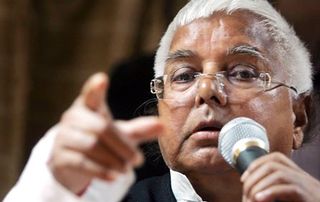
In his boyhood, long before Lalu Yadav became India’s most unlikely management guru, he sometimes strayed from his cows and scampered barefoot to the railroad tracks. Dodging crowds and porters, he made his way to the first-class cars and, for a few glorious moments, basked in the air conditioning that blasted from the open door. Then the police would spot him and shoo him away, into the moist trackside cowflap where he belonged.
The boy has grown up, but when I meet him in his New Delhi office, he’s still barefoot, and a headache for train conductors everywhere. Lalu Yadav, 61, is now the boss of all 2.4 million Indian Railways employees. When he wants air conditioning, he nods, and a railway employee hops up to twist the dial. As minister of railways, he rules India’s largest employer—one with annual revenues in the tens of billions—from a fine leather sofa, his sandals and a silver spittoon on the floor nearby and a clump of tobacco in his cheek.
Lalu is a happy man: happy to have risen to become rich, beloved, and reviled all over India; happy that a grateful nation credits him with whipping its beleaguered rail system into profitability; and happy that he’s managed to do all this and somehow stay out of jail.
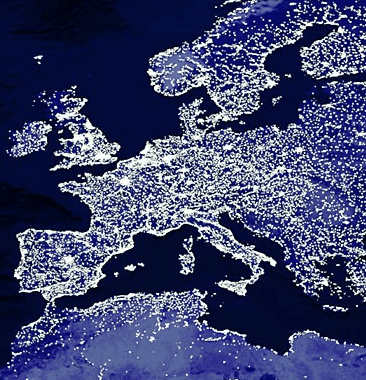
But now a new movement is taking shape worldwide in opposition to the misuse of artificial light. Stargazers, environmentalists, light engineers, cultural anthropologists and doctors specializing in the treatment of sleep disorders all want to put an end to the dictatorship of eternal light. Light pollution is a rapidly growing environmental problem, but it is also one that could be solved relatively easily. In many cases, all it takes is goodwill and a few little tricks.
Some countries have already passed laws and regulations to control light pollution. Slovenia is a pioneer in Europe. There, cities and towns are now required to reduce their light emissions. In addition, artificial lights must shine in such a way that their light beams do not rise above the horizon. This spells the end of the “skybeam” searchlights much loved by nightclub operators.
Germany has been less active on the photon front, although German scientists did recently embark on the battle against light pollution. Under the leadership of the Berlin-based Leibniz Institute of Freshwater Ecology and Inland Fisheries (IGB), more than two dozen scientists from various disciplines will study the effects of light pollution on plants, animals and human beings, as well as what to do about it.
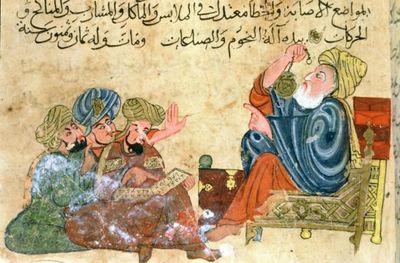
When Baghdad opened its gates as the new capital of the Abbasid Caliphate, the prime site in the city was occupied by the royal library. Both the city and the library, completed around 765, were built by Caliph al-Mansur, who devised a method for measuring the circumference of the Earth and was second in a long line of Abbasid caliphs who valued thought and learning above all else. The Abbasids created, shaped and developed one of the most rich and fertile periods of science in human history.
The library was officially called “the House of Wisdom”. It was a monumental structure, accommodating translators, copyists, scholars, scientists, librarians and the swelling volumes of Persian, Sanskrit and Greek texts that flooded into Baghdad. Not surprisingly, it became a magnet for seekers of knowledge from across the Muslim empire.
Jonathan Lyons tells the story of the House of Wisdom, the caliphs who suppor-ted it and the people who worked there, at a riveting, breakneck pace. In quick succession we meet scholars such as al-Khwarizimi, the illustrious Muslim mathematician and founder of algebra, the geographer al-Masudi, who described major sea routes to Persia, Cambodia and as far as the Malay peninsula in The Book of Roads and Kingdoms, and al-Kindi, the first Arab philosopher. But Lyons is more concerned with how what was happening in Baghdad and other Muslim cities was transferred to Europe. So he focuses on a string of colourful translators and scholars who travelled to the Muslim world and took its knowledge and discoveries back with them.
Adelard of Bath, for example, travelled to Antioch and Sicily in his dogged pursuit of what he called studia Arabum, the learning of the Arabs.
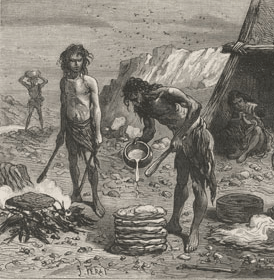
You are what you eat, or so the saying goes. But Richard Wrangham, of Harvard University, believes that this is true in a more profound sense than the one implied by the old proverb. It is not just you who are what you eat, but the entire human species. And with Homo sapiens, what makes the species unique in Dr Wrangham’s opinion is that its food is so often cooked.
Cooking is a human universal. No society is without it. No one other than a few faddists tries to survive on raw food alone. And the consumption of a cooked meal in the evening, usually in the company of family and friends, is normal in every known society. Moreover, without cooking, the human brain (which consumes 20-25% of the body’s energy) could not keep running. Dr Wrangham thus believes that cooking and humanity are coeval.
In fact, as he outlined to the American Association for the Advancement of Science (AAAS), in Chicago, he thinks that cooking and other forms of preparing food are humanity’s “killer app”: the evolutionary change that underpins all of the other—and subsequent—changes that have made people such unusual animals.
Humans became human, as it were, with the emergence 1.8m years ago of a species called Homo erectus. This had a skeleton much like modern man’s—a big, brain-filled skull and a narrow pelvis and rib cage, which imply a small abdomen and thus a small gut. Hitherto, the explanation for this shift from the smaller skulls and wider pelvises of man’s apelike ancestors has been a shift from a vegetable-based diet to a meat-based one. Meat has more calories than plant matter, the theory went. A smaller gut could therefore support a larger brain.
Dr Wrangham disagrees. When you do the sums, he argues, raw meat is still insufficient to bridge the gap. He points out that even modern “raw foodists”, members of a town-dwelling, back-to-nature social movement, struggle to maintain their weight—and they have access to animals and plants that have been bred for the table. Pre-agricultural man confined to raw food would have starved.
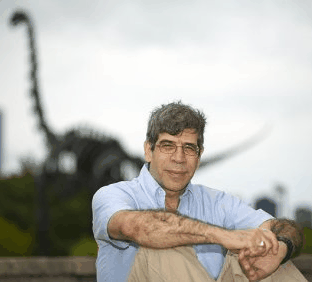
University of Chicago biologist Jerry Coyne believes that one reason people mistrust Darwinism is a lack of familiarity with the evidence. In Why Evolution Is True (Viking), Coyne draws on genetics, anatomy, molecular biology, paleontology and geology to explain why biologists find the theory so compelling. “I offer it,” he writes, “in the hope that people everywhere may share my wonder at the sheer explanatory power of Darwinian evolution, and may face its implications without fear.”
What led you to write the book?
I guess a couple of things. First of all, I only teach evolution. I've been teaching it for my whole career, which I guess is coming on 25 years now, and I realized when I started teaching that nobody ever taught the evidence for evolution, which is wide-ranging and cool. And I looked in the textbooks, and they didn't have it either. And yet when you read Darwin, the thing that's most fascinating is the evidence he musters in support of it. In talking with professional biologists and evolutionists, they didn't ever learn why people thought evolution was true, because you're not taught that in class. But I thought that that should be passed on to the students because of the second reason I wrote the book, which is the pervasiveness of creationism in this country. I wanted to educate the students so they know that evolution really happened, so they don't really doubt that, but also to arm them against the forces of irrationality that were going to be impinging on them and society.
Short of opening a Radio Shack in an Amish town, Dubai is the world’s worst business idea, and there isn’t even any oil. Imagine proposing to build Vegas in a place where sex and drugs and rock and roll are an anathema. This is effectively the proposition that created Dubai – it was a stupid idea before the crash, and now it is dangerous.
Dubai threatens to become an instant ruin, an emblematic hybrid of the worst of both the West and the Middle-East and a dangerous totem for those who would mistakenly interpret this as the de facto product of a secular driven culture.
The opening shot of this clip shows 200 skyscrapers that were built in the last 5 years. It looks like Manhattan except that it isn’t the place that made Mingus or Van Allen or Kerouac or Wolfe or Warhol or Reed or Bernstein or any one of the 1001 other cultural icons from Bob Dylan to Dylan Thomas that form the core spirit of what is needed, in the absence of extreme toleration of vice, to infuse such edifices with purpose and create a self-sustaining culture that will prevent them crumbling into the empty desert that surrounds them.
Prophets have light Screwed tight in their eyes. They cannot see the darkness Inside their own loincloth. Their speech has grace And their voice tenderness. When prophets arrive Dogs do not bark. They only wag their tails Like newspaper reporters. Their tongues hang out And drool as profusely As editorials. Crowds in the street Split up like watermelons When prophets arrive.
But there are times when even the fuse of heavenly stars is blown Space boils like a forgotten kettle The screw comes off from the eyes And the blinded prophet is stunned It is then that he comprehends the spiral staircase of heaven made of iron The complexity of its architecture.
It is the first time that he apprehends God’s inhuman boredom And the size of His shoes. The weight of His foot. And the total monopoly reflected In His every movement. It is then that he realises that His journey so far is only The space and time of His almighty yawn.
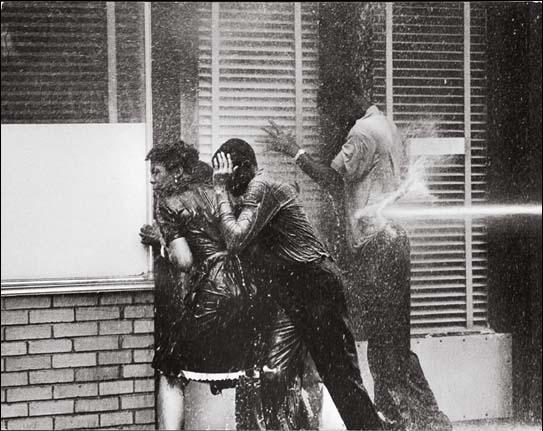
According to an ABC News/Washington Post poll released last month, twice as many blacks as whites thought racism was a big problem in this country, while twice as many whites as blacks thought that blacks had achieved racial equality. Furthermore, according to a 2003 Gallup poll, two in five of blacks said that they felt discriminated against at least once a month, and one in five felt discriminated against every day. But, a CNN poll from last January found that 72 percent of whites thought that blacks overestimated the amount of discrimination against them, while 82 percent of blacks thought that whites underestimated the amount of discrimination against blacks.
What explains this wide discrepancy? One factor could be that most whites harbor a hidden racial bias that many are unaware of and don’t consciously agree with.
Project Implicit, a virtual laboratory maintained by Harvard, the University of Washington and the University of Virginia, has administered hundreds of thousands of online tests designed to detect hidden racial biases. In tests taken from 2000 to 2006, they found that three-quarters of whites have an implicit pro-white/anti-black bias. (Blacks showed racial biases, too, but unlike whites, they split about evenly between pro-black and pro-white. And, blacks were the most likely of all races to exhibit no bias at all.) In addition, a 2006 study by Harvard researchers published in the journal Psychological Science used these tests to show how this implicit bias is present in white children as young as 6 years old, and how it stays constant into adulthood.
So why do so many people have this anti-black bias?
I called Brian Nosek, an associate professor in psychology at the University of Virginia and the director of Project Implicit, to find out. According to him, our brains automatically make associations based on our experiences and the information we receive, whether we consciously agree with those associations or not. He said that many egalitarian test-takers were shown to have an implicit anti-black bias, much to their chagrin. Professor Nosek took the test himself, and even he showed a pro-white/anti-black bias. Basically, our brains have a mind of their own.
This bias can seep into our everyday lives in insidious ways.
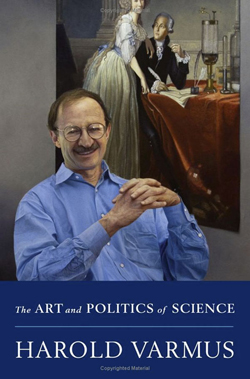
Despite outward signs that I had chosen a life of studying and teaching literature, soon after starting my graduate work at Harvard, I began to suffer some further internal doubts about abandoning medicine. The graduate curriculum in English literature was not especially onerous, but it felt like a prolongation of college. Most of my courses were heavily populated with Harvard and Radcliffe undergraduates. First-year graduate students had little sense of identity as future scholars, we were often taught by older graduate students, and Harvard’s famous professors, with the notable exception of the wonderful playwright and poet William Alfred, paid little attention to us. Making a commitment to literary scholarship under these circumstances was not easy.…
Occasionally on Saturday mornings, I traveled across the Charles River to join some Amherst classmates at Harvard Medical School, while they sat in the Ether Dome at the Massachusetts General Hospital, entranced by diagnostic dilemmas discussed at the weekly clinical pathology conference. These stories struck me as far more interesting than those I was reading, and my medical school friends expressed genuine excitement about their work. They also seemed to have formed a community of scholars, with shared interests in the human body and its diseases and common expectations that they would soon be able to do something about those diseases.
These Saturday excursions probably account for an influential dream that I had one night about my continuing indecision. In that dream, my future literature students were relieved when I didn’t turn up to teach a class, but my future patients were disappointed when I didn’t appear. It seemed I wanted to be wanted.…
In 1909, pamphlets were dropped over the town of Milan containing Marinetti’s Futurist Manifesto, the centennial of which we are celebrating. Everything about this piece was exciting, its pace, its over-the-top scenery: We had stayed up all night, my friends and I, under hanging mosque lamps with domes of filigreed brass, domes starred like our spirits. . . . An immense pride was buoying us up, because we felt ourselves alone at that hour, alone, awake, and on our feet, like proud beacons or forward sentries against an army of hostile stars. Nothing is slow in this manifesto of speedy Futurism: “‘Let’s go!’ I said. ‘Friends, away! Let’s go!’” I love that kind of exalted certainty about a showy (manifest) endeavor. Of course, we have the right to ironize about the over-the-topness — who among us would so exaggerate the style and so magnify the substance as to make a larger-than-life-size poster, pointing at itself as a deictic genre? Look! Here! Now! Tristan Tzara, Papa-Dada himself, lays down the rules in 1918, and not just for Dada: “To proclaim a manifesto you have to want: A.B.C., thunder against 1, 2, 3.”

Why, since President Obama promised to “restore science to its rightful place” in Washington, do some things feel not quite right? First there was Steven Chu, the physicist and new energy secretary, warning The Los Angeles Times that climate change could make water so scarce by century’s end that “there’s no more agriculture in California” and no way to keep the state’s cities going, either. Then there was the hearing in the Senate to confirm another physicist, John Holdren, to be the president’s science adviser. Dr. Holdren was asked about some of his gloomy neo-Malthusian warnings in the past, like his calculation in the 1980s that famines due to climate change could leave a billion people dead by 2020. Did he still believe that?