IN THE EARLY Middle Ages, if an educated Westerner set out to make a standard map of the world, here is what he would do: draw a circle, then a horizontal band across that circle, then a vertical band dividing the bottom half of the circle in two. The result resembled a hood ornament with a “T” in the middle. The semicircle at the top was Asia; the identical quarter-circles below were Europe and Africa. Today, it’s easy to feel superior to a society that thought Europe and Africa looked like matching slices of pizza, but we shouldn’t. That medieval map said very little about how the world was shaped, but it had a lot of information: For starters, it told you that God’s creation was symmetrical, and thus perfect, and that its apex was Jerusalem. In a deeply religious society in which most people never made it more than a few miles from home, this was understood to be far more important than knowing the exact contours of the Mediterranean. Thanks to satellites, surveying, and ever-increasing computing power, mapping has become geographically accurate beyond the dreams of a medieval mind. But many of those same technological advances have also brought us full circle: Maps have increasingly become vehicles not just for telling us how the world looks, but for organizing and representing all sorts of information.
Irfan Ahmed al-Alawi, the chairman of the Islamic Heritage Foundation, set up to help protect the holy sites, says the case of the grave of Amina bint Wahb, the mother of the Prophet, found in 1998, is typical of what has happened. “It was bulldozed in Abwa and gasoline was poured on it. Even though thousands of petitions throughout the Muslim world were sent, nothing could stop this action.”
Today there are fewer than 20 structures remaining in Mecca that date back to the time of the Prophet 1,400 years ago. The litany of this lost history includes the house of Khadijah, the wife of the Prophet, demolished to make way for public lavatories; the house of Abu Bakr, the Prophet's companion, now the site of the local Hilton hotel; the house of Ali-Oraid, the grandson of the Prophet, and the Mosque of abu-Qubais, now the location of the King's palace in Mecca.
Yet the same oil-rich dynasty that pumped money into the Taliban regime as they blew up the Bamiyan Buddhas in Afghanistan six years ago has so far avoided international criticism for similar acts of vandalism at home. Mai Yamani, author of The Cradle of Islam, said it was time for other Muslim governments to ignore the al-Sauds' oil wealth and clout and speak out. “What is alarming about this is that the world doesn't question the al-Sauds' custodianship of Islam's two holy places. These are the sites that are of such importance to over one billion Muslims and yet their destruction is being ignored,” she said. “When the Prophet was insulted by Danish cartoonists thousands of people went into the streets to protest. The sites related to the Prophet are part of their heritage and religion but we see no concern from Muslims.”
The first part in this video playlist is five minutes of clips from the documentary Occupation 101. The whole film (about 90 minutes) is presented in ten parts after that. You can skip to the beginning of the film by clicking the right-arrow once. Each part should follow the previous one automatically.
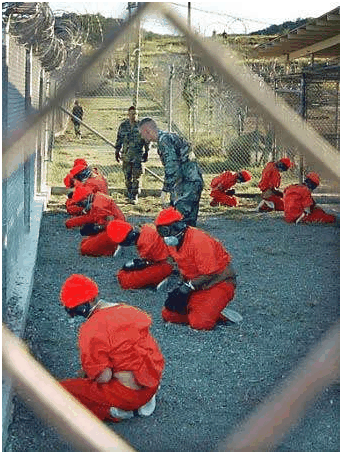
The story of America's descent into torture in the wake of the terrorist attacks of September 11, 2001, has been told now by many writers. Mark Danner, Jane Mayer, and Ron Suskind have written brilliant expositions of the facts, showing how the drive to prevent the next attack led the administration's highest officials to seek ways around the legal restrictions on coercive interrogation of suspects.[1] After the abuses at Abu Ghraib came to light, the military itself commissioned three detailed investigative reports, including highly critical ones by Major General Antonio Taguba and by a panel led by former defense secretary James Schlesinger. Among other factors, they blamed ambiguity in the standards governing interrogation—an ambiguity ultimately attributable to the attempts at evasion directed from the top. Congressional committees have held numerous public hearings into the use of coercive interrogation tactics at both Abu Ghraib and Guantánamo. The Center for Constitutional Rights, the ACLU, and the NYU Center on Law and Security have each published collections of official documents, which effectively indict the government using its own words.[2]
But undoubtedly the most unusual and deeply revealing take on the subject is the work of the British lawyer and law professor Philippe Sands. As Alexis de Tocqueville showed long ago, sometimes it takes the eyes of an outsider to show us ourselves. Sands, a leading international lawyer and a professor at University College London, took it upon himself to conduct his own personal investigation of one aspect of the torture policy—the Army's adoption of coercive tactics to interrogate suspects at Guantánamo.
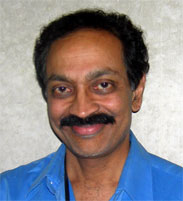
One of the last remaining problems in science is the riddle of consciousness. The human brain—a mere lump of jelly inside your cranial vault—can contemplate the vastness of interstellar space and grapple with concepts such as zero and infinity. Even more remarkably it can ask disquieting questions about the meaning of its own existence. “Who am I” is arguably the most fundamental of all questions. It really breaks down into two problems—the problem of qualia and the problem of the self. My colleagues, the late Francis Crick and Christof Koch have done a valuable service in pointing out that consciousness might be an empirical rather than philosophical problem, and have offered some ingenious suggestions. But I would disagree with their position that the qualia problem is simpler and should be addressed first before we tackle the “Self.” I think the very opposite is true. I have every confidence that the problem of self will be solved within the lifetimes of most readers of this essay. But not qualia.
The qualia problem is well known. Assume I am an intellectually highly advanced, color-blind martian. I study your brain and completely figure out down to every last detail what happens in your brain—all the physico-chemical events—when you see red light of wavelength 600 and say “red”. You know that my scientific description, although complete from my point of view, leaves out something ineffable and essentially non-communicable, namely your actual experience of redness. There is no way you can communicate the ineffable quality of redness to me short of hooking up your brain directly to mine without air waves intervening (Bill Hirstein and I call this the qualia-cable; it will work only if my color blindness is caused by missing receptor pigments in my eye, with brain circuitry for color being intact.) We can define qualia as that aspect of your experience that is left out by me—the color-blind Martian.
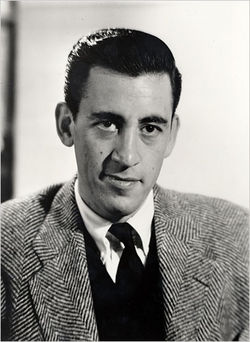
On Thursday, J. D. Salinger turns 90. There probably won’t be a party, or if there is we’ll never know. For more than 50 years Mr. Salinger has lived in seclusion in the small town of Cornish, N.H. For a while it used to be a journalistic sport for newspapers and magazines to send reporters up to Cornish in hopes of a sighting, or at least a quotation from a garrulous local, but Mr. Salinger hasn’t been photographed in decades now and the neighbors have all clammed up. He’s been so secretive he makes Thomas Pynchon seem like a gadabout.
Mr. Salinger’s disappearing act has succeeded so well, in fact, that it may be hard for readers who aren’t middle-aged to appreciate what a sensation he once caused. With its very first sentence, his novel “The Catcher in the Rye,” which came out in 1951, introduced a brand-new voice in American writing, and it quickly became a cult book, a rite of passage for the brainy and disaffected. “Nine Stories,” published two years later, made Mr. Salinger a darling of the critics as well, for the way it dismantled the traditional architecture of the short story and replaced it with one in which a story could turn on a tiny shift of mood or tone.
Like many cultural conventions, the canon of great books is one part myth, another part wishful-thinking. At once self-limiting and ever expanding, the western literary and philosophical tradition has grown by means organic and totally artificial. Classics, after all, were once new; but only posterity decides which works survive to be handed down from generation to generation, and which vanish into obscurity.
Few would deny that the likes of Aristotle, Cervantes and Shakespeare are central figures in the western canon. But what, exactly, do we mean when we speak of literary greatness? The very notion is enshrouded in a kind of hoary mysticism. The Victorian critic Matthew Arnold wrote of “the best that has been thought and known in the world,” but that only takes us so far. There is a cloudy, if universal agreement – a convenient fiction, really – that such an elevated category exists, but there are not, and never will be, fixed criteria for determining those books that are entitled to the sobriquet “great”.
Greatness may be bestowed by a kind of collective acclaim, in the accretion of hundreds of years of opinion from critics, academics, writers and thinkers. And it is ultimately the authority of cultural elites that forms the boundaries of what we keep in the canon – by reading it, teaching it, writing about it – and what falls by the wayside. Taking this measure – the wisdom of crowds, if you will – one could define the canon of great books in an expansive sense: it includes those works that have, over time, been esteemed as great. This was the approach taken in 2006 by the New York Times, which polled “a couple of hundred prominent writers, critics, editors and other literary sages” in an attempt to crown the best American novel of the last quarter-century. (Toni Morrison’s Beloved was the winner.) In this conception, the canon is a fluid, living thing: its boundaries ebb and flow as new works emerge and older books fall out of favour.
But this descriptive approach strikes a certain kind of mandarin as far too permissive – and there remains always a temptation to prescribe a list instead: to pin down, once and for all, a definitive and precise list of imperishable works that speak to all ages and eras, monuments of aesthetic accomplishment; not just those books we do still read, but what we should read.
The return rate on gifts and the cashing of gift cards is up considerably. Elsewhere holiday gift cards from places like Wal-Mart are increasingly being used for food purchases. Things are looking worse and worse. Roubini in Project Syndicate:
Traditionally, central banks have been the lenders of last resort, but now they are becoming the lenders of first and only resort. As banks curtail lending to each other, to other financial institutions, and to the corporate sector, central banks are becoming the only lenders around.
Likewise, with household consumption and business investment collapsing, governments will soon become the spenders of first and only resort, stimulating demand and rescuing banks, firms, and households. The long-term consequences of the resulting surge in fiscal deficits are serious. If the deficits are monetized by central banks, inflation will follow the short-term deflationary pressures; if they are financed by debt, the long-term solvency of some governments may be at stake unless medium-term fiscal discipline is restored.
Nevertheless, in the short run, very aggressive monetary and fiscal policy actions – both traditional and non-traditional – must be undertaken to ensure that the inevitable stag-deflation of 2009 does not persist into 2010 and beyond. So far, the US response appears to be more aggressive than that of the euro zone, as the European Central Bank falls behind the curve on interest rates and the EU’s fiscal stance remains weak.
Given the severity of this economic and financial crisis, financial markets will not mend for a while. The downside risks to the prices of a wide variety of risky assets (equities, corporate bonds, commodities, housing, and emerging-market asset classes) will remain until there are true signs – towards the end of 2009 – that the global economy may recover in 2010.
Israel did not exhaust the diplomatic processes before embarking yesterday on another dreadful campaign of killing and ruin. The Qassams that rained down on the communities near Gaza turned intolerable, even though they did not sow death. But the response to them needs to be fundamentally different: diplomatic efforts to restore the cease-fire – the same one that was initially breached, one should remember, by Israel when it unnecessarily bombed a tunnel – and then, if those efforts fail, a measured, gradual military response.
But no. It's all or nothing. The IDF launched a war yesterday whose end, as usual, is hoping someone watches over us.
Blood will now flow like water. Besieged and impoverished Gaza, the city of refugees, will pay the main price. But blood will also be unnecessarily spilled on our side. In its foolishness, Hamas brought this on itself and on its people, but this does not excuse Israel's overreaction.
The history of the Middle East is repeating itself with despairing precision. Just the frequency is increasing. If we enjoyed nine years of quiet between the Yom Kippur War and the First Lebanon War, now we launch wars every two years. As such, Israel proves that there is no connection between its public relations talking points that speak of peace, and its belligerent conduct.
Israel also proves that it has not internalized the lessons of the previous war. Once again, this war was preceded by a frighteningly uniform public dialogue in which only one voice was heard – that which called for striking, destroying, starving and killing, that which incited and prodded for the commission of war crimes.
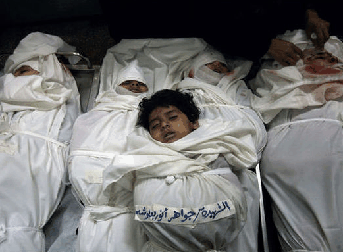
“I will play music and celebrate what the Israeli air force is doing.” Those chilling words were spoken on al-Jazeera on Saturday by Ofer Shmerling, an Israeli civil defence official in the Sderot area adjacent to the Gaza Strip. For days Israeli planes have bombed Gaza. Almost 300 Palestinians have been killed and a thousand injured, the majority civilians, including women and children. Israel claims most of the dead were Hamas “terrorists”. In fact, the targets were police stations in dense residential areas, and the dead included many police officers and other civilians. Under international law, police officers are civilians, and targeting them is no less a war crime than aiming at other civilians.
Palestinians are at a loss to describe this new catastrophe. Is it our 9/11, or is it a taste of the “bigger shoah” Matan Vilnai, the deputy defence minister, threatened in February, after the last round of mass killings?
Israel says it is acting in “retaliation” for rockets fired with increasing intensity ever since a six-month truce expired on 19 December. But the bombs dropped on Gaza are only a variation in Israel's method of killing Palestinians. In recent months they died mostly silent deaths, the elderly and sick especially, deprived of food, cancer treatments and other medicines by an Israeli blockade that targeted 1.5 million people – mostly refugees and children – caged into the Gaza Strip. The orders of Ehud Barak, the Israeli defence minister, to hold back medicine were just as lethal and illegal as those to send in the warplanes.
1. Israelis have claimed to have ended the occupation of the Gaza Strip in 2005.
While Israel has indeed removed the settlements from the tiny coastal Strip, they have in no way ended the occupation. They remained in control of the borders, the airspace and the waterways of Gaza, and have carried out frequent raids and targeted assassinations since the disengagement.
Furthermore, since 2006 Israel has imposed a comprehensive siege on the Strip. For over two years, Gazans have lived on the edge of starvation and without the most basic necessities of human life, such as cooking or heating oil and basic medications. This siege has already caused a humanitarian catastrophe which has only been exacerbated by the dramatic increase in Israeli military aggression.
2. Israel claims that Hamas violated the cease-fire and pulled out of it unilaterally.
Hamas indeed respected their side of the ceasefire, except on those occasions early on when Israel carried out major offensives in the West Bank. In the last two months, the ceasefire broke down with Israelis killing several Palestinians and resulting in the response of Hamas. In other words, Hamas has not carried out an unprovoked attack throughout the period of the cease-fire.
Israel, however, did not live up to any of its obligations of ending the siege and allowing vital humanitarian aid to resume in Gaza. Rather than the average of 450 trucks per day being allowed across the border, on the best days, only eighty have been allowed in – with the border remaining hermetically sealed 70% of the time. Throughout the supposed 'cease-fire' Gazans have been forced to live like animals, with a total of 262 dying due to the inaccessibility of proper medical care.
A few suggestions for action, and you can supply others in the comments.
1. Stay informed An increasingly invaluable resource is The Electronic Intifada. Listen to Palestinian voices and solidarity activists who are on the ground in Gaza. Listen to listener sponsored radio, like KPFA. Flashpoints has excellent interviews with people on the ground. You will not hear much from the military generals , for that you have CNN.
2. Donate so that the people of Gaza may live Israel's starvation “diet” is causing a humanitarian catastrophe, and may actually cause more casualties, in a quiet way, than the US-supplied bombs that fall in city centers in Gaza. Children are especially vulnerable. There is also a dire situation of lack of medical supplies, as Israel restricts the amount of aid allowed into Gaza. Now with thousands of massacre casualties, i can't imagine what this can be like. You can make a difference. Join the Middle East Children's Alliance in sending much needed medical aid to Gaza. It would be cool to let them know Daily Kos sent you.
3. Advocate for a new US policy in the Middle East Our political work must not end on election nights. Politicians, with few exceptions, will do nothing for human rights unless they are pushed, prodded, and forced to do so. When Congressman Ron Dellums was first elected to Congress, he offered at every congressional session a bill to impose sanctions on the Apartheid system in South Africa. For many years, only a handful of congresspeople joined him. All that changed when a strong movement started on the street demanding change. How much more so is our work needed now for a change in US policy.
Write down! I am an Arab And my identity card number is fifty thousand I have eight children And the ninth will come after a summer Will you be angry?
Write down! I am an Arab Employed with fellow workers at a quarry I have eight children I get them bread Garments and books from the rocks.. I do not supplicate charity at your doors Nor do I belittle myself at the footsteps of your chamber So will you be angry?
Write down! I am an Arab I have a name without a title Patient in a country Where people are enraged My roots Were entrenched before the birth of time And before the opening of the eras Before the pines, and the olive trees And before the grass grew
My father.. descends from the family of the plow Not from a privileged class And my grandfather..was a farmer Neither well-bred, nor well-born! Teaches me the pride of the sun Before teaching me how to read And my house is like a watchman's hut Made of branches and cane Are you satisfied with my status? I have a name without a title!
Write down! I am an Arab You have stolen the orchards of my ancestors And the land which I cultivated Along with my children And you left nothing for us Except for these rocks.. So will the State take them As it has been said?!
Therefore! Write down on the top of the first page: I do not hate poeple Nor do I encroach But if I become hungry The usurper's flesh will be my food Beware.. Beware.. Of my hunger And my anger! /
A car pulls up outside a Georgian house in Soho. Out steps Salman Rushdie. He's dressed entirely in black – black overcoat, black scarf, black jacket, black sweater, trousers, shoes… The only thing not completely black is his shirt and that's only because it's got a few white stripes on it. He looks – actually, he looks just like a hit-man. In his hand he carries a polythene bag full of books. When he comes upstairs, I find myself peering through the opaque plastic trying to make out the titles. One of them turns out to be the French version of his last novel, The Enchantress of Florence – now out in paperback. The book, declares Rushdie with satisfaction, has done terrifically well in France, getting 'the sort of rave reviews you find yourself making up in the bath'.
Over here, it had a more mixed reception, but then, as Rushdie says of himself, 'I'm not the sort of writer who ever gets five out of 10 reviews. I tend to get 11 out of 10, or minus one out of 10. That's all right, though; it shows that people are having strong reactions.' The reactions to Rushdie have been so strong in certain sections of the British press that you might expect him to be wary of interviews – hostile even. In fact, he's relaxed, genial and prone to bursts of Mutley-like chuckling. Plopping one Canderel into his cup of tea, he sets his BlackBerry down on the table beside him. Over the next hour it regularly chugs with incoming emails.
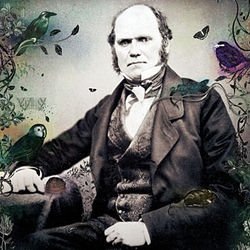
When the 26-year-old Charles Darwin sailed into the Galápagos Islands in 1835 onboard the HMS Beagle, he took little notice of a collection of birds that are now intimately associated with his name. The naturalist, in fact, misclassified as grosbeaks some of the birds that are now known as Darwin’s finches. After Darwin returned to England, ornithologist and artist John Gould began to make illustrations of a group of preserved bird specimens brought back in the Beagle’s hold, and the artist recognized them all to be different species of finches. From Gould’s work, Darwin, the self-taught naturalist, came to understand how the finches’ beak size must have changed over the generations to accommodate differences in the size of seeds or insects consumed on the various islands. “Seeing this gradation and diversity of structure in one small, intimately related group of birds, one might really fancy that from an original paucity of birds in this archipelago, one species had been taken and modified for different ends,” he noted in The Voyage of The Beagle, published after his return in 1839.
Twenty years later Darwin would translate his understanding of finch adaptation to conditions on different islands into a fully formed theory of evolution, one emphasizing the power of natural selection to ensure that more favorable traits endure in successive generations. Darwin’s theory, core features of which have withstood critical scrutiny from scientific and religious critics, constituted only the starting point for an endlessly rich set of research questions that continue to inspire present-day scientists. Biologists are still seeking experimental results that address how natural selection proceeds at the molecular level—and how it affects the development of new species.
This flag of Palestine is here to symbolize our solidarity with the innocents being massacred and maimed in unbelievable numbers in Gaza. All justifications for the brutal Israeli assault are utter nonsense.
Israel’s siege of Gaza began on 5 November, the day after an Israeli attack inside the strip, no doubt designed finally to undermine the truce between Israel and Hamas established last June. Although both sides had violated the agreement before, this incursion was on a different scale. Hamas responded by firing rockets into Israel and the violence has not abated since then. Israel’s siege has two fundamental goals. One is to ensure that the Palestinians there are seen merely as a humanitarian problem, beggars who have no political identity and therefore can have no political claims. The second is to foist Gaza onto Egypt. That is why the Israelis tolerate the hundreds of tunnels between Gaza and Egypt around which an informal but increasingly regulated commercial sector has begun to form. The overwhelming majority of Gazans are impoverished and officially 49.1 per cent are unemployed. In fact the prospect of steady employment is rapidly disappearing for the majority of the population.
On 5 November the Israeli government sealed all the ways into and out of Gaza. Food, medicine, fuel, parts for water and sanitation systems, fertiliser, plastic sheeting, phones, paper, glue, shoes and even teacups are no longer getting through in sufficient quantities or at all. According to Oxfam only 137 trucks of food were allowed into Gaza in November. This means that an average of 4.6 trucks per day entered the strip compared to an average of 123 in October this year and 564 in December 2005.