Dear Sir Obama: Presidential Advice

Jory John in the New York Times:

ScreenHunter_10 Jan. 17 11.31 We asked our students — not just those in San Francisco, but ones in Ann Arbor, Mich.; Boston; Chicago; Los Angeles; New York; and Seattle — to offer their thoughts, hopes and advice to Mr. Obama in handwritten letters (many of which came with drawings). Here is the result of their work; some letters have been edited for space:

Dear Sir Obama,

These are the first 10 things you should do as president:

1. Make everyone read books.
2. Don’t let teachers give kids hard homework.
3. Make a law where kids only get one page of homework per week.
4. Kids can go visit you whenever they want.
5. Make volunteer tutors get paid.
6. Let the tutors do all the thinking.
7. Make universities free.
8. Make students get extra credit for everything.
9. Give teachers raises.
10. If No. 4 is approved, let kids visit the Oval Office, but don’t make it boring.

— Mireya Perez, age 8, San Francisco

More here.

Eyeless in Gaza

Roger Cohen in the New York Review of Books:

ScreenHunter_08 Jan. 17 11.21 I had a dream: Israeli Arab students, enraged by the war in Gaza, were protesting at the Hebrew University of Jerusalem. A counterdemonstration by Jewish students erupted. When the head of university security, a Holocaust survivor, tried to intervene, the Arab students called him a Nazi.

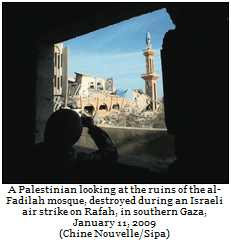
Actually, I didn't dream this. Shlomo Avineri, a political scientist at the university, related the incident, which occurred in the first days after Israel began its Gaza war on December 27. But dreams cut to the quick. There's no point denying that a line of sorts runs from the forty-three people killed by Israeli fire near a United Nations school in Gaza on January 6 back to the Palestinian Nakba (catastrophe) of 1948 and to Berlin, 1945.

History is relentless. Sometimes its destructive gyre gets overcome: France and Germany freed themselves after 1945 from war's cycle. So, even more remarkably, did Poland and Germany. China and Japan scarcely love each other but do business. Only in the Middle East do the dead rule. As Yehuda Amichai, the Israeli poet, once observed, the dead vote in Jerusalem. Their demand for blood is, it seems, inexhaustible. Their graves will not be quieted. Since 1948 and Israel's creation, retribution has reigned between the Jewish and Palestinian national movements.

I have never previously felt so despondent about Israel, so shamed by its actions, so despairing of any peace that might terminate the dominion of the dead in favor of opportunity for the living.

More here.

Cool Cat

Christopher Hitchens in The Atlantic:

ScreenHunter_07 Jan. 17 10.33 I have a small wish of my own in this season of public and private Utopias. It is that the emergence—or should I say ascendance?—of Barack Hussein Obama will allow the reentry into circulation of an old linguistic coinage. Exploited perhaps to greatest effect by James Baldwin, the word I have in mind is cat. Some of you will be old enough to remember it in real time, before the lugubrious and nerve-racking days when people never knew from one moment to the next what expression would put them in the wrong: the days of Negro and colored and black and African American and people of color. After all of this strenuous and heated and boring discourse, does not the very mien of our new president suggest something lithe and laid-back, agile but rested, cool but not too cool? A “cat” also, in jazz vernacular, can be a white person, just as Obama, in some non–Plessy v. Ferguson ways, can be. I think it might be rather nice to have a feline for president, even if only after enduring so many dogs. (Think, for one thing, of the kitten-like grace of those daughters.) The metaphor also puts us in mind of a useful cliché, which is that cats have nine lives—and an ability to land noiselessly and painlessly on their feet.

More here.

Friday, January 16, 2009

Africa on the Fly

Dangling from a paraglider with a propeller on his back, photographer George Steinmetz gets a new perspective on Africa.

Abigail Tucker in Smithsonian Magazine:

ScreenHunter_06 Jan. 17 09.34 “Most aerial photographers work from helicopters or little planes, but he goes up on this crazy little thing,” says Ruth Eichhorn, director of photography for the German edition of GEO, one of many magazines, including Smithsonian, that has published Steinmetz's work. “He can go very low, so he can photograph people in the landscape, and he will go to places that nobody else will go. It's very, very dangerous work, but I think it's worth it.”

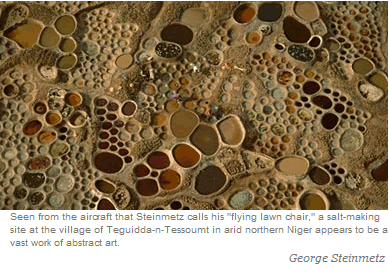
Steinmetz's aircraft—he calls it “a flying lawn chair”—consists of a nylon paraglider, a harness and a backpack-mounted motor with a large propeller that looks like an industrial fan. “I am the fuselage,” he explains. To lift off, he spreads the glider on the ground, cranks up the motor and runs a few steps when the right gust of wind comes along. Then, traveling 30 miles per hour, he can dip into craters and get close enough to thousands of sunbathing fur seals to smell their fishy breath.

It might be easy to dismiss him as a real-life Icarus, the winged rogue of Greek myth who soared too near the sun. But Steinmetz flies to get closer to the earth; his Africa pictures convey a kind of intimacy that comes only with a certain distance. His perspective is lofty but not detached, and it's informed by his love of geophysics, which he studied as an undergraduate at Stanford University.

More here.

The Night New York Avoided a Riot

Clay Risen in The Morning News:

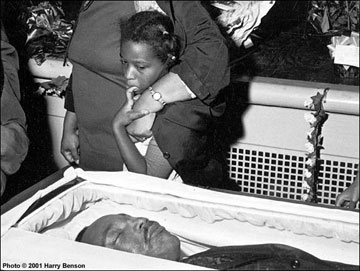
Hb_martin_luther_king Martin Luther King, Jr. was assassinated in Memphis a little after 6 p.m., Central Standard Time, on April 4, 1968. As the news spread around the country, angry and grieving inner-city residents poured into the streets. In many places, marches and protests broke out; in some, the crowds turned violent. Scores of shops and restaurants along Washington’s 14th Street were looted that night, and several were set on fire, some only a few minutes’ drive from the White House.

Over the following few days, more than 100 cities would experience significant civil disturbance. In many cases it took National Guard troops to bring peace, and in three—Baltimore, Chicago, and Washington—it took thousands of active Army and Marine units. Strangely, however, New York City almost completely avoided violence, despite widespread expectation during the previous year that the city was due for a massive riot. This is the story of how the city avoided conflagration on that first, tense night. (The following is excerpted from Clay Risen's new book, A Nation on Fire: America in the Wake of the King Assassination—ed.)

More here.

The case for an International agency

Prince Hassan of Jordan in Prospect Magazine:

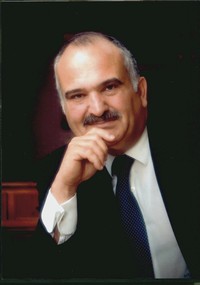
6a00d8341c562c53ef010536d6ea30970c-800wi The tragic stalemate between Israel and Palestine should have ended long ago. It has involved 60 years of bitter conflict, including numerous international wars and the displacement of refugees following the creation of the State of Israel in 1948 and the Israeli occupation of Palestine after 1967. The struggle seems never-ending. It is a woeful tale of missed opportunities, broken promises, moments of hope shattered by renewed acts of aggression and an entrenchment of polarised positions.

Even prior to the current escalation, the Israeli blockade was having a calamitous impact on the population of Gaza. In the immediate weeks and months ahead, crisis management will be required to halt the violence on both sides, but temporary ceasefires are not a solution. Nor do international resolutions appear to be effective. At the same time, neither condemnation nor ad hoc aid can heal these festering wounds. This is a conflict with far-reaching implications, first and foremost for the people of Palestine, but also for the stability of the region and beyond. Yet it is also a conflict within which practical measures may be suggested, and attempted.

To halt the apparently growing disconnect within the region, both the Organisation of Islamic Conference and the League of Arab States must present a clear statement of their positions, whilst the Arab Peace Initiative needs to inject new momentum into its proposals, regaining traction amongst the parties and international partners. Survival in these harsh, but staggeringly beautiful lands requires cooperation over scarce resources, on the provision of employment for our youth, and on regional trade agreements. To be enduring, any meaningful peace initiative must address the region as a whole, inclusive of Iran, Israel and Turkey.

More here. (Note: Thanks to Princess Sarvath)

A letter from the grave

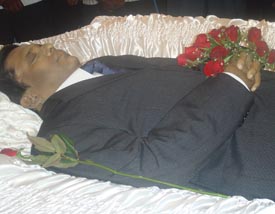
This is a truly moving editorial written by slain newspaper editor Lasantha Wickramatunga to be published in the case of his assassination. Please read the whole thing below. Here is an introduction by Emily Wax in the Washington Post:

Lasantha2 Across South Asia, it has become known as the letter from the grave.

Anticipating his own slaying, Sri Lankan journalist Lasantha Wickramatunga, 52, a fierce critic of his country's government, wrote an editorial called “And Then They Came for Me,” a dramatic essay to be printed in the event of his assassination.

On Jan. 8, the father of three was shot in the head and chest on his way to work by two men on motorcycles. The editorial, published the following Sunday, has highlighted how dangerous reporting in Sri Lanka has become. Critics cite a growing pattern of intimidation by the government, especially during a recent push to wipe out the separatist Liberation Tigers of Tamil Eelam, or Tamil Tigers, in a war that has persisted for more than two decades, one of the world's longest-running conflicts.

More here. And here is Lasantha Wickramatunga's actual editorial from Sri Lanka's The Sunday Leader:

And Then They Came For Me

LasanthaNo other profession calls on its practitioners to lay down their lives for their art save the armed forces and, in Sri Lanka, journalism. In the course of the past few years, the independent media have increasingly come under attack. Electronic and print-media institutions have been burnt, bombed, sealed and coerced. Countless journalists have been harassed, threatened and killed. It has been my honour to belong to all those categories and now especially the last.

I have been in the business of journalism a good long time. Indeed, 2009 will be The Sunday Leader's 15th year. Many things have changed in Sri Lanka during that time, and it does not need me to tell you that the greater part of that change has been for the worse. We find ourselves in the midst of a civil war ruthlessly prosecuted by protagonists whose bloodlust knows no bounds. Terror, whether perpetrated by terrorists or the state, has become the order of the day. Indeed, murder has become the primary tool whereby the state seeks to control the organs of liberty. Today it is the journalists, tomorrow it will be the judges. For neither group have the risks ever been higher or the stakes lower.

Why then do we do it? I often wonder that. After all, I too am a husband, and the father of three wonderful children. I too have responsibilities and obligations that transcend my profession, be it the law or journalism. Is it worth the risk? Many people tell me it is not. Friends tell me to revert to the bar, and goodness knows it offers a better and safer livelihood. Others, including political leaders on both sides, have at various times sought to induce me to take to politics, going so far as to offer me ministries of my choice. Diplomats, recognising the risk journalists face in Sri Lanka, have offered me safe passage and the right of residence in their countries. Whatever else I may have been stuck for, I have not been stuck for choice.

But there is a calling that is yet above high office, fame, lucre and security. It is the call of conscience.

More here. Read more about the man here.

‘I’m the luckiest novelist in the world’

From The Guardian:

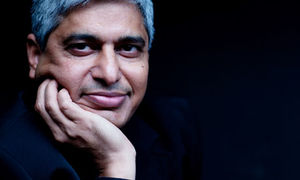
Vikas-Swarup-author-of-th-006 When they made a film of Vikas Swarup's bestseller, they gave it an extreme makeover. But can I get the author to say anything critical about Danny Boyle's hit adaptation of his debut novel, about a penniless orphan who wins India's Who Wants to Be a Millionaire? Not a chance. Swarup, you see, is a diplomat. And not just any diplomat: his sumptuous business card, embossed with three golden lions, tells me he is minister and deputy high commissioner of India, based in Pretoria.

They changed the title from Q&A to Slumdog Millionaire. (“That made a lot of sense,” says Swarup.) They changed the ending. (“Danny thought the hero should be arrested on suspicion of cheating on the penultimate question, not after he wins as I had it. That was a successful idea.”) They made friends into brothers, axed Bollywood stars and Mumbai hoodlums and left thrilling subplots on the cutting-room floor. Crucially, they changed the lead character's name from Ram Mohammad Thomas to Jamal Malik, thereby losing Swarup's notion that his hero would be an Indian everyman, one who sounded as though he was Hindu, Muslim and Christian. Instead, they made Jamal a Muslim whose mother is killed by a Hindu mob. (“It's more dramatically focused as a result, perhaps more politically correct.”) “I was forewarned of the changes by Simon Beaufoy, the screenwriter,” Swarup says. And he's still happy. “The film is beautiful. The plot is riveting. The child actors are breathtaking.”

Swarup has one niggle. He worries how that scene of Hindu mobs murdering Muslims will play when the film opens in India next week. “People in India are sensitive about how they're portrayed, so there will be criticisms. But a Bollywood director recently told me Slumdog Millionaire's failing was that it wasn't extreme enough to be truly Indian. India has a genius for recycling its contradictions.” Swarup rewards my sceptical frown with an endearing smile.

More here.

Tom Friedman offers a perfect definition of “terrorism”

Glenn Greenwald in Salon:

ScreenHunter_05 Jan. 16 11.40 Tom Friedman, one of the nation's leading propagandists for the Iraq War and a vigorous supporter of all of Israel's wars, has a column today in The New York Times explaining and praising the Israeli attack on Gaza. For the sake of robust and diverse debate (for which our Liberal Media is so well known), Friedman's column today appears alongside an Op-Ed from The Atlantic's Jeffrey Goldberg, one of the nation's leading (and most deceitful) propagandists for the Iraq War and a vigorous supporter of all of Israel's wars, who explains that Hamas is incorrigibly hateful and radical and cannot be negotiated with. One can hardly imagine a more compelling exhibit demonstrating the complete lack of accountability in the “journalism” profession — at least for those who are loyal establishment spokespeople who reflexively cheer on wars — than a leading Op-Ed page presenting these two war advocates, of all people, as experts, of all things, on the joys and glories of the latest Middle East war.

In any event, Friedman's column today is uncharacteristically and refreshingly honest. He explains that the 2006 Israeli invasion and bombing of Lebanon was, contrary to conventional wisdom, a great success. To make this case, Friedman acknowledges that the deaths of innocent Lebanese civilians was not an unfortunate and undesirable by-product of that war, but rather, was a vital aspect of the Israeli strategy — the centerpiece, actually, of teaching Lebanese civilians a lesson they would not soon forget:

Israel’s counterstrategy was to use its Air Force to pummel Hezbollah and, while not directly targeting the Lebanese civilians with whom Hezbollah was intertwined, to inflict substantial property damage and collateral casualties on Lebanon at large. It was not pretty, but it was logical. Israel basically said that when dealing with a nonstate actor, Hezbollah, nested among civilians, the only long-term source of deterrence was to exact enough pain on the civilians — the families and employers of the militants — to restrain Hezbollah in the future.

Israel’s military was not focused on the morning after the war in Lebanon — when Hezbollah declared victory and the Israeli press declared defeat. It was focused on the morning after the morning after, when all the real business happens in the Middle East. That’s when Lebanese civilians, in anguish, said to Hezbollah: “What were you thinking? Look what destruction you have visited on your own community! For what? For whom?”

Friedman says that he is “unsure” whether the current Israeli attack on Gaza is similiarly designed to teach Palestinians the same lesson by inflicting “heavy pain” on civilians, but he hopes it is:

In Gaza, I still can’t tell if Israel is trying to eradicate Hamas or trying to “educate” Hamas, by inflicting a heavy death toll on Hamas militants and heavy pain on the Gaza population. If it is out to destroy Hamas, casualties will be horrific and the aftermath could be Somalia-like chaos. If it is out to educate Hamas, Israel may have achieved its aims.

Much more here.

Mars Has Methane, But Life?

From Science:

Mars It's taken 5 years, but planetary scientists are finally confident that they have detected methane on Mars. At a press conference today at NASA headquarters in Washington, D.C., and in a paper published online today in Science, researchers announced that all the painstaking observations, analysis, and reanalysis now reveal summertime plumes of the gas from three regions on the planet. On Earth, methane is a byproduct of living bacteria, but whether that's what's producing the gas on Mars is anyone's guess. The first news of martian methane claims came in 2004 (Science, 26 March 2004, p. 1953). But the early data–from spacecraft and ground-based telescopes–were controversial. Spacecraft were not detecting all of the spectroscopic signatures of the gas, for example, and ground-based observers had to contend with interference from methane and other trace gases in Earth's atmosphere.

At today's press conference, astronomer Michael Mumma of NASA's Goddard Space Flight Center in Greenbelt, Maryland, declared success. “We've eliminated most of the gremlins that were bothering us,” he said. The biggest problem was working out how to reliably remove terrestrial contamination from the team's spectra. “We've done a lot of work that makes the current results robust,” Mumma says. Planetary scientist Sushil Atreya of the University of Michigan, Ann Arbor, agrees. Measuring martian methane “is really at the ragged edge of things,” he says, but “I think the detection is pretty solid.” Beyond detection, the observations reveal that the methane averages 33 parts per billion in the summer but essentially disappears afterward. About 0.6 kilograms of methane emerge each second in the summer, Mumma said, which is comparable to the emissions from a natural oil seep near Santa Barbara, California. Perhaps, he said, the martian methane is continually produced beneath the surface but only released when summer warming breaks an icy seal on the surface.

The source? No one can say.

More here.

The “war on science” is over. Now what?

Chris Mooney in Slate:

ScreenHunter_04 Jan. 16 11.14 The “war on science” is over. Or at least it is in the sense that I originally meant the phrase: We're at the close of the Bush administration's years of attacks on the integrity of scientific information—its biased editing of technical documents, muzzling of government researchers, and shameless dispersal of faulty ideas about issues like global warming.

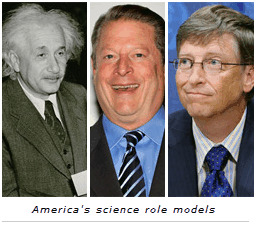
The attacks generated dramatic outrage and considerable activism from the traditionally staid science community and the sympathy of politicians like Hillary Clinton and Barack Obama. So it's no great surprise to find the president-elect setting out to restore dignity to the role of science in government. George W. Bush didn't even bother to name his White House science adviser until well into his first term, and his appointee (physicist John Marburger) didn't win Senate confirmation until October 2001. In contrast, Obama has already named a Nobel laureate physicist (Steven Chu) to head the Energy Department and a climate specialist and prominent leader of the scientific community, Harvard's John Holdren, as his Cabinet-level science adviser.

Scientists are ecstatic about these developments and about Obama's recent promise to listen to them “even when it's inconvenient—especially when it's inconvenient.” But it would be the gravest of errors for researchers to simply return victorious to their labs and fall back on a time-honored stance of political detachment.

More here.

No cease fires

Jonathan Shainin in The National:

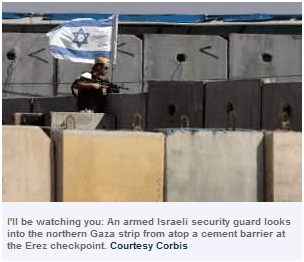
ScreenHunter_03 Jan. 16 10.58 It is important to understand that Israel did not leave Gaza in 2005. Israeli settlers left Gaza, and Israeli soldiers moved from its center to its perimeter. The deprivation inflicted by the subsequent siege has been widely chronicled elsewhere, and while it may provide little justification for Hamas violence, one thing is absolutely clear: Israel has controlled the Gaza Strip from June 1967 until today. It decides who enters and who leaves, decides when food and medicine and money can cross the border and when they can’t. It decides where the walls go and who guards them, when to send in its tanks and planes, who can govern and who cannot govern, and above all, who lives and who dies.

The prominent Israeli commentator Ari Shavit – a former leftist and brilliant writer who became the foremost liberal hagiographer of Ariel Sharon – wrote on Tuesday that this is “a war for Israel’s sovereignty.” Close, but not quite. Israel’s sovereignty has never been at issue: it is the unquestioned sovereign power, the authority over those that are its citizens and those that are not. It is the perpetuation of Israeli sovereignty over the Palestinian territories – and not the occupation of territory, per se – that is precisely the issue. Palestinian residents of the occupied territories are citizens of no state; they are subjects of no government and no law, bearing no rights. The problem is that this is not a temporary situation: the abysmal failure of the Oslo process, which perceptive observers saw from its start, was that it promised territory without sovereignty, a meaningless offer that represented Israel’s most generous proposal.

More here.

Thursday, January 15, 2009

The Tragic Despair of Tom Segev

Segev in the Washington Post:

Israel has adhered to a number of basic assumptions that have never proven right. Some of these theories contributed to the operation in Gaza this time. According to one such assumption, inflicting hardship on Palestinian civilians will make the population rise up against its leaders and choose more “moderate” ones. Hence, when Hamas took over Gaza in 2007, after a short, sharp struggle with its secular rivals in Fatah, Israel imposed a blockade on the strip, pushing 1.5 million Palestinians to the verge of a humanitarian catastrophe. But Hamas has only become stronger. And here's another false Israeli assumption: that Hamas is a terrorist organization. In fact, it's also a genuine national and religious movement supported by most of the people in Gaza. It cannot be simply bombed away.

The latest violence hasonce again brought reporters from all over the world to the region. Many of them wonder why Israelis and Palestinians don't simply agree to divide the land between them. Indeed, Israeli leaders support a two-state solution, which had previously been advocated only by the extreme left. Palestinian leaders, though not the heads of Hamas, have agreed to accept this solution. Apparently, only the details of the agreement have to be worked out. If only it were that simple.

This conflict is not merely about land and water and mutual recognition. It is about national identity. Both the Israelis and the Palestinians define themselves by the Holy Land — all of it. Any territorial compromise would compel both sides to relinquish part of their identity.

In recent years, with the rise of Hamas and the increasing militance of some Jewish settlers, this precariously irrational conflict has also assumed a more religious character — and thereby become even more difficult to solve. Islamic fundamentalists, as well as Jewish ones, have made control of the land part of their faith, and that faith is dearer to them than human life.

So I find myself among the new majority of Israelis who no longer believe in peace with the Palestinians. The positions are simply too far apart at this time.

I no longer believe in solving the conflict. What I do believe in is better conflict management — including talks with Hamas, which is a taboo that must be broken.

R.I.P., Two of My Cultural Icons

Wrathkhanricardomontalba_l In Entertainment Weekly:

The late Ricardo Montalban had a titanic career — spanning some 60-odd years — during which the Mexican actor kicked up his heels in MGM musicals and granted wishes on Fantasy Island, set the stage for ape rebellions and tangled with men from U.N.C.L.E, swung with nighttime soap stars and lent his voice to Family Guy. It doesn't matter than he won an Emmy (for 1978's How the West Was Won) or was nominated for a Tony (for 1958's Jamaica)…to me, he will always be Khan.

He will always be Captain Kirk's finest foe, the would-be conqueror who first tried to steal the Enterprise in the classic Star Trek episode “Space Seed” and then finally robbed Kirk of his best friend in Star Trek II: The Wrath of Khan. Montalban's magnetic, robust presence; that voice that sounded like a ride over rolling hills — he made Khan Noonien Singh the worst kind of despot: the kind you're pretty sure you'd die for. The product of a Eugenics program that rendered him stronger and smarter than the average bear, Khan was a tragic figure — the man who would not be denied, born into a world that did nothing buy deny him his birthright — and that tragedy is part of what lifts Star Trek II to an almost Shakespearean level.

Gallery-Patrick-McGoohan--017 And in the Guardian, a piece on the late Patrick McGoohan:

An angry secret agent drives into London in his fashionable Lotus 7 as a storm threatens, bursts into his boss's office, throws his resignation down on to his desk, and storms out again. At home later, he finds an undertaker at his door. Gas comes through the keyhole, and he collapses as he packs his bags to go away. He wakes up in the Village, and no one will tell him where he is or why he is there, only that he is Number Six. ” I am not a number, I am a free man!” is his answer – and battle was joined in 17 attempted escapes.

In the series McGoohan met several sinister Number Twos but could never find out who Number One was until the last episode, improvised by McGoohan and his large writing team at the last moment, when Number One's false face was pulled off to reveal a monkey's underneath. When that too was pulled off, it revealed the face of McGoohan's Number Six himself.

The implication that human beings can imprison themselves was timely in the swinging 60s, while at the same time the notion of the security services as the real enemy was seeping its way into fiction that had previously existed in more black and white terms.

NASA scientists are expected to announce Thursday they may have proof there is life on Mars

From Fox News:

ScreenHunter_02 Jan. 15 16.18 The scientists suspect alien microbes may be alive and kicking just below the soil of the big planet, after large quantities of what may be the organisms' waste products were detected.

The organisms — called methanogens — are suspected to have been living in water beneath underground ice, where they are disgorging tons and tons of methane.

On Earth, methane is produced in massive quantities by animals such as cows, sheep and goats, as well as by geological processes.

Giant telescopes from Earth and NASA's Mars Reconnaissance Orbiter have spotted a haze of the gas surrounding Mars, and according to some scientists this can only point to the presence of life on Mars.

“Methane is a product of biology,” British Mars expert Professor Colin Pillinger told the London tabloid The Sun Wednesday night.

corpses and nymphs

Measuring_your_own_grave

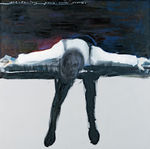
As existentialist injunctions go, “Measur[e] your own grave” and “Live forever” could be said to represent polar opposites, of heaven and (literally) earth. And yet, the painters to whom these phrases serve as subtitles for their museum surveys, respectively at the Modern and the New, are anything but opposed. It is not as if, for instance, Elizabeth Peyton has the exclusive on ethereality, Marlene Dumas on groundedness. Indeed, Peyton and Dumas, though different ages and with markedly contrastive personal histories, could be construed as soul sisters. In the manner of that Greek legend where different maidens lined up to inspire separate body parts for the statue of a goddess, these two artists could almost be enlisted to collaborate on a portrait of the postmodern (and post- or neo-feminist) condition, one that in painterly touch and depictive attitude alike is torn between intimacy and remoteness, memory and visceral presence. And this collaboration would take place without a major compromise on either’s part in terms of modus operandi, touch, or – deep down – philosophy.

more from artcritical here.

raucous, radical, defiant and unapologetic

Robert Burns4

Eighteenth-century Scots was clearly a language rich in synonyms for this last pastime, and Burns makes use of most of them in his poetry. Even after his marriage to the long-suffering Jean Armour, he continued to take advantage of the numerous opportunities for sexual conquest opened up by his personal charm and powers of persuasion. Although Burns was a poet who was forced to earn his living by means of agricultural labour for much of his life, the Ayrshire communities in which he lived were not entirely deprived of contact with the currents of thought emanating from Edinburgh, the centre of the Scottish Enlightenment. Crawford lists the many formal and informal social networks promoting the development of individual culture and literary activity to which Burns belonged. Through his membership of the Freemasons, his participation in the Tarbolton “Bachelors Club”, and his friendship with like-minded people of his own class and background, he found ready support and assistance for his earliest poetic efforts, and encouragement for his desire to have his songs and poems published.

more from the TLS here.

Israel’s foreign ministry organising volunteers to flood news websites with pro-Israeli comments

Richard Silverstein in The Guardian:

A reader of my blog has received the following email which documents both the efforts and the agency that originated them. The solicitation to become a pro-Israel “media volunteer” also includes a list of media links which the ministry would like addressed by pro-Israel comments:

Dear friends,

We hold the [sic] military supremacy, yet fail the battle over the international media. We need to buy time for the IDF to succeed, and the least we can do is spare some (additional) minutes on the net. The ministry of foreign affairs is putting great efforts in balancing the media, but we all know it's a battle of numbers. The more we post, blog, talkback, vote – the more likely we gain positive sentiment.

I was asked by the ministry of foreign affairs to arrange a network of volunteers, who are willing to contribute to this effort. If you're up to it you will receive a daily messages & media package as well as targets.

If you wish to participate, please respond to this email.

My friend did so and received this official communique from the ministry with talking points about Operation Cast Lead which s/he was to use in her/his propaganda efforts. Among the links was was a Peter Beaumont Cif piece. The following were identified as “target sites”: the Times, the Guardian, Sky News, BBC, Yahoo!News, Huffington Post, and the Dutch Telegraaf. Also targeted were other media sites in Dutch, Spanish, German and French considered critical of the invasion.

More here. Meanwhile, Donald Macintyre and Kim Sengupta report in The Independent:

Israel is under suspicion of committing war crimes and should halt the “clear and present danger to the lives and well-being of tens of thousands of civilians” in Gaza, nine of the country's main human rights organisations have declared.

The Israeli organisations have written to the government, armed forces chiefs and the attorney general, condemning the “unprecedented” harm to a civilian population now in “extreme humanitarian distress”, the “wanton use of lethal force” and a series of what it says are “blatant violations of the laws of warfare”.

These include the fact that, apart from the death toll, with border crossings closed residents are unable to escape the war zone and are living in “fear and terror”. The organisations also cited the dire capacity problems of Gaza's hospital system and the failure to evacuate about 600 wounded and chronically ill patients; what they say is prevention by the army of rescue teams reaching isolated areas which have come under intensive attack; and the fact that, with sewage now flowing in many streets, more than half a million people are without clean water and 250,000 residents have been without electricity for 18 days. Another million residents are without power at any one time, the organisations said.

More here.