Ol’ Dirty Bastard was god

090122_CB_odbTN

“Creation is original freshness related to God,” said Ol’ Dirty Bastard. No, wait—it was St. Thomas Aquinas. Could have been ODB, though: No one doubted his original freshness, and the entropic rapper was quite as prone to a theological outburst as he was to one that was deranged or dirty-bastardly. Inducted as a 10-year-old into the Scholastically complex systems of the Five Percent Nation—the breakaway sect founded in 1963 by former Nation of Islam minister Clarence 13X Smith—Dirty in his short life would stray wildly from the path, but the teachings stayed with him. Always at his fingertips were the Supreme Alphabet, the 120 Degrees, the Nine Basic Tenets. “The black man is God!” he proclaimed at the end of a 1994 performance on The Arsenio Hall Show. And to an interviewer in 1997: “I’m God. That’s my identity, one of the low gods. One of the earth gods—one with a lot of wisdom.” Was he high? Almost certainly. But neither afflatus nor clinical grandiosity were at work here: For the Five Percenters, otherwise known as the Nation of Gods and Earths, these were the proverbs of a simple piety.

more from Slate here.

Saturday, January 24, 2009

Israel-Palestine: Suppose a Confederation

Seyla Benhabib makes a proposal for Israel-Palestine:

Suppose there was a confederation in Israel-Palestine. Suppose the neutralization of groups like Hamas and Hizbollah which do not recognize the existence of the state of Israel was a goal common to Palestinians as well as other Arab nations but that in the event Hamas would recognize Israel’s right to exist it would have a seat at the table; suppose that there were common air, maritime and water controls jointly exercised by an Israeli-Palestinian authority, suppose that there was a common currency and regulated settlement rights for each ethnic group in certain parts of the common territory. Israel would not have to face civil war against the fanatic settlers in Hebron and the West Bank who would then either have to live under a regional municipal Palestinian authority or would have to return to Israel. But Israel would not have to defend their land grabs through incursions into Palestinian territory; the Palestinians would not have to pretend that the Bantustan of Gaza could in any sense be part of a Palestinian state; instead Gaza would be an autonomous region in a joint Israeli-Palestinian confederation. Gaza and the West Bank would hold elections for municipal and regional administration and governments, under some clearly defined power-sharing agreement with each other and with Israel.

A confederation would not mean the disappearance of the national collective polity and identity of each people: within some version of the pre-1967 territories, that is the Green line, Israel would remain a Jewish state, with its language, and holidays and elections; but it would share power in military, security, intelligence, currency and trade matters with the Palestinian state. Likewise the Palestinians would have their own language, holidays and elections, but the two peoples would develop some form of joint school curricula particularly in the teaching of history which did justice to historical truths and to the suffering of both peoples. Children of a new generation would learn to have empathy rather than hatred for each other. There would be some equalization of socio-economic and welfare rights in this confederation so that everyone would not want move into the wealthier Israeli provinces; religious pluralism and liberal civil rights would be respected equally for all Jews, Muslims, Christians and all people of other faiths. For the religiously observant who would want to have their personal affairs to be administered by religious authorities there would be optional religious courts but there would also be a shared Bill of Rights for all peoples which would guarantee equal civil and political rights.

Marx: the quest, the path, the destination

Schneider_marxsm Helmut Merker in Tagesspiegel (in signandsight):

What is a revolutionary? The writings of Marx and Engels both use the metaphor of revolution as the “locomotive of history”. Is, then, the revolutionary a standard bearer of progress, a pace setter, a frontrunner?

None of the above, because in a world ruled by a turbo “devaluation” where only the new has market value, where commodity production spirals out of control, the “train of time” is a deadly trend. Alexander Kluge instead opts for Walter Benjamin's idea of the revolution as mankind “pulling the emergency brake“. We must hold up the torch of reason to the problems at hand, and the true revolutionary is therefore the one who can unite future and past, merging two times, two societies, the artist who montages stories and history. And so we come to Alexander Kluge and his art.

Kluge's monumental “News from Ideological Antiquity. Marx – Eisenstein – Das Kapital” is a 570-minute film available only on DVD which is based on the work of two other montage artists, James Joyce and Sergei Eisenstein. These two met in 1929 to discuss filming Marx's “Kapital” which had been written 60 years beforehand. Now, eighty years on, Alexander Kluge joins the party and takes up where Eisenstein failed, because neither Hollywood's capitalists nor Moscow's Communists were prepared to send the necessary funds his way.

The Bonfire of China’s Vanities

25hua_190 Pankaj Mishra in the NYT:

One cold afternoon last fall I met Yu Hua at the state-run Friendship Hotel in Beijing. Cheerfully, he described to me the incipient international fame of his most recent novel, “Brothers,” one of China’s biggest-selling literary works. He had just returned from Hong Kong, where the novel was short-listed for the Man Asian Prize; he was leaving soon for Paris to receive an award for the book, which had just been translated into French. With the breezy insouciance that unbroken success creates, Yu then began to recount a somewhat irreverent memory of Mao Zedong’s death.

Though nearly 50, Yu, who wears his hair short and spiky, looks relatively young. He speaks in emphatic bursts, his face often flushing red, and he is quick to laugh. It was, in fact, his boisterous laugh that almost got him into trouble on the morning of the solemn announcement of Mao’s death. Responding to orders that blared out from loudspeakers, he assembled with hundreds of other students in the main hall of his small-town high school. “Funereal music was played, and then we had to hear the long list of titles that preceded Mao’s name, ‘Chairman,’ ‘Beloved Leader,’ ‘Great helmsman . . . ,’ ” Yu recalled. “Everyone loved Chairman Mao, of course, so when his name was finally announced, everyone burst into tears. I started crying, too, but one person crying is a sad sight; more than a thousand people crying together, the sound echoing, turns into a funny spectacle, so I began to laugh. My body shook with my effort to control my laughter while I bent over the chair in front of me. The class leader later told me, admiringly, ‘Yu Hua, you were crying so fervently!’ ”

Saturday Poem

///
“A Drop in the Bucket”
Don Share

My mother, not quoting Coleridge: Water, water
everywhere, not a single drop to drink.

“Nor” was not her style, nor was her addition
of “single” or dropping of “and” singular.
She added many a word to what my father
failed to say, or said. This was the rule in her
extempore kingdom of sentences and kitchen sink.
She was well-spoken … unlike my father, dryly brilliant
scientist who seldom said more than he meant—
nothing token, quotable, or extravagant.
Words, to Dad, were data, nothing to be spoken;
to Mom, syllables strung together, each a token.
My mother wanted to be remembered and quoted;
her magisterium was full-bore, lachrymose, full-throated.
///

Exchange Between Bill Moyers and Abraham Foxman of the Anti-Defamation League

From Bill Moyers Journal:

Following Bill Moyers' reflections on the events in Gaza on the JOURNAL last week, Anti-Defamation League National Director Abraham Foxman sent him this letter:

041408_Abe_Foxman Mr. Moyers,

In less than a thousand words, you managed to fit into your January 9 commentary: (1) moral equivalency between Hamas, a radical Islamic terrorist group whose anti-Semitic charter cites the Protocols of the Elders of Zion, and Israel, the only democracy in the Middle East and perhaps America’s greatest ally in the world; (2) historical revisionism, asserting that Canaanites were Arabs; (3) anti-Semitism, declaring that Jews are “genetically coded” for violence; (4) ignorance of the terrorist threat against Israel, claiming that checkpoints, the security fence, and the Gaza operation are tactics of humiliation rather than counter-terrorism; and (5) promotion of an individual, the Norwegian doctor in Gaza, who has publicly expressed support for the September 11 attacks.

I have seen and read serious critiques of Israel’s military campaign in Gaza, and I have disagreed with many of them. Your commentary, however, is different, consisting mostly of intellectually and morally faulty claims that do a great disservice to the PBS audience. It invites not disagreement, but rebuke.

On one point you are correct – “America has officially chosen sides.” And rightly so. Fortunately for our nation, very few of our citizens engage in the same moral equivalency, racism, historical revisionism, and indifference to terrorism as you. If the reverse held, it would not be a country that any decent person would want to live in.

Sincerely,

Abraham H. Foxman
National Director
Anti-Defamation League

In response, Bill Moyers sent Mr. Foxman the following message:
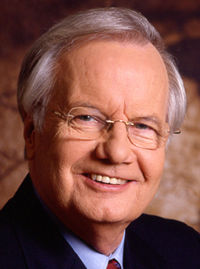
Bill_moyers2 Dear Mr. Foxman:

You made several errors in your letter to me of January 13 and I am writing to correct them.

First, to call someone a racist for lamenting the slaughter of civilians by the Israeli military offensive in Gaza is a slur unworthy of the tragedy unfolding there. Your resort to such a tactic is reprehensible.

Earlier this week it was widely reported that the International Red Cross “was so outraged it broke its usual silence over an attack in which the Israeli army herded a Palestinian family into a building and then shelled it, killing 30 people and leaving the surviving children clinging to the bodies of their dead mothers. The army prevented rescuers from reaching the survivors for four days.”


More here.

Rising fame for Obama ‘lookalike’

From the BBC:

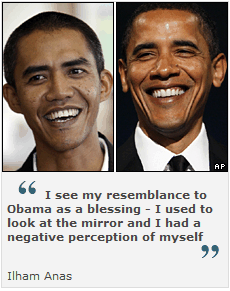
ScreenHunter_09 Jan. 24 13.30 Ilham Anas, 34, is already a celebrity in Jakarta, where Mr Obama once lived, but his fame is spreading.

He has appeared on Indonesia's premier TV talk show, done an advertisement as Mr Obama, and received other marketing offers from companies in the region.

The real Barack Obama went to school in Jakarta in the late 1960s, when his classmates knew him as Barry.

Mr Anas told Reuters news agency: “I was in the airport in Malaysia in transit and a man approached me and asked: 'Are you Obama?'. I was very surprised when he asked to take a picture together and bought me a meal.”

Mr Anas's increasing popularity arose after his colleagues, at a local teenage magazine, asked him to pose with a suit, tie and American flag, following Mr Obama's election victory in November.

Soon, they were taking photos and sending them to friends. “The pictures spread very quickly on the internet. It was phenomenal. Then TV stations and an advertising agency got in touch with me,” he said.

More here.

Breath of Thought

RUSSELL SHORTO in The New York Times:

THE INVENTION OF AIR: A Story of Science, Faith, Revolution, and the Birth of America By Steven Johnson

Air The Age of Categories is dead. Strangely, it never went by that name, or any name. Also curious is the fact that its boundaries are unclear: it overlapped the Age of Enlightenment, the Age of Reason and some others, but succumbed to the atomizing atmosphere of the Information Age. Knowledge, it held, went hand in hand with nomenclature and delineation. As science developed, branches formed. Elemental to the college and university were academic departments, each of which came surrounded by high walls. A datum was deemed to fit within the confines of chemistry or sociology or the history of spoons or whatever, and that was more or less that.

Now we perceive the limitations of those old categories and scoff; we value multidisciplinarianism and genre-bending. The life of the mind is more chaotic, but also more exhilarating.

Often a new boundary-crossing perspective comes simply from going back to original sources — to the time before categories hardened. Study the famous late correspondence between Thomas Jefferson and John Adams, Steven Johnson notes, and you find only five references to Benjamin Franklin and three to George Washington, but 52 to Joseph Priestley, the scientist/theologian who is often credited with the discovery of oxygen.

More here.

Do Naked Singularities Break the Rules of Physics?

From Scientific American:

Naked-singularities_1 Modern science has introduced the world to plenty of strange ideas, but surely one of the strangest is the fate of a massive star that has reached the end of its life. Having exhausted the fuel that sustained it for millions of years, the star is no longer able to hold itself up under its own weight, and it starts collapsing catastrophically. Modest stars like the sun also collapse, but they stabilize again at a smaller size. Whereas if a star is massive enough, its gravity overwhelms all the forces that might halt the collapse. From a size of millions of kilometers across, the star crumples to a pinprick smaller than the dot on an “i.”

Most physicists and astronomers think the result is a black hole, a body with such intense gravity that nothing can escape from its immediate vicinity. A black hole has two parts. At its core is a singularity, the infinitesimal point into which all the matter of the star gets crushed. Surrounding the singularity is the region of space from which escape is impossible, the perimeter of which is called the event horizon. Once something enters the event horizon, it loses all hope of exiting. Whatever light the falling body gives off is trapped, too, so an outside observer never sees it again. It ultimately crashes into the singularity.

But is this picture really true?

More here.

Friday, January 23, 2009

Scientists’ Nightstand: Chris Sangwin

Anna Lena Phillips in American Scientist:

SangwinChris Sangwin researches applied mathematics at the University of Birmingham in the United Kingdom. He is the author, most recently, of How Round Is Your Circle? Where Engineering and Mathematics Meet (Princeton University Press, 2008), which he cowrote with John Bryant. He is also author, with Chris Budd, of Mathematics Galore! Masterclasses, Workshops and Team Projects in Mathematics and Its Applications (Oxford University Press, 2001). His homepage and GeoGebra page offer videos and animations of applied mathematics in action.
Could you tell us a bit about yourself?
I'm currently a lecturer in the School of Mathematics at the University of Birmingham. I grew up in Salisbury before going to Oxford and then Bath as a graduate student. I graduated and moved to Birmingham in 2000. At present my research work is in applied mathematics and also on computer-aided assessment. My hobbies include mountaineering and beekeeping. I've always been interested in the outdoors, so mountaineering was a natural choice. I took up beekeeping recently and am having a huge amount of fun, making some delicious honey and appreciating much more how important food production really is!

What books are you currently reading (or have you just finished reading) for your work or for pleasure? Why did you choose them, and what do you think of them?
I've just finished a very interesting biography of Léon Foucault (as in Foucault's pendulum)— The Life and Science of Léon Foucault: The Man Who Proved the Earth Rotates, by William Tobin (Cambridge University Press, 2003) and am in the middle of Galileo's Dialogue Concerning the Two Chief World Systems, Ptolemaic and Copernican (1632).

More here.

How I Learned to Stop Worrying and Love the Death Star

Death_star2

Thirty years ago, American film audiences pressed low in their seats as a massive white wedge of machine parts passed overhead. With the release of George Lucas’s Star Wars, the smooth, silvery flying saucers that had dominated postwar sci-fi became embarrassing reminders of an obsolete vision of the future. Lucas envisioned a World of Tomorrow dominated by black, white, and gray; hard-edged, massive, and inorganic forms, covered with a salty acne of apparatus. The film’s visual program was a departure from the saucers and occasional capsules writ large that sci-fi audiences had grown accustomed to, but its colorless symmetrical ships should have been recognizable to at least a small portion of its audience—those familiar with contemporary art. In a 1967 essay on minimalism, Clement Greenberg, America’s most influential critic, could have been describing Star Wars: “Everything is rigorously rectilinear or spherical. Development within a given piece is usually repetition of the same modular shape, which may or may not be varied in size.”

more from Triple Canopy here.

the newspaper is dead!… or not

090126_r18156_p233

You can read all about it online, blog by blog, where the digital gloom over the death of an industry often veils, if thinly, a pallid glee. The Newspaper Death Watch, a Web site, even has a column titled “R.I.P.” Or, hold on, maybe the newspaper isn’t quite dead yet. At its funeral, wild-eyed mourners spy signs of life. The newspaper stirs! The last time the American newspaper business got this gothic was 1765, just after the first gothic novel, Horace Walpole’s “The Castle of Otranto,” was published, in London, and, in an unrelated development, Parliament decided to levy on the colonies a new tax, requiring government-issued stamps on pages of printed paper—everything from indenture agreements to bills of credit to playing cards. The tax hit printers hard, at a time when printers were also the editors of newspapers, and sometimes their chief writers, too. The Stamp Act—the “fatal Black-Act,” one printer called it—was set to go into effect on November 1, 1765. Beginning that day, printers were to affix stamps to their pages and to pay tax collectors a halfpenny for every half sheet—amounting, ordinarily, to a penny for every copy of every issue of every newspaper—and a two-shilling tax on every advertisement. Printers insisted that they could not bear this cost. It would spell the death of the newspaper.

more from The New Yorker here.

the turkish scottish connection

Ferrard-84x84-1

In his study of Ottoman poetry, what struck Gibb from the outset was how distant written Ottoman Turkish, both literary and non-literary, was from the spoken language and from the early language of thirteenth-century Asia Minor and Central Asia. After leaving university and devoting himself entirely to the study of Persian and Turkish, he began publishing translations of Turkish prose and poetry. Any student of Turkish soon realizes how much Turkish has changed in the last 150, and particularly in the last eighty, years. In Western works, the changes are referred to as the language reforms – revolution would be more accurate. No sooner were the Ottomans masters of Constantinople than they began to produce literature; at first poetry and eventually prose. The prose, like the poetry, looked to Persia not only for models but for its vocabulary and indeed whole phrases. The following is a portion of Turkish prose from the sixteenth century. The Turkish elements (in italics) are drowning in a mass of Persian and Arabic:

Çun sani’-i sana’i’-i beda’i’-i umur-i kulliyat ve mudevvir-i deva’ir eflaki tibak-i seb’a-i semavat ve kassam-i erzak-i murtezikat-i mevcudat, suradikat-i kibab-i gayb ve seraperde-i mukaddere-i la-reybden bir vaz’- i pesendide vu ma’kul ve bir eser-i sayeste vu makbul zuhura geturub

more from Eurozine here.

Friday Poem

///
A Riff for Sidney Bechet
Stanley Moss

That night in Florence,
forty-five years ago,
I heard him play
like “honey on a razor,”
he could get maple syrup
out of a white pine,
out of a sycamore,
out of an old copper beech.
I remember that summer
Michelangelo's marble
naked woman's breasts,
reclining Dawn's nipples—
exactly like the flesh I ached for.
How could Dawn behind her clouds hurt me?
The sunrise bitch was never mine.
He brought her down. In twelve bars of burnt sugar,
she was his if he wanted her.


The answer’s blowing in the wind

Novelist Bapsi Sidhwa recalls the events of the past and looks for answers to our present dilemmas in The Deccan Herald:

Bapsi_sidhwaOne cannot look in upon events in 2008 without reflecting on the fateful moments that held Pakistan hostage to a horrendous roller-coaster ride through 2007. The turmoil that spilled over from Afghanistan into the lawless maze of mountains between Afghanistan and Pakistan intensified, and suicide bombers, not on our radars before, exploded like grotesque fire-crackers in the northern areas and in major cities, including Lahore, killing thousands. The radicalisation of the peaceful Swat Valley by the Taliban and their dire edicts was another development: “If any ‘nai’ shaves or trims a beard, his shop will be blown up!” What could the poor barbers do but obey?

A new girl’s school built by DIL, a voluntary organisation for the development of literacy, was burnt down in the Valley.

On the heels of this turmoil came waves of protest by lawyers and politicians demanding General Pervaiz Musharraf’s resignation and calling for the reinstatement of the Chief Justice Iftikhar Chaudhry. The Supreme Court Justice was ousted by the general for challenging the validity of a case that would have permitted him to remain in power after elections. Like his predecessors who had come to power with some popular support, General Musharraf continued to overstay his welcome.

The processions and their acts of minor vandalism — burning buses and tires on streets — though disruptive, ironically brought respite from suicide bombing.

More here.

Einstein’s Worldview and Its Effects

Daniel Kennefick reviews Einstein for the 21st Century: His Legacy in Science, Art, and Modern Culture by Peter L. Galison and Gerald Holton and Silvan S. Schweber, in American Scientist:

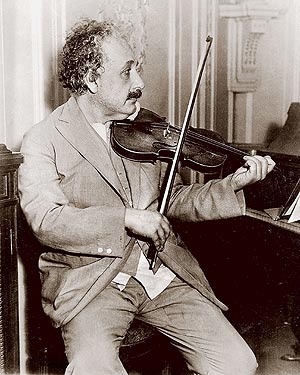
Einstein_070621120740126_wideweb__300x375 Those writers asked to grapple with the subject of Einstein and the arts were faced with a profound conundrum. Although Einstein lived through, and made his greatest contributions to culture during, a period of great ferment and change in the arts, he expressed, as far as we know, little or no interest in the literature, music or visual arts of his own period. Yet most of us somehow instinctively feel that Einstein, as the leading figure in the revolution of modern physics that occurred in the first half of the 20th century, can be viewed as part of a historical movement that also encompasses Pablo Picasso, James Joyce and Arnold Schoenberg. How can one seriously address a subject that cries out for large statements and yet provides the most meager of foundations on which to rest them?

Happily, the authors address themselves soberly to the question of Einstein's artistic legacy. Leon Botstein, writing on Einstein and music, is particularly thoughtful. His balanced account of Einstein's abilities as a violinist is of interest to those of us who have read much about Einstein's love of music without ever finding out much about his abilities as a musician. Many have speculated that Einstein's love of music somehow contributed to his scientific genius, and Botstein correctly quotes the great man himself pouring cold water on the notion that his scientific thought was in any way influenced by his love of music. Botstein notes that Einstein's taste was quite conservative and that he lacked any appreciation of the modernist music of his own day. In those respects, he was typical of many 20th-century scientists.

More here.

Don’t Just Speak Out, Cry Out!

From The Magnes Zionist:

ScreenHunter_08 Jan. 23 12.34 Now that the artillery has ceased firing, we are seeing a few Israelis speak out against the horrors of this so-called war, a war whose main goal was not to stop the rocket fire, which could have been done without a single death, but rather to wreak havoc on a defenseless civilian population. (That statement, of course, is not at all controversial, since even defenders of the war concede that the purpose of wreaking havoc was to weaken Hamas, and to show them that “the boss went crazy.”)

Tom Segev, who wrote eloquently against the unnecessary and immoral war from the outset, has published a piece about the scandal of Israeli apathy. I hope his “History Lesson: The History of [Israeli] Self-Righteousness” is translated into English.

The history of Israeli self-righteousness is rich with condemnations and expressions of regret over injuring civilians. Israel's self-image is based on the assumption that the IDF is better than other armies. “We at least try not to injure civilians.” That wasn't true even before the destruction and the death that the IDF sowed in Gaza in recent weeks. But this time it seems that many fewer Israelis than in the past feel that what happened there – should not have happened.

This operation stands out not only in its cruelty, but mainly because it did not succeed in drawing Israelis out of their apathy. This apathy is chiling and is no less shameful than the actions themselves.

Haaretz, in an editorial, has called for a governmental inquiry into war crimes. Even a wimpy Labor party liberal like philosopher Yirmiyahu Yovel has written a powerful accusation against Israel's conduct of the war.

More here.