
Privilege of Being
Robert HassMany are making love. Up above, the angels
in the unshaken ether and crystal of human longing
are braiding one another’s hair, which is strawberry blond
and the texture of cold rivers. They glance
down from time to time at the awkward ecstasy—
it must look to them like featherless birds
splashing in the spring puddle of a bed—
and then one woman, she is about to come,
peels back the man’s shut eyelids and says,
look at me, and he does. Or is it the man
tugging the curtain rope in the dark theater?
Anyway, they do, they look at each other;
two beings with evolved eyes, rapacious,
startled, connected at the belly in an unbelievably sweet
lubricious glue, stare at each other,
and the angels are desolate. They hate it. They shudder pathetically
like lithographs of Victorian beggars
with perfect features and alabaster skin hawking rags
in the lewd alleys of the novel.
All of creation is offended by this distress.
It is like the keening sound the moon makes sometimes,
rising. The lovers especially cannot bear it,
it fills them with unspeakable sadness, so that
they close their eyes again and hold each other, each
feeling the mortal singularity of the body
they have enchanted out of death for an hour or so,
and one day, running at sunset, the woman says to the man,
I woke up feeling so sad this morning because I realized
that you could not, as much as I love you,
dear heart, cure my loneliness,
wherewith she touched his cheek to reassure him
that she did not mean to hurt him with this truth.
And the man is not hurt exactly,
he understands that his life has limits, that people
die young, fail at love,
fail of their ambitions. He runs beside her, he thinks
of the sadness they have gasped and crooned their way out of
coming, clutching each other with old, invented
forms of grace and clumsy gratitude, ready
to be alone again, or dissatisfied, or merely
companionable like the couples on the summer beach
reading magazine articles about intimacy between the sexes
to themselves, and to each other,
and to the immense, illiterate, consoling angels.
From Human Wishes (Ecco Press, 1989)
Category: Recommended Reading
Monday, April 6, 2009
perceptions

Sunday, April 5, 2009
The other kind of smart
From The Boston Globe:
FOR MOST OF us, what we were taught in school and what we remember from our school years are two different things. We sat through uncountable hours of lessons about denominators and organelles, about precipitates and dangling participles, about Boo Radley and Shays' Rebellion, and yet the memories that sneak up on us today are more likely to be the humiliations suffered on the school bus or the awkward moments from a pubertal romance, the triumph of a deftly parried insult or the sheltering solidarity we felt in a now long-dispersed clique.
Much of what we learn about social life, in other words, we learn in school. The learning process is a fumbling and painful one, administered not by teachers but through schoolyard intrigues and emotional outbursts. And in this part of our education, we are largely on our own. While some people – Franklin Delano Roosevelt was one, Ronald Reagan another – seem born with a gift for emotional perception, the rest of us muddle through as we can. School is set up for one kind of learning, but when it comes to emotional matters, the assumption has always been that these are instincts we have to develop for ourselves.
More here.
Leon Gast’s When We Were Kings
Our own Morgan Meis in The Smart Set:
Boxing is an ugly thing. The outcome is considered a great success when one combatant has beaten the other into unconsciousness. Old boxers are a sad lot, a compound wreck of irreversible physical and mental damage. The details are well known. Yet no one seems to care all that much. As someone once quipped, “Sure, there have been deaths and injuries in boxing, but none of them serious.”
Underneath this fundamental ugliness is a greater wretchedness still. I think, for instance, of the opening of Ralph Ellison's novel Invisible Man, where a group of young blacks in the South are made to fight one another to the drunken joy of the white crowd in order to collect their “scholarships.” Muhammad Ali summed this ugliness up with his typical forthrightness. “Boxing,” he said, “is a lot of white men watching two black men beat each other up.”
And yet, it compels. Not always. Not even all that often. Not in a way that makes it possible to defend the sport of boxing in any rational way. Nevertheless, it compels. Perhaps it's the simplicity of it, the literal way in which one either beats one's opponent or is beaten by him. Whatever it is, there is no greater testament to boxing at its most compelling than When We Were Kings, the documentary by Leon Gast about the fight in 1974 (often referred to as the “Rumble in the Jungle”) between then-world champion George Foreman and an aging Muhammad Ali.
More here.
Armenian Golgotha

Readers familiar with the literature of the Holocaust will read Armenian Golgotha with a combination of recognition and estrangement. Many of the events Balakian writes about could be taking place in Poland or the Ukraine 20 years later. Again and again, we hear about how Turkish policemen would tell the residents of a village to assemble for a long journey, herd people into carriages, then drive them to a remote spot, where they would be murdered and their possessions divided up among the murderers. Armenians were told that they were simply being relocated to the Syrian desert province of Der Zor, just as Jews were told that they were being resettled in the East; the name of Der Zor takes on, in Balakian’s account, the same aura of nightmare and death that “the East” did for Jewish victims. Balakian even wonders, as have some Jewish observers of the Holocaust, why more of the victims did not fight back. “They had the psychology of a herd of dumb sheep, going to their death without complaint,” he complains about one group of deportees who failed to seize the chance to flee.
more from TNR here.
today now!
gorilla warfare

On the surface, a day at the zoo can appear fairly routine. At the Philadelphia Zoo on its birthday, kids ran their fingers over an empty tortoise shell that a volunteer held by that animals’ exhibit, and laid on the floor of the Bank of America Big Cat Falls’ theater to watch a film montage of tigers, lions, and cheetahs. Parents pushed strollers and bought Dippin’ Dots. I sat on the edge of Bird Lake and watched children in a paddle boat shaped like a swan try to hit Canada geese while an employee on the dock yelled, “Ride’s over!” But there were also multiple opportunities for contemplation of biology — a fact whose spirit would have pleased the zoo’s founders, if not its form. At an exhibit of two hornbills, for example, one of the birds hopped to the fence whenever a visitor came to it. It walked back and forth along the fence with a toy in its long, black beak: a cartoon cat with a stressed-out expression on its face. In the petting zoo, I saw a squirrel (one of the only truly wild animals at a zoo) eat almost an entire ice cream cone that someone had dropped. A few dozen peacocks invaded the dusty mountain of the prairie dog enclosure; three of the mammals sat at the end of clear plastic box placed out on the mound, eating peanuts while one of the birds poked its head in to eat some, too.
more from The Smart Set here.
The devil is in the details
Mahmood Mamdani’s stemwinding book on Darfur brilliantly punctures the sanctities of the international humanitarian order – but doesn’t know where to stop, Wesley Yang writes.
From The National:
The international community is presently engaged in a high-stakes game of poker with the government of Sudan. At stake is the legitimacy of the International Criminal Court, the permanent sitting tribunal whose purpose is to punish those that commit the worst crimes against humanity. Also hanging in the balance are the lives of 2.5 million Darfurian refugees who have been driven from their homes by a scorched earth counter-insurgency campaign launched by the Sudanese government in response to rebel attacks in the region in 2003.
Both sides in this international stand-off have already demonstrated a willingness to sacrifice those lives for the sake of the principles they support. The Sudanese government has thrown out 13 international aid groups who provide the food and medicine necessary to sustain those refugees, under the pretext that they gathered evidence for the ICC against Sudan’s president, Omar al Bashir. The ICC prosecutor Luis Moreno-Ocampo went ahead with the indictment in full knowledge that this was the likely consequence. He claims to be acting in the interest of justice alone, without reference to the political or humanitarian situation – and no one disputes that by arming and abetting mounted Arab proxies (later dubbed “devils on horseback” in the press) to put down a rebellion with indiscriminate violence against civilians, al Bashir violated the spirit and letter of international law (as have many rulers before him). We have a struggle for primacy between the two principles – national sovereignty and international law – that seems likely to define global politics for the rest of this century.
Providing an accurate account of these principles, and the intricate politics in which they are embedded, involves wading through self-serving and overwrought claims from both sides while weighing two genuine and incommensurable claims to legitimacy. In his new book, Saviors and Survivors: Darfur, Politics and the War on Terror, the distinguished Africa scholar Mahmood Mamdani does his readers the considerable service of laying waste to many of the dangerous and self-serving illusions of one side of this argument. But he erects a mirror edifice of illusions in its place; getting the story straight requires disentangling the true from the misleading in Mamdani’s account.
More here.
George Bush and History’s Croakers
The Duke of Wellington thought that “croaking” was the second-worst obstacle faced by the British army he led to victory during the protracted 1808–1814 Peninsular War; the worst was the political partisanship of some of the generals sent by London to serve under him either as a reward for services or as a harmless rebuke meted to aggravating, but otherwise socially or politically invulnerable personages in uniform (first prize, one week in Spain; second prize, two weeks in Spain). He wrote with feeling to the Prime Minister, “I only beg of you not to send me any violent party men. We must keep the spirit of party out of the army, or we shall be in a bad way indeed.”
They certainly were, and the badness of the way was compounded when partisan petitioners and patronage seekers went forth preceded and followed by a croaking obbligato. “Croaking” was the double-barrelled onomatopoeic witticism (vastly more clever and polite than “Pommie bastard” or “Damn Yankee”) first used by Wellington to describe the despondent, defeatist grumbling, moaning, rumour-mongering enmity of too many of the island’s intelligentsia. These croakers, like Shelley, Byron, Leigh Hunt and Hazlitt, shared with the aristocratic habitués of Lady Holland’s salon and with the Radical Whig opponents of the government a blinkered admiration for what they saw as the titanic Napoleonic effort to defend, perfect and extend the exemplary libertarian bequest of the French Revolution.
Such croaking was dismissive of the “Sepoy” general whose only battlefield experience had been gained in India and who was now challenging Napoleon’s towering military genius, but it was mostly driven by a blinding contempt of the Prime Minister ultimately responsible for conducting what the croakers considered to be an immoral, unnecessary and doomed war against their beloved France.
Sunday Qawwali Special
First, a bit of Ghulam Fareed Sabri and Maqbool Ahmad Sabri:
And here is Amjad Sabri, the son of Ghulam Farid Sabri:
And here is some Aziz Mian for the sake of nostalgia (for some of us):
Can Pakistan Be Governed?
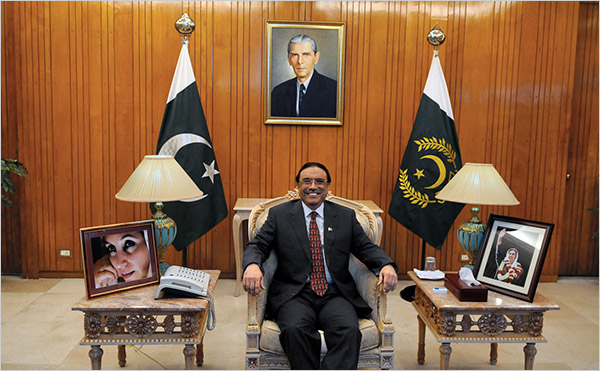
James Traub in the New York Times Magazine:
Zardari has a special talent for maneuvering himself out of the tight spots he gets himself into. But the Pakistani people have grown weary of his artful dodging. Zardari’s poll numbers are dreadful. More important, he has given little sustained attention to the country’s overwhelming problems — including, of course, the Islamist extremism that, for the Obama administration, has made Pakistan quite possibly the most important, and worrisome, country in the world. Zardari has bought himself more time, but for Pakistan itself, the clock is ticking louder and louder.
More here.
Saturday, April 4, 2009
French resistance: A Profile of Costa Gavras

This year marks the 40th anniversary of his landmark feature Z (1969), about an incorruptible judge investigating the killing at a peace demo of a reformist politician, played by Yves Montand. With democracy disappearing in a fog of dirty tricks, conspiracy and cover-up, Z was an indictment of the US-backed coup in Greece, and was banned there under the military junta of 1967-74. With dark humour, a faux-documentary style and a soundtrack by Mikos Theodorakis – then under house arrest – it made Gavras's name as master of a genre that married the pace and suspense of the action thriller with political critique, and it won an Oscar for best foreign-language film. Z has recently begun an anniversary tour with a screening in New York in a new 35mm print.
The Waiting is the Hardest Part
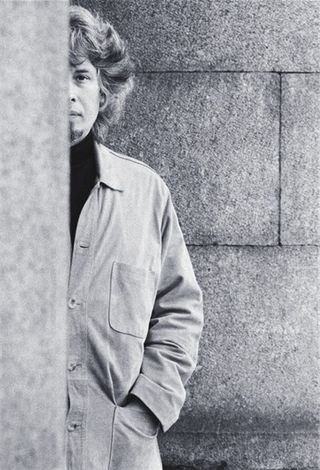
The Queue, which is being published for the first time in the United States, is set in an enormous line that forms one summer afternoon in the 1980s in Moscow, a line that about 2,000 people eventually join, over the course of two days, in order to have a chance to buy–something. It's never entirely clear what they're so eager to buy. In one of the novel's running jokes, Sorokin keeps hinting at different kinds of items. At first the goods seem to be shoes from Yugoslavia (or possibly Czechoslovakia or Sweden), then jeans from the United States, then suede jackets from Turkey. Certainly they are imports: the Soviet versions of all these things could be bought in a store without much queuing, but their shoddiness was a familiar, insulting and inescapable fact of Soviet life. David Remnick recalls in Lenin's Tomb, his book about the fall of the Soviet Union, an exhibit he attended in 1989 at Moscow's Exhibition of Economic Achievements. Mounted in the frank spirit of glasnost, it was called “The Exhibit of Poor-Quality Goods” and featured “ruptured shoes, rusted samovars, chipped stew pots, unraveled shuttlecocks, crushed cans of fish, and, the show-stopper, a bottle of mineral water with a tiny dead mouse floating inside.” One could blame perverse incentives, mismanaged supply chains and bureaucratic corruption for this state of squalor; but two customers in Sorokin's queue hit upon a more straightforward explanation while comparing American and Soviet economies: “They have to work their asses off over there, but here if you come drunk to work it's no big deal.”
The Queue is written entirely in dialogue, composed of bits of conversations that take place among the people waiting in line.
Reclaiming the Irrational from the Religious

The rational, and quite reasonable, skepticism regarding religious belief is also in its way discouraging. As we try to imagine a human culture that is devoid of religion, we are also envisioning a human culture that is devoid of something essential to the preservation of the very culture we hope to prolong. That essential something is the irrational.
As a skeptic and rationalist myself, I am often embarrassed to have to admit that I spend considerable time cultivating those irrational aspects of myself, aspects that might look on the outside very much like religion. But this cultivation has revealed to me that what we call religion these days is just as responsible for putting the kibosh on the irrational as is the rationalists and empiricists in our midst. Both rationalists and the religious see religion as what Tim Dean in his recent post featured here calls “prescriptive,” unable to ask “why” as deeply as science. Faith trumps why, the religious might say, and whatever I cannot glean from holy texts I will chalk up to God and all his works as a mystery to behold. (Sadly and disappointingly the final episode of Battlestar Galactica opted for this very solution. It seems fiction is often more likely to find a God in the machine than even the most evangelical religious believers.)
The kind of religion that Dean finds problematic is not irrational at all, however. For the believer, the human personhood of the embryo is wholly rational, resting on the immutable, divine law. This kind of spiritual belief is only one small aspect of the religious imagination, a broad palette that at its root is not rational, and should not be critiqued with the same tools we use to judge those who believe in creationism and saddle-wearing triceratops. We cannot lump convictions about personhood with mythological cosmogonies.
Truth is, I blame religion for this confusion.
The Dangers of Scientific Capitalism

Military strategists have known for centuries that there is, and can be, no final science of war. In a real struggle over things that actually matter, we must assume that we are up against thinking opponents, who may understand some things about us that we don’t know about ourselves. For example, if profit can be made by understanding the model behind a policy, as is surely the case with the models used by the United States Federal Reserve, sooner or later so much capital will seek that profit that the tail will begin to wag the dog, as has been happening lately.
The truth is that such models are most useful when they are little known or not universally believed. They progressively lose their predictive value as we all accept and begin to bet on them. But there can be no real predictive science for a system that may change its behavior if we publish a model of it.
serbs try to deal with it
How can an article that is almost a confession, written in a melancholy tone of voice, in which sorrow and joy are intertwined, an article in which there exists remorse for harm done to the other, in which the author sees herself not as someone who proclaims the “last truth”, nor as someone who considers her “interpretation of the truth” to be “the only possible, genuine and just” one, but demands only that the truth be found, that the truth be faced, believing only in its sobering effect, as she once believed, despite the personal consequences, when telling the incontestable truth about “her environment” – how can such an article provoke that amount of fury, that amount of cynicism, such a torrent of sickly sweet pathos, all trying to “defend our cause”. I see reasons for such reactions in our perception of the “others”, who are not allowed to see us as we are, but only as we want to be. And we are, according to the tiny mirror in which we look at ourselves, “a dignified and creative nation, proud of its history” (the last two decades are part of that history too, whether we like it or not, ergo we should be proud of them too), we are blessed with (blessed by God of course) “great sensibility for the arts”.
more of the debate at Eurozine here.
ambiguously apocalyptic

Design pioneer, neo-futurist, and novelist Bruce Sterling reflects on Half-life’s tug-of-war between human hope and failure in The Sleep of Reason, an essay the gallery commissioned to accompany the exhibit. In it, Sterling portrays Rockman as an alligator at a watering hole. “Though he is known for the searing clarity of his paintings, there are things below the waterline that he does not paint,” Sterling writes. “He decided, as an act of deliberate will, to maintain his amphibious ambiguity. An ambiguity about the boundary of man and animal. An ambiguity about the borders of nature and artifice. Of art, of science.” Rockman started this series two years ago, before the current economic crisis. So while the work has an uncanny timeliness to it, it’s almost as if he had the foresight to know this moment would not call for another Manifest Destiny — or any other detailed illustration of our failings. Half-life has just enough of the good stuff, enough reminders of the beauty and hope of humanity to hang a life raft on.
more from Seed here.
death in recession
You are not your brain
Gordy Slack in Salon:
In his new book, “Out of Our Heads: Why You Are Not Your Brain, and Other Lessons From the Biology of Consciousness,” Noë attacks the brave new world of neuroscience and its claims that brain mechanics can explain consciousness. Nobel Prize-winning molecular biologist Francis Crick wrote, “You, your joys and your sorrows, your memories and your ambitions, your sense of personal identity and free will, are in fact no more than the behavior of a vast assembly of nerve cells and their associated molecules.” While Noë credits Crick for drawing popular and scientific attention to the question of consciousness, he thinks Crick's conclusions are dead wrong and dangerous. Noe's conversational style is gentle, attentive and easygoing. But, in true philosopher fashion, he also picks his words deliberately, as if stepping off the path of right thinking would result in some tragic plummet into the abyss of illogic.
In San Francisco there's a brain gym where members exercise their brains with “neurobic” software. A sign outside the place reads: “You Are Your Brain!” It has become almost a mainstream notion now. But the subtitle of your book begins “Why you are not your brain.” What's wrong with the “You are your brain” view?
It's one thing to say you wouldn't be you if not for your brain, that your brain is critical to what you are. But I could say that about your upbringing and your culture, too. It's another thing entirely to say that you are your brain. I don't reject the idea that the brain is necessary for consciousness; but I do reject the argument that it is sufficient. That's just a fancy, contemporary version of the old philosophical idea that our true selves are interior, cut off from the outside world, only accidentally situated in the world. The view I'm attacking claims that neural activity is enough to explain consciousness, that you could have consciousness in a petri dish. It supposes that consciousness happens inside the brain the way digestion occurs inside the GI tract. But consciousness is not like digestion; it doesn't happen inside of us. It is something we do, something we achieve. It's more like dance than it is like digestion.
More here.
I’ll Go On
Joseph O'Neil in The New York Times:
Submerged for years in a murk of international literary diplomacy and scrupulous academic exertion, “The Letters of Samuel Beckett” has finally surfaced; and an elating cultural moment is upon us. It is also a slightly surprising moment. Beckett, in his published output and authorial persona, was rigorously spare and self-effacing. Who knew that in his private writing he would be so humanly forthcoming? We always knew he was brilliant — but this brilliant? Just as the otherworldliness of tennis pros is most starkly revealed in their casual warm-up drills, so these letters, in which intellectual and linguistic winners are struck at will, offer a humbling, thrilling revelation of the difference between Beckett’s game and the one played by the rest of us. (Beckett played tennis, incidentally.)
This volume (three more are promised) auspiciously begins with two notes from Beckett to James Joyce, in the second of which (from April 1929) this 23-year-old lecturer at the École Normale Supérieure in Paris politely briefs the maestro on the distinction between the infinitive and substantive forms of a Greek phrase. Rather more forebodingly, the volume ends with a letter, dated June 10, 1940, regarding a billiards game the following Friday. Rain checks were presumably issued, because Friday was the day the Germans occupied Paris. In the years between these missives, Beckett has abandoned an academic career; published a handful of essays, a book of poems, a study of Proust, stories (“More Pricks Than Kicks,” 1934) and a novel (“Murphy,” 1938); and bounced between Ireland, England, France and Germany, engaged in what he hopefully describes, in a job application, as “private study and composition” — i.e., not very much at all. For the most part, then, we are concerned with a portrait of the artist as an unsettled, underemployed and relatively unknown young man.
More here.