Art or Bust: The oldest sculpture ever discovered is a 36,000 year old woman with really big breasts. Is anyone surprised?

Our own Morgan Meis in The Smart Set:

ID_NC_MEIS_STATU_AP_001 Dubbed the “Venus of Hohle Fels” she is only about 6 centimeters tall. Her most prominent feature is the aforementioned rack, though her shapely gams come in a close second. This has led to a certain amount of snickering. The oldest sculpture in the world is basically a pair of breasts that hung on a string from some cave person's neck. As The Economist opined, “this discovery adds to the evidence that human thinking—or male thinking, at least—has hardly changed since the species evolved.”

The more uptight among us—i.e. the scientists—are trying to keep it clean. Professor Nicholas Conard from Tübingen University danced gingerly around the topic, noting to the BBC that, “We project our ideas of today on to this image from 40,000 years ago. I think there are good reasons to emphasize sexual interpretations, but we really don't know whether it is coming from a more male or a more female perspective. We don't know very much about how the artifact was used.” Others have retreated to the relatively safe territory of cognitive and cultural development. Paul Mellars, an archeologist at Cambridge, in his commentary on the sculpture for Nature, wrote “How far this ‘symbolic explosion’ [the emergence of representational art like the Venus] associated with the origins and dispersal of our species reflects a major, mutation-driven reorganization in the cognitive capacities of the human brain — perhaps associated with a similar leap forward in the complexity of language — remains a fascinating and contentious issue.”

I'm not sure the two points (the sex and the cognitive development) are really all that different.

More Leave a comment

Watch the Parking Meters

Nikil Saval reviews Underground: My Life with SDS and the Weathermen by Mark Rudd, in N + 1's latest book review supplement:

Nsruddmaybe_img_assist_custom The title is slightly misleading. Of the book's 322 pages, which cover 1966 to the present, Mark Rudd spends almost half of them over-ground—at Columbia, helping lead the famous occupation of 1968. The years underground are a disappointment: unlike his comrade-in-arms and fellow memoirist, Bill Ayers (Fugitive Days), who was a main architect of the “Days of Rage” in 1969 and the infamous bombing campaign, Rudd went sour on the Weathermen early, doing little as a fugitive except trying not to get caught. Scenes of Rudd running from FBI agents dressed as hippies make for fun reading, but they are only interludes in a chronicle marked mostly by episodes of deep regret and self-laceration.

More here.

Do we need a technological breakthrough to avert the climate crisis?

Bradford Plumer in The New Republic:

Pic%20for%20brad%20in%20mag In the winter of 1984, a young scientist named Steven Chu was working as the new head of the quantum electronics division at AT&T's Bell Labs in Holmdel, New Jersey. For months, he'd been struggling to find ways to trap atoms with light so that he could hold them in place and study them better. It was an idea he'd picked up from an older colleague, Arthur Ashkin, who had wrangled with the problem all through the 1970s before finally being told to shut the project down–which he did, until Chu came along. (“I was this new, young person who he could corrupt,” Chu later joked.) Now Chu, too, had hit an impasse until, one night, a fierce snowstorm swirled through New Jersey. Everyone at Bell had left early except for Chu, who lived nearby and decided to stay a bit longer. As he watched the snow drift outside, he realized they'd been approaching the problem incorrectly: He first needed to cool the atoms, so that they were moving only as fast as ants, rather than fighter jets; only then could he predict their movements and trap them with lasers. It was a key insight, and Chu's subsequent work on cooling atoms eventually earned him a share of the Nobel Prize in physics.

While it may sound inevitable in retrospect, big breakthroughs like that don't come along too often. Nowadays, though, Chu is betting that they will– and must. As the U.S. energy secretary, Chu has been tasked with reshaping the country's trillion-dollar energy economy, to reduce America's reliance on fossil fuels and cut greenhouse-gas emissions 80 percent or more by mid-century- -essential to avoiding catastrophic climate change. It's an enormous goal, and Chu believes the only way to achieve it is with multiple Nobel-caliber leaps in energy technology. “I mean technology that is game-changing, as opposed to merely incremental,” he told Congress in March–technology that, as a recent Department of Energy (DOE) task force described it, will require an understanding of basic physics and chemistry “beyond our present reach.”

Not everyone agrees that the fate of the planet hinges on such far-reaching advances.

More here.

How Can Obama Speak to Two Audiences at Once in Egypt?

Shadi Hamid in Patheos:

ScreenHunter_03 Jun. 03 09.12 President Obama has correctly put his finger on torture abuses, the Iraq war, Guantanamo Bay, and the festering Arab-Israeli conflict as sources of anti-Americanism. But before Iraq and Guantanamo, and at the peak of Oslo peace process, the U.S. was still viewed by many in the region with weariness, if not, at times, outright suspicion and hatred.

The sources of grievance are deeper and more pronounced than we like to think. America has been seen as a destructive force and an obstacle to Arab progress, in large part due to our remarkably consistent support of repressive Arab autocrats, over not years but decades. It has been an unfortunate, costly bargain – regimes support our strategic interests in the region. In return, we turn a blind eye to the crushing of domestic opposition. This wager was justified by policymakers as a necessary evil during the Cold War. However, it did not end then, and our economic and military support for some of the region's most egregious actors continues.

More here.

Tuesday, June 2, 2009

Billion-Pixel Pictures Allow Ultra-Zooming for Science

Brian Handwerk in National Geographic News:

If a picture is worth a thousand words, what's a thousand-megapixel picture worth?

Great Temple Excavation at Petra, Jordan

Such “gigapixel” pictures allow viewers to zoom in from say, a panoramic view of President Obama's inauguration to the solemn expression on his face—as in one of the new technology's most famous applications.

For scientists—many of whom gathered in Pittsburgh last week for training in new gigapixel technology—these ultra-zoomable images are becoming tools to improve the study of archaeology, geology, biology, and more.

Developed by GigaPan systems, a for-profit company, the new GigaPan system allows users to create these superhigh-resolution panoramas with ordinary digital cameras.

With camera attached, a robotic GigaPan tripod systematically photographs a scene with thousands of close-up images, which are later stitched together with proprietary software.

More here.

A failed demiurge?

Article_moody

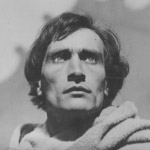
My hypothesis: Artaud is part of a European and specifically French intellectual lineage obsessed with the rigors of truth-telling. (“We are born, we live,” he said, speaking to a tradition of paradoxical truths, “we die in an environment of lies.”) Artaud aspires to be a magus of truth, a sorcerer of truth, and he is willing to die for it, or to be driven insane by his perceptions: “I believe that our present social state is iniquitous and should be destroyed. If this is a fact for the theater to be preoccupied with, it is even more a matter for machine guns.” Does he believe what he’s saying exactly as he’s saying it, or does he simply believe that the truth is in the avowal, which avowal changes its utterer, makes it nearly impossible for him to bring the message back to the place where it most needs to be brought—the place of mendacity? “Should I be writing like Artaud? I am incapable of it,” Derrida says, “and besides, anyone who would try to write like him, under the pretext of writing toward him, would be even surer of missing him, would lose the slightest chance ever of meeting him in the ridiculous attempt of this mimetic distortion.” Sontag argues that he’s a gnostic (“Artaud wandered in the labyrinth of a specific type of religious sensibility, the Gnostic one”), meaning, I suppose, that he believed in a secret, unimpeded route to the divine, that he could have personal access, without requiring the apparatus of the church and its intercessions. Or: gnostic meaning that the divine with which he consorts is a malignancy?

more from Rick Moody at The Believer here.

kunkel online

Kunkel184

As for the internet as a broadcast rather than point-to-point technology, everyone knows that it supplies a lot of information. Culturally, it has the charms and limitations of a variety show. For example, during the short-lived Diet-Coke-and-Mentos craze of a few years ago (it seems the substances combine like nitrogen and glycerin), I was cheered by going on YouTube to see Americans harmlessly blowing things up in disused weekend parking lots: it is not often that the American fantasies of pure destructiveness and pure innocence are so beguilingly combined. And the infamous clip of Miss South Carolina 2006 trying to answer a question about geography stands as a more concentrated indictment of the US in the Bush years than just about anything a documentary filmmaker has produced. The internet is a funny place. And then curiosity and amusement sometimes turn to wonder: a friend tells me how moving it was to watch footage of a kangaroo giving birth. The nature of the internet is such that all of these examples will seem out-of-date; but they have their this year’s equivalents, and will next year too.

more from Benjamin Kunkel at n+1 here.

feats of juggling, false apparitions, impostures, and illusions

Burnett_grafton2

Anxiety about deception runs deep in the philosophical and religious traditions of Europe, and new techniques for mastering this fear mark episodes in the history of the modern world. Over the course of the nineteenth century, both the playfulness and the peril of deceit came to be distanced from the sphere of rational inquiry: the sciences ceased to have much use for legerdemain; metaphysicians lost interest in the theater. But it was not always so, as the conversation below with Anthony Grafton suggests. Grafton is the Henry Putnam University Professor of History at Princeton University and the author of a shelf of major works on the­ Renaissance, classical scholarship, and the history of science, including Forgers and Critics: Creativity and Duplicity in Western Scholarship (Princeton University Press, 1990).­ ­D. Graham Burnett, editor at Cabinet and also professor of history at Princeton, sat down with Grafton to discuss his work on deception and forgery­.

more from Cabinet here.

The End of the Affair

The fate of Detroit isn’t a matter of economics. It’s a tragic romance, whose magic was killed by bureaucrats, bad taste and busybodies. P.J. O’Rourke on why Americans fell out of love with the automobile.

From the Wall Street Journal:

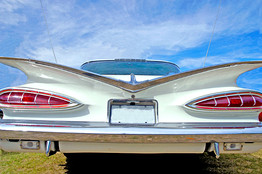
OB-DT894_cars05_D_20090529195808 The phrase “bankrupt General Motors,” which we expect to hear uttered on Monday, leaves Americans my age in economic shock. The words are as melodramatic as “Mom’s nude photos.” And, indeed, if we want to understand what doomed the American automobile, we should give up on economics and turn to melodrama.

Politicians, journalists, financial analysts and other purveyors of banality have been looking at cars as if a convertible were a business. Fire the MBAs and hire a poet. The fate of Detroit isn’t a matter of financial crisis, foreign competition, corporate greed, union intransigence, energy costs or measuring the shoe size of the footprints in the carbon. It’s a tragic romance—unleashed passions, titanic clashes, lost love and wild horses.

Foremost are the horses. Cars can’t be comprehended without them. A hundred and some years ago Rudyard Kipling wrote “The Ballad of the King’s Jest,” in which an Afghan tribesman avers: Four things greater than all things are,—Women and Horses and Power and War.

More here.

Would You Slap Your Father? If So, You’re a Liberal

Nicholas D. Kristof in the New York Times:

ScreenHunter_07 Jun. 02 14.27 Some evolutionary psychologists believe that disgust emerged as a protective mechanism against health risks, like feces, spoiled food or corpses. Later, many societies came to apply the same emotion to social “threats.” Humans appear to be the only species that registers disgust, which is why a dog will wag its tail in puzzlement when its horrified owner yanks it back from eating excrement.

Psychologists have developed a “disgust scale” based on how queasy people would be in 27 situations, such as stepping barefoot on an earthworm or smelling urine in a tunnel. Conservatives systematically register more disgust than liberals. (To see how you weigh factors in moral decisions, take the tests at www.yourmorals.org.)

It appears that we start with moral intuitions that our brains then find evidence to support. For example, one experiment involved hypnotizing subjects to expect a flash of disgust at the word “take.” They were then told about Dan, a student council president who “tries to take topics that appeal to both professors and students.”

The research subjects felt disgust but couldn’t find any good reason for it. So, in some cases, they concocted their own reasons, such as: “Dan is a popularity-seeking snob.”

More here. [Take the tests, they are interesting.]

Tuesday Poem

Lives of Great Men (Selected)
Inuo Taguchi


Lenin

Lenin is relieved
that the bronze statue of himself was taken down.
In fact for half-a-century
he has wanted to lie down in Red Square
and listen to the Beach Boys,
on some fine Sunday afternoon, for instance,
with his family and close friends, of course.
But he could not confess this sort of thing to anyone,
so he has kept standing as a bronze statue.
Imagine yourself a bronze statue.
Just standing watching history
would wear on him.

Newton

Under an apple tree
Newton encountered the Law of Universal Gravitation
and instantly fell in love with her.

Ah, she was indeed his eternal lover –
the universal love and the universality which was love.
That night he applied all his skill
to the writing of a love letter
entitled,
'On the Law of Universal Gravitation and Her Passionate Function.'

The Law of Universal Gravitation, however,
didn't give a damn about Newton,
because she was crazy about the quadrille
which was popular at that time.

Superman

Superman is strolling the garden
in his wheelchair.
Life is cruelty itself,
though sunlight falling down at this moment
is grace itself.

When I was flying the sky
I was still very young.
I was flying, surely,
but I still didn't yet know
what it meant
to be flying the sky.

But now it's different.
To fly the sky is,
as it were,
to move your little finger,
and even at that no more than half-an-inch.

Life is like a sublime joke.
But it's funny,
isn't it? You have to get a wheelchair
and then you can become superman.

Portrait of the Artist as a Young Data-Entry Supervisor

From The Boston Globe:

Ideascenterinside__1243688142_1501 Without quite grasping the extent of our debt, we rely on writers to help explain the world to us. It's they who give us a feel for what it's like to fall in love, who give us words for describing the landscape around us, and who help us interpret the dynamics of our families. Such is their power that we can name whole slices of experience with adjectives built of their names. We speak of encountering, sometimes in the most unlikely settings, dynamics most succinctly described as “Proustian,” “Austenesque,” and “Kafkan.” Writers are our map-makers.

However, many contemporary writers are notably silent about a key area of our lives: our work. If a proverbial alien landed on earth and tried to figure out what human beings did with their time simply on the evidence of the literature sections of a typical bookstore, he or she would come away thinking that we devote ourselves almost exclusively to leading complex relationships, squabbling with our parents, and occasionally murdering people. What is too often missing is what we really get up to outside of catching up on sleep, which is going to work at the office, store, or factory.

More here.

In That Tucked Tail, Real Pangs of Regret?

John Tierney in The New York Times:

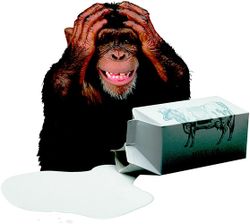
Chimp If you own a dog, especially a dog that has anointed your favorite rug, you know that an animal is capable of apologizing. He can whimper and slouch and tuck his tail and look positively mortified — “I don’t know what possessed me.” But is he really feeling sorry? Could any animal feel true pangs of regret? Scientists once scorned this notion as silly anthropomorphism, and I used to side with the skeptics who dismissed these displays of contrition as variations of crocodile tears. Animals seemed too in-the-moment, too busy chasing the next meal, to indulge in much self-recrimination. If old animals had a song, it would be “My Way.”

Yet as new reports keep appearing — moping coyotes, rueful monkeys, tigers that cover their eyes in remorse, chimpanzees that second-guess their choices — the more I wonder if animals do indulge in a little paw-wringing. Your dog may not share Hamlet’s dithering melancholia, but he might have something in common with Woody Allen. The latest data comes from brain scans of monkeys trying to win a large prize of juice by guessing where it was hidden. When the monkeys picked wrongly and were shown the location of the prize, the neurons in their brain clearly registered what might have been, according to the Duke University neurobiologists who recently reported the experiment in Science.

More here.

Monday, June 1, 2009

Sunday, May 31, 2009

What a Texas town can teach us about health care

Atul Gawande in The New Yorker:

ScreenHunter_03 May. 31 23.10 It is spring in McAllen, Texas. The morning sun is warm. The streets are lined with palm trees and pickup trucks. McAllen is in Hidalgo County, which has the lowest household income in the country, but it’s a border town, and a thriving foreign-trade zone has kept the unemployment rate below ten per cent. McAllen calls itself the Square Dance Capital of the World. “Lonesome Dove” was set around here.

McAllen has another distinction, too: it is one of the most expensive health-care markets in the country. Only Miami—which has much higher labor and living costs—spends more per person on health care. In 2006, Medicare spent fifteen thousand dollars per enrollee here, almost twice the national average. The income per capita is twelve thousand dollars. In other words, Medicare spends three thousand dollars more per person here than the average person earns.

The explosive trend in American medical costs seems to have occurred here in an especially intense form. Our country’s health care is by far the most expensive in the world. In Washington, the aim of health-care reform is not just to extend medical coverage to everybody but also to bring costs under control. Spending on doctors, hospitals, drugs, and the like now consumes more than one of every six dollars we earn.

More here.

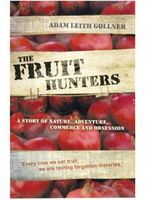
The Fruit Hunters

From The Telegraph:

Fruitstory1_1408976f Coy friends are serving me fruit at their peril since I read Adam Leith Gollner’s passion-packed book on the subject. Presented with a dish of sliced lemons at a pancake party recently, I caused several female guests to cross their legs by explaining that Casanova used these same fruits (halved and squeezed) as contraceptive diaphragms, believing that the acidic pulp acted as a spermicide. And the other day a waiter almost dropped my sister’s creme brûlée when he heard me tell her that the conquistadors named the vanilla bean after the Latin word for vagina.

Today there are an estimated 240,000 to 500,000 fruit-bearing plant species with perhaps 70,000 to 80,000 of these being edible. But most of our food comes from only 20 crops. Puréeing together the science, history, art and politics of fruit, Gollner tells the tale of how humans took small and often relatively bitter morsels from the wild and cultivated increasingly large and succulent varieties. Then of how big agriculture and global markets required farmers to engineer fruits that could be picked before they were ripe, transported thousands of miles to stack uniformly and durably on supermarket shelves in all seasons, resulting in “Stepford Fruits: gorgeous replicants that look perfect, feel like silicon implants and taste like tennis balls, mothballs or mealy, juiceless cotton wads”.

More here.

saddam’s palaces

3545789713_06ed236d84_o

Photographer Richard Mosse first appeared on BLDGBLOG last year with his unforgettable visual tour through the air disaster simulations of the international transportation industry. He and I have since kept in touch —so, when Mosse returned from a trip to Iraq this spring, he emailed again with an unexpectedly intense, and hugely impressive, new body of work. These extraordinary images—published here for the first time—show the imperial palaces of Saddam Hussein converted into temporary housing for the U.S military. Vast, self-indulgent halls of columned marble and extravagant chandeliers, surrounded by pools, walls, moats, and, beyond that, empty desert, suddenly look more like college dormitories. Weight sets, flags, partition walls, sofas, basketball hoops, and even posters of bikini’d women have been imported to fill Saddam’s spatial residuum. The effect is oddly decorative, as if someone has simply moved in for a long weekend, unpacking an assortment of mundane possessions.

more from BLDGBLOG here (h/t Alan Koenig).

become better through video games

10113917

VIDEO games get a bad press. Many are unquestionably violent and, as has been the way with new media from novels to comic books to television, they have been accused of corrupting the moral fabric of youth. Nor are such accusations without merit. There is a body of research suggesting that violent games can lead to aggressive thoughts, if not to violence itself. But not all games are shoot-’em-ups, and what is less examined is whether those that reward more constructive behaviour also have lingering impacts. That, however, is starting to change. Two studies showing that video games have a bright side as well as a dark one have been carried out recently. One, to be published in June by the Journal of Experimental Social Psychology, was conducted by Douglas Gentile, of Iowa State University’s media research laboratory. He and his colleagues tested the effects of playing so-called “pro-social” games on children and young adults in three countries.

more from The Economist here.