Can just using ratios really teach me to be a better cook?

Jennifer Reese in Slate:

ScreenHunter_11 Jun. 14 10.07 “There are hundreds of thousands of recipes out there, but few of them help you to be a better cook in any substantial way,” Michael Ruhlman writes in the preface to his fascinating and pompous new book, Ratio. “In fact, they may hurt you as a cook by keeping you chained to recipes.” Ruhlman calls Ratio an “anti recipe book, a book that teaches you and frees you from the need to follow.” He argues that once you've memorized certain “bedrock” culinary ratios, you can cook virtually anything without resorting to a cookbook.

I read Ratio cover to cover one afternoon, and I rolled my eyes. Like many of us who lack an Italian grandmother or a culinary school education, I taught myself to cook with recipes. Ruhlman is dead wrong about one thing: Recipes can help you become a better cook in a very substantial way. From following instructions, you learn technique. From watching how ingredients are paired, you develop an intuitive sense of what flavors work together.

Moreover, the underlying message irritated me. It's no longer good enough to make a pecan pie from the Joy of Cooking? We have to be artists now?

More here.

Cocaine study that got up the nose of the U.S.

Ben Goldacre in The Guardian:

ScreenHunter_10 Jun. 14 10.00 The Commons home affairs select committee is looking at the best way to deal with cocaine. You may wonder why they're bothering. When the Advisory Council for the Misuse of Drugs looked at the evidence on the reclassification of cannabis it was ignored. When Professor David Nutt, the new head of the advisory council, wrote a scientific paper on the relatively modest risks of MDMA (the active ingredient in the club drug ecstasy) he was attacked by the home secretary, Jacqui Smith .

In the case of cocaine there is an even more striking precedent for evidence being ignored: the World Health Organisation (WHO) conducted what is probably the largest ever study of global use. In March 1995 they released a briefing kit which summarised their conclusions, with some tantalising bullet points.

“Health problems from the use of legal substances, particularly alcohol and tobacco, are greater than health problems from cocaine use,” they said. “Cocaine-related problems are widely perceived to be more common and more severe for intensive, high-dosage users and very rare and much less severe for occasional, low-dosage users.”

The full report – which has never been published – was extremely critical of most US policies.

More here.

Guide: How Iran is ruled

ScreenHunter_09 Jun. 14 09.50

From the BBC:

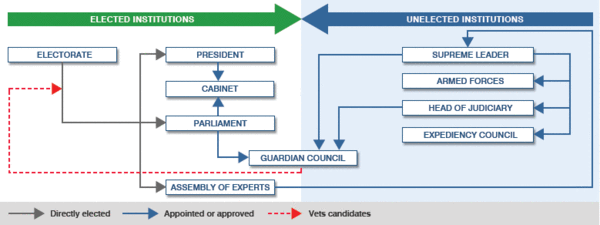
The president is elected for four years and can serve no more than two consecutive terms.

President Ahmadinejad

President Ahmadinejad

The constitution describes him as the second-highest ranking official in the country. He is head of the executive branch of power and is responsible for ensuring the constitution is implemented.

In practice, however, presidential powers are circumscribed by the clerics and conservatives in Iran's power structure, and by the authority of the Supreme Leader. It is the Supreme Leader, not the president, who controls the armed forces and makes decisions on security, defence and major foreign policy issues.

All presidential candidates are vetted by the Guardian Council, which banned hundreds of hopefuls from standing in the 2005 elections.

More here.

Absolute Hot: Is there an opposite to absolute zero?

Peter Tyson at Nova:

ScreenHunter_08 Jun. 14 09.46 Seems like an innocent enough question, right? Absolute zero is 0 on the Kelvin scale, or about minus 460 F. You can't get colder than that; it would be like trying to go south from the South Pole. Is there a corresponding maximum possible temperature?

Well, the answer, depending on which theoretical physicist you ask, is yes, no, or maybe. Huh? you ask. Yeah, that's how I felt. And the question doesn't just mess with the minds of physics dummies like me. Several physicists begged off of trying to answer it, referring me to colleagues. Even ones who did talk about it said things like “It's a little bit out of my comfort zone” and “I think I'd like to ruminate over it.” After I posed it to one cosmologist, there was dead silence on the other end of the line for long enough that I wondered if we had a dropped call.

I had touched a nerve, because, unbeknownst to me, the highest-temperature question gets to the heart of current inquiries and proposed theories in cosmology and theoretical physics. Indeed, scientists who work in these fields are zealously trying to answer that question. Why? Because, in some sense, nothing less than the future course of physics rests on the answer.

More here.

Saturday Poem

Death of a Field
Paula Meehan

…………………..

The field itself is lost the morning it becomes a site

When the Notice goes up: Fingal County Council – 44 houses

…………………..

The memory of the field is lost with the loss of its herbs

…………………..

Though the woodpigeons in the willow

And the finches in what’s left of the hawthorn hedge

And the wagtail in the elder

Sing on their hungry summer song

…………………..

The magpies sound like flying castanets

…………………..

And the memory of the field disappears with its flora:

Who can know the yearning of yarrow

Or the plight of the scarlet pimpernel

Whose true colour is orange?

…………………..

And the end of the field is the end of the hidey holes

Where first smokes, first tokes, first gropes

Were had to the scentless mayweed

…………………..

The end of the field as we know it is the start of the estate

The site to be planted with houses each two or three bedroom

Nest of sorrow and chemical, cargo of joy

…………………..

The end of dandelion is the start of Flash

The end of dock is the start of Pledge

The end of teazel is the start of Ariel

The end of primrose is the start of Brillo

The end of thistle is the start of Bounce

The end of sloe is the start of Oxyaction

The end of herb robert is the start of Brasso

The end of eyebright is the start of Fairy

…………………..

Who amongst us is able to number the end of grasses

To number the losses of each seeding head?

I’ll walk out once

Barefoot under the moon to know the field

Through the soles of my feet to hear

The myriad leaf lives green and singing

The million million cycles of being in wing

…………………..

That – before the field become solely map memory

In some archive of some architect’s screen

I might possess it or it possess me

Through its night dew, its moon white caul

Its slick and shine and its prolifigacy
In every wingbeat in every beat of time

Reflect and resist: Palestinians are making art out of adversity

Ahdaf Soueif, organiser of the Palestine festival of literature in The Guardian:

Ahdaf Leaning against padded walls in a darkened room we eavesdrop on an argument: “the elite think they can get independence without resistance – by collaboration -”

“What's wrong with being normal? Normality as a form of resistance -”

“What is normal?”

“You know, sometimes I forget that we're under occupation . . .”

Last week I heard the same phrases in Ramallah. Today, we're listening to them at the Venice biennale, in Ramallah Syndrome, a sound installation by Sandi Hilal and Alessandro Petti.

Three biennales ago, in 2003, Bethlehem-born Hilal and her husband, Petti, provided the exhibition with Stateless Nation: a number of giant passports that you came upon, one by one, in the pavilions of different states. The passports were issued by different authorities, but the bearer's place of birth was always Palestine. Now I'm struck by the converse: the number of people born in different parts of the world who identify themselves and act as Palestinians. And this year the Palestinians have – well, not a pavilion, but a space of their own. As one of the 44 “Collateral Events” of the 53rd biennale, they are housed – courtesy of the City of Venice – in the former Convento dei Santi Cosma e Damiano.

A few metres away from Ramallah Syndrome, on a spotlit patch of floor, tiny figures float, meet and merge, reproduce, splinter, vanish; OK, hit, hit but don't run is an animation by Shadi Habib Allah that aims, he says, to create a “tension between the mechanisation of nature and the naturalisation of the mechanical”. It makes you think of amoebas, of cells under microscopes. You can follow a meandering train of thought to the Palestinian condition if you like. But you don't have to. The point about the art on show here is that it both resists the Israeli project for Palestine and resists being seen only in terms of resistance.

More here. (I met the incredible Ms. Ahdaf Soueif in Chicago and was deeply impressed by her exquisite sensitivity and sharp intellect. I highly recommend her beautifully crafted and extremely moving novel, The Map of Love. It really is about love.)

Feminine Mystique

From The New York Times:

Cover-500 Nearly everything about Kate Walbert’s new novel is wickedly smart, starting with the title: “A Short History of Women.” Does it connote modesty or grandeur? “Short” sounds modest. “History” sounds grand — grandiose, in fact, when affixed to a work of fiction. But “Women” clinches it: modest, then. After all, what more trifling subject could one elect to research? Such, at any rate, is the prevailing view in the world inhabited by Walbert’s characters — all five generations of them. One of the book’s accomplishments is that it persuades us that this sentiment holds no less currency in 21st-­century America than it did in late Victorian England. But Walbert’s primary concerns — unlike those of some of her characters — aren’t political. Her writing wears both its intelligence and its ideology lightly. No manifesto, this is a gorgeously wrought and ultimately wrenching work of art.

More here.

Data Center Overload

Tom Vanderbilt in the New York Times Magazine:

ScreenHunter_04 Jun. 13 10.12We have an almost inimical incuriosity when it comes to infrastructure. It tends to feature in our thoughts only when it’s not working. The Google search results that are returned in 0.15 seconds were once a stirring novelty but soon became just another assumption in our lives, like the air we breathe. Yet whose day would proceed smoothly without the computing infrastructure that increasingly makes it possible to navigate the world and our relationships within it?

Much of the daily material of our lives is now dematerialized and outsourced to a far-flung, unseen network. The stack of letters becomes the e-mail database on the computer, which gives way to Hotmail or Gmail. The clipping sent to a friend becomes the attached PDF file, which becomes a set of shared bookmarks, hosted offsite. The photos in a box are replaced by JPEGs on a hard drive, then a hosted sharing service like Snapfish. The tilting CD tower gives way to the MP3-laden hard drive which itself yields to a service like Pandora, music that is always “there,” waiting to be heard.

But where is “there,” and what does it look like?

“There” is nowadays likely to be increasingly large, powerful, energy-intensive, always-on and essentially out-of-sight data centers.

More here.

Friday, June 12, 2009

The real threat facing Pakistan today

Manan Ahmed in The National:

ScreenHunter_06 Jun. 13 10.25 Musharraf’s dictatorial regime sought to polish over any internal incoherence with a unified foreign front aimed primarily at operating militarily in Afghanistan, NWFP and Baluchistan. The influx of cash, some $6 billion, into the coffers of the military propelled the army to new-found heights as the country’s largest landlord, largest employer and largest business. But maintaining this new oligarchy came at a steep price for Pakistan.

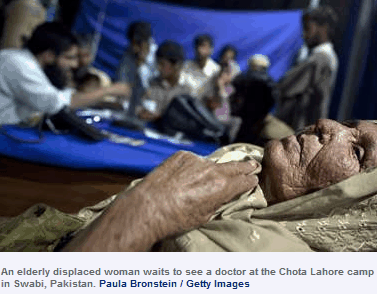
The two main post-2001 theatres, the states of NWFP and Baluchistan, have born the brunt of military overreach and dwindling civic engagement. It is these sub-nationalist discontents – and not the phantom “Taliban” threat – that pose serious problems for the unity of the state, and they cannot be answered by military escalation. In Baluchistan, since 2004, a low-grade civil war emerged after brutalities committed by Musharraf’s regime, hearkening back to the Baluchi nationalist struggles of the early 1970s. NWFP remained the “frontier” both ideologically and developmentally. Besides being a military staging-ground, its people were denied even rudimentary access to health care, education or a functioning judicial system. The call for Islamic law in 2008, which elicited such alarm around the world, should be seen against the backdrop of such neglect – an attempt to reassert local control and not merely an example of rampant radicalisation in Pakistani society.

Rather than addressing the legitimate needs of Pakistan’s various regions and groups, one government after another has, for half a century, taken power from citizens and provinces alike. If the state is indeed incoherent today, it is the consequence of decades of military rule. The greatest threat facing Pakistan today is not a ragged band of armed Pashtuns. It is what follows the deployment of indiscriminate firepower to defeat them – mass displacement and a rising toll of civilian deaths.

More here.

The Domestication of the Savage Mind

IQquestion Cosma Shalizi reviews James R. Flynn's What is Intelligence? Beyond the Flynn Effect, in American Scientist:

On average, measured IQ has been rising at roughly 3 points per decade across the industrialized world for as far back as the data go. This means that someone who got a score of 100 on an IQ test in 1900 would get a score of only 70 for the same answers in 2000. This is the Flynn effect.

Flynn easily swats down some proposed explanations for the effect. It is too large, too widespread and too steady to be due to improved nutrition, greater familiarity with IQ tests or hybrid vigor from mixing previously isolated populations. (Nobody seems to have suggested that modern societies have natural or sexual selection for higher IQ, but the numbers wouldn’t add up in any case.) So either our ancestors of a century ago were astonishingly stupid, or IQ tests measure intelligence badly.

Flynn contends that our ancestors were no dumber than we are; rather, most of them used their minds in different ways than we do, ways to which IQ tests are more or less insensitive. That is to say, we have become increasingly skilled at the uses of intelligence that IQ tests do catch. Although he doesn’t put it this way, Flynn thinks that IQ tests are massively culturally biased, and that the culture they favor has been imposed on the populations of the developed countries (and, increasingly, the rest of the world) through cultural imperialism and social engineering.

Our Prejudice Toward Francis Bacon’s Scream.

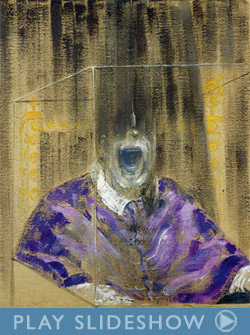
ID_IC_MEIS_BACON_AP_001Morgan Meis in The Smart Set:

Critics tend not to believe in the scream. They think they're being manipulated and they don't like it. Nobody likes to be a sucker, critics least of all. The more the critics witness the public’s adoration of Bacon's work, the more they smell a rat.

Arthur Danto, writing on Bacon for The Nation back in 1990, summed up the feelings with his typical intellectual incisiveness.

So … these depicted screams seem to entitle us to some inference that they at least express an attitude of despair or outrage or condemnation, and that in the medium of extreme gesture the artist is registering a moral view toward the conditions that account for scream upon scream upon scream. How profoundly disillusioning it is then to read the artist saying, in a famous interview he gave to David Sylvester for The Brutality of Fact: Interviews with Francis Bacon, “I've always hoped in a sense to be able to paint the mouth like Monet painted a sunset.” … It is like a rack maker who listens to the screams of the racked only as evidence that he has done a fine job…. We are accordingly victims ourselves, manipulated in our moral being by an art that has no such being. It is for this reason that I hate Bacon's art.

There is nothing worse, in Danto's eyes, than a scream that means nothing. It amounts to the destruction of the moral realm in the name of aesthetics. The key scream painting in Bacon's oeuvre is probably “Study after Velazquez” (1950). Bacon takes Velazquez' famous “Portrait of Pope Innocent X” (1650), in which the Pope is a study in cynicism and power and transforms it into one of his blurred, terrifying, screaming heads. The impulse is always to explain this, and other screams through personal history or politics. Bacon was reacting to the horror of his times. Bacon was reacting to the horror of his family life and his later relationships (with their sometimes violent and destructive characteristics). Bacon was reacting to the repressive atmosphere in England regarding his homosexuality. Danto, I think, is correct in rejecting this kind of reductionism. So was Bacon. When asked about his interest in Velasquez' famous Pope painting, Bacon replied, “I think it's the magnificent color of it.” He also stated flatly that, “I have never tried to be horrific.” Danto can never forgive Bacon for this sleight of hand.

But Danto, and by extension many other critics, miss a key distinction when they focus on the meaninglessness of the screams. Bacon retreated to the language of pure painting and aestheticism in order to resist the specific meanings often attributed to his works.

N.Y. Times mines its data to identify words that readers find abstruse

Zachary M. Seward in Nieman Journalism Lab:

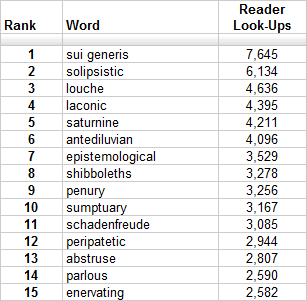
ScreenHunter_02 Jun. 12 14.40 If The New York Times ever strikes you as an abstruse glut of antediluvian perorations, if the newspaper’s profligacy of neologisms and shibboleths ever set off apoplectic paroxysms in you, if it all seems a bit recondite, here’s a reason to be sanguine:The Times has great data on the words that send readers in search of a dictionary.

As you may know, highlighting a word or passage on the Times website calls up a question mark that users can click for a definition and other reference material. (Though the feature was recently improved, it remains a mild annoyance for myself andmanyotherswho nervously click and highlight text on webpages.) Anyway, it turns out the Times tracks usage of that feature, and yesterday, deputy news editorPhilip Corbett, who oversees the Timesstyle manual, offered reporters a fascinating glimpse into the 50 most frequently looked-up words on nytimes.com in 2009. We obtained the memo and accompanying chart, which offer a nice lesson in how news sites can improve their journalism by studying user behavior.

More here.

Why are you working so hard?

From Salon:

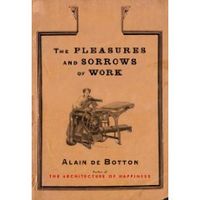
Book Even the best job in the world can be difficult to enjoy on a bad day. No matter how rewarding your work is, no matter how much meaning you derive from it, there are those times when you wonder if it makes sense to devote most of your waking hours to one pursuit. “Wouldn't it be better to spend part of my day outdoors?” you think. “Shouldn't I be helping those in need? Will I ever find a way to express the innermost reaches of my soul?”Even the best job in the world can be difficult to enjoy on a bad day. No matter how rewarding your work is, no matter how much meaning you derive from it, there are those times when you wonder if it makes sense to devote most of your waking hours to one pursuit. “Wouldn't it be better to spend part of my day outdoors?” you think. “Shouldn't I be helping those in need? Will I ever find a way to express the innermost reaches of my soul?”

In “The Pleasures and Sorrows of Work,” Alain de Botton tackles the modern problem of labor in his characteristically untamed, thoughtful style, revealing the ways work can bring us meaning or strip our lives of it, depending on our circumstances. De Botton explores 10 different professions, from biscuit manufacturing to entrepreneurship to painting to rocket science, examining each with a magnifying lens in order to better fathom it. Interspersed with the text are 200 original black-and-white photographs — a janitor vacuuming the floor at an aerospace convention, electrical pylons in a weedy field, women in hairnets sorting biscuits — that complement the book's moody tone.

More here.

Science, the Extravaganza: “Bring them in for the art and have them leave with science.”

From The New York Times:

Ant The second annual World Science Festival, a five-day extravaganza of performances, debates, celebrations and demonstrations, including an all-day street fair on Sunday in Washington Square Park, began with a star-studded gala tribute to the Harvard biologist Edward O. Wilson at Lincoln Center Wednesday night. Over the next three days the curious will have to make painful choices: attend an investigation of the effects of music on the brain with a performance by Bobby McFerrin, or join a quest for a long-lost mural by Leonardo Da Vinci at the Metropolitan Museum of Art? Learn about the science behind “Battlestar Galactica” with actors from the show, or head to one of various panels of scientists and philosophers arguing about free will, alternate universes, science and religion, time and what it means to be human? On Saturday there’s a chance to play naturalist, scouring a pair of New York parks under professional guidance in what Dr. Wilson calls a “BioBlitz” for flora, fauna and “all things crawly.” On Sunday you can get your hands in a variety of experiments at the street fair, including a “CSI”-style crime scene.

The festival is the brainchild of Brian Greene, a Columbia University physicist and mathematician and best-selling author, and his wife, Tracy Day, a former producer for ABC. They say they thought of the project after attending a science festival in Genoa, Italy, and being impressed by seeing science bubbling through the streets and cafes. The idea is to mix up art, theater and music with the inevitable talking heads and professional interlocutors like Charlie Rose or Alan Alda, who can keep the discussion moving and down to earth, in order to entice an audience that didn’t know it was interested in science. Ms. Day likes to describe the strategy this way: “Bring them in for the art and have them leave with science.”

More here.

$2.5 billion spent, no alternative cures found

From MSNBC:

ScreenHunter_01 Jun. 12 10.48 Ten years ago the government set out to test herbal and other alternative health remedies to find the ones that work. After spending $2.5 billion, the disappointing answer seems to be that almost none of them do.

Echinacea for colds. Ginkgo biloba for memory. Glucosamine and chondroitin for arthritis. Black cohosh for menopausal hot flashes. Saw palmetto for prostate problems. Shark cartilage for cancer. All proved no better than dummy pills in big studies funded by the National Center for Complementary and Alternative Medicine. The lone exception: ginger capsules may help chemotherapy nausea.

As for therapies, acupuncture has been shown to help certain conditions, and yoga, massage, meditation and other relaxation methods may relieve symptoms like pain, anxiety and fatigue.

However, the government also is funding studies of purported energy fields, distance healing and other approaches that have little if any biological plausibility or scientific evidence.

Taxpayers are bankrolling studies of whether pressing various spots on your head can help with weight loss, whether brain waves emitted from a special “master” can help break cocaine addiction, and whether wearing magnets can help the painful wrist problem, carpal tunnel syndrome.

More here. [For Aditya Dev Sood.]

Thursday, June 11, 2009

Dispatch from Tehran

Bani at Iranian.com:

ScreenHunter_08 Jun. 11 19.54 The youth in the streets are mostly demanding social liberties and less oppression, and I'm not sure why they believe that Moussavi actually defends these wishes. It may be because he has the official support of ex-president, Mohammad Khatami, who is still a strong symbol of reform for people, but I sense a more complex ideological game that is proving successful, despite the loopholes.

The fact is that these young supporters of Moussavi are not in a state of revolt. The chanting, the slogans, and the antagonism are not directed at the state, but towards their adversaries, the supporters of Ahmadinejad who have gathered across the street to counter their joyous campaign enthusiasm. As the Moussavi supporters laugh, sing and cheer together, Ahmadinejad's followers stand transfixed and speechless, holding Iranian flags and photos of the current president kissing the Supreme Leader's hand, hoping to intimidate the reformist crowd with their grim appearance. They also use intimidation techniques like riding their motorbikes through the joyous crowd or making faces. Here and there, they are joined by older Bassijis (Islamic militia) who are dressed in plain clothes, or by agents of the secret service whose Iranian-made polyester suits and earpieces make them hard to miss. The Bassijis walk around monitoring the situation, as the secret service systematically photographs each and every demonstrator, surely saving these images for a rainy day.

Representing the most traditional and conservative line of thought in the country, this pro-Ahmadinejad crowd has become completely frustrated and angry these last few nights.

More here. [Thanks to Zara Houshmand.]

Will the Feds Call George Tiller’s Murder Terrorism?

There have been two ring wing terrorism incidents in less than two weeks: the murder of women's health care provider George Tiller and yesterday's shooting at the Holocaust museum by a neo-Nazi activist. There are reasons to consider these acts of terrorism. Lindsay Beyerstein on whether Tiller's assassin will be charged with terrorism, in the Huffington Post:

The Oklahoma City bombers were investigated by the FBI and tried under a 1994 federal anti-terrorism statute, and that was before the PATRIOT ACT, which presumably makes it even easier to prosecute terrorism as a federal crime today.

Tiller's murder was terrorism by any reasonable definition of the term. It was a politically-motivated act of conspicuous brutality, designed to suppress abortions through fear. The feds will probably stop short of investigating Tiller's murder as a terrorist attack. That designation would unleash vast federal powers to investigate large swathes of the radical anti-choice movement and hold accountable anyone who gives them the slightest aid and comfort. The feds are simply not prepared for the political fallout that would ensue if, say, Operation Rescue were officially designated as a terrorist organization.

But Tiller's assassination seems to be working as an intimidation tactic. On Tuesday, Dr. Tiller's family announced that his clinic, one of only three facilities of its kind in the country, will close its doors forever. Tracy Clark-Flory writes in Salon that the terrorist got exactly what he wanted:

A lesson in the effectiveness of terrorism: Dr. George Tiller's Kansas clinic is closing permanently,according to his family's lawyers. In a statement Tuesday, the family said: “We are proud of the service and courage shown by our husband and father and know that women's healthcare needs have been met because of his dedication and service.” They will continue to honor his memory “through private charitable activities” — in other words, the type of activism that is less likely to get a person killed.

Of course, the intimidation won't stop at a single act.