France’s Obama fixation

Daniel Nichanian in openDemocracy:

Could a “French Obama” win a presidential election?

This is not just a rhetorical question; it has real significance in the French context. Obama's French enthusiasts inevitably distort his real profile and platform in their effort to frame his victory for their own purposes. The parts of Obama's story that his admirers invoke and the themes they emphasize provide a window into the glaring shortfalls of French society. Obama is a cipher for the Left's inability to sell its ideas; the rigid structure of political parties and stultifying hold of political elites; and the dreadful lack of minority figures in leadership positions.

One group of Obama admirers can be found in the Socialist Party (PS). The country's leading left-wing party has not won a presidential election since 1988 and a legislative election since 1997. Asphyxiated in recent years by the hyperactivity of right-wing President Nicolas Sarkozy and unable to counter the spread of conservative ideas, the PS has been in survival mode for much of the past decade.

Socialist leaders are now hoping to take advantage of Obama's victory to bolster their own cause and get back into France's political game. To regain power, the PS must learn how to make its platform look more appealing to lower and middle class voters. And what better way to do that than to insist the party's proposals are similar to those of the popular and emblematically progressive American president?


The Black Hole in America’s GDP

MF Marty Feldstein weighs in, in Project Syndicate:

The stimulus package would thus fill less than half of the hole in GDP caused by the decline in household wealth and housing construction, with the remaining demand shortfall of $450 billion in each of the next two years causing serious second-round effects. As demand falls, businesses will reduce production, leading to lower employment and incomes, which in turn will lead to further cuts in consumer spending.

To be sure, an improvement in the currently dysfunctional financial system will allow banks and other financial institutions to start lending to borrowers who want to spend but cannot get credit today. This will help, but it is unlikely to be enough to achieve positive GDP growth.

A second fiscal stimulus package is therefore likely. However, it will need to be much better targeted at increasing demand in order to avoid adding more to the national debt than the rise in domestic spending. Similarly, the tax changes in such a stimulus package should provide incentives to increase spending by households and businesses.

Although long-term government interest rates are now very low, they are beginning to rise in response to the outlook for a sharply rising national debt. The national debt held by US and foreign investors totaled about 40% of GDP at the end of 2008. It is likely to rise to more than 60% of GDP by the end of 2010, with the debt-to-GDP ratio continuing to increase. The resulting increase in real long-term interest rates will reduce all forms of interest-sensitive spending, adding further to the economy’s weakness.

So it is not clear what will occur to reverse the decline in GDP and end the economic downturn.

Donald Barthelme’s had his critics, but even his supporters can miss the mark

Our own Morgan Meis in The Smart Set:

ID_IC_MEIS_BARTH_AP There's a Donald Barthelme revival afoot. These things sometime happen to writers who have the temerity to die. Time moves on. Literary fashions wax and wane. Great writers are inexplicably forgotten. Forgotten writers are suddenly reborn in the literary imagination.

Such is the story with Barthelme. He was never exactly forgotten (he died in 1989), but his name hasn't been at the forefront of the collective literary mind since then. I suspect that the new biography by Tracy Daugherty, Hiding Man, signals a change in all that. There's also been a number of prominent “reconsiderations,” including a longish essay by Louis Menand in The New Yorker.

All of this was predicted by Thomas Pynchon, who wrote an introduction to a posthumous collection of Barthelme's “satires, parodies, fables, illustrated stories, and plays” called The Teachings of Don. B. Pynchon says that:

All things, in any event, will be set right when the biopic or Donald Barthelme Story is aired at last. … He will get the key to the city and a ride on a fire truck. Reviewers who trashed his work years ago will now fly into town, paying the full fare out of their own pockets, to apologize abjectly. All his books will show up again on the best-seller lists. Mike Ovitz of CAA will call from Hollywood with high-budget movie plans for some story the author has forgotten he wrote, and Barthelme will put him on hold while he goes to the fridge for another beer.

It's ironic that this comes from Pynchon, since it is people like Pynchon, DeLillo, and (more recently) David Foster Wallace who picked up where Barthelme left off and rendered him, at least temporarily, superfluous.

More Leave a comment

What made the Greeks laugh?

Mary Beard on the familiar stand-bys of ancient humour and the schoolboy antics of murderous dictators.

From the Times Literary Supplement:

ScreenHunter_02 Mar. 12 13.49 In the third century BC, when Roman ambassadors were negotiating with the Greek city of Tarentum, an ill-judged laugh put paid to any hope of peace. Ancient writers disagree about the exact cause of the mirth, but they agree that Greek laughter was the final straw in driving the Romans to war.

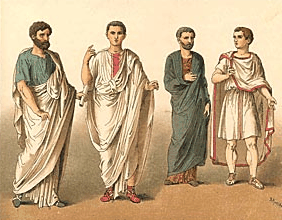
One account points the finger at the bad Greek of the leading Roman ambassador, Postumius. It was so ungrammatical and strangely accented that the Tarentines could not conceal their amusement. The historian Dio Cassius, by contrast, laid the blame on the Romans’ national dress. “So far from receiving them decently”, he wrote, “the Tarentines laughed at the Roman toga among other things. It was the city garb, which we use in the Forum. And the envoys had put this on, whether to make a suitably dignified impression or out of fear – thinking that it would make the Tarentines respect them. But in fact groups of revellers jeered at them.” One of these revellers, he goes on, even went so far as “to bend down and shit” all over the offending garment. If true, this may also have contributed to the Roman outrage. Yet it is the laughter that Postumius emphasized in his menacing, and prophetic, reply. “Laugh, laugh while you can. For you’ll be weeping a long time when you wash this garment clean with your blood.”

Despite the menace, this story has an immediate appeal. It offers a rare glimpse of how the pompous, toga-clad Romans could appear to their fellow inhabitants of the ancient Mediterranean; and a rare confirmation that the billowing, cumbersome wrap-around toga could look as comic to the Greeks of South Italy as it does to us. But at the same time the story combines some of the key ingredients of ancient laughter: power, ethnicity and the nagging sense that those who mocked their enemies would soon find themselves laughed at.

More here.

Why do vampires still thrill?

Joan Acocella in The New Yorker:

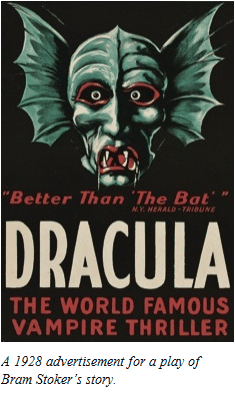
ScreenHunter_01 Mar. 12 13.28 In the summer of 1816, Lord Byron, fleeing marital difficulties, was holed up in a villa on Lake Geneva. With him was his personal physician, John Polidori, and nearby, in another house, his friend Percy Bysshe Shelley; Shelley’s mistress, Mary Godwin; and Mary’s stepsister Claire Clairmont, who was angling for Byron’s attention (with reason: she was pregnant by him). The weather that summer was cold and rainy. The friends spent hours in Byron’s drawing room, talking. One night, they read one another ghost stories, which were very popular at the time, and Byron suggested that they all write ghost stories of their own. Shelley and Clairmont produced nothing. Byron began a story and then laid it aside. But the remaining members of the summer party went to their desks and created the two most enduring figures of the modern horror genre. Mary Godwin, eighteen years old, began her novel “Frankenstein” (1818), and John Polidori, apparently following a sketch that Byron had written for his abandoned story, wrote “The Vampyre: A Tale” (1819). In Polidori’s narrative, the undead villain is a proud, handsome aristocrat, fatal to women. (Some say that Polidori based the character on Byron.) He’s interested only in virgins; he sucks their necks; they die; he lives. The modern vampire was born.

More here.

Woolly Bear, Heal Thyself

Carl Zimmer in his excellent blog, The Loom:

00003951 Animals, as I explained in my recent column for Discover, take precautions not to get sick (including the famous anal cannon). We take precautions too–conscious ones, based on what we have learned about how diseases spread, and perhaps also unconscious ones that lower our risk of infection.

But if those precautions fail, we humans sometimes take medicines to kill off the pathogens making us sick. And there’s an intriguing body of evidence suggesting that animals take medicine too.

A lot of that evidence comes from studies on chimpanzees, our closest living relatives. When they get infected, they will sometimes devour leaves and other vegetation they otherwise never touch. In the case of one plant, the chimps have to first peel away an outer covering that is lethally toxic. They go to these lengths, it appears, because eating these plants can cure them of their ills. Some plants can flush parasites out of the gut and others actually fight the pathogens themselves. In fact, when researchers study the plants chimpanzees eat, they discover new compounds that kill bacteria and other pathogens. They look promising as medicines for people. (pdf).

Given the sophisticated minds of chimpanzees (they can, for example, plot rock-hurling attacks on zoo-goers), it’s possible that chimpanzees teach themselves which medicinal plants to take, and these medical traditions spread culturally. But other animals seem to eat peculiar things when they get sick, too. Even insects do. Obviously, no invertebrate has ever graduated from medical school. (Insert your doctor joke here.) So the question arises, are insects actually self-medicating, or are they getting so sick that their diet goes haywire?

More here.

Lahiri sees off Rushdie in Commonwealth heat

From The Guardian:

Jhumpa_lahiri_460x276 Salman Rushdie's novel The Enchantress of Florence has missed out on a major literary award yet again, after he was pipped to the post by Jhumpa Lahiri in the regional heats for the Commonwealth writers' prize. Lahiri's collection of short stories Unaccustomed Earth, which track from Seattle to Thailand to India as they explore family life and the immigrant experience, also beat Rushdie's fellow Booker contender Philip Hensher to win the Europe and South Asia regional heat. Chair of the judges, Professor Makarand Paranjape said the Bengali-American writer had faced “some very tough competition” from both Hensher's “magisterial survey of English suburbia”, and Rushdie's “fecund and fierce imagination”.

In the end, however, Lahiri's “lyrical, meticulously crafted prose, with the moving and memorable treatment of the diasporic experience coupled with her significant achievement in extending the form of the short story, won the day,” he said.

Mohammed Hanif was a much easier choice, the judges said, for the first book category. He emerged quickly as clear favourite for his novel A Case of Exploding Mangoes, a darkly comic tour de force which takes as its starting point the plane crash which killed Pakistan's military dictator General Zia ul Haq. Praised for its “amazingly detailed and plausible portrayal of historical events”, as well as its “great political insight and stylistic virtuosity”, the novel is the first Pakistani book to be a regional winner. Hanif said he was “especially pleased” to win the prize, particularly given the strength of his fellow nominees, who included Sulaiman Addonia for The Consequences of Love, and Joe Dunthorne for Submarine.

More here.

All You Can Eat

From Orion:

Carrier-79 The green dumpster behind Red Lobster was nearly empty when I lifted the lid. Through the effluvium of yesterday’s supper, way down, sat a couple of pretty blue boxes. I hitched myself over the rim, leaned in, and took one.

I am not a regular dumpster diver. I was driven by a hunger for knowledge. Inside the restaurant, where the décor, ambience, soundtrack—all but the smell—reeked of the sea, I asked the server who laid before me the first plate of Red Lobster’s “endless shrimp” where they came from.

“Farms,” she said.

“Where are these farms?” I asked.

“Different places.” She gave a shrug. “Do you want another beer?”

I ate only eight grilled shrimp from Red Lobster’s “endless” supply. Something was stuck in my craw. An hour before, I had been in a community hall in Brownsville, Texas, with forty-three angry, tearful American shrimpers. In a country awash in shrimp, they were going bankrupt. They had gathered to hear more bad news: severe new rules limiting what they could catch.

“What about Red Lobster?” I asked the group.

“Red Lobster!” one man shouted. “They’re our enemy. They haven’t bought a shrimp since the 1980s.”

More here.

Wednesday, March 11, 2009

Hinged Mostly on Dedications

From Harper's:

First_folio This sentence caught my eye in yesterday’s International Herald Tribune:

Wells said that compared with the Cobbe portrait, the other representations now thought to be copies of it presented “an inanimate mask” of Shakespeare and that the discovery of the Cobbe painting would lead to a new generation of Shakespeare scholarship, driven by the realization that Shakespeare was more handsome, more fashionable, and more wealthy than previously believed.

The sentence appears in one version of Pulitzer Prize-winner John F. Burns’s reporting on the apparent (or possible, or contested) appearance of a “new” portrait of the Bard of Avon. If you haven’t seen the painting, it’s very lovely indeed, and surely does differ from the hydrocephalic fellow we’ve come to know and love. So said, the notion that a new generation of Shakespeare scholarship would be driven in a different direction by the “realization” that Shakespeare was “more handsome, more fashionable and more wealthy than previously believed” is drop-and-roll ridiculous. The number of idiotic assumptions that underlie such a statement (not Burns’s but, apparently, Wells’s) is hard to calculate, but their nature isn’t hard to characterize: we learn about art from artists (not from art).

More here.

niebuhr lives

Niebuhr1

A fog of know-nothing ideology, anti-intellectualism, cronyism, incompetence, and cynicism has, for eight years, enveloped the executive branch of the United States government. America’s role in the world and the policies that should shape and maintain it have been distorted by misguided decisions and by willful misinterpretations both of history and of current events. That fog is now being dispersed, and the vast intellectual and managerial resources of the United States are once again being mobilized. A blessing of this time of liberation and hope is that serious works of political analysis and philosophy may contribute to the new administration’s approach to its daunting agenda of global and national problems. That Barack Obama has made clear his admiration for one of the books under review—Reinhold Niebuhr’s The Irony of American History—is in itself reassuring.

more from the NYRB here.

cy twombly, in paris, on the ceiling

04houston.large1

One morning in late January, after a ride on the Paris métro to its terminus in the eastern suburb of Montreuil and a cold 10-minute walk through an industrial zone, I arrive at a nondescript, unheated warehouse. Inside, laid out on the floor of the large, open space, is a 33-meter-long white canvas, composed of 11 strips stapled together. The canvas is still mostly blank, with unfinished spheres in shades of blue, white, and yellow. Music plays softly in the background as three painters perform the immense task of painting what will portray a vast skyscape. These unromantic working-class environs are an unlikely place to find what might be one of the more romantic possibilities in art: a painting for the ceiling of the Louvre. As part of its mission to add contemporary artists’ work to its vast collection of paintings and crafts dating back to antiquity, the Louvre asked the American artist Cy Twombly to paint the ceiling of one of its galleries, the Salle des Bronzes. Twombly agreed, and for the first time since Georges Braque in 1953, a living artist’s work will adorn a ceiling of the iconic museum.

more from The American Scholar here.

ballard, pre-posthumously

Arts_ballard

In a very real sense, Ballard did become a psychiatrist, albeit a dryly ironic one, at ease with his philosophical bipolar disorder — now profoundly moralistic, now exuberantly amoral, now both. All of his dystopias are in truth pathological utopias; Ballard rejoices in the breakdown of bourgeois morality and the Return of the Repressed. Like the Freud of Civilization and Its Discontents, he can always hear the scrabbling of our sublimated instinctual drives behind Western society’s liberal-humanist facade. But unlike Freud, and like R.D. Laing, Norman O. Brown and other radical Freudians of the ’60s, Ballard is equally wary of the soft fascism of our master-planned, socially engineered age, with its megamalls and Club Meds, its gated communities and New Urbanist retrovilles. “In a completely sane world, madness is the only freedom” is a copyrighted Ballard quote. Ballard’s genius lies in his metaphoric use of scientific jargon and an antiseptic tone, somewhere between the dissecting table and the psychopathic ward, to psychoanalyze postmodernity. Long before deconstructionists like Jacques Derrida were slinging around references to the “decentered” self, Ballard is talking, in his trenchant introduction to Crash (1973), about “the most terrifying casualty of the century: the death of affect” and about “the increasing blurring and intermingling of identities within the realm of consumer goods.”

more from the LA Weekly here.

Do not rely on bankers

Esther Duflo Esther Duflo in Vox:

This column warns against bank nationalisation without state control. Bankers will not hesitate to enrich themselves at the expense of the public good if they have the opportunity.

The Obama administration is reluctant to nationalise banks (or at least some of them). The word nationalisation, until recently almost vulgar in the American vocabulary, has made its debut on television and in newspapers. The first on the list are the two biggest banks, Citibank and Bank of America, whose stock price has collapsed due to rumours that the government may soon take control. Republicans stifle it. For them, the relaunch plan is too European (the new Communism!). But economists who call for nationalisation are increasingly numerous.

The argument heard most in favour of nationalisation of banks is financial. Their losses were so important (the time of billions is over, we are now in trillions!) that only the government is in a position to save the financial system by investing heavily in ailing banks. At the end of the Bush administration, the Paulson plan included taking stakes in state banks without voting rights. But the rights of the taxpayers must be protected; the state can not become the main shareholder of banks without taking their control.

There is another argument, implicit or explicit, for the nationalisation of banks; we can not trust bankers not to leave with the cash, let alone spend any of the assistance provided by the government in the public interest. Two recent studies that analyse the experience of recent years show that bankers will not hesitate to enrich themselves at the expense of the public if they have the opportunity.

The Shrine of Rahman Baba Destroyed

Someone recently blew up the shrine of the 17th century sufi mystic Rahman Baba, mostly likely the psychos of the Taleban. Cricket games, Sufi shrines… (Via Shahnaz Habib in The New Yorker.) In the BBC:

Rahman Baba is considered the most widely read poet in Pashto speaking regions of Afghanistan and Pakistan.

The Taleban had warned they would blow up the shrine if women continued to visit it and pay their respects.

Literary experts say the poet's popularity is due to his message of tolerance coupled with a powerful expression of love for God in a Sufi way.

The BBC's M Ilyas Khan in Islamabad says that his lasting appeal reflects the historic popularity of Sufism in South Asia.

But our correspondent says that his views are anathema to the Taleban, who represent a more purist form of Islam and are opposed to Sufism, preventing people from visiting shrines of Sufi saints in areas they control.

Wednesday Poem

A Miracle for Breakfast
Elizabeth Bishop

At six o’clock we were waiting for coffee,
waiting for coffee and the charitable crumb
that was going to be served from a certain balcony,
—like kings of old, or like a miracle.
It was still dark. One foot of the sun
steadied itself on a long ripple in the river.

The first ferry of the day had just crossed the river.
It was so cold we hoped that the coffee
would be very hot, seeing that the sun
was not going to warm us; and that the crumb
would be a loaf each, buttered, by a miracle.
At seven a man stepped out on the balcony.

He stood for a minute alone on the balcony
looking over our heads toward the river.
A servant handed him the makings of a miracle,
consisting of one lone cup of coffee
and one roll, which he proceeded to crumb,
his head, so to speak, in the clouds—along with the sun.

Was the man crazy? What under the sun
was he trying to do, up there on his balcony!
Each man received one rather hard crumb,
which some flicked scornfully into the river,
and, in a cup, one drop of the coffee.
Some of us stood around, waiting for the miracle.

I can tell you what I saw next; it was not a miracle.
A beautiful villa stood in the sun
and from its doors came the smell of hot coffee.
In front, a baroque white plaster balcony
added by birds, who nest along the river
—I saw it with one eye close to the crumb—
and galleries and marble chambers. My crumb
my mansion, made for me by a miracle,
through ages, by insects, birds, and the river
working the stone. Every day, in the sun,
at breakfast time I sit on my balcony
with my feet up, and drink gallons of coffee.

We licked up the crumb and swallowed the coffee.
A window across the river caught the sun
as if the miracle were working, on the wrong balcony.

Only a Promise of Happiness: The Place of Beauty in a World of Art

Martin Donougho reviews Alexander Nehamas in Notre Dame Philosophical Reviews:

In his new book Alexander Nehamas wishes to rehabilitate talk of beauty as a characteristic of art, in the face, first, of philosophical or modernist attempts to insulate art from ordinary concerns, and second, of resort to aesthetic judgment rather than passionate engagement with art, to a 'juridical' as opposed to a 'Platonic' approach. He contends (35) that beauty “is part of the everyday world of purpose and desire, history and contingency, subjectivity and incompleteness.” His case for passion is made with passion.

A distinctive mark of the book is its self-consciously personal tone. I trust I may be allowed some personal reactions of my own — a sense of puzzlement intended to be productive as much as critical. To begin with, surely I am not the only person to wonder about the implications of Stendhal's words — from which Nehamas borrows his title — “Beauty is only a promise of happiness.” They come from chapter 17 of Stendhal's On Love, a chapter entitled “Beauty usurped (détrônée) by love”: a footnote tells of how imagination may so possess the lover that even ugliness can become an object of his passion, a pockmarked face beloved on that very account. You could hardly say that 'Beauty' is here straightforwardly endorsed. Adorno — a figure not mentioned in this otherwise wide-ranging book — also favors Stendhal's apothegm, yet his dialectical approach can more easily accommodate discordance, unsightliness, or the shudder of the sublime. Nehamas by contrast adopts a quasi-Platonic stance: of wonder, of erotic fixation, a state rendered almost speechless in its act of avowal. Of course he must still argue for this stance. And he does so, over the course of five chapters in this elegantly (indeed, beautifully) turned out volume, which derives from the 2001 Tanner lectures at Yale.

Steven Soderbergh’s Epic Film Biography of Che

Che J. Hoberman in the VQR:

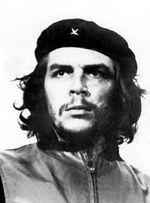
Ernesto “Che” Guevara was born in Rosario, Argentina, in 1928 and reborn as a revolutionary martyr thirty-nine years later, captured, and summarily executed by the Bolivian military. Or perhaps he was reborn three days after his death, October 10, 1967, when the photograph of his corpse—pale eyes open, surprisingly mild—was transmitted to the world. John Berger immediately noted the photo’s similarity to two Renaissance paintings, one ultra secular and the other nouveau sacred: Rembrandt’s “The Anatomy Lesson of Dr. Tulip” and Mantegna’s painting of the dead Christ.

Within eighteen months of his death, this instant immortal had been embalmed—in the form of Egyptian matinee idol Omar Sharif—by Twentieth Century Fox, as the subject of a tediously self-important and ridiculously old-fashioned Hollywood biopic. Early evidence of the hyperreal: noting the production’s budget, John Leonard observed in the New York Times Magazine that making a movie about revolution was considerably more expensive than the revolution itself, “about $10,000 an hour.” But of course: as director Richard Fleischer told Leonard, “No one had ever heard of Che Guevara until he died.”

The last of the moguls, Darryl F. Zanuck saw his studio’s Che in the tradition of Fox’s 1952 Viva Zapata—a melancholy, heartfelt, prestigious, star-spangled tribute to revolutionary failure. A hardcore New Left action tough guy, this Che equates Yanqui and Soviet imperialism and has no patience for governing. “I’ve had enough,” he tells Castro. The Beard begs him to stay but Che is unmoved. “You want to build socialism on one flea-speck in the Caribbean?” he sneers before leaving for his date with destiny. The last word is given to an old Bolivian peon who, hating Che and the government equally, had informed the authorities. His question is delivered to the spectator: “Why do people in your country flock to see a dead gangster?”

The closest thing to a rock star that international Communism ever produced has reemerged as a capitalist tool.

Why indeed?

Clean and Virtuous: When Physical Purity Becomes Moral Purity

From Scientific American:

Hands When people are asked to list their favorite metaphor, they typically cite great works of poetry, literature or oratory. Indeed, many metaphors are born from creative insight—Romeo likening Juliet to the rising sun or poet Robert Burns comparing his love to a red rose. But there is more to metaphor than this. Some metaphors are not literary creations at all—instead they seem to be built from the ground up, given to us by experience. For example, knowledge—an intangible, abstract concept—is often recast in terms of the concrete experience of sight. To know something is to see it, and so we often say that we see someone’s point or that an idea is clear. Metaphors of this sort—linking the abstract to the concrete, perceptual, and visceral—were studied systematically by the UC-Berkley cognitive linguist George Lakoff and philosopher Mark Johnson, at Brown University.

What they and others realized is that our concepts are fundamentally shaped by the fact that our minds reside in fleshy, physical bodies. As a result, even our most abstract concepts often have an “embodied” structure. In a classic example, people seem to understand moral virtue as if it were akin to physical cleanliness. To be virtuous is to be physically clean and free from the impurity that is sin. As the University of Pennsylvania psychologist and disgust expert Paul Rozin has shown, experiencing morality in terms of the embodied dimension of contagion can lead to some striking behaviors, such as the refusal to wear a sweater belonging to an evil person because it seems somehow contaminated by the evil essence of that person.

More here.

Tuesday, March 10, 2009

What makes our internal clock tick

Melissa Healy in the Los Angeles Times:

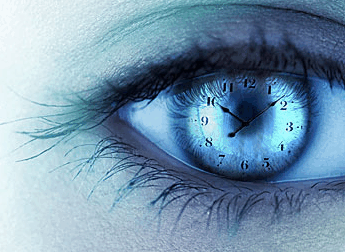
ScreenHunter_02 Mar. 11 09.54 In a healthy human brain, researchers believe that every second we are conscious, a circuit involving three distinct regions of the brain — the cerebellum, basal ganglia and prefrontal cortex — is essentially checking and cross-checking incoming information and its time stamp. In real time, that circuit builds a logical sequence of events out of information coming from different sources at different speeds.

From our earliest days, this circuit helps us to infer relationships of cause and effect, to make sense of the world and to learn. A baby bats at a dangling toy clown, feels its soft covering hit her hand and, less than a second later, hears it jingle: By correctly perceiving the order of those events and the tiny space of time between them, she learns that her action caused the clown to swing and jingle. And in so doing, she learns she can do it again.

When this sense of time is disrupted — as in several illnesses now under study — the world can become a chaotic jumble of seemingly unrelated events, or of effects attributed to the wrong cause. Chronically taken by surprise in an illogical world, a patient with what's increasingly known as a “temporal disorder” might respond with irrational anger or fear. Or he may feel helpless to understand how his actions affect things and people around him, and lapse into apathy.

David Eagleman, a neuroscientist at Baylor College of Medicine in Texas, suggests that such dysfunctions of timing may underlie what he calls the “fragmented cognition of schizophrenia.”

More here.