
Marion Thain at the Los Angeles Review of Books:
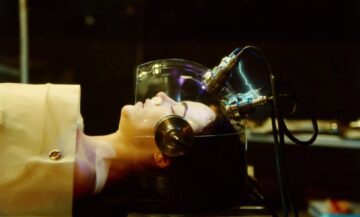 It seems no coincidence that Yorgos Lanthimos’s cinematic rendition of Alasdair Gray’s 1992 novel Poor Things, released at the end of 2023, would come at a time of obsessive commentary about the possibilities and threats of AI. While Lanthimos’s movie has nothing, ostensibly, to say about digital technologies (beyond its own production process), the publication this year of Julie Wosk’s Artificial Women: Sex Dolls, Robot Caregivers, and More Facsimile Females provides a context for considering the potential of the film in the public imaginary.
Wosk’s study explores the construction of artificial women in the age of AI as sex robots, care providers, domestic servants, and the disembodied voices of our digital tools and personal assistants. Considering both actually manufactured women and the many artworks that fabricate them as fictions, Artificial Women explores the strange phenomenon of womanhood in the artificially generated human world.
More here.
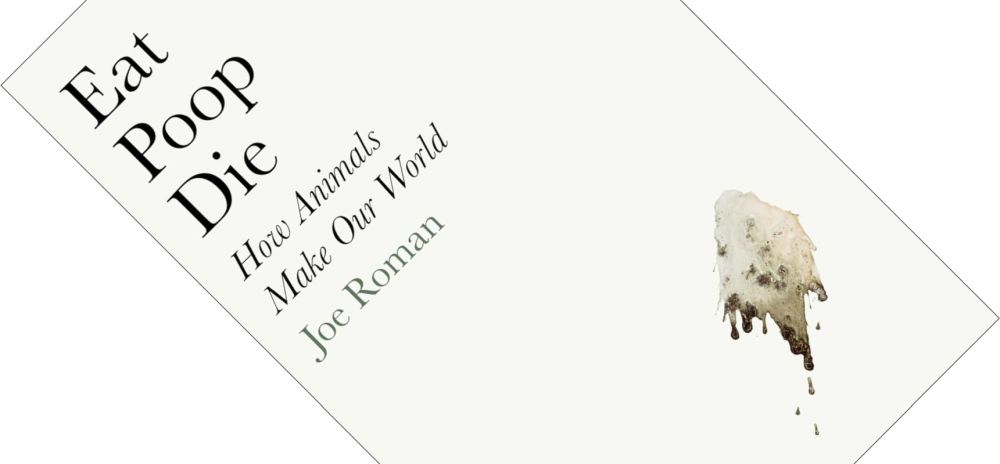 What a killer title. Rarely have I seen three snappy words so effectively capture the essence of a concept in biology. What concept is that? Zoogeochemistry. Many scientists have convincingly made the case that it is the small things that run the world. Though it is undeniably true that e.g. microbes and insects have shaped our planet, and continue to do so, it would be a mistake to think that larger animals are just along for the ride. I was stoked the moment the announcement for this book dropped and conservation biologist and marine ecologist Joe Roman did not disappoint. Eat, Poop, Die is fun and fascinating, while always keeping one eye firmly on the facts and complexities of ecology. Is it too soon to start earmarking titles for this year’s top 5? I think not.
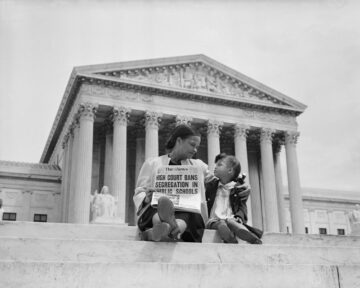 The 70th anniversary, last month, of the Brown v. The Board of Education decision has had me thinking about a certain conundrum regarding black students and education. Part of what has remained as the enduring legacy of Brown is Kenneth and Mamie Clark’s “Doll Test,” which featured in expert testimony for the case, and
 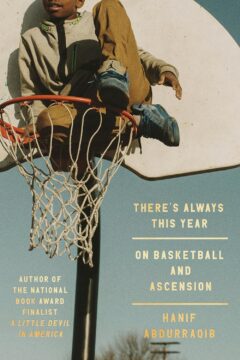 In this testament to both a sport and a state, Abdurraqib leads with his own heart, one that’s been broken over time by loss of family, friends, even a home. His previous works of cultural criticism (A Little Devil in America, Go Ahead in the Rain, They Can’t Kill Us Until They Kill Us) and poetry (A Fortune for Your Disaster, The Crown Ain’t Worth Much) are steeped in elegy and tempered by irony. He goes all out to sustain this difficult balance in his newest and, one could argue, most ambitious solo performance thus far, an awesomely discursive mixtape of memoir, film criticism, tone poem, and sports punditry interspersed with brief tributes to “legendary Ohio aviators” in whose company he includes Lonnie Carmon, the Black Columbus junk collector who built a plane from some of his salvage and flew it on weekends to astonish and inspire his neighbors. Other Buckeye State heroes need little to no introduction to the rest of us: John Glenn and John Brown, Toni Morrison and Virginia Hamilton.
 W
W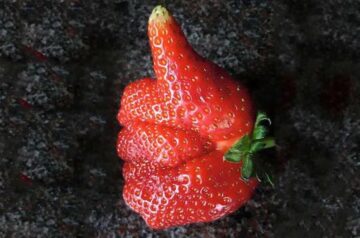 People who follow a diet rich in plants cut their mortality risk by almost a third, while simultaneously slashing the climate impact of their food by a similar amount. These results come from the largest study ever to analyze the health and environmental impacts of the widely-publicized
 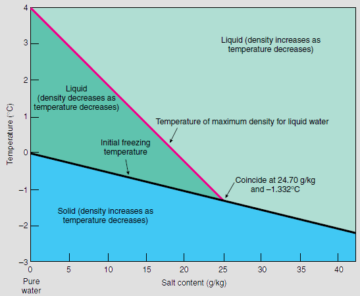 We learn in grade school that water freezes at zero degrees Celsius, but that’s seldom true. In clouds, scientists have found supercooled water droplets as chilly as minus 40 C, and in a lab in 2014, they
 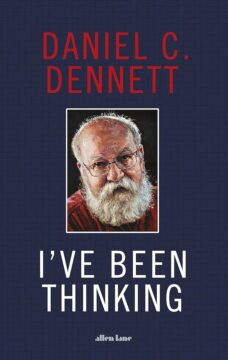 The philosopher Wilfrid Sellars thought that philosophy involved the reconciliation of disparate facts. Consider the disconnect between what he called the ‘scientific’ and the ‘manifest’ images of the world. Science describes a domain of fundamental particles situated in fields of force, spread out across a four-dimensional spacetime. Ordinary human life contains conscious creatures who make decisions, puzzle over problems, and find things good and beautiful. How do we integrate these two stories into a unified whole? One of the tasks of philosophy, Sellars said, was ‘to understand how things in the broadest possible sense of the term hang together in the broadest possible sense of the term’.
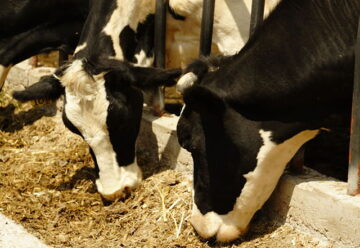 In the urgent quest for a more sustainable global food system, livestock are a mixed blessing. On the one hand, by converting fibrous plants that people can’t eat into protein-rich meat and milk, grazing animals like cows and sheep are an important source of human food. And for many of the world’s poorest, raising a cow or two — or a few sheep or goats — can be a key source of wealth.
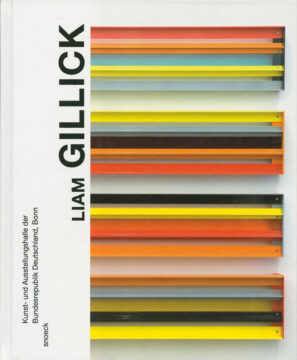 THE TWO THINGS THAT I STARTED WITH at Bozar were the novel and the film, which is almost like a cliché. The relationship between a novel and a film always has a particular connection and disconnection at the same time. As a kid, I would look at novelizations of films. Or find the book that became the film. And I was always fascinated by the gap in between these two things: the fact that the novel (if the novel was written before the film) bore no relationship to the film that I saw. And vice versa: that it could work the other way around, that a novel written after a film can often be almost a transliteration of the film. So for this particular exhibition at Bozar, which has to do with the weight of history, I did fall back a little bit on the story structure, on the idea of someone who cannot enter, who cannot arrive, who’s always on the outside. And the novel and the film had the same name in this case—A Max De Vos—but their content was completely different.
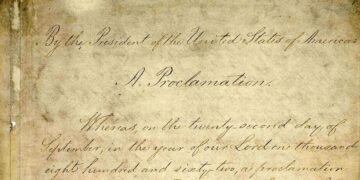 On September 22, 1862, President
 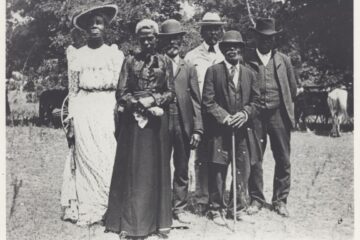 On “Freedom’s Eve,” or the eve of January 1, 1863, the first Watch Night services took place. On that night, enslaved and free African Americans gathered in churches and private homes all across the country awaiting news that the Emancipation Proclamation had taken effect. At the stroke of midnight, prayers were answered as all enslaved people in Confederate States were declared legally free. Union soldiers, many of whom were black, marched onto plantations and across cities in the south reading small copies of the Emancipation Proclamation spreading the news of freedom in Confederate States. Only through the