There Are Four Lights!

Revisiting Star Trek: The Next Generation's eerily prescient torture episode.

Julia Lapidos in Slate:

ScreenHunter_01 May. 08 10.29 In an episode from the series' sixth season, Capt. Picard embarks on a mission to destroy a biological weapon and is taken prisoner by a hostile alien race, the Cardassians. Believing that Picard is privy to strategic military secrets, the Cardassians inject him with a truth serum. When this technique fails to produce information, the Cardassians string up their captive in a stress position, strip him naked, and subject him to extreme physical torment—zapping him with a pain-administering device. For good measure, the lead Cardassian interrogator also devises a test meant to inflict mental anguish: He points four bright lights at Picard and asks him, repeatedly, to say that there are five. (A clear homage to the four-vs.-five-fingers sequence in George Orwell's Nineteen Eighty-Four.)

Powerful when it aired in 1992, the episode is even more resonant in 2009. When Picard's comrades on the Enterprise learn of Picard's capture, they insist that the Cardassians abide by the terms of a Geneva-like “Solanis Convention.” The Cardassians rebuff the request: “The Solanis Convention applies to prisoners of war … [Picard] will be treated as a terrorist.”

More, including video of the scene, here.

Magic and the Brain: Teller Reveals the Neuroscience of Illusion

Jonah Lehrer in Wired:

One of the first tricks in Penn and Teller's Las Vegas show begins when Teller—the short, quiet one—strolls onstage with a lit cigarette, inhales, drops it to the floor, and stamps it out. Then he takes another cigarette from his suit pocket and lights it.

No magic there, right? But then Teller pivots so the audience can see him from the other side. He goes through the same set of motions, except this time everything is different: Much of what just transpired, the audience now perceives, was a charade, a carefully orchestrated stack of lies. He doesn't stamp out the first cigarette—he palms it, then puts it in his ear. There is no second cigarette; it's a pencil stub. The smoke from the first butt is real, but the lighter used on the pencil is actually a flashlight. Yet the illusion is executed so perfectly that every step looks real, even when you're shown that it is not.

Penn and Teller demonstrate the seven basic principles of magic.

The trick is called Looks Simple, and the point is that even a puff on a cigarette, closely examined, can disintegrate into smoke and mirrors. “People take reality for granted,” Teller says shortly before stepping onstage. “Reality seems so simple. We just open our eyes and there it is. But that doesn't mean it is simple.”

For Teller (that's his full legal name), magic is more than entertainment. He wants his tricks to reveal the everyday fraud of perception so that people become aware of the tension between what is and what seems to be. Our brains don't see everything—the world is too big, too full of stimuli. So the brain takes shortcuts, constructing a picture of reality with relatively simple algorithms for what things are supposed to look like. Magicians capitalize on those rules. “Every time you perform a magic trick, you're engaging in experimental psychology,” Teller says. “If the audience asks, 'How the hell did he do that?' then the experiment was successful. I've exploited the efficiencies of your mind.”

More here.

Obama is Spock: It’s quite logical

Our president bears a striking resemblance to the rational “Star Trek” Vulcan whose mixed race made him cultural translator to the universe.

Jeff Greenwald in Salon:

Obama Spock Anyone who followed the early “Star Trek” with regularity knows how charismatic Spock was. If there were two characters I wanted to be as a young man, they were Spock — and James Bond. Both displayed total self-confidence, and amazing problem-solving skills. Both traveled to exotic destinations, and were irresistible to women. And both shared a quality that my generation lacked completely: composure.

While Bond had his weaknesses (anything in a bikini), Spock was virtually unflappable. The most startling marvels in the cosmos were “fascinating.” Disasters were “unfortunate,” perhaps even “tragic.” The raised eyebrow, the lifted chin, the vaguely sarcastic mien — these were coins of the realm to my pubescent friends. How did we weather the terrors of grade school, and survive the irrational outbursts of parents and teachers? By invoking Spock. Who served as our logical, enlightened counterpoint to the madness of the late 1960s? Who else but Spock?

“I am a first-generation 'Star Trek' fan, and I've long argued that many of my deepest political convictions emerged from my experience of watching the program as a young man growing up in Atlanta during the civil rights era,” declares Henry Jenkins, co-director of the MIT comparative media studies program and author of “Convergence Culture.” “In many ways, my commitment to social justice was shaped in reality by Martin Luther King and in fantasy by 'Star Trek.'”

Obama, Jenkins points out, positioned himself in the primaries as a man “at home with both blacks and whites, someone whose mixed racial background has forced him to become a cultural translator.” In this sense Obama even surpasses Spock, whose struggle to reconcile his half-human, half-Vulcan genes is a continual source of inner conflict.

More here.

Thursday, May 7, 2009

The Prince of Washington

From The Washington Post:

Prince Few diplomatic marriages are as hopelessly knotted — or emotionally fraught — as the one between Saudi Arabia and the United States. First joined in 1945 under an oil-for-security agreement, the two countries leaned on each other through the Cold War, the 1967 Six-Day War and the 1991 Persian Gulf War. The House of Saud provided welcome relief to President Jimmy Carter during the energy crisis in the '70s; later, Saudi mujaheddin were dispatched against Russian-occupied Afghanistan. Only after the attacks of Sept. 11, 2001, when it was discovered that 15 of the hijackers were Saudi nationals, did this “special relationship” — always informal, never really defined — begin to sour.

As former Washington Post reporter David B. Ottaway hints in his sweeping history, “The King's Messenger,” it's a miracle the odd couple made it even that far. Saudi Arabia is “a secretive monarchy, Islamic theocracy, and Sunni monoculture,” while the United States is a “religiously pluralistic society, wide-open democracy, and Babel of cultures,” Ottaway writes. “Holding the alliance together was a delicate diplomatic task for both sides, requiring the downplaying of differences, secrecy, and often outright duplicity.” Over the years, much of that diplomacy — and on occasion, the duplicity — fell not to a king or president, but to a single courtier: Bandar bin Sultan, the self-proclaimed “peasant prince.”

More here.

Is David Simon Wrong About Blogs and Local Reporting?

In the NYT's Opinionator blog, Eric Etheridge responds to David Simon:

Yesterday Senator John Kerry held hearings on the “Future of Journalism.” One expert who took the chair to testify was David Simon, the former Baltimore City Sun reporter who later created the HBO series “The Wire.”

Simon stressed that he was not there to make a “Luddite argument against the Internet and all that it offers.” What did concern him was the disappearance of a certain kind of reporting he says bloggers don’t do:

But democratized and independent though they may be, you do not — in my city — run into bloggers or so-called citizen journalists at City Hall, or in the courthouse hallways or at the bars and union halls where police officers gather. You do not see them consistently nurturing and then pressing sources. You do not see them holding institutions accountable on a daily basis.

Read more »

the future is mat

158_Arts_Lewis

It’s all to play for, as far as the history of art in our times goes. An era of cultural as well as economic excess is drawing to a close. The principles that inspired artistic production are soon likely to follow into the dustbin of history those principles by which our economies were run, carrying with them the reputations of some of the most successful artists of our times. Out will go the idea that near identical conceptual works of art can be mass produced by factory-studios until demand is exhausted; out will go the idea that high production values—shininess, the quality of fabrication—are enough to define the art of our time; out will go the idea that art can criticise greed and stupidity by imitating it. Modernism, it seems, has finally succumbed to the decadent super-sized clichés of some conceptual artists. It’s at moments like these that new directions in art emerge, and overlooked artists from the recent past are re-appraised; and I have recently spotted what seem to be a few green shoots of artistic recovery. Last year at the Haunch of Venison gallery, I came across an extraordinary kinetic sculpture by the British artist Mat Collishaw as part of his solo show “Shooting Stars.”

more from Prospect Magazine here.

lindsay’s vision

11 MAYOR JOHN LINDSAY

Lindsay’s planning apparatus had tried to respond to Jacobs’s criticisms of second-wave metropolitanism, but the mayor’s technocratic idealism was ultimately quashed by communities that had, by nature of living with the consequences of Moses’s projects, become resistant to the very idea of urban planning. The promise of John Lindsay went unfulfilled, and his departure from City Hall sounded the death knell of large-scale planning. Nevertheless, that promise lives on, however buried under the patina of late-’70s urban decay, the vulgar commercial projects erected en masse in the ’80s and ’90s, and the more recent vogue for speculative luxury condos and gaudy renovations of older tenements and townhouses. In examining a few of the projects built under the Lindsay administration, it is possible to discern the traces of other, unrealized proposals, the palimpsest of a master plan, and the enduring impact of a partially realized metropolitan vision—elements of which might well be resurrected to address our own needs.

more from Triple Canopy here.

the nibelung gap

TLS_Shippey_544322a

Many years ago William Morris declared that the legend of Sigurd and Gudrún, the Völsungs and the Nibelungs, deserved to become the Northern Homer, and he was right. It has everything: the dragon Fáfnir and the valkyrie Brynhild, werewolves and dwarves, mysterious interventions by a one-eyed deity, a sword broken and reforged, a fabulous treasure-hoard and, above all, a magic ring with a curse on it. It also has – and this may have prevented it from realizing its potential, at least in Morris’s long verse retelling of 1876 – many lurking embarrassments: incest, child-murder, human sacrifice, what looks very like ceremonial female suicide or suttee. Yet even more alluring and provoking than what is in the legend, is what might have been there once but is there no more. The relationship between the various forms of the Nibelung legend was recognized in the nineteenth century as the Königsproblem of Germanic philology, which has never been solved. We still possess four main ancient sources, two Norse (the Völsunga saga and a brief epitome in Snorri Sturluson’s Prose Edda), one in German (the Nibelungenlied), and one in Norse but derived from German, in the legendary compendium of the Þiðrekssaga. There is a fifth, for the legend gave rise to over half (fifteen out of twenty-nine) of the poems contained in the main manuscript of Eddic poetry surviving, the Codex Regius. However, some of those poems concern later additions to the cycle, several deal only with the complaints of Gudrún after all is over, and where the heart of the story should be, there is a gap.

more from the TLS here.

Thursday Poem

Scaffolding
Seamus Heany

Masons, when they start upon a building,
Are careful to test out the scaffolding;

Make sure the planks won’t slip at busy points.|
Secure all ladders, tighten bolted joints.

Yet all this comes down when the job’s done,
Showing off walls of sure and solid stone.

So if, my dear, there sometimes seems to be
Old bridges breaking between you and me,

Never fear. We may let the scaffolds fall,
Confident that we have built our wall.

Torture-tape Gulf prince accused of 25 other attacks

US lawyers claim they have videos implicating Abu Dhabi royal in more cases of torture, a week after outcry over his assaults on Afghan businessman.

Paul Harris in The Observer:

ScreenHunter_01 May. 07 11.16 The wealthy Gulf prince at the centre of a “torture tape” scandal has been accused of attacking at least 25 other people in incidents that have also been caught on film, it has been claimed.

Sheikh Issa bin Zayed al-Nahyan is now under investigation in the United Arab Emirates after the shocking tape showed him beating a man with a nailed plank, setting him on fire, attacking him with a cattle prod and running him over.

But now lawyers for American businessman Bassam Nabulsi, who smuggled the tape out of the UAE, have written to the justice minister of Abu Dhabi – the most powerful of the emirates that make up the UAE – claiming to have considerably more evidence against Issa.

“I have more than two hours of video footage showing Sheikh Issa's involvement in the torture of more than 25 people,” wrote Texas-based lawyer Anthony Buzbee in a letter obtained by the Observer.

More here.

US interrogators may have killed dozens

John Byrne in The Raw Story:

United States interrogators killed nearly four dozen detainees during or after their interrogations, according a report published by a human rights researcher based on a Human Rights First report and followup investigations.
In all, 98 detainees have died while in US hands. Thirty-four homicides have been identified, with at least eight detainees — and as many as 12 — having been tortured to death, according to a 2006 Human Rights First report that underwrites the researcher’s posting. The causes of 48 more deaths remain uncertain.

The researcher, John Sifton, worked for five years for Human Rights Watch. In a posting Tuesday, he documents myriad cases of detainees who died at the hands of their US interrogators. Some of the instances he cites are graphic.

More here.

Dark matter intrigue deepens: Space telescope may have glimpsed hint of mystery particles

From Nature:

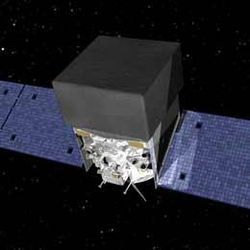
News New data from two experiments — one in space, one on a balloon floating above Antarctica — hint at a tantalizing detection of dark matter, the mysterious stuff comprising 85% of the universe's matter. The evidence is a reported excess of high-energy electrons and their antimatter counterparts, positrons, which could be created as dark matter particles annihilate or decay. The signal from Fermi, the orbiting gamma-ray telescope, is subtle, whereas that claimed by the balloon-borne Advanced Thin Ionization Calorimeter (ATIC) is much more pronounced. The differences are puzzling, but the findings — according to some — could herald the birth of a new age of dark matter exploration.

“We may very well be seeing the beginning of the discovery era,” says Dan Hooper, a theorist at Fermi National Accelerator Laboratory in Batavia, Illinois, who is not affiliated with either of the experiments. Peter Michelson, principal investigator for the instrument on Fermi that made the detection, cautions that his group is not yet claiming to have found a smoking gun for dark matter. The signal could also come from more mundane sources nearby, such as pulsars, the spinning remnants of supernovae. “But if it isn't pulsars, it is some new physics,” says Michelson, of Stanford University in California.

More here.

Project GREAT: General Relativity Einstein/Essen Anniversary Test

Tom Van Baak in LeapSecond.com:

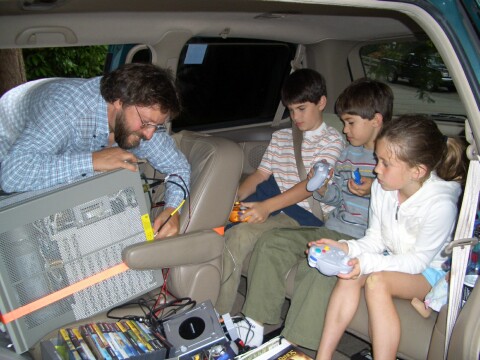
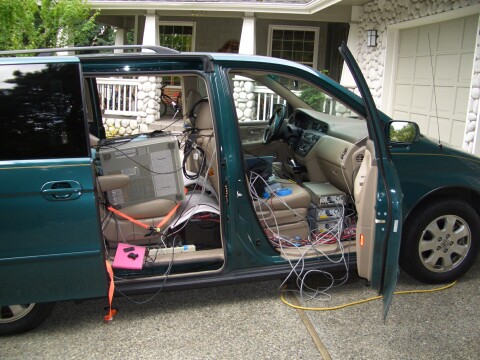
In September 2005 (for the 50th anniversary of the atomic clock and 100th anniversary of the theory of relativity) we took several cesium clocks on a road trip to Mt Rainier; a family science experiment unlike anything you've seen before.

By keeping the clocks at altitude for a weekend we were able to detect and measure the effects of relativistic time dilation compared to atomic clocks we left at home. The amazing thing is that the experiment worked! The predicted and measured effect was just over 20 nanoseconds.

—————————————-

Dad makes final connections to the clocks. It took about half an hour to bring all the equipment down from the upstairs lab out to the car. The kids took the back seat.

Cimg2541

Here's a view of the car. What a mess. The three clocks fit on a middle seat in the van. The front seat area is where I put the counters, laptop, inverters, power monitors, environmental sensors. It comes to 400 pounds of batteries; 200 pounds of clocks.

Cimg2546

More here.

Wednesday, May 6, 2009

Wednesday Poem

The Earth is a Satellite of the Moon
Leonel Rugama

Apollo 2 cost more than Apollo 1
Apollo 1 cost plenty

Apollo 3 cost more than Apollo 2
Apollo 2 cost more than Apollo 1
Apollo 1 cost plenty

Apollo 4 cost more than Apollo 3
Apollo 3 cost more than Apollo 2
Apollo 2 cost more than Apollo 1
Apollo 1 cost plenty

Apollo 8 cost a fortune, but no one minded
because the astronauts were Protestant
they read the Bible from the moon
astounding and delighting every Christian
and on their return Pope Paul VI gave them his blessing.

Apollo 9 cost more than all these put together
including Apollo 1 which cost plenty.

The great-grandparents of the people of Acahualinca were less
hungry than the grandparents.
The great-grandparents died of hunger.
The grandparents of the people of Acahualinca were less
hungry than the parents.
The grandparents died of hunger.
The parents of the people of Acahualinca were less
hungry than the children of the people there.
The parents died of hunger.
The people of Acahualinca are less hungry then the children
of the people there.
The children of the people of Acahaulinca, because of hunger,
are not born
they hunger to be born, only to die of hunger.
Blessed are the poor for they shall inherit the moon.

translation: Sara Miles, Richard Schaaf & Nancy Weisberg
from: Poetry Like Bread, Curbstone Press, 1994

mortality port

ID_IV_WILSO_PORT_AP_001

A few days after the tasting, I logged onto The Port Forum to see how the discussion over the 2007 vintage proceeded. Vigorously, I found. Among the biggest questions were, of course, should we buy these? AHB, from Berkshire, England wrote: “Do I want any of this vintage?…Yes, as I will be in my mid-sixties when these are mature and given my genealogy would expect to still be around in the 2030s.” Several forum members expressed excitement that the 2007s might actually be enjoyed young, without waiting for decades, but several port enthusiasts took a dim view of this, as Wiseman had. Uncle Tom, from “Near Cambridge,” England suggested that “consumers are not all sold on the idea of drinking VP young, and that anyone reviewing a new vintage should be more focused on the likely performance of the wines when matured, than on their ability to afford immediate gratification.” This response made me stop and think about patience, about denying immediate gratification, about aging gracefully. About wagering money and years in the hope of, perhaps once again, tasting something sublime. Maybe this is the key to understanding vintage ports, maybe the lesson they have to teach. If so, there’s no wonder why they’re such a hard sell to us here in America.

more from The Smart Set here.

Darwin’s Missing Evidence: Changes in Moths Observed

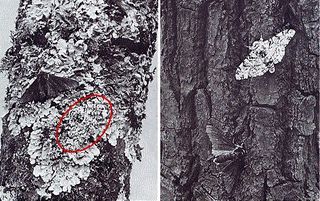
Kettlewell50 years after the original H. B. D. Kettlewell papers on natural selection and melanism in the peppered moth, the research remains an object of criticism and derision by skeptics of Darwin. Kettlewell in Scientific American:

[B]efore Darwin died in 1882, the most striking evolutionary change ever witnessed by man was taking place around him in his own country.

The change was simply this. Less than a century ago moths of certain species were characterized by their light coloration, which matched such backgrounds as light tree trunks and lichen-covered rocks, on which the moths passed the daylight hours sitting motionless. Today in many areas the same species are predominantly dark! We now call this reversal “industrial melanism.”

It happens that Darwin's lifetime coincided with the first great man-made change of environment on earth. Ever since the Industrial Revolution commenced in the latter half of the 18th century, large areas of the earth's surface have been contaminated by an insidious and largely unrecognized fallout of smoke particles. In and around industrial areas the fallout is measured in tons per square mile per month; in places like Sheffield in England it may reach 50 tons or more. It is only recently that we have begun to realize how widely the lighter smoke particles are dispersed, and to what extent they affect the flora and fauna of the countryside.

In the case of the flora the smoke particles not only pollute foliage but also kill vegetative lichens on the trunks and boughs of trees. Rain washes the pollutants down the boughs and trunks until they are bare and black. In heavily polluted districts rocks and the very ground itself are darkened.

Stop Funding My Failing State

Fatima Bhutto Fatima Bhutto in The Daily Beast:

No amount of money, especially in the hands of a famously corrupt government, is going to help Pakistan stave off terror, especially when said government seems more than willing to capitulate to the militants they’re supposed to be using that money to save the world from. Since 2001, Pakistan has been a country in decline. We suffer a suicide-bombing rate that surpasses Iraq's. The billions of dollars we have received have not made Pakistan safer, they haven't made our neighbors safer, and they've done nothing in the way of eradicating terror. Instead, we now have our own version of the Taliban busy blowing up trade routes and flogging young girls.

The Taliban and their ilk, on the other hand, are able to seat themselves in towns and villages across Pakistan without much difficulty largely because they do not come empty-handed. In a country that has a literacy rate of around 30 percent, the Islamists set up madrassas and educate local children for free. In districts where government hospitals are not fit for animals, they set up medical camps—in fact, they’ve been doing medical relief work since the 2005 earthquake hit Northern Pakistan. Where there is no electricity, because the local government officials have placed their friends and relatives in charge of local electrical plants, the Islamists bring generators. In short, they fill a vacuum that the state, through political negligence and gross graft, has created.

Between Pigs and Debt: Representations of Polish Post-Communism

Kuisz-150w Jaroslaw Kulsz, in Eurozine:

Jaroslaw Kuisz comments on two iconic Polish films that show the brutality, fear and loneliness that have accompanied the new political order. In Wladislaw Pasikowski's Psy (Pigs, 1992) a former security service agent turned respectable post-communist policeman resolves to avenge the death of three colleagues. And in Krzysztof Krauze's Dlug (Debt, 1999), two young businessmen, trapped into life as mobsters, commit murder, then confess.

It all began with the pleasing features of Gary Cooper… In the run-up to the election on 4 June 1989, posters with the red Solidarity symbol and the caption “High Noon” were displayed throughout the People's Republic of Poland. They showed a solitary, small-town sheriff on his way to the ballot-box to cast his vote for the Citizen's Committee.

The fact that – despite the ultimate triumph of good over evil – the American 1952 western carried an underlying and very bitter message probably passed unnoticed. The population of the small town in the movie demonstrated no inclination at all to take a risk. They preferred passively to watch the events that were taking place. The inhabitants seemed all but indifferent to whether order would be restored by a group of unshaven thugs or their obsessively high-minded sheriff. Similarly, in the celebrated Polish election that was to “overturn communism”, almost 40 per cent of the electorate failed to vote. More than 10 million of the 27 million people entitled to vote[1] simply waited to see who would take charge.