hurt
Posted on by Morgan Meis

From The Guardian:
She's 81 and growing frail, but revered author and poet Maya Angelou has lost none of her legendary wisdom and humour. In a rare interview, she explains why she's not about to retire.
During a trip to Senegal, Maya Angelou called Samia, a friend she had made in Paris several years before, and was invited over for dinner. Passing a room where people apparently clung to the wall to avoid standing on the rug, Angelou became incensed. “I had known a woman in Egypt who would not allow her servants to walk on her rugs, saying that only she, her family and friends were going to wear out her expensive carpets. Samia plummeted in my estimation.”
Keen to challenge her host's hauteur, she walked back and forth across the carpet. “The guests who were bunched up on the sidelines smiled at me weakly.” Soon afterwards, servants came, rolled up the rug, took it away and brought in a fresh one. Samia then came in and announced that they would be serving one of Senegal's most popular dishes in honour of Angelou: “Yassah, for our sister from America… Shall we sit?” And as the guests went to the floor where glasses, plates, cutlery and napkins were laid out on the carpet, Angelou realised the full extent of her faux pas and was “on fire with shame”. “Clever and so proper Maya Angelou, I had walked up and down over the tablecloth… In an unfamiliar culture, it is wise to offer no innovations, no suggestions, or lessons. The epitome of sophistication is utter simplicity.” Such is an example of the 28 short epistles that comprise Letter To My Daughter, Angelou's latest book.
More here.
“Wer groß denkt, muß irren. A great thinker is bound to make mistakes,” Board Number One quotes him. Heidegger, the man whose philosophy came very close to the Nazi spirit in the 1930s, is notorious for not apologising for the Holocaust and not removing offensive passages. Accused in his 1929 book on Kant of forcing German philosophy into an alien mould, he insisted postwar on the unaltered text, since “everyone keeps accusing me of force” and “thinking people learn all the better from their mistakes”. If this is one of a number of indirect “apologies”, it seems grudging. Much of the problem was character. He hated confrontation. As his supercritical student Karl Löwith put it: “The natural expression of his face included a working forehead, veiled face, and lowered eyes, which now and then would take stock of a situation with a short and swift glance. If someone temporarily forced him into a direct look by speaking to him, then this extremely disharmonious face, jagging angularly in all its features, would become somewhat reserved, wily, shifting and downright hypocritical…What was natural for it was the expression of cautious mistrust, at times full of peasant cunning.” The emotionally hopeless letters Heidegger wrote to Hannah Arendt, the Jewish political philosopher with whom he fell in love when she was his student, are a key. Evasive in love, he was stubborn in achievement and recalcitrant by nature. Like his semi-literate parents, he was a head-down, uncommunicative type in the old rural mould. The extraordinary thing is that he also gave this stubborn, self-concealing character to truth and philosophised on that basis.
more from Lesley Chamberlain at Standpoint here.
In a noble if melodramatic way, Koestler had once held a sort of dress rehearsal for suicide with Walter Benjamin, as both contemplated being taken alive by the Gestapo. (He kept the pills Benjamin gave him, while the latter swallowed his on the Spanish border a few days later.) By comparison, his own suicide in 1983 was an affair very much lacking in grandeur. His mind and his body were certainly both giving way, but he seems to have allowed or perhaps encouraged his healthy wife, Cynthia, to join him in the extinction. An earlier study by David Cesarani was lurid to the point of sensationalism about Koestler’s callousness toward his wives and other women (to say nothing of other people’s wives). It has been plausibly alleged that in his compulsive seductions—of Simone de Beauvoir, for one—he did not always stop quite short of physical coercion. Scammell does his best to plead extenuation here, but is obviously uncomfortable. Just as many of the people who believe in numinous coincidence and supernatural intervention are secretly hoping to prove that it is they themselves who are the pet of the universe, so many of those who overcompensate for inferiority are possessed of titanic egos and regard other people as necessary but incidental. At least this case is a tragic one when considered as a life story, because it shows us what a noble mind was there o’erthrown.
more from Christopher Hitchens at The Atlantic here.
Does the Netherlands have any great literature to boast of? This question is often put to me when I am abroad. So who then are the doyens of that Dutch literature? Many of the people I talk to are unable to name even a single writer from the Dutch-speaking world. Erasmus, Spinoza, Anne Frank – it appears that none of these are directly associated with the Netherlands, even though Erasmus lived in Rotterdam, Spinoza was born in Amsterdam, and Het achterhuis [The diary of a young girl] was written in an Amsterdam house overlooking a canal. Anyone wishing to sketch a picture of Dutch literature of the past fifty years must look at five major writers: Willem Frederik Hermans, Gerard Reve (both now deceased), Harry Mulisch, Cees Nooteboom, and Hella S. Haasse.
more from Margot Dijkgraaf at Eurozine here.
In the fall of 1976, a newspaper contacted Vladimir Nabokov in his Swiss refuge and asked him which books he had recently read. He responded with three typical titles: Dante’s “Inferno” (in Charles Singleton’s deliciously literal translation), a big, fat book about butterflies and his own work-in-progress, “The Original of Laura.” The latter project had preoccupied him over the summer, despite a serious illness. It was, he told his correspondent, “completed in my mind.” The revisions went on while he was confined to a hospital bed, a febrile process he describes in some detail in his “Selected Letters”: “I must have gone through it some fifty times and in my diurnal delirium kept reading it aloud to a small dream audience in a walled garden. My audience consisted of peacocks, pigeons, my long dead parents, two cypresses, several young nurses crouching around, and a family doctor so old as to be almost invisible.” Here was a description to whet the appetite of every Nabokov fanatic. If that’s how he discussed the book, the actual product had to be beyond imagining. Alas, the author died of congestive bronchitis in July 1977. And although he may have completed “The Original of Laura” in his mind, he had managed to transcribe only a small portion of the book onto index cards.
more from James Marcus at the LAT here.
The common thread in Gladwell’s writing is a kind of populism, which seeks to undermine the ideals of talent, intelligence and analytical prowess in favor of luck, opportunity, experience and intuition. For an apolitical writer like Gladwell, this has the advantage of appealing both to the Horatio Alger right and to the egalitarian left. Unfortunately he wildly overstates his empirical case. It is simply not true that a quarterback’s rank in the draft is uncorrelated with his success in the pros, that cognitive skills don’t predict a teacher’s effectiveness, that intelligence scores are poorly related to job performance or (the major claim in “Outliers”) that above a minimum I.Q. of 120, higher intelligence does not bring greater intellectual achievements. The reasoning in “Outliers,” which consists of cherry-picked anecdotes, post-hoc sophistry and false dichotomies, had me gnawing on my Kindle. Fortunately for “What the Dog Saw,” the essay format is a better showcase for Gladwell’s talents, because the constraints of length and editors yield a higher ratio of fact to fancy. Readers have much to learn from Gladwell the journalist and essayist. But when it comes to Gladwell the social scientist, they should watch out for those igon values.
more from Steven Pinker at the NYT here.
Steven Levy in Wired:
Last August, the people who putatively run Twitter — the small crew that three years ago launched the world’s fastest-growing communications medium — announced a relatively minor change in the way the site functions. The tweak would have a small effect on retweeting, the convention by which Twitter users repost someone else’s informative or amusing message to their own Twitter followers. Retweets start with RT, for “retweet,” and usually cite the first author by user ID. And, importantly, retweeters often add a word or two of commentary about the repeated content.
But there was a problem: Twitter itself didn’t invent retweeting; it was created by Twitter users. In a blog post explaining the changes to retweets, the company’s second-in-command, Biz Stone, called them “a great example of Twitter teaching us what it wants to be.” The good news, he said, was that Twitter was building retweets right into the site’s architecture. The bad news was that Project Retweet didn’t make any provision for the commentary that users might like to add.
More here.
Katherine Harrison in The New York Times:
But enough about you, Dear Reader, let’s talk about Philip Roth. Or Nathan Zuckerman or David Kepesh or Mickey Sabbath. Or any of the maddeningly, entertainingly and sometimes tediously self-involved heroes whose lives and loves mirror those of their author. A Roth by any other name would still suffer the affliction identified by O. Spielvogel, the fictional psychiatrist an excerpt of whose imagined article, “The Puzzled Penis,” introduced the reading world to “Portnoy’s Complaint.” A condition marked by “extreme sexual longings,” compulsive sexual behaviors and “overriding feelings of shame and the dread of retribution, particularly in the form of castration,” Portnoy’s complaint outgrew its eponymous novel and manifested itself in one Roth protagonist after another.
Alexander Portnoy sought relief in raw liver, most memorably the piece he “bought one afternoon at a butcher shop and, believe it or not, violated behind a billboard on the way to a bar mitzvah lesson.” But the possibilities and permutations of onanism are limitless. “Into Thin Air,” Part 1 of “The Humbling,” introduces 65-year-old Simon Axler as he descends into a long wallow of doubt, despair and self-pity. “The last of the best of the classical American stage actors,” Axler has suddenly “lost his magic.” “His talent was dead.” Cast as Macbeth and Prospero at the Kennedy Center, he fails so spectacularly at the double bill that he slides into a depression severe enough to frighten off his long-suffering wife.
More here.
From The Wall Street Journal:
Without Thucydides the war (or wars) fought between the Greek states of Athens and Sparta late in the fifth century B.C. would have been no more significant than many another long war (or wars) whose start dates, end dates, causes and characters might (or might not) have been discussed by future historians. Only because of Thucydides' “History of the Peloponnesian War”—with his radical claims of exercising a new rationality and, most grandiloquently, of writing a “thing for all time”—did a typically messy military contest based on money, influence, bloody-mindedness and happenstance become interpreted and reinterpreted as though it were a religious revelation. Communists and anticommunists, leftists and neocons, anti-imperialists and empire builders have all fought to recruit the great Athenian as their ally.
Donald Kagan, a veteran Yale professor of classics and ancient history, has himself taken part in these arguments for almost a half-century. His own four-volume history of the Peloponnesian War is a classic of modern scholarship. Now, with “Thucydides: The Reinvention of History,” Mr. Kagan has produced what reads like the last word on the man, a nuanced and subtle account of a subject that has so often been treated in a spirit of high partisanship. Mr. Kagan stresses that Thucydides, an Athenian naval commander who was exiled in 424 B.C. for losing an important battle in Thrace, was more than just a participant in the conflict that he described. He was also a player in the domestic politics of the war, the “spin” as well as the strategy. Thus “Thucydides: The Reinvention of History” is a book about a long-ago historian's argument with his contemporaries—the tension between facts and what one would like to be facts. “In the important cases examined here,” Mr. Kagan writes, “the contemporary view was closer to the truth than [Thucydides'] own.”
More here. (Note: For Anju and Asad who spoke so eloquently about Thucydides over dinner last weekend.)
Veneer
Give me my hand on his neck and his back to my breast,
my heart ruffling his ribs and their flighty charge.
Give me the sea-grass bristles on his shoulder-blades
and his spine, courteous and pliable to my wrist.
His back is a child’s drawing of seagulls flocked.
I knuckle the air undone by their windward flight
and draw from their dip and rise my linear breath.
Were he standing, my tongue could graze the whorl
at the base of his neck and leave my hand to plane
the small of his close-grained waist.
Were he lying down, I’d crook in the hollow
of him and, with my index finger, slub the mole
at the breech of his back that rounds on darkness
like a knot in veneer: shallow, intricate, opaque.
by Vona Groarke
From: Flight
Publisher: The Gallery Press, Oldcastle, 2002
From The Telegraph:
Writing in his new book, Snapshots in History’s Glare, Gore Vidal begins one paragraph with the words: ‘Despite never having been very social…’. He then proceeds to talk of asking Andy Warhol, Mick and Bianca Jagger and ‘baby Jade’ to visit him and his long time companion, Howard Austen, at their ravishing villa outside Ravello. Our old friends the Newmans [Paul and Joanne, that is]’ used to drop by, the next sentence tells us. So did Lauren Hutton, Susan Sarandon, Rudolf Nureyev, Hillary Clinton, Sting, James Taylor, Leonard Bernstein, Johnny Carson, Bruce Springsteen and many others, as this pictorial memoir bears witness. How exhausting it would all have been if Vidal had actually liked company.
But then Vidal likes to tease, just as he enjoys tearing Truman Capote’s reputation to shreds. One of Capote’s crimes was claiming to have flown, and landed, a plane at the age of 10, which was what Vidal actually had done (Vidal’s father was director of Aeronautics at the Department of Commerce). There are, to prove it, pictures of a golden-haired, white-shorted Gore at the controls. And there are photographs, too, of the young Vidal setting off to war and later frolicking with Tennessee Williams; and of a middle-aged Vidal running for Congress and shooting the breeze with JFK – Vidal shared a stepfather with Jackie Kennedy. Williams told Vidal that JFK had ‘a nice ass’; Vidal told Kennedy who said: ‘Why, that’s very exciting.’
More here.
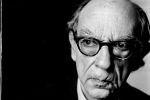
Isaiah Berlin—renowned liberal theorist, historian of ideas, Oxford don, cultural gadfly—was one of the great raconteurs of his generation. According to Robert Darnton, a professor of history at Harvard University, Berlin holding forth resembled “a trapeze artist, soaring through every imaginable subject, spinning, flipping, hanging by his heels.” But Berlin, who died in 1997, worried about his reputation for rhetorical brilliance. Was he merely a clever talker, a frivolous wit? His letters, many of them collected in Enlightening: Letters 1946-1960, published by Chatto & Windus, an imprint of Random House, in Britain in July (and appearing in America in December), reveal a man at times consumed by self-doubt: “I generally think that everything I do is superficial, worthless, glaringly shallow, and could not take in an idiot child,” Berlin wrote to his friend Arthur Schlesinger Jr. in 1952. Berlin was a punctilious and prolific correspondent. Like the first volume of his letters, Flourishing: Letters 1928-1946, published in 2004, Enlightening is a hefty tome—845 pages including the index. “I romanticize every place I come to,” Berlin wrote in 1949. “I find: Moscow, Oxford, Ditchley, Harvard, Washington: Each is a kind of legendary world framed within its own conventions in which the characters, suffused with unnatural brightness, perform with terrific responsiveness.” His many correspondents included the U.S. Supreme Court Justice Felix Frankfurter; Katharine and Philip Graham, publishers of The Washington Post; the diplomat George Kennan; the Zionist leader Chaim Weizmann; and the literary critic Edmund Wilson.
more from Evan R. Goldstein at The Chronicle Review here.
Old Berliners in the media complained that twenty years ago even the Wetter was better. In 1989, the stars apparently shone down on revelers dancing on the Brandenburger Tor as they tore the wall to pieces. And the next day, when the East Berliners chugged onto the Kurfürstendamm—then the main drag in West Berlin—in their gas-guzzling Trabbies, the sky was blue. Of course, when I flip through photos from the famous day, the newly reunited Berlin of twenty years ago looks as grey as grey can be. Helmut Kohl (the then Chancellor) and Willy Brandt (the Social Democratic Party hero who partially reconciled East and West through his Ostpolitik) stood on a balcony above the Schöneberger Rathaus, in the midst of mist and rain, in front of thousands of people. Yesterday, the sky was perhaps even more unrelenting. Rain fell on a hundred thousand people as they elbowed each other for a view of the big screens that relayed images of the Tor (next to which a puffy Bon Jovi bawled out something about freedom). Although the ceremony seemed designed to rev Germans up, all around me I could hear a burble of other languages. While a kitschy German boy band performed a song about freedom, Spanish students enthusiastically noted how German the whole thing seemed. Americans ordered pizzas to go at a stand nearby; clumps of French tourists debated where to party after the ceremony.
more from Charles McPhedran at n+1 here.
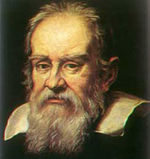
Four hundred years ago, in 1609, Galileo made the first observations with the telescope. The discoveries come out, primary the one that made Galileo promoting the Copernican theory of the Earth’s rotation around the Sun and then to replacing the doctrine concerning the position and the role of the Earth in the space, have been revolutionary non only in terms of scientific development but also in terms of social, technological and economic development, although the strong cultural and religious opposition. Galileo, named as “heretic” by the Catholic Church, was obliged to abjure. Scientific innovation and its dissemination have always played a determinant role in the cultural development of society: but, although the knowledge development is a process that could not be stopped, we can not say the same for what concerns its spread, or better, its accessibility, that is one the main means, if not “the mean”, of democracy. Nevertheless, thanks to the introduction of new technologies and then, thanks to the scientific evolution itself, the transfer and the spread of knowledge have been characterized by an ever greater acceleration. “To know” means “to be able to make a choice”: the word “heresy” originates from Greek and it means “choice”. Then, originally, “heretic” was the person who was able to consider the different options before choosing one. In 2009, European year of Creativity and Innovation, and in our society, defined as the “knowledge society”, at a distance of four hundred years from Galileo’s “heresy”, there is any hope to be “authentically heretic”?
more from Emanuela Scridel at Reset here.
I’ve joined them in my mind somehow, these two, yet Wallace tilted against Updike in the pages of The New York Observer some years ago (and I tilted with him, writing a parallel piece that claimed that the Master was too prolix, too ready to come forward into print with whatever his pen produced). They represented different, in some ways opposing worlds. Wallace was, in a core part of his being, an unassimilated subversive, and what he subverted, over and over, in his exacerbated scenarios, his outlaw fugues, was the vast entrenched order, the what is that Updike chronicled with calm Flemish exactitude. Updike celebrated an assumption about reality that Wallace was in some defining way at odds with. To call it a father/son dynamic would be simplistic, of course, but there are certain elements of that conventional agon, including the son’s will not just to repudiate but to outdo the father. Considering the divergence in their aesthetics—Wallace’s complete lack of interest in the realism that takes surfaces as the outer manifestation of interior forces—the field of engagement would have to be the how as opposed to the what. Which is to say the how of language, style: the sentence. Is it farfetched to think of Wallace’s prose pitching itself in sustained defiance against the philosophical ground of Updike’s, its lightly ironized acceptance of things as they are? The bemused Updike smile endorses a reality, an outlook, that Wallace could not fit himself to, a failure that was bound up, I suspect, with his deepest suffering. Fathers and sons, but also order and chaos.
more from Sven Birkerts at AGNI here.
It is commonplace, 20 years after the fall of the Berlin Wall, to hear the events of that time described as miraculous, a dream come true, something one couldn’t have imagined even a couple of months beforehand. Free elections in Poland with Lech Walesa as president: who would have thought it possible? But an even greater miracle took place only a couple of years later: free democratic elections returned the ex-Communists to power, Walesa was marginalised and much less popular than General Jaruzelski himself. This reversal is usually explained in terms of the ‘immature’ expectations of the people, who simply didn’t have a realistic image of capitalism: they wanted to have their cake and eat it, they wanted capitalist-democratic freedom and material abundance without having to adapt to life in a ‘risk society’ – i.e. without losing the security and stability (more or less) guaranteed by the Communist regimes. When the sublime mist of the ‘velvet revolution’ had been dispelled by the new democratic-capitalist reality, people reacted in one of three ways: with nostalgia for the ‘good old days’ of Communism; by embracing right-wing nationalist populism; with belated anti-Communist paranoia.
more from Slavoj Žižek at the LRB here.
Seymour M. Hersh in The New Yorker:
In the tumultuous days leading up to the Pakistan Army’s ground offensive in the tribal area of South Waziristan, which began on October 17th, the Pakistani Taliban attacked what should have been some of the country’s best-guarded targets. In the most brazen strike, ten gunmen penetrated the Army’s main headquarters, in Rawalpindi, instigating a twenty-two-hour standoff that left twenty-three dead and the military thoroughly embarrassed. The terrorists had been dressed in Army uniforms. There were also attacks on police installations in Peshawar and Lahore, and, once the offensive began, an Army general was shot dead by gunmen on motorcycles on the streets of Islamabad, the capital. The assassins clearly had advance knowledge of the general’s route, indicating that they had contacts and allies inside the security forces.
Pakistan has been a nuclear power for two decades, and has an estimated eighty to a hundred warheads, scattered in facilities around the country. The success of the latest attacks raised an obvious question: Are the bombs safe? Asked this question the day after the Rawalpindi raid, Secretary of State Hillary Clinton said, “We have confidence in the Pakistani government and the military’s control over nuclear weapons.” Clinton—whose own visit to Pakistan, two weeks later, would be disrupted by more terrorist bombs—added that, despite the attacks by the Taliban, “we see no evidence that they are going to take over the state.”
More here. (Note: Thanks to Zeba Hyder.)
From Science:
For the first time, scientists have compared a vast network of human genes responsible for speech and language with an analogous network in chimpanzees. The findings help shed light on how we moved beyond hoots and grunts to develop vast vocabularies, syntax, and grammar.
The centerpiece of the study is FOXP2, a so-called transcription factor that turns other genes on and off. The gene rose to fame in 2001 when researchers showed that a mutant form of it caused an inherited speech and language problem in three generations of the “KE family” in England. The following year, researchers showed that normal FOXP2 differed by only two amino acids–the building blocks of proteins–between humans and chimpanzees. Analyzing more ancestral species, they further showed that the gene was highly conserved all the way up to chimps, suggesting that it played a prominent role in our unique ability to communicate complex thoughts.
More here.
Frank Stella is an old (20th century) master of abstract art, Martha Russo is a new (21st century) master of abstract art, but they both have something in common: the belief that an abstract work of art has no limits — that its forms spill and spread into the environment, suggesting its inner abstract character. The idea of “boundless abstraction” first surfaced in the water lily murals of Monet — for Greenberg they were abstract in all but name, and set the precedent for Pollock’s all-over mural paintings — and was extended by Kandinsky, however hesitantly, in his early works, particularly the famous First Abstract Watercolor (1911, scholars now say 1912 or 1913). There the eccentric continuum of petite color and line perceptions moves beyond the technical boundaries of the work, suggesting an infinite flux of uncontainable visual sensations. Pollock’s implicitly boundless mural abstractions are the climactic statement of “abstraction as total environment,” correlate with the idea of the “environment as totally abstract.” Abstraction came to dominate thinking about the environment as well as art, and the triumph of abstraction signaled by such opposed movements as Abstract Expressionism and Minimalism confirmed that it had become a generalized mode of perception and cognition: only when art and the environment were perceived and understood in abstract terms was their presence convincing.
more from Donald Kuspit at artnet here.