Sea slug surprise: It’s half-plant, half-animal

From MSNBC:

Slug A green sea slug appears to be part animal, part plant. It's the first critter discovered to produce the plant pigment chlorophyll. The sneaky slugs seem to have stolen the genes that enable this skill from algae that they've eaten. With their contraband genes, the slugs can carry out photosynthesis — the process plants use to convert sunlight into energy. “They can make their energy-containing molecules without having to eat anything,” said Sidney Pierce, a biologist at the University of South Florida in Tampa.

Pierce has been studying the unique creatures, officially called Elysia chlorotica, for about 20 years. He presented his most recent findings Jan. 7 at the annual meeting of the Society for Integrative and Comparative Biology in Seattle. The finding was first reported by Science News. “This is the first time that multicellar animals have been able to produce chlorophyll,” Pierce told LiveScience. The sea slugs live in salt marshes in New England and Canada. In addition to burglarizing the genes needed to make the green pigment chlorophyll, the slugs also steal tiny cell parts called chloroplasts, which they use to conduct photosynthesis. The chloroplasts use the chlorophyl to convert sunlight into energy, just as plants do, eliminating the need to eat food to gain energy.

More here.

Tuesday, January 12, 2010

Who Are These Economists, Anyway?

GalbEcon James K. Galbraith in Thought and Action:

Krugman contends that Tweedledum and Tweedledee [new classical economists and the New Keynesians] “mistook beauty for truth.” The beauty in question was the “vision of capitalism as a perfect or nearly perfect system.” To be sure, the accusation that a scientist—let alone an entire science—was seduced by beauty over truth is fairly damaging. But it ’s worth asking, what exactly was beautiful about this idea?

Krugman doesn’t quite say. He does note that the mathematics used to describe the alleged perfection was “impressive-looking”—”gussied up” as he says, “with fancy equations.” It ’s a telling choice of words. “Impressive-looking”? “Gussied up”? These are not terms normally used to describe the Venus de Milo.

To be sure, mathematics is beautiful, or can be. I’m especially fond of the com- plex geometries generated by simple non-linear systems. The clumsy mathematics of the modern mainstream economics journal article is not like this. It is more like a tedious high school problem set. The purpose, one suspects, is to intimidate and not to clarify. And with reason: an idea that would come across as simple-minded in English can be made “impressive-looking” with a sufficient string of Greek symbols. Particularly if the idea—that “capitalism is a perfect or nearly-perfect system” would not withstand the laugh test once stated plainly.

As it happens, the same John Maynard Keynes of whom Krugman speaks highly in his essay, had his own view of the triumph of the economists’ vision— specifically that of the first great apostle of drawing policy conclusions by deduc-tive reasoning from first principles, that of David Ricardo over Thomas Robert Malthus. Keynes wrote:

It must have been due to a complex of suitabilities in the doctrine to the envi- ronment into which it was projected. That it reached conclusions quite different from what the ordinar y uninstructed person would expect added, I suppose, to its intellectual prestige. That its teaching, translated into practice, was austere and often unpalatable, lent it virtue. That it was adapted to carr y a vast and logical superstructure, gave it beauty. That it could explain much social injustice and apparent cruelty as an inevitable incident in the scheme of progress, and the attemp to change such things as likely on the whole to do more harm than good, com- mended it to authority. That it afforded a measure of justification to the free activ- ities of the individual capitalist, attracted to it the support of the dominant social force behind authority.

Note that Keynes does not neglect the element of beauty. But he embeds this point in a much richer tapestr y of opportunism, venality, and apologetics.

[H/t: Mark Blyth]

The Americanization of Mental Illness

Rorsch Ethan Watters article from a few days ago in the NYT has gotten a fair bit of coverage:

AMERICANS, particularly if they are of a certain leftward-leaning, college-educated type, worry about our country’s blunders into other cultures. In some circles, it is easy to make friends with a rousing rant about the McDonald’s near Tiananmen Square, the Nike factory in Malaysia or the latest blowback from our political or military interventions abroad. For all our self-recrimination, however, we may have yet to face one of the most remarkable effects of American-led globalization. We have for many years been busily engaged in a grand project of Americanizing the world’s understanding of mental health and illness. We may indeed be far along in homogenizing the way the world goes mad.

Some thoughts on the piece from Greg Downey in Neuroanthropology:

Certainly, Western ideas about mental illness are directly affecting expectations of psychic distress around the world; see, for example, Vaughan at Mind Hacks discussing Did Antidepressants Depress Japan?. Here Vaughan highlights another force, one touched on by Watters but not explored; pure mercenary impulses, as drug companies try to persuade new markets that the individuals ‘need’ their products, suffering as they do from disorders of which they were previously unaware. Here, the idea that it’s just the ‘beliefs’ about illness held by therapists and authorities obscures the naked greed that goes into public relations campaigns designed to produced disorder.

My argument is not so much that Watters is wrong, as that culture is not just in the ideas people have about disease; these changes in mental illness are also provoked by the social, technological, and material world, for example, how the export of Western-style education affects childhood elsewhere (and thus illuminates ‘disorders’).

Eric Rohmer, 1920-2010

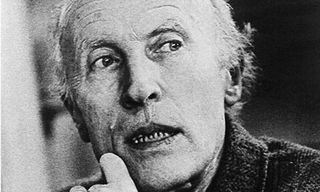
Eric-Rohmer-001 Tom Milne in the Guardian:

In Arthur Penn's intelligently unconventional private eye thriller Night Moves (1975), Gene Hackman's hero – who finds the mystery he faces as unfathomable as his personal relationships – is asked by his wife whether he wants to go to an Eric Rohmer movie. “I don't think so,” he says. “I saw a Rohmer film once. It was kind of like watching paint dry.”

Behind that exchange lies a jab at ­Hollywood's mistrust of any film-maker, especially a French one, who neglects plot and action in favour of cerebral exploration, metaphysical conceit and moral nuance. The Dream Factory, after all, had proved through trial and error that cinema is cinema, literature is ­literature, and the twain shall meet only provided the images rule, not the words.

Of the major American film-makers, perhaps only Joseph Mankiewicz allowed his scripts, fuelled by his own sparkling dialogue, to wag the tail of his movies. While acknowledging the ­brilliance, Hollywood punditry never failed to complain that Mankiewicz characters simply talked too much.

Rohmer, who has died aged 89, pushed even further into this disputed territory. The oldest of the group of critics associated with the film review Cahiers du Cinéma, who launched the French new wave in the late 1950s, Rohmer had (writing initially under his real name of Maurice Schérer) established impeccable credentials for a future film-maker. Among the objects of his admiration were Dashiell Hammett, Alfred Hitchcock (about whom he wrote a monograph with Claude Chabrol), Howard Hawks, and above all FW Murnau, the great visual stylist of the German expressionist era (on whose version of Faust he published a doctoral thesis). As a film-maker, however, he turned instead to such literary-philosophical luminaries as Blaise Pascal, Denis Diderot, Choderlos de Laclos and Jean-Jacques Rousseau.

Can Science Explain Religion?

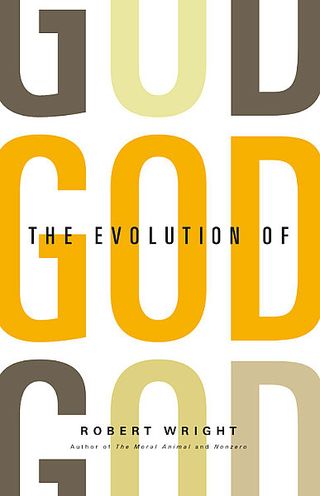
Evogod H. Allen Orr reviews Robert Wright's The Evolution of God in the NYRB:

Several themes emerge from Wright's analysis of religion that are reminiscent of those that characterize the evolution of life. For one thing, the history of religion has, Wright says, a discernible direction. Just as organisms have generally grown more complex over the last four billion years, so man's views of God have generally grown more abstract and—most important for Wright—more attractive morally over the last several thousand years. Also, evolutionary change in religion, like that in species, is typically gradual: “you don't see whole new religions coming out of nowhere,” presumably because religions reflect preexisting social conditions.

The Evolution of God is not, however, concerned solely with the past. Wright also emphasizes that an appreciation of the power of non-zero-sum dynamics might help us resolve certain contemporary political tensions, including those between the Islamic world and the West, groups that potentially have much to gain from each other.

Describing Wright's approach to religious history as materialist may seem to imply that he is uncomfortable with loftier visions of religion—the view, for example, that there might actually be something divine that underlies the physical universe. This is not the case. Wright is sympathetic to religion and to at least some of its larger claims. Indeed he purports to provide an account not only of the evolution of man's view of God but, at least possibly, of God himself.

Wright's book has several strengths. Perhaps the most conspicuous is the prose. Although the book is long, it doesn't feel it. Wright is a skillful writer and he knows how to keep a story moving. His discussion is also surprisingly erudite. The Evolution of God is full of footnotes and the literature cited in them is consistently the literature one would hope for: heavy on scholarly studies and light on popular treatments. In a climate in which discussions of religion, and especially of the intersection of religion and science, often seem superficial or rushed, Wright is to be commended for his close study. He is also to be commended for his refreshingly dispassionate tone. All this combines to provide an absorbing (and rant-free) tour of Western religion.

But Wright's book cannot be judged only, or even primarily, by whether it presents a capable history of religion. Instead it must be judged by whether his new theory of religion succeeds. And here, as we'll see, The Evolution of God is less satisfying.

1969

Art-Workers

The year 1969, subject of a current exhibition spanning the entire second floor at P.S.1 Contemporary Art Center, provides a compelling starting point for examining artistic production and contemplation, then versus now. With every work dating from the year in question, minus a few select contemporary works by younger, emerging artists, the show serves as a kind of thermometer for the vast range of avant-garde thought and practice emerging in the late 1960s and early 1970s. Nearly every work comes straight from the permanent collection of the Museum of Modern Art, of which P.S.1 is an affiliate, revealing patterns of acquisition that mark an institution both ahead of its time and flawed. The show was organized by Neville Wakefield, P.S.1 Senior Curatorial Advisor; Michelle Elligott, MoMA Archivist; and Eva Respini, MoMA Associate Curator of Photography 1969 counters the surface, buoyant stance on artistic practice exemplified in the Whitney’s 2008 ‘Summer of Love: Art of the Psychedelic Era.’ The tone of 1969 is of a darker, more restrained hue, reflecting not just the instability and turmoil of that year, but the marked change in what was considered avant-garde—absence of color, de-materialization of the art object, an ever-closer merging of art and life. Throughout the show we are taken on a journey through the predominant narrative of 1960s art history, as told by the institution that has dictated modern art as we know it. As a result, it is unsurprising that female and black artists are under-represented—particularly absent are Eva Hesse, Adrian Piper, and the late Nancy Spero.

more from Abbe Schriber at artcritical here.

the real words from Senegal to Tanzania

Script__1262971863_2274

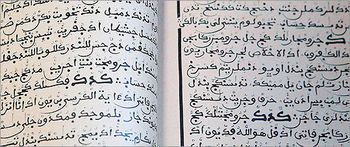
One day while he was living near Seattle, the Senegal-born linguistics professor Fallou Ngom forgot to close a window before a rainstorm passed through, and the next morning discovered the wind had blown some of his papers to the floor. On one of them, a sheet several years old, his late father had recorded a debt. Ngom’s father was considered illiterate because he couldn’t read and write in the country’s official language, French. But like many Senegalese had for centuries, he wrote daily information in his native tongue using a modified form of Arabic script known as Ajami. Ngom was struck by the irony: Here was his “illiterate” father communicating with him years after his death, in writing. Ngom realized that this was more than just a touching personal moment. It also represented an immense opportunity. Ajami script had been widely used across Africa for day-to-day writing in a dozen languages, and Ngom knew those writings had been largely overlooked in the official story of the continent – in part because so few historians could read them. How many other documents like this existed across the continent? How many had simply been missed, or ignored?

more from Kenneth J. Cooper at the Boston Globe here.

Tuesday Poem

After Making Love we Hear Footsteps

For I can snore like a bullhorn
or play loud music
or sit up talking with any reasonably sober Irishman
and Fergus will only sink deeper
into his dreamless sleep, which goes by all in one flash,
but let there be that heavy breathing
or a stifled come-cry anywhere in the house
and he will wrench himself awake
and make for it on the run – as now, we lie together,
after making love, quiet, touching along the length of our bodies,
familiar touch of the long-married

,
and he appears – in his baseball pajamas, it happens,
the neck opening so small
he has to screw them on, which one day may make him wonder
about the mental capacity of baseball players –
and flops down between us and hugs us and snuggles himself to sleep,
his face gleaming with satisfaction at being this very child.

In the half darkness we look at each other
and smile
and touch arms across his little, startling muscled body –
this one whom habit of memory propels to the ground of his making,
sleeper only the mortal sounds can sing awake,
this blessing love gives again into our arms.

by Galway Kinnell

from The Seashell Anthology;
Park Lane Press, 1996

Why Light Makes Migraines Worse

From Science:

Cell Migraine sufferers often retreat to a dark room or pull the shades down. Any light just makes the searing pain worse. Now, scientists think they know why–thanks to some help from blind volunteers. Just why bright light exacerbates migraines is unclear, because brain regions that govern vision don't overlap with those that transmit pain. To narrow down which vision cells might be behind this, anesthesiologist Rami Burstein, who works at Beth Israel Deaconess Medical Center and Harvard Medical School in Boston, and colleagues tracked down migraine sufferers who also happened to be blind. Of the 20 blind individuals who volunteered for the study, six couldn't perceive light at all; they lacked eyes or had a severely damaged optic nerve, which connects the eye to the brain. The other 14, who suffered from genetic and other conditions that lead to blindness, couldn't see, but they could sense certain shades of light.

Not surprisingly, the six people who had no vision at all didn't experience pain from light when they had a migraine. But the other 14 did. This was an interesting clue, because these individuals had faulty rods and cones, cells in the retina that do most of the work of light detection. They did, however, have other retinal cells that functioned fine, particularly those with a type of receptor called melanopsin. Melanopsin doesn't help people see shapes, but it does react to light–specifically, blue light. At this point, says Burstein, “we needed to follow the melanopsin,” to see whether the cells expressing it might link up with cells that transmit pain. And indeed, in the rat brain, axons from the light-sensitive melanopsin cells hooked up to specific nerve cells in the thalamus that play a role in pain sensation, the team reports online this week in Nature Neuroscience.

More here.

Deciphering the Chatter of Monkeys

Nicholas Wade in The New York Times:

ArticleLarge Walking through the Tai forest of Ivory Coast, Klaus Zuberbühler could hear the calls of the Diana monkeys, but the babble held no meaning for him. That was in 1990. Today, after nearly 20 years of studying animal communication, he can translate the forest’s sounds. This call means a Diana monkey has seen a leopard. That one means it has sighted another predator, the crowned eagle. “In our experience time and again, it’s a humbling experience to realize there is so much more information being passed in ways which hadn’t been noticed before,” said Dr. Zuberbühler, a psychologist at the University of St. Andrews in Scotland.

Do apes and monkeys have a secret language that has not yet been decrypted? And if so, will it resolve the mystery of how the human faculty for language evolved? Biologists have approached the issue in two ways, by trying to teach human language to chimpanzees and other species, and by listening to animals in the wild. The first approach has been propelled by people’s intense desire — perhaps reinforced by childhood exposure to the loquacious animals in cartoons — to communicate with other species. Scientists have invested enormous effort in teaching chimpanzees language, whether in the form of speech or signs. A New York Times reporter who understands sign language, Boyce Rensberger, was able in 1974 to conduct what may be the first newspaper interview with another species when he conversed with Lucy, a signing chimp. She invited him up her tree, a proposal he declined, said Mr. Rensberger, who is now at M.I.T.

More here.

I Built an African Army. Here’s what it will take to build Afghanistan’s…

Sean McFate in Foreign Policy:

ScreenHunter_02 Jan. 12 09.44 In May 2004, I was hired for an unusual job: The U.S. State Department contracted DynCorp International, a private military company, to build Liberia's army. I was tapped as an architect of this new force. Previously I had worked for both the U.S. military and Amnesty International. I was a rare bird — an ex-paratrooper and human rights defender — and thus a good fit for this unprecedented task.

When I arrived in Liberia in 2004, the country's army was, at best, a mess. After decades of civil war, soldiers' hands were as bloodied as any rebels'. The troops were undisciplined, unpaid, and undertrained. They were a motley crew that protected no one in a country where pretty much everyone was vulnerable to violence. And it was our job to turn them into a professional military.

Today, just five years later, Liberia's soldiers are among the best in the region. They have been vetted, trained, paid, and readied for action. The difference was the impact of that little-known U.S. initiative — the first of its kind — that literally rebuilt the Liberian army from scratch. Our goal was for the Liberian army to fill the role of U.N. peacekeepers as the latter were slowly phased out, and it worked astonishingly well.

Now that model might be of use again. President Barack Obama's strategy for Afghanistan is predicated on creating Afghan security forces to replace coalition soldiers.

More here. [Thanks to Feisal H. Naqvi.]

The Unbelievably Bad Metaphors in Esquire’s Profile of Jay-Z

John Swansburg in Slate:

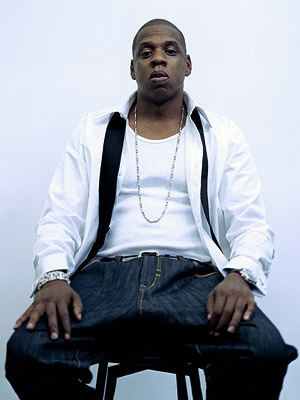
Jayz3 1. “Jay-Z walks into a gracious chamber at Manhattan's Plaza Hotel. It's the same room where, thousands of years ago, crown moldings were born.”

2. “He sits down in his hard-backed chair and the reporters collect around him in a buttery little square. But Jay-Z doesn't really sit. What he actually does is slalom down in his chair, real low like it's a water slide. Seventy-three inches of all-black everything, laid out like a ramp.”

3. “Jay-Z is a half-dangerous rapper who grew up in the gat-happy projects of the Bedford-Stuyvesant section of Brooklyn. He sold crack on feral corners and shot his brother for stealing his ring. Badass, for real.”

4. “Look up, left, and listen. Jay-Z's vamping scowl is paraded everywhere, his presence vibrates from sound systems and is woven into the fabrics.”

5. “Short and bald with a body type that plugs his surname, Steve Stoute is the underfamous but ubiquitous guy in all the celebrity pictures.”

6. “He's black and also liquid-shiny like the mimetic shape-shifting bad guy in Terminator 2. He's real deal-eyed, and what first comes off as arrogance you realize later is sentience, with an extra side of arrogance. He's wily as hell, plus hyper-protective and defensive of his products, both intellectual and carbon-based.”

More here.

What are the past, present and future?

Alexander Waugh in the Wall Street Journal:

PT-AN459_books__DV_20100107191822 Sean Carroll is a formidable theoretical physicist from the California Institute of Technology, and “From Eternity to Here” is his first work of popular science. He outlines, in the simplest possible terms, all that is known about the arrow of time. That is to say, all that we think we know about the arrow of time, for Mr. Carroll's greatest virtue, aside from the clarity of his prose—an absolute “must” when dealing with matters as complex and counterintuitive as quantum gravity, black holes, tachyons and dark energy—is his honesty in delineating precisely what is known, what is unknown, what is subjective, what is hypothetical and what is purely theoretical.

Many popular-science writers try, to their discredit, to blur these lines, usually out of simple fear of revealing the depths of man's (and thereby their own) ignorance. But Mr. Carroll is not afraid to leave his readers with a general impression that practically nothing is known or properly understood about time, space, our universe or its place relative to anything outside of it. This is one of his book's greatest strengths, for only by admitting to our own lack of understanding can we find the pluck to ask the simplest questions. “Why does the arrow of time flow from the past toward the future—why not the other way round?” The question seems trivial, even a trifle babyish, but Mr. Carroll keeps on asking it and, in his brave attempt to provide a full and coherent answer, takes his readers on a fascinating and refreshing trek through every known back alley and cul de sac of quantum mechanics, relativity, cosmology and theoretical physics.

More here.

Monday, January 11, 2010

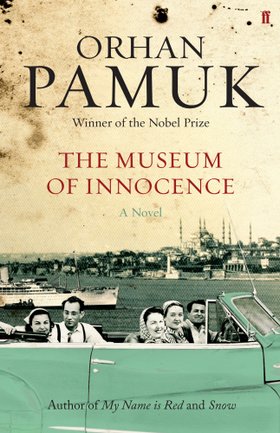
Those Obscure Objects of Desire: The Political Economy of Civilization in Orhan Pamuk’s The Museum of Innocence

by Ahmad Saidullah

Book_museum_of_innocence_jpg_280x450_q85 The Museum of Innocence, Orhan Pamuk’s first novel since he won the 2006 Nobel Prize, is set in the period following the mid-seventies when the author was buying books in Istanbul “like a frantic person who was desperate to understand why Turkey was so poor.” A student of Turkish history and the politics of civilization, Pamuk noted in an essay on his library in The New York Review of Books that “in the 1970s, the stars of every bookstore were the large historical tomes that sought out the root causes of Turkey’s poverty and ‘backwardness’ and its social and political upheavals.”

The Museum of Innocence frames this history around the star-crossed fates of characters from the Turkish elite who live in Nişantaşı, a wealthy neighborhood in the Pera part of Istanbul where Pamuk grew up, and their poorer counterparts in the city. The central plot of Museum, a six-page story about desire and difference, appeared in The New Yorker. While shopping for Sibel, his rich socialite fiancée, Kemal Basacı, the son of one of Istanbul’s wealthiest industrialists, falls for Füsun Keskin, the shopgirl at the boutique, who sells him a fake designer handbag.

Füsun, whose name means “charm,” “enchantment,” “magic,” and “spell” in Turkish, happens to be Kemal’s poor cousin. The Basacıs shun her family members not just for their poverty but for their scandalous and somewhat déclassé decision in allowing Füsun to compete in a beauty pageant. Using the return of the knock-off “Jenny Colon” handbag (the real Jenny Colon was a nineteenth-century actress and Nerval’s muse) as a pretext for meeting again, Kemal and Füsun, a sexually precocious beauty modelled on Lolita, start a clandestine affair in an apartment in Merhamet. Kemal neglects the family business as his passion grows. Frustrated with his obsession and worried about the public odium that will follow the scandal, Sibel breaks off the engagement. Füsun disappears and Kemal on his visits to the Keskins starts collecting tokens of the affair that become his Museum of Innocence.

In the drawn-out second part of the book, Kemal resumes contact with Füsun when she returns to Istanbul with a husband, Feridun, an aspiring screenwriter. Kemal and Feridun pretend to help Füsun become a Yeşilçam film star but secretly do all they can to thwart her. Eventually, Kemal founds Lemon Films and produces a film adaptation of Turkish novelist Halit Ziya Uşaklıgil’s Broken Love (Kırık Hayatlar), a once-censored novel about unrequited love, in which Füsun stars. Her film career is shortlived.

The book ends with chapters on collectors and museums but not before Orhan Pamuk makes his second deus ex machina appearance in the book. He addresses Kemal in a ponderous metafictional apostrophe: “in the book you are telling me your own story and saying ‘I,’ Kemal Bey. I am speaking in your voice. Right now I am trying very hard to put myself in your place, to be you.”

Although Museum is written in an accessible middle style with balanced sentences that are almost flat and static, with few of the syntactical hijinks of some of Pamuk’s other novels, it is one of his more troubling books. He has claimed that this novel is about love and “love,” says a character in the book, “is Leyla and Macnun,” a reference to the Azeri poet Fużūlī’s classic ghazal about ill-starred lovers. Much of Museum’s plotline, though, moves between banal dialogue (“I am a penniless shopgirl, while you are the son of a wealthy factory owner”), platitudes (“Happiness means being close to the one you love, that’s all”) and coy, almost adolescent, descriptions of sex suited to the Yeşilçam romantic film melodramas that Pamuk adored in 1970s and ’80s Istanbul. Ever the bibliophile, Pamuk does not fail to include references to Nabokov’s Lolita, Flaubert’s Madame Bovary, Nerval’s Aurélia and Uşaklıgil who had modelled his style on French romanticism. He also refers to Flaubert’s affair with Louise Colet and the use of love tokens in Madame Bovary.

Read more »

Sunday, January 10, 2010

Three Quarks for Muster Murray!

GellMannTSNOver at The Science Network:

In celebration of the twenty-fifth anniversary of the Santa Fe Institute and Murray Gell-Mann's eightieth birthday, TSN visited Murray at home to discuss life, the universe and everything.

Murray named the quark after the sound made by ducks. He took the spelling from a line in James Joyce's Finnegans Wake:

Three quarks for Muster Mark!
Sure he has not got much of a bark
And sure any he has it's all beside the mark.

The Negative Side Of Positive Thinking

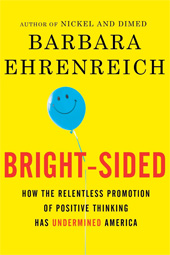
123109bookreview_170 Andrew Sullivan points to Barbara Ehrenreich's new book Bright-Sided: How the Relentless Promotion of Positive Thinking Has Undermined America. Michael Fumento reviews the book in Forbes:

“Anybody who ever built an empire, or changed the world, sat where you are now,” says George Clooney's “termination engineer” to just-fired employees in the comedy Up in the Air. Satire? Hardly. “We Got Fired! … And It's the Best Thing that Ever Happened to Us!” declares one book title. There's a cottage industry built around convincing canned workers that they just won the lottery.

A whole chapter is devoted to it in Barbara Ehrenreich's brilliant exposé of our smiley-faced culture in Bright-Sided: How the Relentless Promotion of Positive Thinking Has Undermined America. It's “an ideological force in American culture,” she says, “that encourages us to deny reality, submit cheerfully to misfortune, and blame only ourselves for our fate.”

Ehrenreich traces the roots of our nation's pathological positivity, ironically, to the dreariness of New World Calvinism and its fire-and-brimstone and pre-destination teachings. Society reacted to these by shooting off in the opposite direction.

First, many sought to take their health destiny into their own hands via Mary Baker Eddy, Christian Science and those ubiquitous reading rooms. Having done it with health, they tried it with wealth–the “Think and Grow Rich” movement that enthralls us. Beginning with Napoleon Hill's 1937 classic of the same name, it sometimes means just that: Envisioning something brings it to you.

In a subtler form it says that a positive outlook leads to positive circumstances. There's nothing that can't be solved with a bright smile and a grand effort to “Cheer up!” OK, so your wife left you for the young stud who also took your job, and the bank just foreclosed on your house. Just sing and whistle along with Monty Python: “Always look on the bright side of life!” After all, “There is no kind of problem or obstacle for which positive thinking or a positive attitude has not been proposed as a cure,” Ehrenreich observes. “Positive thoughts are even solicited for others, much like prayers.”

Ehrenreich notes 60% of female breast cancer patients attributed their continued survival to a “positive attitude,” yet studies repeatedly show no correlation between developing or surviving cancer and mental attitude.

Here's an interview with Ehrenreich over at KPBS, San Diego.

Politics and the Imagination

Guess new bookOver a Princeton University Press, from the first chapter of Raymond Geusss's new book here. From the book description:

In politics, utopians do not have a monopoly on imagination. Even the most conservative defenses of the status quo, Raymond Geuss argues, require imaginative acts of some kind. In this collection of recent essays, including his most overtly political writing yet, Geuss explores the role of imagination in politics, particularly how imaginative constructs interact with political reality. He uses decisions about the war in Iraq to explore the peculiar ways in which politicians can be deluded and citizens can misunderstand their leaders. He also examines critically what he sees as one of the most serious delusions of western political thinking–the idea that a human society is always best conceived as a closed system obeying fixed rules. And, in essays on Don Quixote, museums, Celan's poetry, Heidegger's brother Fritz, Richard Rorty, and bourgeois philosophy, Geuss reflects on how cultural artifacts can lead us to embrace or reject conventional assumptions about the world. While paying particular attention to the relative political roles played by rule-following, utilitarian calculations of interest, and aspirations to lead a collective life of a certain kind, Geuss discusses a wide range of related issues, including the distance critics need from their political systems, the extent to which history can enlighten politics, and the possibility of utopian thinking in a world in which action retains its urgency.

From the first chapter:

Traditional philosophy was utterly fixated on the search for a single fundamental concept the analysis of which would allow one to decipher a whole area of human experience, and for a very wide range of human activities philosophers thought they had discovered an Archimedean point in the concept of a “belief” or an “opinion.” I would like to suggest that this traditional approach might in some ways stand in the way of a proper understanding of politics. In contrast to the traditional views, I would like to propose two theses. First, if one thinks it necessary to isolate a single political concept that was purportedly more central than others, one would be well advised to take as basic not “belief” or “opinion” but “action” or the “context of action.” Political judgments are not made individually one by one, but always stand as parts of larger sets of beliefs and judgments, and a political judgment is always embedded in a context of action. A political judgment is itself specifically directed at focusing, guiding and orienting future action; expressing, or even entertaining, such a judgment is performing an action. Second, “context of action” would not be a concept that could serve as an essential definition of politics in the traditional sense in which philosophers have sought such a definition. At best, “context of action” is an open concept with indeterminate contours, and boundaries that can expand and contract depending on a variety of other factors.

The lost script

From The Boston Globe:

Script__1262971863_2274 One day while he was living near Seattle, the Senegal-born linguistics professor Fallou Ngom forgot to close a window before a rainstorm passed through, and the next morning discovered the wind had blown some of his papers to the floor. On one of them, a sheet several years old, his late father had recorded a debt. Ngom’s father was considered illiterate because he couldn’t read and write in the country’s official language, French. But like many Senegalese had for centuries, he wrote daily information in his native tongue using a modified form of Arabic script known as Ajami. Ngom was struck by the irony: Here was his “illiterate” father communicating with him years after his death, in writing. Ngom realized that this was more than just a touching personal moment. It also represented an immense opportunity. Ajami script had been widely used across Africa for day-to-day writing in a dozen languages, and Ngom knew those writings had been largely overlooked in the official story of the continent – in part because so few historians could read them. How many other documents like this existed across the continent? How many had simply been missed, or ignored?

Within a year, Ngom shifted his research from French linguistics, his specialty at Western Washington University, to the handwritten script of his father. Today Ngom is director of the African Languages Program at Boston University, and is training the first generation of American scholars capable of reading Ajami. What Ngom hopes is nothing less than to lay the groundwork for a reinterpretation of much of African history, using this widespread but little understood writing system to unearth new information about the daily life of Africans, the spread of Islam, the continent’s literary traditions, the Atlantic slave trade, and who knows what else.

Could one writing system have that much influence?

More here.