Let A Hundred Theories Bloom

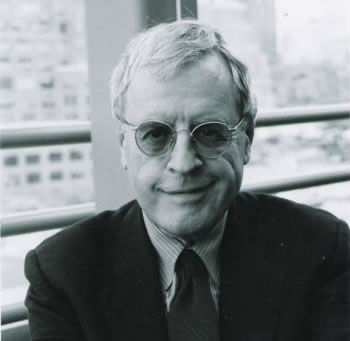
Ve798c_thumb3 George Akerlof and Joseph E. Stiglitz in Project Syndicate:

The economic and financial crisis has been a telling moment for the economics profession, for it has put many long-standing ideas to the test. If science is defined by its ability to forecast the future, the failure of much of the economics profession to see the crisis coming should be a cause of great concern.

But there is, in fact, a much greater diversity of ideas within the economics profession than is often realized. This year’s Nobel laureates in economics are two scholars whose life work explored alternative approaches. Economics has generated a wealth of ideas, many of which argue that markets are not necessarily either efficient or stable, or that the economy, and our society, is not well described by the standard models of competitive equilibrium used by a majority of economists.

Behavioral economics, for example, emphasizes that market participants often act in ways that cannot easily be reconciled with rationality. Similarly, modern information economics shows that even if markets are competitive, they are almost never efficient when information is imperfect or asymmetric (some people know something that others do not, as in the recent financial debacle) – that is, always .

A long line of research has shown that even using the models of the so-called “rational expectations” school of economics, markets might not behave stably, and that there can be price bubbles. The crisis has, indeed, provided ample evidence that investors are far from rational; but the flaws in the rational expectations line of reasoning—hidden assumptions such as that all investors have the same information—had been exposed well before the crisis.

Just as the crisis has reinvigorated thinking about the need for regulation, so it has given new impetus to the exploration of alternative strands of thought that would provide better insights into how our complex economic system functions – and perhaps also to the search for policies that might avert a recurrence of the recent calamity.

Mumbai Revisited

Prashad-150x150 One year ago, Mumbai was the target of a horrendous terrorist attack. Over at the Immanent Frame, several scholars–Veena Das, Sumit Ganguly, William R. Pinch, Vijay Prashad, Arvind Rajagopal, Anupama Rao, Tariq Thachil, and Arafaat A. Valiani–reflect on “what might constitute an appropriate response on the part of the Indian government, reflected on the terrorists’ use of spectacle (and the media’s response to it), considered India’s ongoing struggle to maintain its self-professed secular identity, and discussed the troubling socio-economic status of Muslims in India, the history and current state of Muslim-Hindu relations, and recent challenges to Mumbai’s historically cosmopolitan make-up.” Vijay Prashad:

When mass movements wither, bitterness remains with the movements’ fugitives, many of whom plot amongst each other to contrive their return. These fugitives fire bullets at each other, accusing one another of treachery, holding themselves above the reasons for the failure of their movements. Equally, they seek refuge somewhere to gather up strength so as to return again with force.

In the 1990s, Afghanistan was that refuge for fugitives from Mindanao Island to Ingushetia, from the Arabian Peninsula to the Indonesian archipelago. Those who went to Afghanistan arrived with grievances of their own, some of the body, some of the soul. The exhaustion of national liberation into the authoritarian states of the 1980s, combined with the export of Saudi Islam to undermine any hope for the resurrection of radical nationalism and gave succor to this Jihad International. Funded by Washington and Riyadh, this International grew to have a greater sense of its own destiny, believing that what it accomplished was by its own means and not by the deft maneuver of its puppeteers. Not Hekmatyar, nor Shah Massoud, nor Bin Laden, could have set the trap for the Russian Bear, and none alone would have been able to thwart the Soviet Afghantsi, the frontline troops. It took this rag-tag brigade, despite Pakistani and US support, four years to dislodge the weak government of Mohammed Najibullah after the withdrawal of the Soviet armies. But the take-over of Afghanistan in 1992 and the collapse of the USSR in 1991 produced the excessive fantasy that the Jihad International was responsible. It was a fantasy that continues to have catastrophic effects.

jedi romance

301354-149199-carth-onasi_large

In fact, it was a 15-year-old who turned me on to the game in the first place—one of my SAT students. He was funny, smart, and sensitive and lived with his family in a wealthy community on Long Island where I’d recently started to work as a tutor to keep my writing habit afloat. I taught my student how to look for patterns on the SAT test, and how to spot the usual errors people made when answering questions. He liked learning how to outsmart others. But he was a teenage boy, and didn’t always want to concentrate. He wanted to talk about his Xbox, which my live-in boyfriend had coincidentally just given me for Christmas. My student wanted to know if I had played the video game Knights of the Old Republic. It was set in a mythical version of the Star Wars universe, and would train me in the ways of the Jedi: a private universe where I could build my own light saber, even have my own Wookie sidekick, and become that enviable thing—a cross between Han Solo and Luke Skywalker—all while still remaining a girl. Or a boy. I could mold my features to look like anyone I wanted. There were instructions I could follow in case I wanted my character to look like Halle Berry. It was January and I was bored. The low sky and constant snow made the cramped city borough where I lived even more claustrophobic. But out here in the neighborhood I visited twice a week, wide windows looked out over an icy lawn and Manhasset Bay. It was doubtful that any residence I ever owned was going to have the luxury of a vast, scenic view outside the dining room window. But now there was at least the allure of becoming a Jedi to pass the winter months. My boyfriend thought we ought to give the game a try.

more from Marie Mutsuki Mockett at The Morning News here.

Madame Chiang: far more complex, awful and brilliant than we had imagined

ThumbStandard

There is a bull market these days in Generalissimo Chiang Kai-shek (1887-1975) and his wife, Soong Mei-ling (1897-2003), usually called Madame Chiang Kai-shek. When I was studying in Taiwan in the late 1950s, then-President Chiang was regarded by most of the Western students on the island — and many of the Chinese as well — as the remote, cruel man who lost China; his wife was the austere, once-glamorous Dragon Lady who had helped him lose it. Although Chiang alone, or both Chiangs, had appeared numerous times on the cover of Time magazine, those illustrious days seemed over. But now that Jay Taylor has written his comprehensive book “The Generalissimo: Chiang Kai-shek and the Struggle for Modern China,” we are able to see Chiang as a man of considerable cunning, brutality and patience who skillfully played a weak hand against the Japanese and Mao’s forces while extracting huge sums from the Americans. Similarly, in her latest biography, “The Last Empress,” Hannah Pakula presents Madame Chiang as far more complex, awful and brilliant than we had imagined.

more from Jonathan Mirsky at the NY Times here.

Dubai: A morally bankrupt dictatorship built by slave labour

Johann Hari in The Independent:

Dubai The people who really built the city can be seen in long chain-gangs by the side of the road, or toiling all day at the top of the tallest buildings in the world, in heat that Westerners are told not to stay in for more than 10 minutes. They were conned into coming, and trapped into staying.

In their home country – Bangladesh or the Philippines or India – these workers are told they can earn a fortune in Dubai if they pay a large upfront fee. When they arrive, their passports are taken from them, and they are told their wages are a tenth of the rate they were promised.

They end up working in extremely dangerous conditions for years, just to pay back their initial debt. They are ringed-off in filthy tent-cities outside Dubai, where they sleep in weeping heat, next to open sewage. They have no way to go home. And if they try to strike for better conditions, they are beaten by the police.

I met so many men in this position I stopped counting, just as the embassies were told to stop counting how many workers die in these conditions every year after they figured it topped more than 1,000 among the Indians alone.

Human Rights Watch calls this system “slavery.” Yet the Westerners who have flocked to Dubai brag that they “love” the city, because they don't have to pay any taxes, and they have domestic slaves to do all the hard work. They train themselves not to see the pain.

More here. [Thanks to Nikolai Nikola.]

The Age of Innocence by Edith Wharton

From The Guardian:

The-Age-of-Innocence-001 When Newland Archer opened the door at the back of the box, the curtain had just gone up on the garden scene. “Darn it,” he thought. “I have arrived 10 seconds unfashionably early. All New York knows you are not supposed to make your entrance until Marguerite is two bars into her aria.” Newland's annoyance dissipated when he realised that no one who was anyone in New York society had witnessed his horrendous faux pas. During the interval he turned his gaze towards his beloved, the divine May Welland, seated in the Mingott box opposite, and frowned when he saw that her cousin, the Countess Ellen Olenska, was in her party. How very awkward! What would New York think of the reintroduction of the scarlet woman into society? Yet how typical of the Mingotts to be so brazenly protective of their own! No matter! He would rise above New York's pettiness and his reputation would be unstained!

More here.

Alice Munro’s Object Lessons

From The New York Times:

ArticleLarge The Germans must have a term for it. Doppel­gedanken, perhaps: the sensation, when reading, that your own mind is giving birth to the words as they appear on the page. Such is the ego that in these rare instances you wonder, “How could the author have known what I was thinking?” Of course, what has happened isn’t this at all, though it’s no less astonishing. Rather, you’ve been drawn so deftly into another world that you’re breathing with someone else’s rhythms, seeing someone else’s visions as your own. One of the pleasures of reading Alice Munro derives from her ability to impart this sensation. It’s the sort of gift that requires enormous modesty on the part of the writer, who must shun pyrotechnics for something less flashy: an empathy so pitch-­perfect as to be nearly undetectable. But it’s most arresting in the hands of a writer who isn’t too modest — one possessed of a fearless, at times, fearsome, ambition.

From the beginning, Munro has staked her claim on rocky, rough terrain. Her first dozen books are rooted mostly in southwestern Ontario, mostly in the lives of women. Although the stories are, on the surface, bastions of domesticity — they’re full of mothers and daughters and aunts and cousins, darning and gardening, aprons and cakes — Munro flays this material with the unflinching efficiency of a hunter skinning a rabbit. More recently, in “The View From Castle Rock,” she broadened her narrative territory by venturing both into 17th-­century Scotland and beyond the boundaries of conventional fiction, mining her family history to produce an unabashed amalgam of invention and fact. Her new book, “Too Much Happiness,” represents at once a return to her habitual form and a furthering of her exploratory sensibilities. The collection’s 10 stories take on some sensational subjects. In fact, a quick tally yields all the elements of pulp fiction: violence, adultery, extreme cruelty, duplicity, theft, suicide, murder. But while in pulp fiction the emotional climax coincides with the height of external drama, a ­Munro story works according to a different scheme. Here the nominally momentous event is little more than an anteroom to an echo chamber filled with subtle and far-reaching thematic reverberations.

More here.

Man Ray’s Signature Work

Artist Man Ray mischievously scribbled his name in a famous photograph, but it took decades for the gesture to be discovered.

Abby Callard in Smithsonian Magazine:

ScreenHunter_03 Nov. 28 11.13 In 1935, the avant-garde photographer Man Ray opened his shutter, sat down in front of his camera and used a penlight to create a series of swirls and loops. Because of his movements with the penlight, his face was blurred in the resulting photograph. As a self-portrait—titled Space Writings—it seemed fairly abstract.

But now Ellen Carey, a photographer whose working method is similar to Man Ray’s, has discovered something that has been hidden in plain sight in Space Writings for the past 74 years: the artist’s signature, signed with the penlight amid the swirls and loops.

“I knew instantly when I saw it—it’s a very famous self-portrait—that his signature was in it,” says Carey, a photography professor at the University of Hartford. “I just got this flash of intuition.” Her intuition was to look at the penlight writing from Man Ray’s point of view—which is to say, the reverse of how it appears to anyone looking at the photograph. “I knew that if I held it up to a mirror, it would be there,” Carey says. She did, and it was.

ScreenHunter_05 Nov. 28 11.13 “This makes perfect sense if you understand that throughout his career, Man Ray did many artworks based off his signature,” says Merry Foresta, who curated a 1988 exhibition of his work at the National Museum of American Art (now the Smithsonian American Art Museum) and decorates her Washington, D.C. office with a poster of his iconic Tears image.

Man Ray’s mischievous gesture is typical of his work. He was born Emmanuel Radnitsky in Philadelphia in 1890, but he spent most of his youth in the Williamsburg section of Brooklyn. In 1915, he met Marcel Duchamp, who introduced him to the modern art scene; the pair were involved with the Dadaists, who rejected traditional aesthetics (Duchamp, for example, displayed a urinal titled Fountain as part of his readymades series), and, later, the Surrealists.

More here.

Sex Pranks of the Orchid World

Carl Zimmer's new book excerpted in Discover:

Tangledbank Anne Gaskett, a Cornell University biologist, spends her days crouching quietly next to orchids in Australia. It may seem like an uneventful way to pass the time, but she is actually observing a marvelous act of sexual deception. The flowers are fooling wasps into making love to them.

Male wasps normally seek out females by sniffing for their pheromones, signaling chemicals that they produce. Each species makes a unique pheromone, which means that male wasps rarely end up with the wrong females. But the flowers that Gaskett studies, called tongue orchids, can produce a molecule that precisely mimics the pheromone made by the females of the species Lissopimpla excelsa, commonly known as dupe wasps. Male L. excelsa wasps pick up the scent of the orchids and race to the flowers, expecting to find a mate.

The deception only deepens when the wasp approaches the flower. The pheromone-like compounds are released from a part of the flower that has the coloring of a female dupe wasp. When a male wasp lands on the tongue orchid to investigate, he finds that his body fits snugly against it, just as it would against a female wasp. The dupe wasp is so profoundly fooled that he even extends sexual pincers, called genital claspers, into the flower.

More here.

Pakistan and India: Common Threat Needs Common Defence

This article by Pervez Hoodbhoy was published simultaneously today in Pakistan (Dawn) and India (The Hindu):

Hoodbhoy So, how can India protect itself from invaders across its western border and grave injury? Just as importantly, how can we in Pakistan assure that the fight against fanatics is not lost?

Let me make an apparently outrageous proposition: in the coming years, India’s best protection is likely to come from its traditional enemy, the Pakistan Army. Therefore, India ought to now help, not fight, against it.

This may sound preposterous. After all, the two countries have fought three and a half wars over six decades. During periods of excessive tension, they have growled at each other while meaningfully pointing towards their respective nuclear arsenals. And yet, the imperative of mutual survival makes a common defence inevitable. Given the rapidly rising threat within Pakistan, the day for joint actions may not be very far away.

Today Pakistan is bearing the brunt. Its people, government and armed forces are under unrelenting attack. South Waziristan, a war of necessity rather than of choice, will certainly not be the last one. A victory here will not end terrorism, although a stalemate will embolden jihadists in south Punjab, including Lashkar-i-Taiba and Jaish-i-Mohammad. The cancer of religious militancy has spread across Pakistan, and it will take decades to defeat.

More here.

Friday, November 27, 2009

Interdisciplinary Hype

Photo_2490_landscape_largeJerry A. Jacobs in The Chronicle of Higher Ed:

The present arrangement of discipline-based departments, combined with interdisciplinary research centers, provides an inelegant but practical way to nurture disciplinary skills while allowing the flexibility for scholars to come together around new and topical areas. Occasionally the results are so compelling that a new discipline is formed. Successful interdisciplinary endeavors are thus transitional. Once they settle into maturity, they increasingly resemble the disciplines they sought to overthrow, at least in their organizational form. Promising new areas of inquiry should be nurtured whether or not they happen to cut across disciplinary lines. They should be encouraged because of their intellectual and practical promise—not because they are interdisciplinary.

Exciting interdisciplinary opportunities undoubtedly exist in some fields, and individual scholars will continue to borrow insights, concepts, and techniques from a diverse portfolio of sources. There is no reason to prohibit creative interdisciplinary projects. Wise deans, provosts, and presidents may be able to attract distinguished scholars precisely because those individuals work on specialties that span adjacent fields or even colleges. The intellectual boundaries of today's research may not map neatly onto disciplinary frameworks developed long ago.

Yet interdisciplinarity is not a panacea. Some interdisciplinary experiments will be stillborn; some interdisciplinary units will prove unwieldy and fracture of their own accord. Remember a cautionary tale from the past: Harvard's department of social relations proved unable to unify anthropology, psychology, and sociology and finally agreed to a divorce in 1972 after more than 20 years of marriage.

Claude Lévi-Strauss: The View from Afar

Home_levi-strauss_260 The UNESCO Courier has an collection of pieces that Lévi-Strauss wrote for UNESCO (via Savage Minds). From the editorial:

“The efforts of science should not only enable mankind to surpass itself; they must also help those who lag behind to catch up”,” Claude Lévi-Strauss wrote in his first UNESCO Courier article published in 1951. He contributed to the magazine regularly during the 1950s suggesting ideas he later developed in the works which made him world-famous.

Recommending the unification of methodological thinking between the exact sciences and the human sciences, he underlined in another article that “the speculations of the earliest geometers and arithmeticians were concerned with man far more than with the physical world”. Pythagoras, for one, was “deeply interested in the anthropological significance of numbers and figures”, as were the sages of China, India, pre-Colonial Africa and pre-Colombian America, “preoccupied” with the meaning and specific attributes of numbers.

His idea grew into a thesis on the “mathematics of man – to be discovered along lines that neither mathematicians nor sociologists have as yet been able to determine exactly,” and destined to be “very different from the mathematics which the social sciences once sought to use in order to express their observations in precise terms,” as the father of structural anthropology explained in a 1954 article published in the Social Science Bulletin, another source for this issue.

“Our sciences first became isolated in order to become deeper, but at a certain depth, they succeed in joining each other. Thus, little by little, in an objective area, the old philosophical hypothesis…of the universal existence of a human nature is borne out”, he said in a 1956 document preserved in the UNESCO archives, which opened their doors wide so that this special issue could be, if not definitive, as varied as possible.

The letters of Vincent van Gogh

When I did my last post, I hadn't realized that Morgan Meis had already written about Van Gogh's letters at The Smart Set:

ID_NC_MEIS_VANGO_AP_001 A letter makes the world small again, shows a person enmeshed in the day-to-day affairs that everyone understands. Thus, by way of their potentially shocking intimacy or through their potentially overwhelming banality, letters tend to lack the specific elements that are to be found in the actual work of a great artist. Letters, inevitably, are the flotsam and jetsam through which the scholars pick. They contain little meat for you and me.

But this is not always the case. Thanks to the Van Gogh Museum in Amsterdam, the letters of Van Gogh can now be perused in total. There is an exhibit running through January 2010 but, more important for those not able to make the trip, a complete online edition of the letters available at vangoghletters.org. The website is simply amazing. The letters themselves are interesting enough on the personal level. Vincent's last letter to his brother Theo contains the poignant thought, “I’d perhaps like to write to you about many things, but first the desire has passed to such a degree, then I sense the pointlessness of it.” All of the letters to Theo, actually, reveal a thoughtful, sensitive, and loving brother.

In this, Vincent van Gogh is one of us. We see him as a human being negotiating his way through a complicated world. But there is something more, some portion of his greatness contained in these letters. This makes them unusual.

More here.

Black Friday Bonus: Here are two pictures of Morgan and me just before our visit to the Van Gogh Museum in Amsterdam.

Vincent Van Gogh: The Complete Letters

Andrew Motion in The Guardian:

Van_Gogh_Letter_from_Vincent_to_his_brother Michelangelo wrote some wonderful sonnets; Constable's correspondence has a fascinating tough-tenderness; most visualisers have, with varying degrees of success, tried to match words to their images. But Van Gogh's letters are the best written by any artist. Engrossing, moving, energetic and compelling, they dramatise individual genius while illuminating the creative process in general. No wonder readers have long since taken them to heart. No wonder, either, that singers have used them in their songs (“Starry Night”), and film-makers as the basis of their movies (Lust for Life). Their mixture of humble detail and heroic aspiration is quite simply life-affirming.

Received wisdom has it that the letters show Van Gogh as a tortured genius. Yet anyone who has actually read them (rather than watched the movie) will feel uncomfortable about this. There are, of course, harrowing stretches in which he frets about insanity, about poverty and about how others perceive him. But the great majority of them are impressive – even lovable – because, no matter how distressing their surrounding circumstances, they show an extraordinarily calm-sounding good sense and a beautiful directness in their account of complicated emotional states. This sense of balance, which frankly amounts to nobility, has been evident in all editions of his letters, ever since the first was published by his sister-in-law, Jo Bonger, in 1914. In this new edition it is even more vividly manifest.

More here. [A couple of weeks ago Morgan Meis and I saw some of the letters in the Van Gogh Museum in Amsterdam, and some of the drawings in them are truly stunning. We agreed they were the best thing in the museum.]

Surgery for Mental Ills Offers Hope and Risk

From The New York Times:

Brain One was a middle-aged man who refused to get into the shower. The other was a teenager who was afraid to get out. The man, Leonard, a writer living outside Chicago, found himself completely unable to wash himself or brush his teeth. The teenager, Ross, growing up in a suburb of New York, had become so terrified of germs that he would regularly shower for seven hours. Each received a diagnosis of severe obsessive-compulsive disorder, or O.C.D., and for years neither felt comfortable enough to leave the house. But leave they eventually did, traveling in desperation to a hospital in Rhode Island for an experimental brain operation in which four raisin-sized holes were burned deep in their brains. Today, two years after surgery, Ross is 21 and in college. “It saved my life,” he said. “I really believe that.” The same cannot be said for Leonard, 67, who had surgery in 1995. “There was no change at all,” he said. “I still don’t leave the house.” Both men asked that their last names not be used to protect their privacy.

More here.

Americans’ Eating Habits More Wasteful Than Ever

From Science:

Waste After their biggest meal of the year, Americans might reflect on the fate of those moldering Thanksgiving leftovers. Nearly 40% of the food supply in the United States goes to waste, according to a new study, and the problem has been getting worse. “The numbers are pretty shocking,” says Kevin Hall, a quantitative physiologist at the National Institute of Diabetes and Digestive and Kidney Diseases (NIDDK) in Bethesda, Maryland. Food waste is usually estimated through consumer interviews or garbage inspections. The former method is inaccurate, and the latter isn't geographically comprehensive. Hall and his colleagues tried another approach: modeling human metabolism. They analyzed average body weight in the United States from 1974 to 2003 and figured out how much food people were eating during this period. Hall and Chow assumed that levels of physical activity haven't changed; some researchers think that activity has decreased, but Hall and Chow say their assumption is conservative. Then they compared that amount with estimates of the food available for U.S. consumers, as reported by the U.S. government to the Food and Agriculture Organization of the United Nations.

The difference between calories available and calories consumed, they say, is food wasted. “We called it the missing mass of American food,” says co-author Carson Chow, a mathematician at NIDDK. In 2003, some 3750 calories were available daily per capita; 2300 were consumed, so 1450 were wasted, comprising 39% of the available food supply, the team reports in the November issue of PLoS ONE. This figure exceeds the 27% estimated by the U.S. Department of Agriculture (USDA) from interviews with consumers and producers.

More here.

Israel & Palestine: Can They Start Over?

Hussein Agha and Robert Malley in the New York Review of Books:

ScreenHunter_02 Nov. 27 13.00 What is the matter with the two-state solution? To this day, it remains the only outcome that appears attuned to reality; the only one that enjoys broad support. Its rough outlines no longer constitute much of a mystery. Yet all this does not so much answer the question as it reframes it: What basic ingredients have been missing from the conventional two-state concept? Why, so widely embraced in the abstract, has it been so stubbornly rejected in practice?

The problem with the two-state idea as it has been construed is that it does not truly address what it purports to resolve. It promises to close a conflict that began in 1948, perhaps earlier, yet virtually everything it worries about sprang from the 1967 war. Ending Israel's occupation of Palestinian territories is essential and the conflict will persist until this is addressed. But its roots are far deeper: for Israelis, Palestinian denial of the Jewish state's legitimacy; for Palestinians, Israel's responsibility for their large-scale dispossession and dispersal that came with the state's birth.

If the objective is to end the conflict and settle all claims, these matters will need to be dealt with. They reach back to the two peoples' most visceral and deep-seated emotions, their longings and anger. For years, the focus has been on fine-tuning percentages of territorial withdrawals, ratios of territorial swaps, and definitions of Jerusalem's borders. The devil, it turns out, is not in the details. It is in the broader picture.

More here.