
From The Christian Science Monitor:
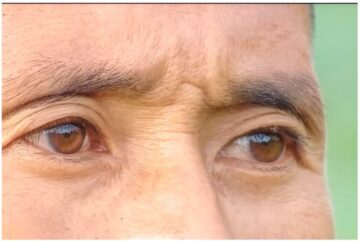 One of this year’s most influential people on TikTok and YouTube does not see himself as an influencer. He is Thích Minh Tuệ, a middle-aged man who adopted a humble, ascetic life a few years ago and began to walk barefoot up and down Vietnam. He lived in forests with few clothes and accepted alms from strangers, practicing a Buddhist way of frugal simplicity. In May, he became an internet phenomenon. Admirers began to post videos of him along his pilgrimage, inspiring millions. While disavowing any attempt at virtue signaling, he nonetheless was widely seen as an exemplary model, especially in comparison with the lavish lifestyles of top officials. Vietnamese were particularly irked when the minister of public security was caught on camera eating gold-encrusted steak at a London restaurant three years ago. In June, at the strong advice of police, Thích Minh Tuệ disappeared from public view. “His real crime was his humble lifestyle that stands in such stark contrast to the corruption scandals that have rocked Vietnam,” wrote Zachary Abuza, professor at the National War College in Washington, for Radio Free Asia.
Thích Minh Tuệ’s story reflects a bubbling debate among corruption fighters around the world about whether to focus less on corruption itself and more on the intrinsic integrity and honesty of people. “There have been growing calls for a renewed focus on the central role of values, ethics and integrity in controlling corruption,” stated a 2022 report by the watchdog Transparency International.
More here.
Enjoying the content on 3QD? Help keep us going by donating now.
 Drinking even small amounts of alcohol reduces your life expectancy, rigorous studies show. Only those with serious flaws suggest that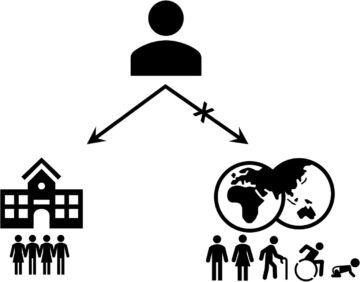
 W
W The man who may very well become the vice-president of the US
 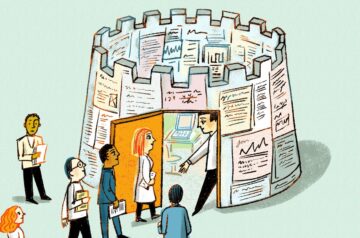 It sounded like the right thing to do. I was a first-year Ph.D. student in educational psychology, and my research adviser told me I should consider practicing open science—“being open and above board,” as he put it. He suggested I make my first-year research project a preregistered report. We would publish our planned methods and analysis in advance, an approach meant to minimize questionable research practices such as cherry-picking of results. I found myself at a crossroads. On one hand, the promise of enhancing transparency and reproducibility was compelling. On the other, I was frightened about potential negative repercussions.
 In “The Secret Lives of Numbers,” Kate Kitagawa, a mathematics historian, and Timothy Revell, a science writer, intend by reasoned and scholarly means to overthrow the “assumption that the European way of doing things is superior.”
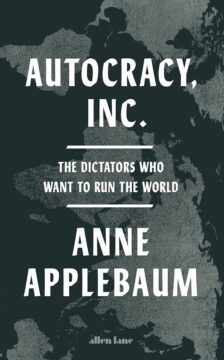 Anne Applebaum, as anyone familiar with her writing will know, is well-positioned to catalogue this new age of autocracy. Like her, Autocracy, Inc. is clear-sighted and fearless. I remember disagreeing with her genteelly at editorial meetings in the early 1990s, when she was writing about the danger that Russia’s post-communist implosion would one day present for the west, after Boris Yeltsin left office. She talked even then about the need for Nato to build up its defences against the time when Russia would be resurgent; while I, having spent so much time in the economic devastation of Moscow and St Petersburg, thought the best way for the west to protect itself was by being far more generous and welcoming towards Russia. Events have shown which of us was right, and it wasn’t me.
 A newly identified brain pathway in mice could explain why placebos, or interventions designed to have no therapeutic effect, still relieve pain. Developing drugs that target this pathway may lead to
  Once upon a time, Henderson argues, the upper classes used to signal their status by purchasing expensive material goods. But as the kinds of goods that used to be reserved for members of the upper classes have become available to a much wider stratum of society, the affluent and highly educated have resorted to different status symbols to signal their superior standing. This is why luxury beliefs—jargon-heavy political slogans calling for positions that are widely unpopular among the general population—have substituted for luxury goods.
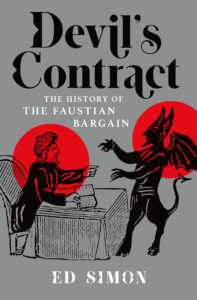 My desire to write a cultural history of the Faust legend goes back a few years earlier than my pilgrimage to the Deptford churchyard, around the time that I attended an adaptation of the play entitled faustUS staged by the theater collective 404 Strand in my hometown of Pittsburgh. Basing the script on the shorter, so-called “Text A” of Marlowe’s play, a tauter and more cryptic work that cuts the slapstick that mars more traditional productions of Doctor Faustus, the performance was hallucinatory, ritualistic, psychedelic, incantatory. A work of conjuration. With the audience invited to sit in an ad hoc theater-in-the-round constructed on the stage of the Kelly Strayhorn Theater, we all faced a rusted iron-cage in which the action of the play would be set. I was in the front row.