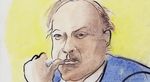
“One life, one writing,” Robert Lowell said. The writer’s experience is all of a piece, and so too, however disparate it may seem, is the work to which it gives rise. The personal emphasis here is typically poetic, but novelists have long shared the desire to give a higher unity to their careers, transform a succession of works into something larger and more coherent. The method selected is apt to reflect its time. In the nineteenth century—a period whose greatest inventions, it’s been said, were society and history—Balzac and Zola produced vast sociographic supernovels, many volumes long, that sought to transcribe the whole of contemporary society. Hardy, defending his provincial world from metropolitan encroachment, gathered his work within an autonomous imaginative principality—a method emulated by Faulkner and García Márquez. High Modernism’s self-mythologizing artist-heroes took a different tack, Proust placing his own figure at the center of a single never-ending, all-encompassing epic—the self expanding to fill the work, the work expanding to fill the career—with Joyce and Musil doing roughly likewise. Different unifying strategies appear today. The autobiographical persona that runs like a spine through Philip Roth’s corpus represents a multiplication and refraction of the authorial image that is perfectly in tune with our culture of mediated self-exposure. David Mitchell, one of British fiction’s brightest stars, forges his links surreptitiously, characters from one novel showing up, as if by chance, in the margins of others—a strategy that mimics the fortuitous, far-flung connections of a globalizing age. And then there is Javier Marías, the acclaimed Spanish novelist: annual Nobel speculation, 5 million books in print, high praise from Pamuk, Sebald and Coetzee. As his oeuvre has lengthened—and in particular, with the gradual publication of his magnum opus, the three-volume Your Face Tomorrow—its coherence has gathered only slowly and in retrospect.
more from William Deresiewicz at The Nation here.
Thursday, August 26, 2010
 Amitava Kumar in Vanity Fair:
[The stabbed taxi driver, Ahmed H.] Sharif released a statement via the New York Taxi Workers Alliance: “I feel very sad. I have been here more than 25 years. I have been driving a taxi more than 15 years. All my four kids were born here. I never feel this hopeless and insecure before,” said Mr. Sharif. “Right now, the public sentiment is very serious (because of the Ground Zero Mosque debate). All drivers should be more careful.”
We might wish to make allowance for the role of the N.Y.T.W.A. in injecting the correct dose of political context, as in the critical parenthetical insertion in the remark quoted above; nevertheless, an event like this, especially in New York City, cannot be insulated from the vicious rhetoric that has swirled around us in recent weeks. The blogosphere is already alight with accusations that Sarah Palin and Newt Gingrich have blood on their hands.
Tempting as it may be to repeat this analysis, I don’t wish to discount another factor: the sense of power, and even the false intimacy with the Other, that [Michael] Enright [the alleged assailant] would have experienced in Afghanistan. His behavior inside the cab also goes to show how embedded he is in the narrative of the U.S. military adventure. Are only Palin and Gingrich to be blamed for it?

Like a number of successful novel sequences or film franchises, the James Bond movies have spawned a stream of books that analyze, often too solemnly, the artistic merit and the cultural relevance of the original works. These books tend to be written by people who take great pleasure in complete immersion in their subject. A book on, say, Arthur Conan Doyle’s famed detective is likely to know what kind of pipe Sherlock Holmes smoked, or where Dr. Watson underwent his training in medicine. The James Bond scholar (there’s a phrase!) is likely to know that Noël Coward was considered for the role of Dr. No, and that if Cary Grant had been willing to sign on for more than one film, he very well might have been cast as the lethal British spy. Very well and good, you say—an author ought to know his subject. The problem is that such arcane trivia tends to cloud out the bigger picture; fandom, with its purely obsessive approach, does not always produce the most considered or insightful judgments. Most James Bond books (and I do not mean the fiction on which the films are based) tend to get lost in the universe under review—and, to paraphrase Ian Fleming, this world is not enough. Fans of Conan Doyle or P.G. Wodehouse or Star Trek know what I mean, however loathe they may be to admit it.
more from Sinclair McKay at TNR here.
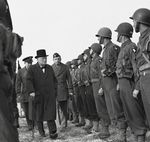
Seventy years ago this summer, in June of 1940, an aging British politician, who for the previous twenty years had seemed to his countrymen to be one of those entertaining, eccentric, essentially literary figures littering the margins of political life, got up to make a speech in the House of Commons. The British Expeditionary Forces had just been evacuated from France, fleeing a conquering German Army—evacuated successfully, but, as the speaker said, wars aren’t won that way—and Britain itself seemed sure to be invaded, and soon. Many of the most powerful people in his own party believed it was time to settle for the best deal you could get from the Germans. At that moment when all seemed lost, something was found, as Winston Churchill pronounced some of the most famous lines of the past century. “We shall go on to the end,” he said defiantly, in tones plummy and, on the surviving recordings, surprisingly thick-tongued. “We shall fight on the seas and oceans, we shall fight with growing confidence and growing strength in the air, we shall defend our Island, whatever the cost may be, we shall fight on the beaches, we shall fight on the landing grounds, we shall fight in the fields and in the streets, we shall fight in the hills; we shall never surrender.” Churchill’s words did all that words can do in the world. They said what had to be done; they announced why it had to be done then; they inspired those who had to do it.
more from Adam Gopnik at The New Yorker here.
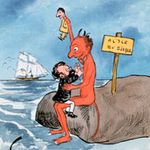
The story of Captain Alfred Dreyfus has long had an iconic status, evoked with the expectation that everyone knows and appreciates its weighty implications. Léon Blum, writing about it in 1935, likened the battles over Dreyfus to the fascist challenge to the Republic immediately before the Popular Front of 1936. A decade later, the aged monarchist writer Charles Maurras, sentenced by a French court to life imprisonment for collaborating with the Germans, protested, “It is the revenge of Dreyfus!”. Behind these mythologies, the story of the real Dreyfus has an agreed core. A patriotic Jewish officer of the French general staff, Dreyfus was arrested in 1894 on trumped-up charges of selling military secrets to the Germans. He then faced a secret court martial, a humiliating ceremony of military degradation and a cruel deportation to Devil’s Island, off the shores of French Guiana, where he rotted away for over four years, suffering horribly while his supporters gradually organized to review his conviction, eventually securing his reinstatement. Historians frequently distinguish between the detailed account of this story – the Dreyfus case – and the broader Dreyfus Affair: the conflict over the convicted traitor that divided France; the mobilization both for and against revision of the original judgment; and disputes about the deeper implications, both for France at the time and subsequently, for the history of Jews in the post-emancipation period; and for the continuing struggle for civil rights wherever innocent people face the overweening power of the State.
more from Michael R. Marrus at the TLS here.
From Salon:
 Melanie Thernstrom’s pain began inconspicuously, as a burning ache in her limbs after a long swim. But instead of drifting away over the next few days, the feeling dug in, traversing her neck and shoulder and eventually smothering her entire right arm. She popped aspirin, applied hot compresses, and simply tried to ignore it, but slowly the reality became clear — this pain wasn’t going anywhere. For the next several years, she bounced from doctor to doctor searching for an effective treatment for her mysterious ailment. Despite being young, active and seemingly healthy, Thernstrom had joined the ranks of the more than 70 million Americans who suffer from debilitating chronic pain.
In her new book, “The Pain Chronicles: Cures, Myths, Mysteries, Prayers, Diaries, Brain Scans, Healing, and the Science of Suffering,” Thernstrom, a writer for the New York Times Magazine, shadowed doctors and talked with patients about the science and experience of pain. Despite its being so common, she discovered, chronic pain remains a massive medical enigma, hard to treat or even isolate. She met amputees who complained of a constant ache in their missing limbs, women who felt like their entire bodies were bruised when there was not a scratch on them, and hundreds of others haunted by the invisible and devastating burden of constant pain — all the while pursuing a cure for her own suffering (which turned out to be caused by a degenerative arthritic condition in her spine). Her book examines the human experience of pain through the lenses of science, history, philosophy and memoir, creating a comprehensive and thoroughly engaging portrait of a force that all of us have experienced, but few of us truly understand.
More here.
From Nature:
 Altruistic behaviour, such as sterile worker ants caring for the offspring of their queen, evolves only between related individuals through what is known as kin selection — or so many evolutionary biologists have thought since the 1960s. They argue that the standard theory of natural selection cannot explain the evolution of eusocial groups of organisms such as bees and ants, because the sterile workers in those groups do not themselves reproduce. A two-part mathematical analysis1, published in Nature this week, overturns this tenet by showing that it is possible for eusocial behaviour to evolve through standard natural-selection processes.
Reproductive benefits: Kin selection is based on 'inclusive fitness', the idea that, for example, sterile workers can accrue reproductive benefits by helping their relatives. In doing so, they help shared genes to survive and get passed on to the next generation. This provides a route for eusociality to evolve. But Martin Nowak, a mathematical biologist at Harvard University in Cambridge, Massachusetts, and the lead author of the analysis, says, “there is no need for inclusive fitness to explain eusociality”.
More here.
Ahmed Rashid in The National Interest:
 This is a country that sadly appears on every failing-state list and still wants to increase its arsenal from around 60 atomic weapons to well over 100 by buying two new nuclear reactors from China. This is a country isolated and friendless in its own region, facing unprecedented homegrown terrorism from extremists its army once trained, yet it pursues a “forward policy” in Afghanistan to ensure a pro-Pakistan government in Kabul as soon as the Americans leave.
For a state whose economy is on the skids and dependent on the IMF for massive bailouts, whose elite refuse to pay taxes, whose army drains an estimated 20 percent of the country’s annual budget, Pakistan continues to insist that peace with India is impossible for decades to come. For a country that was founded as a modern democracy for Muslims and non-Muslims alike and claims to be the bastion of moderate Islam, it has the worst discriminatory laws against minorities in the Muslim world and is being ripped apart through sectarian and extremist violence by radical groups who want to establish a new Islamic emirate in South Asia.
Pakistan’s military-intelligence establishment, or “deep state” as it is called, has lost over 2,300 soldiers battling these terrorists—the majority in the last 15 months after much U.S. cajoling to go after at least the Pakistani (if not the Afghan) Taliban. Despite these losses and considerable low morale in the armed forces, it still follows a pick-and-choose policy toward extremists, refusing to fight those who will confront India on its behalf as well as those Taliban who kill Western and Afghan soldiers in the war next-door. An army that has received nearly $12 billion in direct military aid from the United States since 2001, and has favored-nation status from NATO, still keeps the leaders of the Afghan Taliban in safe refuge.
More here. [Thanks to Feisal H. Naqvi.]
Brendan Kiley in The Stranger:
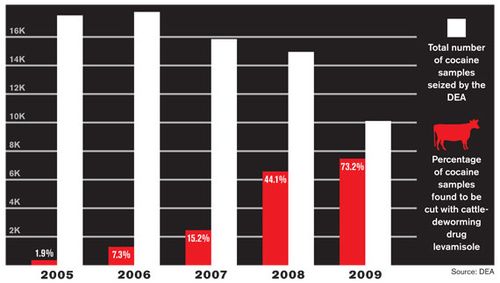
These days, levamisole is mostly used by farmers to deworm cows and pigs—and, for some reason, it's also used by people in the cocaine trade. The DEA first reported seeing significant amounts of levamisole-tainted cocaine in 2005, with 331 samples testing positive. Then the numbers spiked: The DEA found 6,061 tainted samples in 2008 and 7,427 in 2009. One DEA brief from 2010 reports that between October 2007 and October 2009, the percentage of seized cocaine bricks containing levamisole jumped from 2 percent to 71 percent.
Which is not only sudden, but odd. Levamisole is not like other common cutting agents—sugar, baking powder, laxatives, etc.—in three important ways:
1. It's more expensive than other cuts.
2. It makes some customers sick.
3. It's being cut into the cocaine before it hits the United States.
This last mystery is the most puzzling. Typically, smugglers like to move the purest possible product—less volume means less chance of detection—and cut their drugs once they cross into the United States.
So what's the incentive to use a relatively expensive cut of something that makes your customers sick and increases your smuggling risk?
More here.
Jonny Thakkar in The Point:
 If they want to be consistent, conservatives ought really to be anti-capitalist. This may be a little surprising, but in point of fact conservatism has always been flexible as far as particular policies are concerned. In the U.S. conservatives oppose universal healthcare as an attack on freedom; in the U.K. they defend it as a national tradition. Both positions count as conservative because, as Samuel Huntington argues, conservatism is a “situational” ideology which necessarily varies from place to place and time to time: “The essence of conservatism is the passionate affirmation of the value of existing institutions.” It follows that conservatives can seek to conserve all manner of institutions, including those designed to fight inequality, safeguard the environment, tame market forces, and so on.
But the potential for such reversals is by no means restricted to the Right. When Leftists reflect on their opposition to the free market, they will find that their reasons are–at least in part–conservative. And why not? If conservatism is indeed situational then its rightness or wrongness must depend entirely on the situation, and the value of what is to be conserved. One trope of “utopian” literature from Plato’s Republic to Aldous Huxley’s Island is the fear of adulterating perfect arrangements. Even radicals sometimes have to be conservative.
This is more than mere semantics. Successful political movements successfully incorporate divergent elements; moribund ones don’t. Every so often tensions are simply too great to bear, and something snaps. Political constellations shift. Parties emerge. Coalitions form. Southern Democrats defected to the GOP in 1960s America; Britain has just seen the Liberal Democrats ally with the Tories. These things can happen. Left conservatism can happen.
More here.
Wednesday, August 25, 2010
Jerome Burne in the Times Literary Supplement:
 Sixty years ago, the philosopher Gilbert Ryle published his famous attack on Cartesian dualism, The Concept of Mind, which claimed to find a logical flaw in the popular notion that mental life has a parallel but separate existence from the physical body. Among other effects it provided sophisticated support for the psychological behaviourists, then in the ascendant, who asserted that since we could not objectively observe mental activity it was not really a fit subject for scientific investigation.
Nowhere was the notion of banning mental states taken up more enthusiastically than by the emerging discipline of neuropsychiatry. If consciousness and all its manifestations were “merely” the firing of neurons and the release of chemicals in the brain, what need was there to focus on mental states? Once the physical brain was right, the rest would follow.
It was an approach that has spawned a vast pharmaceutical industry to treat any pathological psychological state – anxiety, shyness, depression, psychosis – with a variety of pills. The underlying promise is that scientifically adjusting the levels of various brain chemicals will bring relief and a return to normality. The biggest-selling class of these drugs are the anti-depressant SSRIs – brands include Prozac, Seroxat and Lustral. A recent report revealed that they were the most widely prescribed drugs in America, with an estimated global market value of over $20 billion.
However, as is set out calmly and clearly in Irving Kirsch’s The Emperor’s New Drugs, it would seem that the whole golden edifice is based on a lie.
More here.
i carry your heart with me
i carry your heart with me (i carry it in
my heart) i am never without it (anywhere
i go you go, my dear; and whatever is done
by only me is your doing, my darling)
………………………………………………………….. i fear
no fate (for you are my fate, my sweet) i want
no world (for beautiful you are my world, my true)
and it's you are whatever a moon has always meant
and whatever a sun will always sing is you
here is the deepest secret nobody knows
(here is the root of the root and the bud of the bud
and the sky of the sky of a tree called life; which grows
higher than soul can hope or mind can hide)
and this is the wonder that's keeping the stars apart
i carry your heart with me (i carry it in my heart)
by e.e. cummings,
from Complete Poems 1904-62.
Liveright Publishing, 1994
From The Telegraph:
 Next year marks the 50th anniversary of Ernest Hemingway’s suicide, a ghoulish landmark that may prompt reconsideration of the writer but is unlikely to restore the reputation he once had as America’s greatest novelist. His most famous books, A Farewell to Arms and For Whom the Bell Tolls, today seem mawkish rather than moving. His reputation has been further eroded by the posthumous appearance of writing that doesn’t show him at his best. A Moveable Feast, which first appeared in 1964, three years after Hemingway’s death, is an exception. It is a series of sketches set in Paris in the early Twenties, where Hemingway lived for five years as a struggling writer. He knew most of the luminaries there – Pound, Madox Ford, Joyce, Stein and Scott Fitzgerald are all brought to life.
…
The Hemingway of Paris days was little more than a teenager, yet already showed a mature talent for disparagement, which receded in later years as his own persona, inflated by fame, pushed other characters off centre stage in his work. His early novel The Sun Also Rises (1926) starts with a subtle character assassination: “Robert Cohn was once middleweight boxing champion of Princeton. Do not think that I am very much impressed by that as a boxing title, but it meant a lot to Cohn.” Three decades later, Hemingway was happy to dispatch most of his famous contemporaries with equal ruthlessness and the portraits in A Moveable Feast are made deadlier by Hemingway’s half-hearted disclaimers. He tells of overhearing Stein addressed (presumably by Alice B Toklas) “as I had never heard one person speak to another; never, anywhere, ever” – the sinister effect magnified by Hemingway’s tantalising refusal to repeat the words he heard. Madox Ford is depicted, unfairly but hilariously, as a preposterous stuffed shirt, while Pound is a gentle, comical figure, rushing round raising funds to free “Mr Eliot” in London from his bank job. Notoriously, Scott Fitzgerald, despite Hemingway's repeated protestations of friendship, is portrayed at length as a whiny, sexually inadequate weakling. Although Hemingway blames Zelda for her husband’s troubles, he did enough damage to change popular perceptions of Fitzgerald for years. A Moveable Feast is a masterpiece of malice.
More here.
From the Boston Globe:
With images from southern and central Russia in the news lately due to extensive wildfires, I thought it would be interesting to look back in time with this extraordinary collection of color photographs taken between 1909 and 1912. In those years, photographer Sergei Mikhailovich Prokudin-Gorskii (1863-1944) undertook a photographic survey of the Russian Empire with the support of Tsar Nicholas II. He used a specialized camera to capture three black and white images in fairly quick succession, using red, green and blue filters, allowing them to later be recombined and projected with filtered lanterns to show near true color images. The high quality of the images, combined with the bright colors, make it difficult for viewers to believe that they are looking 100 years back in time – when these photographs were taken, neither the Russian Revolution nor World War I had yet begun. Collected here are a few of the hundreds of color images made available by the Library of Congress, which purchased the original glass plates back in 1948.
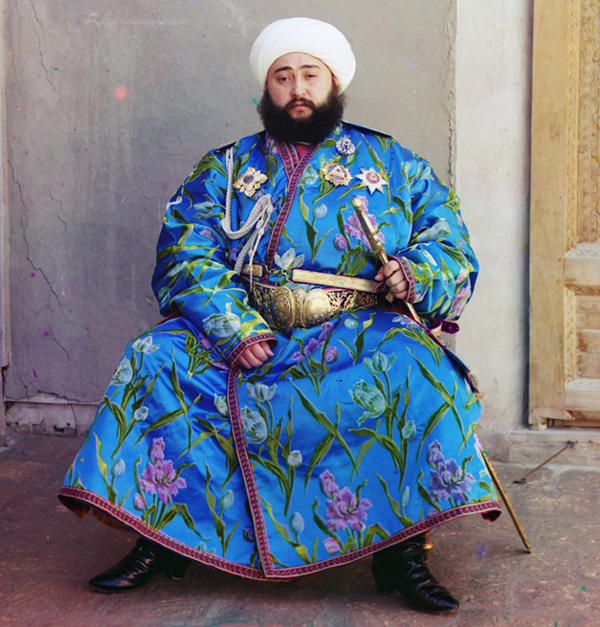
More photos here.
From Scientific American:
 By a simple food-in/energy-out model, a run on the treadmill or swim in the pool should make you want to eat more. But recent findings have suggested that exercise can actually help to slow overeating. And a new study presents evidence that the body's physiologic response to exercise can help retune the nervous system's cues and make the body feel less hungry, rather than more so. Hunger is a complex sensation, but it is determined in part by neurons located in the hypothalamus, which send signals to the brain telling it that you're either hungry or sated. Those neurons get their message from hormones, including insulin and leptin. When the body develops a resistance to these messengers, people become more prone to overeating and weight gain. And scientists have begun to suspect that cellular inflammation might be at least partly responsible for allowing these signals to get out of whack.
Researchers behind the new work found that “physical activity reorganizes the set point of nutritional balance through anti-inflammatory signaling,”
More here.

Two weeks ago, I wrote that the arguments against the construction of the Cordoba Initiative center in lower Manhattan were so stupid and demagogic as to be beneath notice. Things have only gone further south since then, with Newt Gingrich’s comparison to a Nazi sign outside the U.S. Holocaust Memorial Museum or (take your pick from the grab bag of hysteria) a Japanese cultural center at Pearl Harbor. The first of those pseudo-analogies is wrong in every possible way, in that the Holocaust museum already contains one of the most coolly comprehensive guides to the theory and practice of the Nazi regime in existence, including special exhibits on race theory and party ideology and objective studies of the conditions that brought the party to power. As for the second, there has long been a significant Japanese-American population in Hawaii, and I can’t see any reason why it should not place a cultural center anywhere on the islands that it chooses. From the beginning, though, I pointed out that Imam Feisal Abdul Rauf was no great bargain and that his Cordoba Initiative was full of euphemisms about Islamic jihad and Islamic theocracy. I mentioned his sinister belief that the United States was partially responsible for the assault on the World Trade Center and his refusal to take a position on the racist Hamas dictatorship in Gaza.
more from Hitch at Slate here.

Edward Hopper, viewed a certain way, becomes a dear old chestnut. Rooftops, lonely girls, railroad tracks, gas stations (those queer old pumps), soda fountains, spooky-quaint houses. A melancholy Norman Rockwell. He can be used to conceal a cranky dislike for abstract, modern, and contemporary art—Hopper himself didn’t think much of the Picassos and Pollocks of the world—and he remains, as always, good box office. The Whitney, often rebuked for being trendily obscure, all but owns the Hopper franchise. Shouldn’t the museum enjoy a moment of rest, reputation, and the elderly paying customer? Inevitably “Modern Life: Edward Hopper and His Time,” organized by Barbara Haskell and Sasha Nicholas, will have something of this cozy old-movie feel. Drawn almost entirely from the Whitney’s collection, the show is constructed around Hopper, but includes work from 34 other well-known artists who made their names before World War II and whose imagery is fairly realistic. (They range from John Sloan of the Ashcan School to the Precisionist Charles Sheeler.) The show intends to have a jangly urban emphasis, but the “modern life” invoked in the title obviously refers to a different modern than the one we know today. This is a survey of another, earlier America.
more from Mark Stevens at New York Magazine here.

Thomas Bernhard is certainly one of the major, titanic writers of any era, any country. Enormously influential, unremittingly bleak and pessimistic but never without a sense of humor, his style evolved into single-paragraphed philosophical rants extending hundreds of pages, the best of which are Woodcutters, ‘Walking’ (from Three Novellas), and Gathering Evidence. I have finally accumulated what I believe are all the publications translated into English. His books have been translated and published by a variety of presses from the major (Knopf) to the tiny (Ariadne), across decades, with many of them out of print for long stretches, so I thought it would be helpful to those interested in Bernhard to see everything in one place.
more from Scott Bryan Wilson at The Quarterly Conversation here.
Tuesday, August 24, 2010
From The New Yorker:
 A digest of last week’s prophetic and interpretive thought
“I was not commenting and I will not comment on the wisdom of making a decision to put a mosque there. I was commenting very specifically on the right that people have that dates back to our founding.” —Barack Obama
“We all know that they have the right to do it, but should they?” —Sarah Palin
“Where the ‘Ground Zero mosque’ is concerned, opposition is roughly proportional to distance, even in New York.” —Hendrik Hertzberg
“I believe that this is an important test of the separation of church and state—as important a test as we may see in our lifetimes—and it is critically important that we get it right.” —Michael Bloomberg
More here.
