
Meara Sharma at The Believer:
 The specter of failure, of course, looms large over creative people, whose identities are particularly bound up with their work; the stock character of the tortured artist dates back to Plato. Culturally, we tend to romanticize grandiose failure—artists who toiled in bitter agony or isolation or with complete lack of recognition their whole lives, only to become demigods after death (van Gogh, Emily Dickinson). In an essay in Boston Review, the critic Tom Bissell considers how fragile the phenomenon of writerly success is, exploring how names that are iconic and enduring today, like Herman Melville and Walt Whitman, could easily have been long lost, had it not been for an assortment of arbitrary occurrences: “Remaindered copies bought from book peddlers. A man, sitting at his desk, an oxidized copy of a forgotten novel beside him, cobbling together an essay with no idea of what it would accomplish.… Essays published at the right time, in the right journals or books, noticed by the right people.” The reasons many famous writers of yore continue to have star status has little to do with fate, Bissell writes, but rather with “the stagecraft of chance.” He quotes Melville—notoriously unsuccessful in his lifetime, writing to a friend in 1849 upon the flop of his novel Mardi. “[It] may possibly—by some miracle, that is—flower like aloe, a hundred years hence—or not flower at all, which is more likely by far, for some aloes never flower.”
more here.
 For Billie Holiday, solitude was no bargain. “In my solitude,” she tells us in one of her signature songs, she sits in her room, filled with despair, gloom everywhere, eminently sad, certain she’ll soon go mad. Were she alive today, Ms. Holiday would be astonished to learn that solitude is no longer the dark and dreary state described by the lyricists Eddie DeLange and Irving Mills, but one, au contraire, that needs to be cultivated on the way to a rounder, fuller, in many ways more healthy mental life.
 The origin of consciousness has teased the minds of philosophers and scientists for centuries. In the last decade, neuroscientists have begun to piece together its neural underpinnings—that is, how the brain, through its intricate connections, transforms electrical signaling between neurons into consciousness. Yet the field is fragmented, an international team of neuroscientists recently
  This month marks 100 years since Mallory’s last dance with the sublime. Debate persists over whether a 1920s climber in hobnail boots, even a phenom like Mallory, could have made it past the Second Step, a technical and challenging 100-foot promontory, to reach the summit.
 My copy of Salman Rushdie’s new book, Knife, arrived a few weeks ago, and before I had even opened the package, the news also arrived that Paul Auster had succumbed to cancer—and the confluence of Rushdie’s book and the information about Auster hit me harder than I would have predicted. Rushdie and Auster were friends. I knew this because in August 2022 there was a major assassination attempt on Rushdie—the assassination attempt is the topic of Knife—and a very few days later PEN America, the writers’ organisation, held a solidarity rally on the steps of the 42nd Street Library in New York. I attended, and I listened to Auster deliver a short speech. He celebrated Rushdie’s dedication to the storytelling imagination. He conjured the principle of freedom, and, in doing so, he expressed quietly an ardour of personal love, one friend for another in his moment of extreme trouble.
 Theory of mind
 History is repeating itself in Sudan. Tensions between rival security factions, which spilled out last April into open conflict, have rapidly created the world’s largest displacement crisis and food security crisis. Nearly half of the country’s 50 million people are in desperate need of food aid that is not reaching them, either because of access constraints or because it is simply not available.
 T
T On August 16, 1918, a bookkeeper in Denver named George Eyser wrote a will. He was not married and had no children. And so it was to his only sibling, his sister Ottilie, with whom he lived in a two-story brick house at 420 Downing Street, that he bequeathed his property and possessions: money, the proceeds from an insurance policy, a gold watch and chain, a scrapbook that chronicled the nearly three decades he spent as an amateur gymnast, and his crowning glory—the six Olympic medals he won on a single October day in 1904.
 The difference between good art and bad art is that good art is subtle. Pakistan struggles to do subtle. There is certainly your everyday slapstick comedy, the tragic heroine, and the flippantly violent hero. But no, Pakistan is not at all good at subtle, which is why Sarmad Khoosat’s
  A
A  J
J For more than four years, reflexive partisan politics have derailed the search for the truth about a catastrophe that has touched us all. It has been estimated that
  After the murder of George Floyd in May 2020, former NBA player
 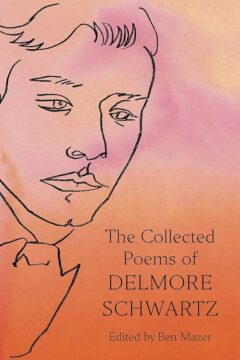 When Schwartz comes up in conversation today, two things are typically remarked of him. First, he is a man whose reputation has eclipsed his work, his stature as a poet having surrendered to the clamor for myth. Second, this myth is one of vertiginous and scandalous decline. Delmore Schwartz: an American tragedy. Both commonplaces have the unfortunate merit of being true.