White Fright: Glenn Beck’s Large, Vague, Moist, and Undirected Rally—the Waterworld of White Self-Pity

100830_FW_beckTN Hitchens in Slate on Glenn Beck's rally in DC, in Slate:

In a rather curious and confused way, some white people are starting almost to think like a minority, even like a persecuted one. What does it take to believe that Christianity is an endangered religion in America or that the name of Jesus is insufficiently spoken or appreciated? Who wakes up believing that there is no appreciation for our veterans and our armed forces and that without a noisy speech from Sarah Palin, their sacrifice would be scorned? It's not unfair to say that such grievances are purely and simply imaginary, which in turn leads one to ask what the real ones can be. The clue, surely, is furnished by the remainder of the speeches, which deny racial feeling so monotonously and vehemently as to draw attention.

Concerns of this kind are not confined to the Tea Party belt. Late professors Arthur Schlesinger and Samuel Huntington both published books expressing misgivings about, respectively, multiculturalism and rapid demographic change. But these were phrased so carefully as almost to avoid starting the argument they flirted with. More recently, almost every European country has seen the emergence of populist parties that call upon nativism and give vent to the idea that the majority population now feels itself unwelcome in its own country. The ugliness of Islamic fundamentalism in particular has given energy and direction to such movements. It will be astonishing if the United States is not faced, in the very near future, with a similar phenomenon. Quite a lot will depend on what kind of politicians emerge to put themselves at the head of it. Saturday's rally was quite largely confined to expressions of pathos and insecurity, voiced in a sickly and pious tone. The emotions that underlay it, however, may not be uttered that way indefinitely.

First Ant Genomes Promise Insight into Epigenetics and Longevity

From Scientific American:

First-ant-genomes-epigenetics_1 Some ants live longer than others—way longer. And the mapping of the first full genome sequences of ants helps to reveal how two ants from the same colony, and with much the same genetic material, can have such different life histories. The work may also provide insights into longevity in another social species with which ants share about one third of their genes: humans.

Researchers sequenced the genomes of two ant species: Jerdon's jumping ant (Harpegnathos saltator) and the Florida carpenter ant (Camponotus floridanus), which have quite different levels of social—and hence, biological—mobility. Carpenter ants live in large colonies that revolve around a queen that lays all of the fertilized eggs. Once the queen dies, the colony perishes as well. Jerdon's jumping ants, on the other hand, have smaller colonies in which worker ants can replace the queen after she dies. These so-called gamergate queens change physically and behaviorally as they take on the queen's duties. All of these ant castes seem to start with the same basic genetic blueprint, yet end up looking—and behaving—very differently. Scientists point to epigenetics, the change in gene expression (rather than direct alterations in the DNA code), as a likely explanation.

More here.

Think the Answer’s Clear? Look Again

From The New York Times:

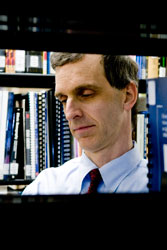
Doc Win an Academy Award and you’re likely to live longer than had you been a runner-up. Interview for medical school on a rainy day, and your chances of being selected could fall. Such are some of the surprising findings of Dr. Donald A. Redelmeier, a physician-researcher and perhaps the leading debunker of preconceived notions in the medical world. In his 20 years as a researcher, first at Stanford University, now at the University of Toronto, Dr. Redelmeier, 50, has applied scientific rigor to topics that in lesser hands might have been dismissed as quirky and iconoclastic. In doing so, his work has shattered myths and revealed some deep truths about the predictors of longevity, the organization of health care and the workings of the medical mind. “He’ll go totally against intuition, and come up with a beautiful finding,” said Eldar Shafir, a professor of psychology and public affairs at Princeton University who has worked with Dr. Redelmeier on research into medical decision-making.

Dr. Redelmeier was the first to study cellphones and automobile crashes. A paper he published in The New England Journal of Medicine in 1997 concluded that talking on a cellphone while driving was as dangerous as driving while intoxicated. His collaborator, Robert Tibshirani, a statistician at Stanford University, said the paper “is likely to dwarf all of my other work in statistics, in terms of its direct impact on public health.” As an internist who works at Sunnybrook Hospital in Toronto, Canada’s largest trauma center, Dr. Redelmeier sees a large number of patients in the aftermath of crashes. As a result, one of his abiding professional preoccupations is with vehicle crashes. He found that about 25 more people die in crashes on presidential Election Days in the United States than the norm, which he attributes to increased traffic, rushed drivers and unfamiliar routes. He also discovered a 41 percent relative increase in fatalities on Super Bowl Sunday, which he attributed to a combination of fatigue, distraction and alcohol. After publication of the findings on the Super Bowl, the National Highway Traffic Safety Administration embarked on a campaign with the slogan “Fans don’t let fans drink and drive.” In preparation for a recent interview in his modest office in the sprawling hospital complex, Dr. Redelmeier had written on an index card some of his homespun philosophies.

“Life is a marathon, not a sprint,” he read, adding, “A great deal of mischief occurs when people are in a rush.”

More here.

hitch on stieg

Images-1

I suppose it’s justifiable to describe “best-selling” in quasi-tsunami terms because when it happens it’s partly a wall and partly a tide: first you see a towering, glistening rampart of books in Costco and the nation’s airports and then you are hit by a series of succeeding waves that deposit individual copies in the hands of people sitting right next to you. I was slightly wondering what might come crashing in after Hurricane Khaled. I didn’t guess that the next great inundation would originate not in the exotic kite-running spaces at the roof of the world but from an epicenter made almost banal for us by Volvo, Absolut, Saab, and ikea. Yet it is from this society, of reassuring brand names and womb-to-tomb national health care, that Stieg Larsson conjured a detective double act so incongruous that it makes Holmes and Watson seem like siblings. I say “conjured” because Mr. Larsson also drew upon the bloody, haunted old Sweden of trolls and elves and ogres, and I put it in the past tense because, just as the first book in his “Millennium” trilogy, The Girl with the Dragon Tattoo, was about to make his fortune, he very suddenly became a dead person. In the Larsson universe the nasty trolls and hulking ogres are bent Swedish capitalists, cold-faced Baltic sex traffickers, blue-eyed Viking Aryan Nazis, and other Nordic riffraff who might have had their reasons to whack him. But if he now dwells in that Valhalla of the hack writer who posthumously beat all the odds, it’s surely because of his elf. Picture a feral waif. All right, picture a four-foot-eleven-inch “doll” with Asperger’s syndrome and generous breast implants. This is not Pippi Longstocking (to whom a few gestures are made in the narrative). This is Miss Goth, intermittently disguised as la gamine.

more from Hitch at Vanity Fair here.

it’s hard to kill the king

ID_PI_GOLBE_CEAUS_AP_001

They dug up the body of Nicolae Ceausescu. Or did they? The Romanian dictator and his wife Elena were executed on Christmas, 1989. But there are those who still won’t believe it. So last month, Romania dug up the body in Ceausescu’s grave to perform DNA tests on it, and to pronounce Nicolae Ceausescu dead, once and for all. In “The Great Christmas Killing,” Hungarian author Peter Nadas wrote about the Ceausescus’ execution as he saw it on television, 10 years after the fact. He describes in stark detail the scenes before the killing and after, from the hasty trial to the hurried postmortem examination. “The captors of the dreaded Ceausescu couple…forced them into a space between the wall and the two steel-legged tables. Either it was cold in the room, or the uniformed members of the summary tribunal did not permit the tyrant and his wife to take off their coats.” He writes of the moment when the hands of the Ceausescus are tied behind their backs with clothesline as they protest, indignant, and the terror of the attending physician whose entire body shakes as he is called on to show the camera, the world, that Nicolae and Elena Ceausescu are gone.

more from Stefany Anne Golberg at The Smart Set here.

Greekonomics

Greekonomics539__1282933148_0982

PAROIKIA, Greece — Like the throbbing of the cicadas in the cypress trees, an electric pulse of anxiety is scoring this otherwise unremarkable summer on the tourist island haven of Paros. Greek visitors sip their frothy iced coffees; foreign tourists play racquetball at the water’s edge; and the small merchants whose exertions fuel Greece’s middling economy serve ouzo on the rocks with their customary theatrics. Summer here is sacrosanct, a time when Greeks exercise their inalienable right to lazy lunches of tomato salad and deep-fried smelt. For a month or two, most people decamp to an island or their ancestral village, escaping the enervating responsibilities of everyday life — a ritual enjoyed by everyone from janitors and factory workers to ship owners and government ministers. The nation simply shuts down in July and August. This year, however, the sense of an impending economic disaster has injected a sour note: You can hear it in the once-crowded cafes, in the warnings about strikes that might disrupt travel, and in the foreboding with which restaurant owners bid farewell to longtime summer patrons by saying, “If we’re here next here!” rather than the traditional kali antamosi, “until we meet again.”

more from Thanassis Cambanis at The Boston Globe here.

Monday, August 30, 2010

Perceptions

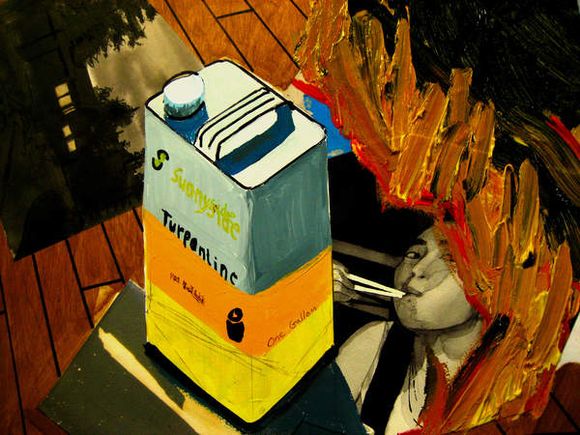
What Visions Burn Turpentine

Ezra Johnson. Still from What Visions Burn. 2006.

“Ezra Johnson’s What Visions Burn relays the story of an art heist and its aftermath, in which Johnson intertwines content with style for a unique take on the robber-film genre. He paints and repaints his canvases to create each frame of his films, providing a rich visual texture and continuity. He uses the medium of painting to make a film about stolen paintings, and interjects newspaper headlines—made from newsprint collages—into the action…” From SITE Santa Fe Biennial 2010 website.

More here, here and here.

The Owls | Blood Simple + A Woman, A Gun, and A Noodle Shop

*Ben Walters and J. M. Tyree have been talking about movies, often amicably, since 1995. Together, they wrote a critical appreciation of The Big Lebowski for The British Film Institute's Film Classics series of books, and reviewed No Country for Old Men and Burn After Reading for Sight & Sound. They recently had a transatlantic chat about Blood Simple, the Coens' first feature. Blood Simple has been remade by Zhang Yimou as A Woman, A Gun, and a Noodle Shop, set for a limited theatrical release in the States on 3 September. This prompted thoughts about homage, genre looting, pulp, and Wong Kar-Wai's Barton Fink…

12:46 PM JMT: Just watching the end of Body Heat
BW: amazing
wanna finish it?
12:47 PM JMT: Not unless you want to wait 15 mins…no need…I know what happens…
BW: i don't mind
JMT: Let's start!
BW: all righty then

12:50 PM JMT: I'd been thinking about Blood Simple and Body Heat after watching the Australian noir The Square. Then we noticed that Zhang Yimou’s remake of Blood Simple, called A Woman, A Gun, and A Noodle Shop, was getting reviewed and released. A good excuse to revisit Blood Simple…

12:51 PM BW: tell me about the square, i don't know that one
12:53 PM JMT: Brothers Nash & Joel Edgerton made this delightfully grim Aussie crime thriller in 2008 featuring infidelity, murder, and arson. The deadly fire is set off using Christmas tree lights!
12:54 PM BW: ho ho ho
that passed me by. is it notably similar to blood simple or more of a fellow pastiche?
12:57 PM JMT: It has that same sense of pressure and humor – a dog is eaten by an alligator and it's played for laughs.
BW: well, that's pretty funny
i think noir has always had a sense of humour
12:58 PM it's easy to overlook now that it's such a venerated genre but most of them had some kind of absurdity

Read more »

Sunday, August 29, 2010

The 3 Quarks Daily Ball 2010, Brixen

_GHR5412

Hello,

The 3QD Ball was almost unbearably fun and a great roaring success thanks to the help of many, many people. In fact, I think it's safe to say it was our best party ever. I won't thank everyone by name here, but you know who you are and you know how grateful I am to you for making our ball such a stylish affair! Here are more pictures (all of which are taken by my incredibly talented and dear friend Georg Hofer):

_GHR5382

Read more »

The Parable of Metatechnology

Our own Aditya Dev Sood in The Sunday Guardian:

PM Last night I had a dream so vivid it can only be called a vision. Its specificity and purpose seem also to demand a name, and so I shall call it The Parable of Metatechnology.

I dreamt of a Hungarian technocrat and polymath from the late 1800s, whose name is too complicated to remember. He had helped design many of the bridges that crisscross the Danube, interconnecting Buda and Pest, and so creating the twin-city of Budapest. He had consulted on the design of the city's underground railway, only the second in the world after London, and the only one on the Continent. In addition to his Engineering practice, He had a scholarly career in the field of Descriptive Geometry, so he was a kind of mathematician. He was an amateur linguist, and toyed with representing sentences in a simplified code — he was a kind of programmer, long before there was something called software.

Right around the end of the ninteenth century, his milieu, the city as a whole, was trying to figure out how to advance the pace of its technological development, how to ensure that Budapest would become the center of the twentieth century. He had a vague notion, a hunch, that there might be something beyond technology, which if it could be discovered, unlocked, unleashed, could predict the now uncertain pattern of the unfolding of technology. Just as two dimensional spaces can be projected into three, and as three can be projected into four and more, perhaps a modeling of metatechnology would allow him to resolve the technology layer through which his city was passing.

He asked for funds, of course. He set up his laboratory on one of the empty hilltops across the Danube, on the Buda side. From his window, he could see the last of his bridges being completed over the glistening Danube. His bright young assistants projected each of the known sciences and applied disciplines onto the other, struggling mightily to generate a unifying theory, trying to map this new field of metatechnology.

More here.

Ladies, gaga: What drag is doing for women

From The Boston Globe:

Dragmain__1282934383_1377 Maybe you’re shy, or a shut-in. Maybe you’re single and don’t want to be. Maybe all that truck driving, dog walking, kid raising, and company running has sapped your femininity. You’re a woman, and whatever the reason, you long to feel sexy and glamorous for a change. A spa day usually does the trick. But this is a deeper, almost spiritual problem that no spa — or therapist or “Sex and the City” binge — can cure. You could turn to your girlfriends or your sisters or your stack of Sophie Kinsella books. Instead, you do something more drastic, something more unexpected.

You dress in drag.

That’s the premise of the drag queen RuPaul’s new show — “RuPaul’s Drag U.” It takes biological women who feel disconnected from themselves, and, under the tutelage of a bunch of professional male drag queens, gives them heels, a giant wig, and a drag name, like Saline Dion. They sashay down a runway. They lip synch. They dance. “I had no idea how much work went into being a woman,” says one contestant whose drag name was Kornisha Kardashian. At the end of the runway competition, a winner is selected. Everybody seems moved. Even if you’ve been following the steady mainstreaming of gay culture, this premise may come as a perverse shock. Drag is the art of men borrowing — and often parodying — the archest and most extreme womanly characteristics. They razor-line their lips and give themselves giant hair as a kind of subversive theater. A woman, presumably, can do this whenever she feels like it. So it seems strange, not to say retrograde, for a woman to turn to a drag queen not simply to look like a woman but to feel like one.

More here.

America’s misguided culture of overwork

From Salon:

Book Since the start of the recession, the number of unemployed in the U.S. has doubled. Those who are fortunate enough to still have jobs are often working longer hours for less pay, with the ever-present threat of losing being laid off. But even before the recession, American workers were already clocking in the most hours in the West. Compared to our German cousins across the pond, we work 1,804 hours versus their 1,436 hours – the equivalent of nine extra 40-hour workweeks per year. The Protestant work ethic may have begun in Germany, but it has since evolved to become the American way of life.

According to Thomas Geoghegan, a labor lawyer in Chicago and author of “Were You Born on the Wrong Continent?: How the European Model Can Help You Get a Life,” European social democracy – particularly Germany’s – offers some tantalizing solutions to our overworked age. In comparison to the U.S., the Germans live in a socialist idyll. They have six weeks of federally mandated vacation, free university tuition, nursing care, and childcare. In an attempt to make Germany more like the U.S., Angela Merkel has proposed deregulation and tax cuts only to be met with fury on the left. Over multiple trips spanning a decade, Geoghegan decided to investigate how the Germans were living so well, and by extension, what we might be able to learn from them.

More here.

bolaño, crime, chi-chi’s

Images

Literature about crime, or crime stories in general, hold their interest for one of two reasons. In the first case, exemplified by, for instance, the Sherlock Holmes mysteries, we are presented with a mystery that, through various twists and turns, gets solved. This is exciting and satisfying. We didn’t know who done it, then we get to know who done it. The second kind of crime writing is more illusive. Crimes may get solved, but the question of “why” often takes precedence over “who.” The question of who is relatively easy to answer: it was that guy. The question of why is more intractable. It tends toward a lengthy regress. OK, he did it for the money or for love, but, still, why? In the novels of James M. Cain or Georges Simenon, for instance, there are crimes and those crimes are sometimes solved. But buzzing around the Who and the What is a troublesome Why that often does little more than buzz. The novel ends and the buzzing fades away, only to reemerge in the next novel. Once, in an interview with Giulio Nascimbeni, Georges Simenon was asked about a recurring dream. Simenon replied, “Yes, it’s true. It was night and I could see a large and calm lake, reflecting the moon. Black mountains rose around it. I arrived from between two of these mountains, I looked at the lake and the moon, and that was it, nothing else happened.”

more from me at The Owls here.

A Foreigner Carrying in the Crook of His Arm a Tiny Bomb

A discussion with Amitava Kumar on The Leonard Lopate Show:

Amitava Kumar looks at the global repercussions of the war on terror. His book A Foreigner Carrying in the Crook of His Arm a Tiny Bomb tells the story of two men convicted in U.S. courts on terrorism-related charges: Hemant Lakhani, a 70-year-old tried for attempting to sell a fake missile to an FBI informant, and Shahawar Matin Siraj, who was accused of being involved in a conspiracy to bomb a subway. Kumar explores the experiences of ordinary people caught up in the war on terror and the growing suspicions about foreigners in post-9/11 America.

The Ballad of David Markson: A Primer

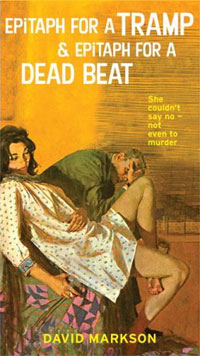
Epitaph-for-a-trampColin Marshall in The Millions:

I laughed loud and long after coming across a retired schoolteacher’s self-published book of poetry with the wildly unappealing title Meanderings of an Aged Mind. Yet it now occurs to me that the late avant-garde novelist David Markson’s literary output eventually assumed exactly that form. And though he never quite reached the depth of being forced into self-publication, his fame seems to have peaked around 1970. Quasi-praise such as “undeserved obscurity” and “smartest novelist you’ve never heard of” would thereafter accumulate like barnacles on his hull.

Markson wrote two novels that look just about like traditional novels, one that could pass for a traditional novel’s second cousin, and four that invent, develop, and refine the aggressively non-novelistic shape that would become his very own genre. Line them up, and you’ve never seen such clear stylistic progress. Final destination: books made of evenly-spaced, meticulously arranged facts from the lives of notable artists, writers, philosophers, and other intellectuals. No, not historical fiction. Not narratives of any lives in particular. Not tracings of any currents of thought. Just textual accretions, really, but textual accretions of the highest erudition and artistry.

If you’re looking for grand statements about David Markson’s career, you might say the same thing that makes his novels so fascinating — and, to his fans, so endlessly engaging — also makes them so little-known. Not just steeped in but crafted from the West’s achievements in thought and aesthetics, they pay off in excitement to the extent that you know your Yeatses from your Keatses, your Kierkegaards from your Spinozas. Truly meriting the label of sui generis that otherwise gets thrown around so carelessly, his novels are fiendishly tricky to contextualize. What might you have already read that suggests you’ll like David Markson? Tough call, since, for good or ill, nothing’s like David Markson.

Back From the Future: Can Measurements Performed in the Future Influence the Present?

Future2

Zeeya Merali in Discover:

[Jeff] Tollaksen and [Yakir] Aharonov proposed analyzing changes in a quantum property called spin, roughly analogous to the spin of a ball but with some important differences. In the quantum world, a particle can spin only two ways, up or down, with each direction assigned a fixed value (for instance, 1 or –1). First the physicists would measure spin in a set of particles at 2 p.m. and again at 2:30 p.m. Then on another day they would repeat the two tests, but also measure a subset of the particles a third time, at 3 p.m. If the predictions of backward causality were correct, then for this last subset, the spin measurement conducted at 2:30 p.m. (the intermediate time) would be dramatically amplified. In other words, the spin measurements carried out at 2 p.m. and those carried out at 3 p.m. together would appear to cause an unexpected increase in the intensity of spins measured in between, at 2:30 p.m. The predictions seemed absurd, as ridiculous as claiming that you could measure the position of a dolphin off the Atlantic coast at 2 p.m. and again at 3 p.m., but that if you checked on its position at 2:30 p.m., you would find it in the middle of the Mediterranean.

And the amplification would not be restricted to spin; other quantum properties would be dramatically increased to bizarrely high levels too. The idea was that ripples of the measurements carried out in the future could beat back to the present and combine with effects from the past, like waves combining and peaking below a boat, setting it rocking on the rough sea. The smaller the subsample chosen for the last measurement, the more dramatic the effects at intermediate times should be, according to Aharonov’s math. It would be hard to account for such huge amplifications in conventional physics.

For years this prediction was more philosophical than physical because it did not seem possible to perform the suggested experiments. All the team’s proposed tests hinged on being able to make measurements of the quantum system at some intermediate time; but the physics books said that doing so would destroy the quantum properties of the system before the final, postselection step could be carried out. Any attempt to measure the system would collapse its delicate quantum state, just as chasing dolphins in a boat would affect their behavior. Use this kind of invasive, or strong, measurement to check on your system at an intermediate time, and you might as well take a hammer to your apparatus.

By the late 1980s, Aharonov had seen a way out: He could study the system using so-called weak measurements. (Weak measurements involve the same equipment and techniques as traditional ones, but the “knob” controlling the power of the observer’s apparatus is turned way down so as not to disturb the quantum properties in play.) In quantum physics, the weaker the measurement, the less precise it can be. Perform just one weak measurement on one particle and your results are next to useless. You may think that you have seen the required amplification, but you could just as easily dismiss it as noise or an error in your apparatus.

The way to get credible results, Tollaksen realized, was with persistence, not intensity. By 2002 physicists attuned to the potential of weak measurements were repeating their experiments thousands of times, hoping to build up a bank of data persuasively showing evidence of backward causality through the amplification effect.

Just last year, physicist John Howell and his team from the University of Rochester reported success.

On the Value of Indian and Chinese Industrial Policies

KumarFig2 Jesus Felipe, Utsav Kumar, and Arnelyn Abdon argue that the now criticized Indian and Chinese industrial policies of the 1960s through the 1970s (and later for India) are responsible for the high growth rates of the 1990s and the 2000s in Vox.

The emergence of China and India on the world stage has aroused much interest. As in many other areas of (policy) economics, just how these countries “did it” and the lessons for other countries is something economists either do not know, do not agree on, or both.

In the case of China, the literature seems to agree that capital accumulation, industrialisation, and export-led growth were key factors after 1979. Economists like Gregory Chow (1993) or World Bank chief economist Justin Lin, argue that, before 1979, Chinese central planning was a failure, economic performance was poor, and “haste made waste” (Lin 2010).

In the case of India, its poor performance during the 1960s and 1970s, referred to as “Hindu growth”, has often been attributed to, among other things, poor planning, and the license-permit Raj (Bhagwati and Desai 1970). Yet economists such as Bardhan (2006) and Nagaraj (2010) argue that infrastructure bottlenecks and demand–side constraints have been neglected in the discussion of India’s industrial performance.

Built-up capability.

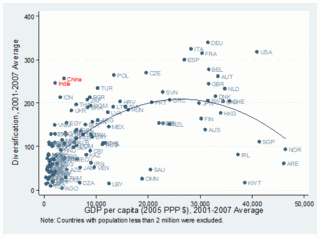
In two recent papers and using a data set covering almost 800 products (Felipe et al 2010a and 2010b), we examine the evolution of the export basket of the two countries. We argue that the capabilities that both China and India accumulated before reforms started are vital to understanding their growth later on. While we agree that planning led to mistakes, inefficiencies, and to the misallocation of resources in both countries, we argue that, given their income per capita, China’s and India’s export baskets are more sophisticated – as measured by the income content of the export basket – and diversified – as measured by the number of products exported with revealed comparative advantage – than might otherwise be expected. Both are far ahead of countries at similar levels of development. This could have been achieved only through planning, industrial policy, and sector targeting.