Sunday Poem

The Bridge

I’ve had enough
I’m sick of seeing and touching
Both sides of things
Sick of being the damn bridge for everybody

Nobody
Can talk to anybody
Without me
Right?

I explain my mother to my father
my father to my little sister
My little sister to my brother
my brother to the white feminists
The white feminists to the Black church folks
the Black church folks to the ex-hippies
the ex-hippies to the Black separatists
the Black separatists to the artists
the artists to my friends’ parents…

Then
I’ve got to explain myself
To everybody

I do more translating
Than the Gawdamn U.N.

Forget it
I’m sick of it.

I’m sick of filling in your gaps

Sick of being your insurance against
the isolation of your self-imposed limitations

Sick of being the crazy at your holiday dinners

Sick of being the odd one at your Sunday Brunches

Sick of being the sole Black friend to 34 individual white people

Find another connection to the rest of the world
Find something else to make you legitimate
Find some other way to be political and hip

I will not be the bridge to your womanhood
Your manhood
Your humanness

I’m sick of reminding you not to
Close off too tight for too long

I’m sick of mediating with your worst self
On behalf of your better selves

I am sick
Of having to remind you
To breathe
Before you suffocate
Your own fool self

Forget it
Stretch or drown
Evolve or die

The bridge I must be
Is the bridge to my own power
I must translate
My own fears
Mediate
My own weaknesses

I must be the bridge to nowhere
But my true self
And then
I will be useful

by Donna Kate Rushin
from This Bridge Called My Back: Writings by Radical Women of Color
Kitchen Table Press, 1983
Man dies again!

From The Immanent Frame:

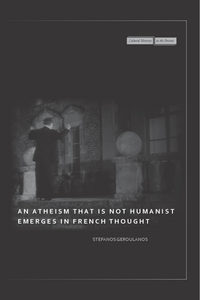
Book “Man dies again.” Or so might one entitle a tabloid version of Stefanos Geroulanos’s excellent work on the history of antihumanist thought in twentieth-century France. The phrase, of course, echoes a New York Post headline—“Pope dies again”—that supposedly appeared when Pope John Paul I died in 1978, a mere 33 days after Pope Paul IV’s passing. Like that likely apocryphal tabloid title, the simplistic formula is an apparently contradictory, but perhaps telling, misreading. First, it drastically reduces the density, richness, and rigor of Geroulanos’s argument, which retraces multiple—at once overlapping and competing—formulations of atheistic critiques of humanism in the politically and intellectually turbulent decades following World War One. And second, it draws an associative link between the Post’s unintentional précis of papal political theology and those strains of French thinking which most insistently worked against the divinization of “Man.” Both the condensation and the displacement at work in the phrase seem to distort the book’s aims and claims beyond recognition.

And yet, the exaggerated brevity of “Man dies again” does encapsulate what I take to be one of the central—and powerful—claims of this book, namely, that the “Man” who has been called into question by antihumanism is not always the same Man, but rather a historically shifting intellectual and political construct. Precisely because these philosophies do not always have the same target at the same moment, Man’s imminent effacement is invoked repeatedly, rather than once and for all. What might be understood as a negative anthropology in one context—for example, Kojève’s 1930s account of man’s negation with the end of history—is radically revised and reinterpreted as a Marxist anthropology in the postwar era.

More here.

Saturday, June 26, 2010

Kraken Rising: How the Cephalopod Became Our Zeitgeist Mascot

Kraken-raising-tn Mark Dery in h+ magazine:

As H.P. Lovecraft devotees know, Cthulhu (“kə-THOO-loo”) is the octopoid horror that slithered across the intergalactic wastes, in the time before Time, and slumbers now in the ocean’s abyssal depths, dreaming of apocalypse. As described in “The Call of Cthulhu,” he’s a cosmic obscenity, a partial-birth nightmare of “vaguely anthropoid outline” with the scaly hide and “rudimentary wings” of a dragon. But his most memorable aspect is his cephalopod head, variously described as an “octopus-like head whose face was a mass of feelers,” an “awful squid-head with writhing feelers,” or just “pulpy” and “tentacled.”

When the stars align, Cthulhu will rise again to resume His dominion over the Earth, ushering in an age of frenzied abandon. Humankind will be “free and wild and beyond good and evil, with laws and morals thrown aside and all men shouting and killing and reveling in joy” — Aleister Crowley’s idea of Primal Scream therapy, maybe, or what Burning Man might look like if the Manson Family were called in as rebranding consultants.

Recovering English majors will be reminded of the leviathan in Tennyson’s poem “The Kraken,” which rises from the abyss at the end of the age, when “fire shall heat the deep.” (The Lovecraft scholar Robert M. Price thinks the author drew inspiration from the Tennyson poem.)

As it happens, the many-tentacled One is rising these days, though less as an omen of apocalypse than as an emblem of the zeitgeist. The cephalopod — octopuses and squid, especially the giant squid, Architeuthis — has emerged, in recent years, as a tribal totem for geeks and hipsters of the Threadless T-shirt persuasion, celebrated in tattoos, skateboard decks, Gama-Go’s Giant Squid messenger bag, the Colossal Squid onesie retailed by Hipster Baby Tees, artist Adam Wallacavage’s tentacled chandeliers, Etsy seller OctopusMe’s sterling-silver rings cast from actual tentacles, and let us not forget the Screaming Octopus Mini Vibrator or the insertable silicone Tentacle from Whipspider Rubberworks, a “g-spot stimulator” studded with glow-in-the-dark suction cups. (Both go well with tentacle hentai, the only-in-Japan cartoon-porn genre devoted to fantasies of wide-eyed Lolitas ravished by cephalopods).

First Working Replacement Lung Created in Lab

Rat-artificial-lungs-created_22310_600x450Ker Than in National Geographic:

For the first time scientists have reconstructed working lungs in the lab and transplanted them into a living animal.

The achievement is a breakthrough in biomedical engineering that could lead to replacement lungs for humans in the near future, experts say.

Currently, the only way to replace diseased lungs in adults is a lung transplant, a high-risk procedure that's vulnerable to tissue rejection.

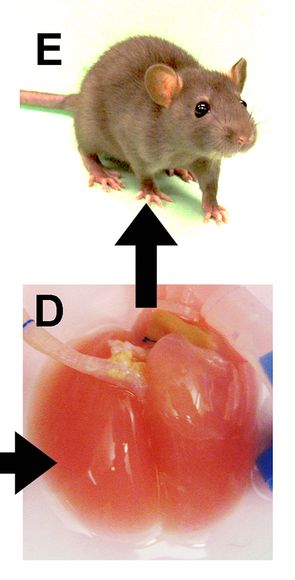
In a new study, researchers took lungs from a living rat and used detergents to remove lung cells and blood vessels, revealing the organ's underlying matrix.

This lung “skeleton”—made of flexible proteins, sugars, and other chemicals—consists of a branching network that divides more than 20 times into smaller and smaller structures. (See an interactive graphic of lung structure.)

The researchers placed these “decellularized” lungs into a bioreactor, a machine filled with a slurry containing different types of lung cells extracted from rat fetuses.

Within several days, the fetal cells naturally attached to the lung matrix and formed a functional lung.

“By and large, the correct subsets of cells went to their correct anatomical locations,” explained study leader Laura Niklason, a biomedical engineer at Yale University. “It appears that the lung matrix has cues, or 'zip codes,' that tell the cells where to land.”

When the team implanted the engineered lungs into an adult rat for short periods of time—between 45 minutes and two hours—the lungs exchanged oxygen and carbon dioxide in the same way as natural lungs.

Not for Profit

20100623_2010+25books1_wGuy Dammann reviews Martha C. Nussbaum's Not for Profit: Why Democracy Needs the Humanities, in The New Statesman:

As the American philosopher Martha Nussbaum argues in this limpid polemic, the vacuum left by conventional ideas about the value of education has been filled by an instrumental conception tied not to the notions of citizenship and moral autonomy, but to short-term economic benefit. The stakes, Nussbaum says, could not be higher. “If this trend continues, nations all over the world will soon be producing generations of useful, docile, technically trained machines, rather than complete citizens who can think for themselves, criticise tradition, and understand the significance of another person's sufferings and achievements.” The price, in other words, is capitalism's noble partner, liberal democracy.

Nussbaum describes a “worldwide crisis” taking place in education. She identifies the ways in which democracy relies on the values embedded in the arts and humanities. Societies have always used their arts and history as a mirror in which to see, understand and question their own values and desires, their fears and dreams, and their internal contradictions. But the value of the arts, in this respect, is contingent on the ability to think, judge and criticise for oneself.

The citizen educated in the art of following “argument rather than numbers”, Nussbaum writes, “is a good person for a democracy to have, the sort of person who would stand up against the pressure to say something false or hasty. A further problem with people who lead the unexamined life is that they often treat one another disrespectfully.”

This aspect of tolerance and openness occupies the core of Nussbaum's case.

A Genome Story: 10th Anniversary Commentary

Collins_human_genomeFrancis Collins in New Scientist:

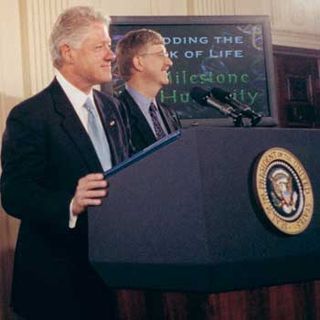
For those of you who like stories with simple plots and tidy endings, I must confess the tale of the Human Genome Project isn't one of those. The story didn't reach its conclusion when we unveiled the first draft of the human genetic blueprint at the White House on June 26, 2000. Nor did it end on April 14, 2003, with the completion of a finished, reference sequence.

Instead, human genome research is an epic drama being played out year after year, in sequel after exciting sequel, as scientists continue to make new discoveries about the role of our DNA instruction book in health and disease.

The First Law of Technology says we invariably overestimate the short-term impact of a truly transformational discovery, while underestimating its longer-term effects. Indeed, that appears to be true about the sequencing of the human genome. Many news articles are coming out right now reflecting upon what has—or hasn't—happened in the decade since we announced the first draft sequence. Cynics tend to view the immediate health benefits from genomic research as a glass half empty, but I see a glass half full—and growing fuller every day.

For me as a physician, the great appeal of the Human Genome Project was the opportunity it offered to seek answers to some of medicine's biggest puzzles. Today, as I look across all fields of biomedical research, it is clear that genomics is helping to piece together many of those puzzles. Whether their work focuses on cancer, diabetes, infectious diseases, mental illness or other conditions, researchers are using tools that have sprung out of the Human Genome Project to identify the molecular causes of disease and to develop new strategies for diagnosis, treatment, and prevention.

the last tuna

27Tuna-t_CA0-articleLarge

Applying more pressure, I felt the needle slide into the flank, felt the resistance of the dense sushi flesh, raw and red and most certainly delicious. But for the first time in my life I felt tuna flesh for what it was: a living, perfect expression of a miraculous adaptation. An adaptation that allows bluefin to cross oceans at the speed of a battleship. An adaptation that should be savored in its own right as the most miraculous engine of a most miraculous animal, not as food. Perhaps people will never come to feel about a tuna the way they have come to feel about whales. Whales are, after all, mammals: they have large brains; they nurse their young and breed slowly. All of that ensconces them in a kind of empathic cocoon, the warmth of which even the warmest-blooded tuna may never occupy. But what we can perhaps be persuaded to feel, viscerally, is that industrial fishing as it is practiced today against the bluefin and indeed against all the world’s great fish, the very tigers and lions of our era, is an act unbefitting our sentience. An act as pointless, small-minded and shortsighted as launching a harpoon into the flank of a whale.

more from Paul Greenberg at the NYT Magazine here.

picking up bits of the past

70981234-THWAITE_23453c

When Anthony Thwaite first read Philip Larkin’s work, in 1955, he was “as transfixed as I was when I first read The Waste Land”. The two poets became friends and collaborators. Thwaite helped Larkin to compile his Oxford Book of Twentieth-Century English Verse and edited a festschrift, Larkin at Sixty. “One day in March 1971,” Thwaite recalls, “I got a letter from him. ‘Oh, by the way,’ he wrote, ‘I’ve just written a little poem that might suit Ann’s next Garden of Verses for the Kiddies’,” [Ann, Thwaite’s wife, was compiling a children’s annual called Allsorts] “and there was This Be The Verse.” So Thwaite was first to read that now-iconic poem that begins “They f*** you up, your mum and dad . . .”. Thwaite’s reaction was odd. He says he “felt got at”, as a father of four, by the childless Larkin. Only much later did he realise that Larkin meant him to publish it, if he dared, in the New Statesman, where he was literary editor. He is still dismayed that this poem predominates whenever Larkin is mentioned. I protest that Larkin’s reputation thrives anyway — and it’s a useful poem, hence its ubiquity.

more from Valerie Grove at The Times here.

The human brain is a kluge

54531303

There’s a cartoon on my office wall captioned, “How our brain recalls things.” It shows an old galoot (overalls, baseball cap) in a stockroom, leaning on the drawer of a filing cabinet, one hand draped across the folders, the other holding up a sheet of paper. A phone receiver is tucked under his chin, and he seems to be relaying the extracted information to someone upstairs. It’s a satisfying metaphor for a process that neuroscientists have struggled to pin down for decades. In “101 Theory Drive,” Terry McDermott gets us a lot closer to the problem of how the brain records experience. The intrepid McDermott, a former national reporter for The Times with no background in neuroscience, does this by embedding himself in the lab of Gary Lynch, a leading memory researcher and one of the field’s most radical practitioners. “101 Theory Drive” is the lab’s address at UC Irvine. Hard-drinking, cigar-chomping and potty-mouthed, Lynch — described by one colleague as “the hippie of neurobiology” — is nothing if not good copy.

more from Sara Lippincott at the LA Times here.

His fondest wish was to turn himself into a nuclear bomb and get dropped on India

Shakil Chaudhary in Viewpoint:

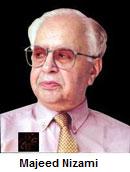
Pic-full-8-june-25a India is Pakistan’s eternal enemy. Unless we defeat it in a nuclear war, it will keep plotting conspiracies against Pakistan, said Mr Majeed Nizami, the owner of the Nawa-i-Waqt, The Nation, and Waqt TV channel, while addressing a function in his honour (Nawa-i-Waqt, June 24). Our missiles and nuclear bombs are superior to India’s ghosts, so tackling India is imperative, he declared. “Don’t worry if a couple of our cities are also destroyed in the process.”

Dr Mujahid Kamran, vice chancellor, Punjab University, Syed Asif Hashmi, chairman, Evacuee Trust Property Board, Bushra Rahman, MNA, Niaz Hussain Lakhvera, director, Lahore Art Council, Pervez Malik, PML-N MNA and finance secretary, Shoaib Bhutta, a staunch journalist friend and fan of President Zardari, and Khushnood Ali Khan, chief editor of Jinnah newspaper, paid glowing tributes to the “living legend”. Mr Bhutta blasted the Jang Group by saying that Aman ki Asha was a conspiracy to turn Pakistan into Hindus’ slave. “They want to annihilate the two-nation theory.” Only Majeed Nizami can stop the Hindu culture from entering Pakistan in the garb of Aman ki Asha, he added. Pervez Malik described Mr Nizami as the most credible (motabir) personality in Pakistan. He also praised Mr Nizami’s position on the Kashmir issue, saying that it deserved to be followed by everybody. Only Majeed Nizami’s power and force can save Pakistan, said Mr Lakhvera. Khushnood Ali Khan said that one of the missiles should be named after Mr Nizami.

Mr Nizami has changed his rationale for initiating a nuclear war with India. The Nawa-i-Waqt (Nov 5, 2008) quoted him as saying: “Pakistan should not hesitate to use nuclear weapons to wrest Kashmir from India”. He had also said that his fondest wish was to turn himself into a nuclear bomb and get dropped on India. In the 1980s, General Zia once invited him to accompany him to India. He angrily turned down the invitation saying “If I ever go to India, I will travel by tank.”

More here. [Thanks to Omar Ali.]

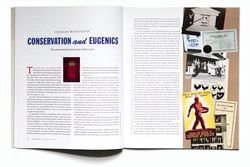
Conservation and Eugenics: The environmental movement’s dirty secret

From Orion Magazine:

Eugenics THE RAIN HAD JUST STOPPED in the little eastern Kansas town of Osawatomie when thirty thousand people, gathered in an atmosphere not unlike that of a country fair, fell quiet. Their hero, former president Teddy Roosevelt, climbed atop a kitchen table and began to speak in a high, almost falsetto voice, orating amid cheering for ninety minutes. When finished, he had delivered the most controversial and influential address of his career, in which he described a radical new program that was both denounced and celebrated in newspapers across the country. The date was August 31, 1910. The New Nationalism Speech, as it came to be known, emphasized conservation, as did most of Roosevelt’s speeches written by his friend Gifford Pinchot, who had been his conservation chief for the two terms of his presidency. But it also newly placed the “moral issue” and “patriotic duty” of conservation into the context of a racial conversation, as well as a much broadened concept of progressivism.

In appealing to the folks in Osawatomie, Roosevelt went well beyond the program he had pursued in office, proposing a powerful national government strong enough to address many of its citizens’ problems. In this new regime, government would be a general antidote to corporate power. Federal programs would control wages and hours, health, and corporate governance. The government would take over utilities and railroads if necessary to stop monopolies. Corporate political contributions would be limited and publicly reported. Most radically, this vastly empowered national government would transform America’s economy to reward only merit, using graduated estate and income taxes to pull down the fortunes of the very rich.

More here.

The Psychology of Bliss

From The New York Times:

Henig-sub-popup In 2003, a German computer expert named Armin Meiwes advertised online for someone to kill and then eat. Incredibly, 200 people replied, and Meiwes chose a man named Bernd Brandes. One night, in Meiwes’s farmhouse, Brandes took some sleeping pills and drank some schnapps and was still awake when Meiwes cut off his penis, fried it in olive oil and offered him some to eat. Brandes then retreated to the bathtub, bleeding profusely. Meiwes stabbed him in the neck, chopped him up and stored him in the freezer. Over the next several weeks, he defrosted and sautéed 44 pounds of Brandes, eating him by candlelight with his best cutlery.

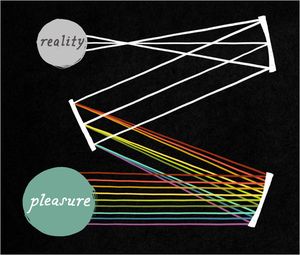
Hold on a minute. Why does this story appear in “How Pleasure Works,” a book whose jacket copy promises a “new understanding of pleasure, desire and value”? If this is a “new under­standing,” maybe we’ll just stick with the old one, thank you very much. For heaven’s sake, we’re only on Chapter 2, and already we’re deep into cannibalism, compounded by a suicidal-masochistic impulse. Still to come are such topics as rubber vomit, human grimacing contests and monkey pornography. But stick with it and trust the author, Paul Bloom, to use these weird digressions to get us someplace interesting. Bloom, a professor of psychology at Yale, has written a book that is different from the slew already out there on the general subject of happiness. No advice here about how to become happier by organizing your closets; Bloom is after something deeper than the mere stuff of feeling good. He analyzes how our minds have evolved certain cognitive tricks that help us negotiate the physical and social world — and how those tricks lead us to derive pleasure in some rather unexpected places.

More here.

Friday, June 25, 2010

With Les Murray, you have to get the speed

Les_MurrayIn the majesty of his years and accomplishments, Les Murray, sole author of the several increasingly massive editions of his New Collected Poems – one of the great books of the modern world – is in the position of a monarch who, having successfully constructed Versailles all on his own, is now pottering in the grounds building sheds. Six years ago The Biplane Houses was such a shed, and very prettily done. Now Taller When Prone is another. Perhaps I would not have had the idea of an enormous building and its satellite bâtiments if the first poem in the new book had not been about the Taj Mahal. The poem, called “From a Tourist Journal” starts like this.

In a precinct of liver stone, high
On its dais, the Taj seems bloc hail.

Immediately he’s got you in. He has always been able to do that. The way he can register, in words nobody else would quite choose, a perception nobody else could quite have, is at the centre of his art, ensuring almost infallibly that a poem will work like a lucky charm for as long as he pours in the images. A Taj made of hail: you and I might say that we would have seen that to be true eventually, and we might even argue learnedly that the word “Mahal” phonically suggested the word “hail” (points for an essay there), but the daunting truth is that he doesn’t just think that way, he sees that way.

more from Clive James at clivejames.com here.

the worship of a cosmic principle

100628_r19745b_p233

“May all that emerges from me be beautiful,” Yves Klein prayed, with what seems like utter sincerity, in the handwritten text of a reliquary-like work, enshrining blue and pink pigment and gold leaf in little Plexiglas boxes, from 1961. The last French artist of major international consequence, Klein, who died the following year, at the age of thirty-four, was entreating Rita of Cascia, a saint of lost causes, abused women, and baseball. He was likely unmoved by the last. Klein’s sport was judo, which he wrote a book about, after studying it at a prestigious school in Tokyo and earning a black belt. The refusal of the French Federation of Judo to recognize his Japanese diploma, in 1954, frustrated his career plans in that line, to the benefit of his commitment to art. Hanging in a gallery near the St. Rita piece, in a sumptuous retrospective at the Hirshhorn Museum, in Washington, D.C., is a drawing in which the word “humility” is repeated twenty times.

more from Peter Schjeldhal at The New Yorker here.

that mysterious force, sensed in childhood and scrutinized in maturity

TLS_Barnes_725915a

I was nine years old when I first encountered the Creeping Man. Having wolfed down nearly all Sir Arthur Conan Doyle’s Sherlock Holmes stories in approximate order of publication, I had reached, with a feeling of regret, the final volume, The Case-Book of Sherlock Holmes. Composed of a dozen short tales, the Case-Book dates from the 1920s, a decade when Conan Doyle’s interest in his most famous creation had dwindled to a kind of mercenary contempt and the bulk of his time and attention were spent evangelizing for the spiritualist cause. Unaware of any of this, I noted no downturn in quality and found the eighth item in the collection, “The Adventure of the Creeping Man”, to be one of the richest and most singular investigations of Holmes’s long career – an opinion which I have had no reason to change. The story begins as Dr Watson is summoned to Baker Street, “one Sunday evening early in September of the year 1903”, by means of a splendidly terse telegram (“Come at once if convenient – if inconvenient come all the same”) in order to hear an account of the mystery of Professor Presbury, “the famous Camford physiologist”. The Professor, a “staid, elderly” widower, has recently become engaged to a much younger woman and “the current of his life” has been disrupted. Formerly “the frankest of men”, his behaviour has turned “furtive and sly”. He “lives as in a strange dream”, ventures out on unexplained expeditions and receives envelopes in the post, “marked by a cross under the stamp”.

more from Jonathan Barnes at the TLS here.

Friday Poem

The Fourfold

Automobiles are flowing like droplets down the string of the highway,
then all of a sudden they’re absorbed into housing estates and courtyards,
the reinforced concrete gardens of hypermarkets. Water

does not wash anything clean, it insistently drums on the brow, seeking
the plumb-line; droplet asking droplet what’s the way.
I turn onto my other side, here naked trees

flex themselves, as if trying to use their youthful branches
to prop up the sky’s support wall, on which weevils
are skillfully pretending to be seagulls and a damp mark is just as

remarkably spreading to form some artificial rose.
I get up, wake up, switch on the TV; the world goes
back to the beginning.

by Tadeusz Dabrowski
translated from Polish by Antonia Lloyd-Jones
from The Boston Review