
Seamus Heaney at the Paris Review:
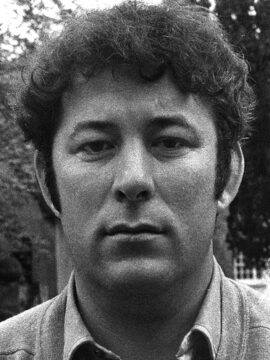 Dear Tom,
It’s not that I have not been thinking about you. I have, quite a bit. And the thoughts have as ever been tinged with second thoughts: for example, I was sorry after you rang that time in the summer that I had not urged you to come over. The usual hunched, wild-eyed panic about how I could do this and that and still have time for the spacious pleasures of sleigh rides in Wicklow intervened too automatically. Somehow, the chance had come and gone in a moment. And then too I’ve been bugged by the idea that I saw a letter from you in a big mail- pile—perhaps when I came back from Australia or Poland last autumn—and that I put it aside to read properly, after the rush-through for crisis-stuff, and then never found it. At any rate, I am haunted by this notion and only hope I am mistaken.
It’s my birthday and it is a day of utterly vernal Easter. Holy Thursday indeed. Fifty-sixth birthday. The fact that I’m actually sitting out in the open air (cf. Mark Twain on the English countryside) will give you some idea of the extraordinary pause and poise of the weather. Loveliest-of-trees time.
more here.
Enjoying the content on 3QD? Help keep us going by donating now.
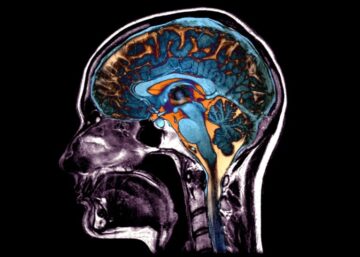 An analysis of almost 50,000 brain scans
 Schmidt confessed to revising his AI outlook every six months, a testament to the field’s volatility. He shared a striking example: “Six months ago, I was convinced that the gap [between frontier AI models and the rest] was getting smaller, so I invested lots of money in the little companies. Now I’m not so sure.”
 America’s most curious endeavors: Atoms for Peace and its policy that spread dangerous nuclear technology world-wide.
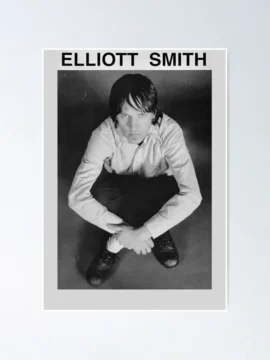 Though it’s true that sadness in its many forms was one of Smith’s central preoccupations, neither he nor his music were defined by it. The spare waltz that defeats Tiny Rick appears on Smith’s third solo album, 1997’s Either/Or. It’s played acoustically at an unhurried pace and combines a seductive lyric about finding solace in booze with a melody that perfectly captures its quiet desperation. In the chorus, a dark E-flat minor hits you like a gut punch because your ears expect a more optimistic E-flat major, and the song returns to that unstable chord to finish, denying you any conventional harmonic resolution. It’s a masterly composition that eclipses anything by Smith’s own idols, including the Beatles or Elvis Costello – sad, yes, but too wondrous to feel strictly morose. And he didn’t write it strung out and crying into an empty glass of Jameson. It was apparently knocked into shape while he was watching the swords-and-sandals TV show Xena: Warrior Princess.
 We’re publishing these exchanges just about every two weeks—a compressed timeline that somehow seems like an eternity amid this summer’s news cycles. Thankfully, art offers its own distinct time signature. When we look at a painting or read a poem, we don’t escape from time, but we do experience it differently. Time contracts and dilates; it folds in and out; mere sequence becomes pattern, shape, meaning. “You are the music / While the music lasts,” as T. S. Eliot puts it. This temporal re-shuffling is one of the gifts of art, and it’s one that I’m especially appreciating during this frenetic summer.
 With persistent, fast-moving advancements in artificial intelligence (AI) cornering most of us every day, even the most technology-shy have begun to accept that AI now infiltrates nearly every aspect of our lives. However, while AI may be useful for retrieving data and making predictions, using it for the intimate and challenging endeavor that is therapy is one purpose you likely wouldn’t have seen coming. Yet, increasing numbers of people are sharing how they are using ChatGPT and other AI-led bots for “makeshift therapy”—which has also left experts questioning how safe this new practice is.
 The first time I heard nematode worms can teach us something about human longevity, I balked at the idea. How the hell can a worm with an average lifespan of only 15 days have much in common with a human who lives decades?