
Category: Recommended Reading
Will the crisis create a new Japan?
From The Washington Post:
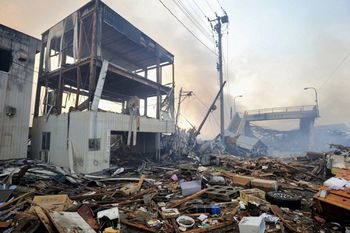
Which way will Japan go?
The March 11 earthquake and tsunami devastated a society that, for all its wealth, was stuck in a rut. Over the past two decades, Japan’s economic growth averaged an anemic 1 percent a year. Politically, the country was rudderless. The Liberal Democratic Party, which had governed almost continuously since the end of the U.S. military occupation following World War II, had finally worn out its welcome. And the novice Democratic Party of Japan, which had assumed power in 2009, was flailing.
More here.
Out of options: A surprising culprit in the nuclear crisis
From The Boston Globe:

For those taking a longer view, however, there is a larger question looming over the disaster: Why was Japan, a nation at high risk for earthquakes and natural disasters, using a type of reactor that needed such active cooling to stay safe? And the answer to that doesn’t lie with Japan, or the way the plant was built. The problem lies deeper, and concerns the entire nuclear industry. Japan’s reactors are “light water” reactors, whose safety depends on an uninterrupted power supply to circulate water quickly around the hot core. A light water system is not the only way to design a nuclear reactor. But because of the way the commercial nuclear power industry developed in its early years, it’s virtually the only type of reactor used in nuclear power plants today. Even though there might be better technologies out there, light water is the one that utility companies know how to build, and that governments have historically been willing to fund.
More here.
Saturday, March 19, 2011
Now that the Planes are Off, Two Reactions to Libya
First, Phyllis Bennis in The Real News:
While the UN resolutionwas taken in the name of protecting civilians, it authorizes a level of direct U.S., British, French, NATO and other international military intervention far beyond the”no-fly zone but no foreign intervention” that the rebels wanted. Its real goal, evident in the speeches that followed the Security Council's March 17th evening vote, is to ensure that “Qaddafi must go,” – as so many ambassadors described it. Resolution 1973 is about regime change, to be carried by the Pentagon and NATO with Arab League approval, instead of by home-grown Libyan opposition.
The resolution calls for a no-fly zone, as well as taking “all necessary measures… to protect civilian populated areas under threat of attack in the Libyan Arab Jamahiriya, including Benghazi, while excluding a foreign occupation force of any form on any part of Libyan territory.” The phrase “all necessary measures” is understood to include air strikes, ground, and naval strikes to supplement the call for a no-fly zone designed to keep Qaddafi's air force out of the skies. The U.S. took credit for the escalation in military authority, with Ambassador Susan Rice as well as other Obama administration officials claiming their earlier hesitation on supporting the UN resolution was based on an understanding of the limitations of a no-fly zone in providing real protection to [in this case Libyan] civilians. It's widely understood that a no-fly zone is most often the first step towards broader military engagement, so adding the UN license for unlimited military escalation was crucial to getting the U.S. on board. The”all necessary measures” language also appears to be the primary reason five Security Council members abstained on the resolution.
Rodger A. Payne over at Duck of Minerva responds:
Certainly, opponents of the no fly zone want to frame the debate around regime change in order to question the legitimacy of the intervention. For instance, Phyllis Bennis of the Institute for Policy Studies asserts that “it's widely understood that a no-fly zone is most often the first step towards broader military engagement.” However, I would challenge that view. The U.S. for many years helped enforce a no-fly zone in Iraq that was eventually controversial and certainly was not the key stepping stone that legitimized war in Iraq. The Bush administration likely would have pursued war on Iraq even without a no fly zone. And much of the world opposed the war in Iraq precisely because it violated international norms about the use of force.
Bennis also worries about the authorization of “all necessary measures..to protect civilians and civilian populated areas under threat of attack in the Libyan Arab Jamahiriya, including Benghazi, while excluding a foreign occupation force of any form on any part of Libyan territory.” She sees this as a virtual blank check for broader military intervention, though she overlooks the last clause.
Tibet’s Quiet Revolution

It’s been startling to witness mass demonstrations in countries across the Middle East for freedom from autocracy, while, in the Tibetan community, a die-hard champion of “people power” tries to dethrone himself and his people keep asking him to stay on. Again and again the Dalai Lama (who tends to be more radical and less romantic than most of his followers) has sought to find ways to give up power, and his community has sought to find ways to ensure he can’t. It could be said that almost the only time Tibetans don’t listen to the Dalai Lama is when he tells them they shouldn’t listen to him. Now, on the eve of an important election for Tibet’s government-in-exile, he has announced he is relinquishing formal political authority entirely—and the Tibetan government has accepted his decision, even as the move has alarmed many around the world and struck some as the end of an era.
In truth, the Dalai Lama’s statement was merely a continuation—and a stronger expression—of what he has been saying for years: that political leadership for the Tibetan people (in exile at least) belongs with the democratically elected government-in-exile he has so painstakingly set up over decades in Dharamsala, in India (elections for a new prime minister are to be held March 20); that he will function only as a “senior advisor,” helping to oversee the transition to a post-Dalai Lama era; and, most important, that the spiritual and temporal sides of Tibetan rule will at last be separate. As he noted in the speech that mentioned his “retirement”—his annual state-of-the-nation address, in effect, delivered on March 10, the anniversary of the 1959 Tibetan uprising against the People’s Republic of China and a frequent day of protest—he has believed, since childhood, that church and state should not be one and that the fate of Tibet should be in the hands of all Tibetans.
A Profile of Elizabeth Warren

The piñata sat alone at the witness table, facing the members of the House subcommittee on financial institutions and consumer credit.
The Wednesday morning hearing was titled “Oversight of the Consumer Financial Protection Bureau.” The only witness was the piñata, otherwise known as Elizabeth Warren, the Harvard law professor hired last year by President Obama to get the new bureau — the only new agency created by the Dodd-Frank financial reform law — up and running. She may or may not be nominated by the president to serve as its first director when it goes live in July, but in the here and now she’s clearly running the joint.
And thus the real purpose of the hearing: to allow the Republicans who now run the House to box Ms. Warren about the ears. The big banks loathe Ms. Warren, who has made a career out of pointing out all the ways they gouge financial consumers — and whose primary goal is to make such gouging more difficult. So, naturally, the Republicans loathe her too. That she might someday run this bureau terrifies the banks. So, naturally, it terrifies the Republicans.
The banks and their Congressional allies have another, more recent gripe. Rather than waiting until July to start helping financial consumers, Ms. Warren has been trying to help them now. Can you believe the nerve of that woman?
Q&A: Julian Schnabel On Politics Of ‘Miral’
Mike Fleming in Deadline:
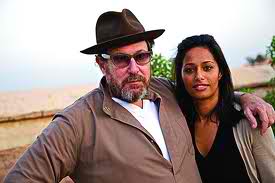
DEADLINE: Were any members of the American Jewish Committee at the screening?
SCHNABEL: I asked from the stage and no one responded. I invited them and thought it would be good for them to see it. It was such a beautiful evening, a 45-foot screen in the middle of the General Assembly. There were 1600 people. Robert De Niro, Sean Penn, Steve Buscemi and Josh Brolin showed up in solidarity, along with artists like Ross Bleckner, David Salle. And Vanessa Redgrave, who a long time ago got in a lot of trouble for saying something in support of Palestinian people at the Oscars. I remember being a kid when she said that, and everybody being so pissed off, saying just because you’re an actress getting an award doesn’t mean you should have a thought or a political point of view. I think Paddy Chayevsky said that. He was a brilliant, but it’s very easy to pick on somebody who speaks up.
More here.
Leopard Nurtures Baby Baboon After Killing It’s Mother
Libya, the US, and the Moral Imperative to Intervene
Shadi Hamid in Democracy Arsenal:
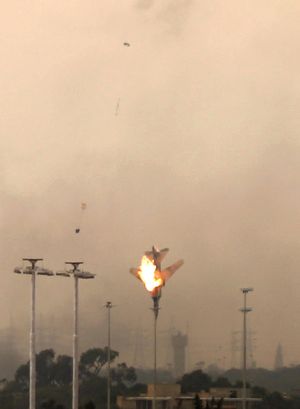
The arguments against military intervention struck me as surprisingly weak and almost entirely dependent on raising the spectre of Iraq and Afghanistan. It was somewhat unclear how and why Iraq 2003 should be compared to Libya 2011. Michael Cohen, whose preference for foreign policy restraint is admirable, worried recently that John McCain and Joe Lieberman's support for a no-fly zone portended bad things to come. Just because McCain and Lieberman support something doesn't automatically mean it's bad.
Cohen writes that Iraq and Afghanistan “are daily reminders that the use of U.S. military force can have unforeseen and often unpredictable consequences.” Yes, but that's sort of the point with bold action. It's supposed to be risky (in fact, if it's not, you may not be going far enough). Success isn't guaranteed. And no one is pretending that a positive outcome in Libya is a foregone conclusion now that the UN Security Council has adopted a resolution authorizing military force. But it does make a successful outcome more likely.
Music is all in the mind
From Nature:
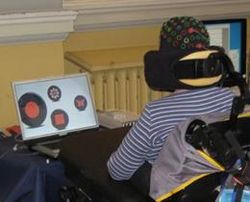
This is a trial of a computer-music system that interacts directly with the user's brain, by picking up the tiny electrical impulses of neurons. The device, developed by composer and computer-music specialist Eduardo Miranda of the University of Plymouth, UK, working with computer scientists at the University of Essex, should eventually help people with severe physical disabilities, caused by brain or spinal-cord injuries, for example, to make music for recreational or therapeutic purposes. The findings are published online in the journal Music and Medicine1. “This is an interesting avenue, and might be very useful for patients,” says Rainer Goebel, a neuroscientist at Maastricht University in the Netherlands who works on brain-computer interfacing.
More here.
James Gleick’s History of Information
From The New York Times:

Gleick makes his case in a sweeping survey that covers the five millenniums of humanity’s engagement with information, from the invention of writing in Sumer to the elevation of information to a first principle in the sciences over the last half-century or so. It’s a grand narrative if ever there was one, but its key moment can be pinpointed to 1948, when Claude Shannon, a young mathematician with a background in cryptography and telephony, published a paper called “A Mathematical Theory of Communication” in a Bell Labs technical journal. For Shannon, communication was purely a matter of sending a message over a noisy channel so that someone else could recover it. Whether the message was meaningful, he said, was “irrelevant to the engineering problem.” Think of a game of Wheel of Fortune, where each card that’s turned over narrows the set of possible answers, except that here the answer could be anything: a common English phrase, a Polish surname, or just a set of license plate numbers. Whatever the message, the contribution made by each signal — what he called, somewhat provocatively, its “information” — could be quantified in binary digits (i.e., 1s and 0s), a term that conveniently condensed to “bits.”
More here.
Saturday Poem
Grain
What was his name again – that fisher lad
dragged under with his fankled nets –
him that the fishes hooked and filleted?
I often wonder if the irony of it all amused him
as he left off from kicking against the dark, and drowned:
not, (as his Mother always feared) to be lost at sea, but found.
Tell me you’ve never seen a hangman hung,
nor laughed at the dying tenor, topped by his own song;
nor stumbled across a baker’s corpse, rising like dough;
nor wept with the weeping ferryman while Charon
gummed his coin. Friends, we’re all done for by the things we do.
If I were a farmer, I’d shrink from the ripening grain.
by John Glenday
from Grain
publisher: Picador, London, 2009
Friday, March 18, 2011
Why Pakistan let CIA contractor Raymond Davis go
Scott Horton in Foreign Policy:

Those facts are the sum total of what U.S. and Pakistani officials have been able to agree on in the six weeks since the incident occurred and Davis, a muscular young former Special Forces officer who, it has since emerged, was working as a CIA contractor, became the center of a diplomatic crisis. The other details have been spun so aggressively by so many different parties that you could assemble a subcontinental Rashomon out of them.
More here.
Abbas Kiarostami Interview
Sam Adams at the AV Club of The Onion:

Certified Copy is something else entirely. A film of firsts: Kiarostami’s first feature shot outside of Iran (in Tuscany) and his first to rest on the performance of a professional actor (a virtuosic turn by Juliette Binoche), as well as his first narrative in a decade.
More here.
The Suburbanization of Mike Tyson
Daphne Merkin in the New York Times Magazine:

More here.
Be water, my friend
our monstrous new selves
Selves change. Not just in the course of our little lives, in ways that we therapists try to effect, but in the course of human history. The idea of what it means to be a human being, of what we should expect of ourselves, of what constitutes the good life and why it is good and how we ought to achieve it—this is transformed by time and circumstance, in a way that can be seen only in retrospect, and even then through a glass darkened by the prejudices of whatever kind of self is looking back. Hard as it is to spot our origins by peering into our collective past, it is even harder to glimpse ourselves as we live through epochal change, as our very understanding of who we are is transformed before our eyes. Hardest of all is to know what, if anything, to do about it.
Nicholas Carr, in The Shallows, and William Powers, with Hamlet’s BlackBerry, have undertaken to tell us exactly that: who we are becoming now that we swim in an endless stream of digital data, what ails this new self and how its pathologies should be treated. Their books are in part confessional accounts of their discovery that something has gone wrong in their lives. For Powers, revelation comes when he leans too far over the transom of his motorboat and falls into the waters off Cape Cod. Clambering back aboard, he realizes that his cellphone went into the drink with him and is ruined. He’s immediately aware of the hassle and headache he’s in for—replacing the phone, restoring his contacts, being out of touch, mourning the loss of his photos. But then, on his way back to his mooring,
I notice something funny. It’s not anything I can see or hear. It’s an inner sensation, a subtle awareness. I’m completely unreachable…. Nobody anywhere on the planet can reach me right now, nor can I reach them…. Just minutes ago, I was embarrassed and angry at myself for drowning my phone. Now that it’s gone and connecting is no longer an option, I like what’s happening.
more from Gary Greenberg at The Nation here.
actual human presence

It will come as little surprise to anyone acquainted with the paintings of Raoul Middleman that earlier in his career he had writing aspirations, too — and not just aspirations, for they were acted upon in raucous short stories that often delved into the steamier side of Baltimore. This is the city where he grew up, taught for many years at the prestigious Maryland Institute College of Art, and continues to make his home. But it is also, in his writings and paintings alike, a city of the imagination, transported beyond its present bricks and mortar to the planet of Joyce’s Dublin and Durrell’s Alexandria, Atget’s Paris and Kirchner’s Berlin. These are cities mapped by longings not landmarks. For many years he has kept a studio of mythic magni- tude in the neighborhood of the famed Copycat building, amidst the raw, mean streets that serve as location for The Wire. Middleman is at once a supremely painterly painter and a writerly painter. His illustrious, fecund career provides a service to aesthetics by dispelling the prissy formalist notion that somehow to tell a story in paint, to illustrate a type, to animate a com- position with scenario, is incompatible with whatever it is that provides visual art with its essence. Middleman’s vital, brimful- of-life riposte to such a reductive way of thinking reconnects narrative painting to centuries of endeavor in countless genres, many of which latter he himself has attacked in his greed for imagery. In virtually any Middleman painting, an event has just happened and there is more to come. Subjects are never passive. The universe is in flux.
more from David Cohen at artcritical here.
living dangerously in Sri Lanka
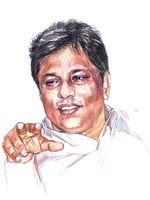
On the morning of January 8, 2009, Lasantha Wickrematunge was driving to work in a suburb of the Sri Lankan capital of Colombo when his Toyota Corolla was blocked by four motorcycles. The masked riders smashed the car’s windows and dragged Lasantha into the street, where one of the assailants punched a hole in his skull with a captive bolt pistol, the kind used to slaughter livestock. According to eyewitnesses, the motorcyclists then sped off in the direction of a nearby military checkpoint, leaving Lasantha dead in the middle of a crowded intersection. Lasantha was the editor of The Sunday Leader, an English-language weekly newspaper that he founded with his older brother Lal in 1994. Known for their muckraking investigations of corrupt politicians, the Wickrematunges were accustomed to harassment and violence: Lasantha had been shot at, beaten up, and had his home shelled by antitank ammunition; the government briefly shut the Leader down in 2000 for flouting censorship laws; in 2005, and again in 2007, arsonists burned down its printing press; and before his assassination, Lasantha received death threats for criticizing the government’s war against the Liberation Tigers of Tamil Eelam (LTTE), a Tamil separatist group that had been in revolt against the predominantly Sinhalese government since 1983.
more from Michael Hardy at The American Scholar here.
Friday Poem(s)
The Sufi's Garland
And when I learned, sitting among the shoes and sheets 
and shards and sheer that, the mind of man, that the
mind of man too is a solo act, a solo uncontainable act, I lost
my fears, my fears of losing, of losing my mind . . . and
thought freely.
And when I learned that being true must not, must not be a way
to ensure they speak good of you, speak good of you when
you are gone, then I, I lost my fears of not, of not
being able to buy their words worth . . . and spoke freely.
………………………….. –Shabad Shradanjali to Tagore's Gitanjali
Both of these verses are excerpts from a book that came my way. In The Sufi's Garland, which the author, Manav Sachdeva Maasoom, has written as a tribute to Emily Dickinson, Antonio Porchia and Rabindranath Tagore, Maasoom offers a wealth of smart sufi beauty.
Among Maasoom's verses you'll find thoughts as jarringly succinct as this:
I went outside to see
if God's voice
was disturbing anybody
In a world in which it seems God's voice is disturbing few this simply put statement can be read, among other things, as an indictment. But God's voice in the sufi-speak we find in this fine book is not the voice of a quasi-human overseer. This god's voice is beyond God. The voice of the god in The Sufi's Garland is the god that speaks when the God of sects is dumbfounded.
The God of sects would turn this verse of Mansoom's on its head:
seek first to love
then to understand
Speaking through the mouths of every confused or manipulative mullah, priest, or preacher, the God of sects demands that we first understand their singular take on God so that (they insist) we may love. Believe first, they say. In his two lines Mansoom sets us straight.
And, as if to underscore, Mansoom later writes:
When in Iran I prayed to Mohammed
Rasool and PEACE be upon him
one asked me straight—Are you Muslim?
and I told him, with a date
and water, breaking my fast
I don't think Brahma would've minded
But among the visions of god in this book, there are also snapshots of god:
the sheer elegance
……… of the seagulls
…………. gliding
……………… startling the Hudson
freshness
…………….. of the summer's
…….. first …………….. navels
~~
Dear Flower
your faint feistiness to survive gives me strength.
tomorrow foreshadows a tenderness in my kernel that is
yours' to keep. I do not know if the joy waltzing in my eyes
that lights up our hearts' lamps each time I visit is a light I
see in you because my heart is but noir. I do not know if
the joy and sweet in you is the same for each bee
Like everything else in the world the book is not perfect, but there's enough near-perfection, astute perception and wise reflection to be found in The Sufi's Garland to make it a worthwhile garland to have written, to read and to wear.
The Sufi’s Garland
by Manav Sachdeva Maasoom
Published by: ROMAN Books
Publication date: 25th March 2011
Price: $24.95 (Hardcover)
104 pp, 6-1/8 x 9-1/4″
ISBN: 978-93-80040-02-8